The Quick Answer: There Is No 2024 Chevrolet Spark EV
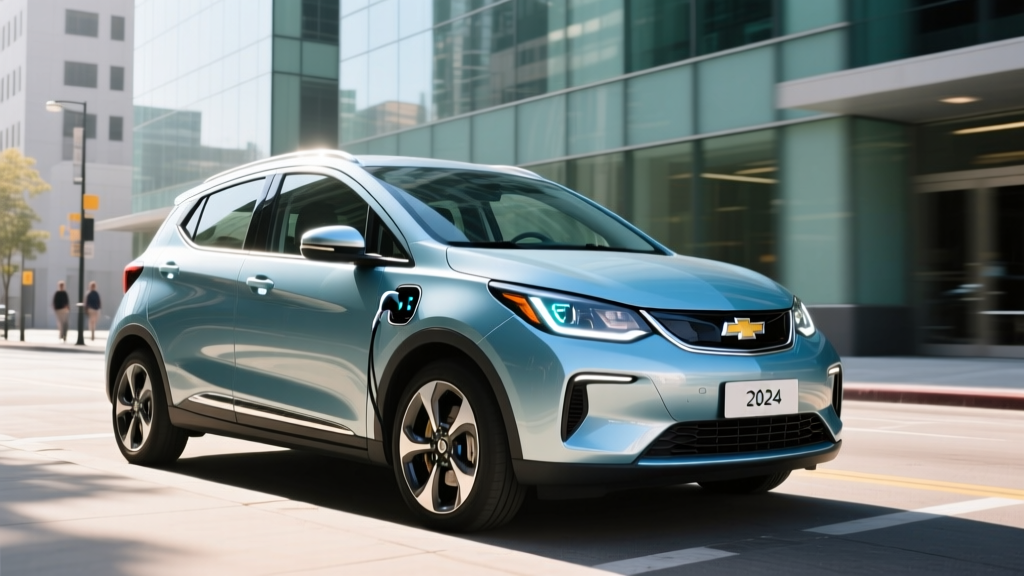
Chevrolet discontinued the Spark EV after the 2016 model year. There is no 2024, 2025, or 2026 Chevrolet Spark EV — and the gasoline Spark hatchback was also discontinued after 2022. If you're searching for a "2024 Chevrolet Spark EV," you're likely encountering outdated listings, clickbait, or confusion with other Chevrolet EVs.
However, the 2014–2016 Spark EV remains a viable used-EV option for budget-conscious buyers who need a short-range city commuter. Below, we break down exactly what the used Spark EV offers in 2026 — real-world range, battery degradation concerns, charging speeds, ownership costs, and how it compares to modern alternatives.
Spark EV Specs at a Glance: What Chevrolet Actually Built
The Spark EV was Chevrolet's first fully electric production car, sold only in select markets (primarily California, Oregon, and Maryland) during its three-year run. Here are the factory specifications for the final 2016 model year, which represents the best version to seek on the used market:
| Specification | 2014 Model Year | 2015–2016 Model Year |
|---|---|---|
| Battery Capacity | 21.3 kWh (NMC) | 18.4 kWh (NMC, LG Chem) |
| EPA Range | 82 miles | 82 miles |
| Motor Output | 114 hp / 400 lb-ft torque | 143 hp / 400 lb-ft torque |
| 0–60 mph | ~8.5 seconds | ~7.2 seconds |
| DC Fast Charge (CCS) | Up to 80 kW (optional) | Up to 80 kW (optional) |
| Level 2 AC Charge | 3.3 kW (6.6 kW optional) | 3.3 kW (6.6 kW optional) |
| EPA Efficiency | 119 MPGe combined | 119 MPGe combined |
| Battery Warranty (original) | 8 yr / 100,000 mi | 8 yr / 100,000 mi |
Key distinction: The 2014 model used a larger A123 Systems battery pack (21.3 kWh usable), while 2015–2016 models switched to a smaller but more energy-dense LG Chem pack (18.4 kWh usable). Despite the smaller pack, EPA range held at 82 miles due to efficiency improvements. The 2015+ motor upgrade from 114 to 143 hp also makes the later models noticeably quicker.
Real-World Range in 2026: What to Actually Expect
EPA Sticker: 82 miles
Real-World Expectation (2026, 8–10 year-old battery): 55–70 miles in moderate conditions; 40–50 miles in cold weather or sustained highway driving
The 82-mile EPA figure was modest even in 2016. In 2026, a used Spark EV's actual range depends heavily on battery degradation. NMC (nickel manganese cobalt) chemistry from this era typically loses 10–20% of original capacity over 8–10 years, depending on charging habits and climate exposure.
Here's what that means in practice:
- Best case (garage-kept, mild climate, Level 2 only): ~70 miles usable range — enough for a 30-mile round-trip commute with margin
- Typical case: 55–65 miles — workable for city errands, tight for any highway driving
- Worst case (hot climate, frequent DC fast charging, high SoC storage): 45–50 miles — effectively a neighborhood-only vehicle
- Cold weather (below 35°F): Expect 30–40% range loss vs. moderate-weather figures, dropping usable range to 35–45 miles
The Spark EV has no active battery thermal management system (no liquid cooling or heating). This means battery temperature tracks ambient conditions, accelerating degradation in hot climates and reducing range sharply in cold ones. According to fueleconomy.gov, EVs without thermal management can lose significantly more range in extreme temperatures than those with active systems.
Charging the Spark EV: Speeds, Connectors, and Limitations
| Charge Level | Power (kW) | Connector | 0–100% Time | Miles per Hour of Charging |
|---|---|---|---|---|
| Level 1 (120V household) | 1.2 kW | J1772 | ~14–17 hours | ~5 mi/hr |
| Level 2 (240V, 3.3 kW onboard) | 3.3 kW | J1772 | ~5–6 hours | ~15 mi/hr |
| Level 2 (240V, 6.6 kW option) | 6.6 kW | J1772 | ~2.5–3 hours | ~28 mi/hr |
| DC Fast Charge (if equipped) | Up to 80 kW peak | CCS Combo 1 | ~20–30 min (10–80%) | N/A |
Critical notes for 2026 buyers:
- DC fast charging was optional, not standard. Many Spark EVs on the used market lack CCS DC fast-charge capability. Verify the charge port has the CCS pins below the J1772 connector before purchasing.
- The 3.3 kW onboard charger is standard. The 6.6 kW upgrade was optional. With 3.3 kW, a full charge from empty takes 5–6 hours on Level 2 — fine for overnight charging, slow for mid-day top-ups.
- NACS compatibility: The Spark EV uses J1772/CCS. Tesla's NACS connector is now the industry standard, but J1772-to-NACS adapters are widely available for Level 2 public charging. For DC fast charging at Tesla Superchargers, a CCS-to-NACS adapter (such as those from Lectron or A2Z) is needed — but verify adapter compatibility with the Spark EV's older CCS implementation.
- Peak 80 kW is not sustained. The charge curve tapers significantly above 60% SoC. Expect a 10–80% DC fast charge in roughly 20–30 minutes under ideal conditions, but the last 20% can take as long as the first 60%.
Cost Breakdown: Used Spark EV vs. Gas Car vs. Modern EV
| Cost Factor | Used Spark EV (2015–2016) | Used Gas Subcompact (e.g., 2016 Honda Fit) | New Budget EV (e.g., 2026 Chevy Equinox EV) |
|---|---|---|---|
| Purchase Price | $5,000–$9,000 | $9,000–$14,000 | ~$33,000 (before credits) |
| Federal Tax Credit | Up to $4,000 (used EV credit, §25E)* | None | Up to $7,500 (§30D)* |
| Annual Fuel/Energy Cost | ~$400–$550 (electricity) | ~$1,400–$1,800 (gasoline) | ~$450–$600 (electricity) |
| Annual Maintenance | ~$200–$400 | ~$600–$900 | ~$200–$400 |
| Insurance (annual avg) | ~$1,000–$1,400 | ~$1,100–$1,500 | ~$1,400–$1,900 |
| Battery Replacement Risk | $5,000–$12,000 (if needed) | N/A | Under warranty |
*Federal tax credits for used EVs (§25E) provide up to $4,000 or 30% of the sale price (whichever is lower) for vehicles priced under $25,000, subject to buyer income limits. New EV credits (§30D) have MSRP caps, income limits, and battery-sourcing requirements. Always verify current eligibility at irs.gov before purchasing.
The math that matters: At $6,000–$8,000 after the used-EV credit, a Spark EV with a healthy battery can deliver annual fuel savings of $900–$1,300 compared to a gas subcompact. Over five years, that's $4,500–$6,500 in fuel savings alone. However, a battery replacement ($5,000–$12,000 if available at all) would erase those savings entirely — making pre-purchase battery health verification essential.
Battery Health: The Single Most Important Check
For any 8–12 year-old EV, battery State of Health (SoH) is the make-or-buy factor. Here's how to assess it on a Spark EV:
- Check the dashboard range estimate at full charge. A healthy 2015–2016 Spark EV should show 75–82 miles at 100% SoC. If it shows below 60 miles, the pack has degraded significantly (below ~75% SoH).
- Request an OBD-II battery health scan. Tools like Leaf Spy (adapted for GM) or a dealer-level diagnostic can read actual pack capacity in kWh. Compare to the original 18.4 kWh (2015–2016) or 21.3 kWh (2014).
- Check original warranty status. The 8-year/100,000-mile battery warranty has expired for 2014–2015 models as of 2023–2024. A 2016 model's warranty expired in 2024. You are on your own for battery replacement costs.
- Inspect for recalls. Check nhtsa.gov/recalls using the VIN for any outstanding battery or electrical recalls.
Battery replacement reality: New OEM replacement packs for the Spark EV are extremely difficult to source in 2026, as GM has deprioritized parts support for this low-volume model. Salvage-yard packs from wrecked Spark EVs typically cost $2,000–$5,000 but carry unknown degradation. Third-party rebuild services may be available for $5,000–$8,000. Factor this risk into your purchase price negotiation.
Common Misconceptions About the Spark EV
| Myth | Fact |
|---|---|
| "The 2024 Spark EV is a new affordable Chevy EV." | The Spark EV was discontinued after 2016. No 2024 model exists. Chevrolet's current budget EV is the Equinox EV (~$33,000). |
| "82 miles of range is enough for anyone." | 82 miles EPA was the 2016 figure. In 2026, a degraded pack delivers 55–70 real-world miles. That's insufficient for most commutes beyond 25 miles round-trip, especially in cold weather. |
| "It charges at any DC fast charger." | DC fast charging was optional. Many Spark EVs have only Level 2 (J1772) capability. Verify CCS pins before purchase. |
| "EV maintenance is basically zero." | While EVs skip oil changes and have less brake wear, a 10-year-old Spark EV still needs tires, cabin air filters, brake fluid, coolant, 12V battery replacements, and suspension work. Budget $300–$500/year. |
| "The federal tax credit covers $7,500 on any used EV." | The used-EV credit (§25E) is up to $4,000 or 30% of sale price (whichever is lower), only for vehicles under $25,000, with buyer income caps. The $7,500 credit (§30D) applies only to new vehicles meeting sourcing requirements. |
Decision Framework: Should You Buy a Used Spark EV?
Buy a used Spark EV if:
- Your daily driving is under 30 miles round-trip, mostly city/suburban
- You have reliable home Level 2 charging (garage or driveway with 240V access)
- You live in a mild climate (minimal extreme heat or cold)
- You can verify battery SoH above 80% before purchase
- You need the cheapest possible EV entry point (under $8,000 after credits)
- You accept the battery replacement risk and budget accordingly
Do NOT buy a used Spark EV if:
- Your commute exceeds 35 miles round-trip
- You lack home charging and would rely on public infrastructure
- You live in a region with sustained temperatures above 95°F or below 20°F
- You need highway-capable range for weekend trips
- You cannot absorb a potential $5,000–$12,000 battery replacement
- You want modern safety features (the Spark EV lacks automatic emergency braking, lane-keep assist, and adaptive cruise)
Consider these alternatives instead:
- Used 2017–2019 Chevy Bolt EV: 238-mile EPA range, 60 kWh battery, CCS fast charging, typically $10,000–$16,000 used — far more practical and still eligible for the used-EV credit.
- Used 2018–2021 Nissan LEAF (40 kWh): 149-mile EPA range, widely available, $10,000–$15,000 — but note CHAdeMO connector limits DC fast-charging options as the industry shifts to CCS/NACS.
- New 2026 Chevy Equinox EV: ~250+ mile range, full warranty, modern ADAS, eligible for $7,500 new-EV credit — but $33,000+ MSRP.
Frequently Asked Questions
Is there a 2024 or 2025 Chevrolet Spark EV?
No. Chevrolet ended Spark EV production after the 2016 model year. The gasoline Spark was discontinued after 2022. Any listing claiming a "2024 Spark EV" is either mislabeled, fraudulent, or confusing the Spark with another model like the Bolt EV or Equinox EV.
How much does a used Spark EV cost in 2026?
Expect to pay $5,000–$9,000 for a 2014–2016 Spark EV, depending on mileage, condition, battery health, and whether it has the optional DC fast-charging package. With the federal used-EV credit (§25E), your effective cost could drop to $4,000–$6,500 if you meet income requirements and the dealer participates in point-of-sale transfer.
Can I daily-drive a Spark EV in 2026?
Yes, but only if your daily round-trip is under 30 miles, you have home charging, and you live in a moderate climate. With battery degradation, expect 55–70 real-world miles from a 2015–2016 model. Cold weather can cut that to 35–45 miles. It works as a dedicated city commuter or second car, not as a primary vehicle for most households.
Does the Spark EV qualify for any tax credits?
The used-EV federal credit (§25E) can provide up to $4,000 (or 30% of the sale price, whichever is lower) if the vehicle is sold for under $25,000, you meet income thresholds ($75,000 single / $150,000 joint AGI), and you purchase from a licensed dealer. The original $7,500 new-vehicle credit (§30D) no longer applies. Check current rules at irs.gov.
What happens if the Spark EV battery fails?
The original 8-year/100,000-mile battery warranty has expired for all Spark EVs as of 2024. A replacement battery (if available) costs $5,000–$12,000 through salvage or third-party rebuild services. OEM new packs from GM are essentially unavailable. This replacement risk is the single biggest financial exposure when buying a used Spark EV — budget for it or choose a newer EV still under warranty.
Is the Spark EV safe?
The Spark EV earned a 4-star overall rating from NHTSA (out of 5). However, it lacks modern active safety features like automatic emergency braking, blind-spot monitoring, and lane-keep assist that are standard on most 2026 vehicles. If advanced driver assistance is a priority, look at a used Bolt EV or a newer model.