Quick Verdict: The Value King Retires on a High Note
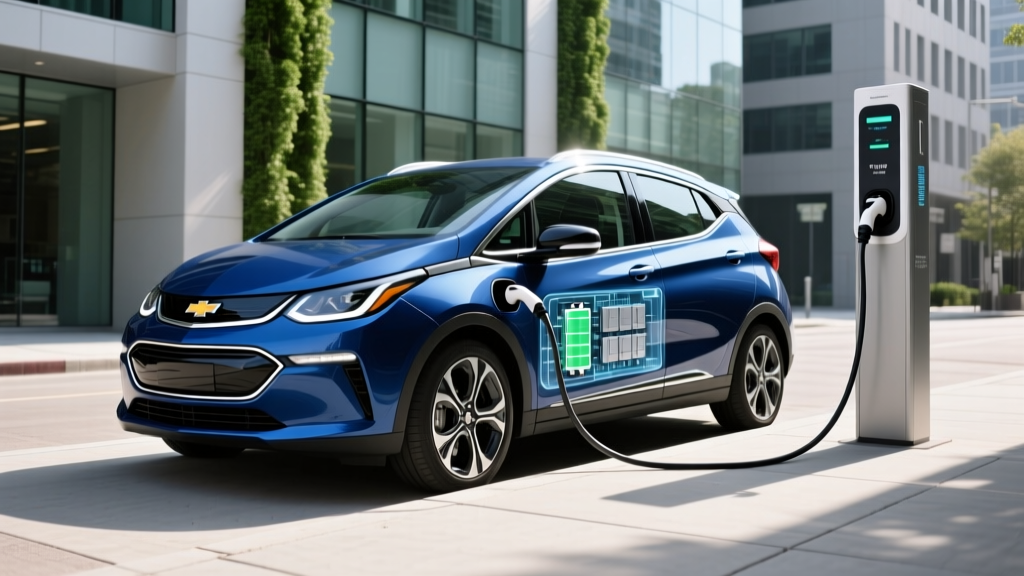
The 2024 Chevrolet Bolt EV 2LT MSRP of $30,695 made it one of the most affordable long-range electric vehicles on the US market before production ended in December 2023. With 259 miles of EPA-estimated range, a usable 65 kWh NMC battery, and federal tax credit eligibility under IRS §30D rules, the Bolt EV 2LT remains a compelling buy on dealer lots and in the used-EV market through 2026. It's not the fastest-charging EV you'll find, but for daily commuting and city driving, few vehicles deliver this much electric range for the dollar.
| Spec | Value |
|---|---|
| EPA Range | 259 miles |
| Battery (Usable) | ~65 kWh, NMC (nickel manganese cobalt) |
| EPA Efficiency | 120 MPGe combined / 28 kWh/100 mi |
| Motor Output | 200 hp / 266 lb-ft torque |
| 0–60 mph | ~6.5 seconds |
| Drivetrain | FWD, single-speed reduction gear |
| Max DC Fast Charge | 55 kW (CCS1) |
| Level 2 Charge Rate | 11.5 kW (48A) |
| Cargo Volume | 57.0 cu ft (rear seats folded) |
| Base MSRP (2LT) | $30,695 (incl. destination) |
| Battery Warranty | 8 yr / 100,000 mi |
Range and Real-World Efficiency
The EPA rates the 2024 Bolt EV at 259 miles for both the 1LT and 2LT trims. That figure comes from the car's combined city/highway test cycle, and the Bolt's efficiency profile heavily favors city driving thanks to aggressive regenerative braking and the stop-and-go advantage all EVs enjoy.
Real-World Range Expectations
EPA Sticker: 259 miles
City/Mixed Commute (65–75°F): 260–280 mi — the Bolt often exceeds its EPA number in urban driving
Highway (70–75 mph sustained): 210–230 mi — the blunt aerodynamics and tall ride height hurt at speed
Cold Weather (below 32°F): 175–210 mi — NMC chemistry without a heat pump sees 20–35% range loss in freezing temps
The Bolt EV lacks a heat pump, relying instead on resistive cabin heating. In sub-freezing conditions, that resistance heater draws significant energy from the traction battery, compounding the natural slowdown in lithium-ion cell kinetics. Owners in northern climates should plan for roughly 180–200 miles of usable winter range and charge more frequently.
At 120 MPGe combined (28 kWh per 100 miles), the Bolt EV is efficient by EV standards. On fueleconomy.gov, it ranks among the top compact EVs for efficiency, trailing only the lighter, more aerodynamic Tesla Model 3 and Hyundai Ioniq 6. At the US average electricity rate of ~$0.17/kWh, filling the 65 kWh pack from empty costs roughly $11 — about one-quarter the cost of fueling a comparable 30 MPG gas car for the same distance.
Charging Speed: The Bolt's Biggest Compromise
If the Bolt EV has an Achilles' heel, it's DC fast charging. The 2024 model peaks at just 55 kW on a CCS1 connector. For context, competitors like the Hyundai Kona Electric charge at up to 100+ kW, and the Tesla Model 3 peaks at 250 kW on Superchargers.
| Charge Level | Power / Current | Rate (mi/hr added) | Notes |
|---|---|---|---|
| Level 1 (120V) | 1.2 kW (12A) | ~4 mi/hr | Standard household outlet; overnight recovery only |
| Level 2 (240V) | 11.5 kW (48A) | ~39 mi/hr | Full charge in ~7 hours; requires 60A circuit |
| DC Fast (CCS1) | 55 kW peak | ~150 mi/hr (at peak) | 10–80% in ~55 min; tapers sharply above 60% |
The 10–80% DC fast charge takes approximately 55 minutes under ideal conditions. The charge curve is relatively flat up to about 55–60% state of charge (SoC), then tapers steeply. From 80–100%, expect another 45+ minutes — GM's battery management system prioritizes cell longevity over charging speed.
For daily driving, this is a non-issue if you have Level 2 home charging. Plug in overnight, wake up to a full battery, and the 55 kW DC limit only matters on road trips longer than 200 miles. Plan for one 45–60 minute stop on a 400-mile journey. If you regularly drive long highway corridors, a faster-charging EV will save you significant time.
The onboard Level 2 charger is a highlight: at 11.5 kW (48 amps), it's one of the most powerful AC chargers in its class. You'll need a hardwired Level 2 station on a dedicated 60-amp circuit to take full advantage. Most home installations cost $800–$2,000 including equipment and electrician labor, depending on panel proximity and local permitting.
Performance and Drivetrain
A single front-mounted permanent-magnet motor delivers 200 horsepower and 266 lb-ft of torque to the front wheels through a single-speed reduction gear. The 0–60 mph sprint takes approximately 6.5 seconds — quick for a compact hatchback and more than adequate for highway merging.
Instant torque delivery makes the Bolt feel punchier than its numbers suggest around town. The low center of gravity (battery pack under the floor) gives it composed handling for a tall hatchback, though the eco-oriented Michelin Energy Saver tires prioritize rolling resistance over grip. Regenerative braking offers two modes: one-pedal driving via a steering-wheel paddle that brings the car to a complete stop, or a traditional coast-and-brake feel in standard drive mode.
There is no all-wheel-drive option, and the Bolt EV is not rated for towing. This is a front-wheel-drive commuter, optimized for efficiency and urban agility, not performance driving or hauling.
Interior, Tech, and the 2LT Advantage
The 2LT trim is where most buyers should aim. For the $30,695 MSRP (which includes the $1,295 destination charge), you get significant upgrades over the 1LT ($26,500 MSRP):
- Heated front seats and heated steering wheel
- Bose premium 7-speaker audio system
- Wireless phone charging pad
- Leather-appointed seating surfaces
- Surround-view camera system
- Auto-dimming rearview mirror
The infotainment system centers on a 10.2-inch diagonal touchscreen running Chevrolet Infotainment 3 Plus with wireless Apple CarPlay and Android Auto. The interface is responsive and logically organized, with physical knobs for volume and tuning — a practical choice over all-touch controls.
The driver-assist suite (Chevy Safety Assist) includes automatic emergency braking with pedestrian detection, forward collision alert, lane-keeping assist with lane departure warning, following distance indicator, and IntelliBeam automatic high beams. Adaptive cruise control is available but not standard. This is an SAE Level 1–2 driver-assist system — it does not steer or accelerate autonomously and requires full driver attention at all times.
Cargo space is generous for the segment: 57.0 cubic feet with the 60/40 rear seatback folded, and 56.2 cubic feet behind the rear seats (measured to the ceiling). Rear legroom is 35.9 inches — adequate for adults on shorter trips but tighter than a Tesla Model Y or VW ID.4. The Bolt EUV (the longer-wheelbase sibling, also discontinued after 2023) offered 39.1 inches of rear legroom if back-seat comfort is a priority.
Pricing, Trims, and Federal Tax Credit Eligibility
Chevrolet slashed Bolt EV pricing dramatically for the 2024 model year before ending production. Here's the MSRP structure:
| Trim | MSRP (incl. destination) | Max §30D Credit | Effective Price (if eligible) |
|---|---|---|---|
| 1LT | $26,500 | Up to $7,500 | As low as ~$19,000 |
| 2LT | $30,695 | Up to $7,500 | As low as ~$23,195 |
IRS §30D Federal Tax Credit — Key Requirements
The Bolt EV has historically qualified for the full $7,500 federal credit, but eligibility depends on several buyer and vehicle criteria under current IRS rules (irs.gov):
- MSRP Cap: Must be ≤ $55,000 for cars (Bolt qualifies at $30,695)
- Buyer Income Cap: AGI ≤ $150,000 single / $300,000 married filing jointly
- Battery Sourcing: Critical minerals and battery components must meet escalating domestic-content thresholds — verify current-year compliance on the IRS qualified vehicles list
- Point-of-Sale Transfer: As of 2024, eligible buyers can transfer the credit to the dealer for an immediate price reduction at purchase rather than waiting to claim it on their tax return
- Assembly: Must be assembled in North America (Bolt built in Orion Township, Michigan — qualifies)
Note: §30D rules and qualified-vehicle lists are updated periodically. Confirm the Bolt EV's current status on the IRS Clean Vehicle Provisions page and consult a tax professional for your specific situation.
For buyers shopping in 2026, remaining new-old-stock 2024 Bolt EVs are scarce. Most purchases will be through the used-EV market, where the §25E used clean vehicle credit applies: up to $4,000 or 30% of the sale price (whichever is less) for EVs priced at $25,000 or below, subject to lower income caps ($75,000 single / $150,000 joint).
Battery Longevity and Warranty
The Bolt EV's 65 kWh (usable) battery pack uses NMC (nickel manganese cobalt) lithium-ion cells supplied by LG Energy Solution. This is the same chemistry used in most long-range EVs, offering high energy density but requiring careful thermal management to minimize degradation.
GM warrants the battery for 8 years or 100,000 miles (whichever comes first), guaranteeing it will retain at least 60% of original capacity during that period. In practice, Bolt owners report modest degradation — typically 5–8% capacity loss over the first 60,000 miles based on community data from Bolt forums and Recurrent Auto's fleet analysis. The active liquid thermal management system helps protect the pack from extreme heat and cold damage.
The Bolt EV was subject to a major battery recall in 2021–2022 (defective cells from a specific LG manufacturing batch that posed a fire risk). GM replaced affected modules with updated cells, and all 2024 models left the factory with the corrected battery hardware. If buying a used 2022–2023 Bolt, verify the recall remedy was completed by checking the VIN on NHTSA.gov.
Pros, Cons, and Who Should Buy
Pros
- 259 miles EPA range at a sub-$31K MSRP — best range-per-dollar in its class
- 11.5 kW Level 2 onboard charger — faster home charging than most rivals
- Spacious hatchback cargo area (57 cu ft)
- One-pedal driving with full stop capability
- Full $7,500 §30D credit eligibility (when sourcing rules are met)
- Proven, simple powertrain with low maintenance costs
Cons
- 55 kW DC fast charging — painfully slow for road trips
- No heat pump — significant winter range loss
- CCS1 connector — no native NACS/Tesla Supercharger access (adapter required, availability limited)
- Production ended Dec 2023 — limited new inventory, uncertain parts timeline
- Modest rear-seat legroom vs. crossover competitors
- No adaptive cruise control standard
Who the 2024 Bolt EV 2LT Is For
Choose the Bolt EV if: You commute 30–80 miles daily, have Level 2 home charging, rarely road-trip beyond 200 miles, and want maximum range per dollar. It's ideal as a primary commuter or a second household car.
Look elsewhere if: You regularly drive 300+ mile highway trips (the 55 kW charging will frustrate you), need AWD for snow-belt winters, want Supercharger network access, or require three-across rear seating. Consider the Hyundai Kona Electric, Tesla Model 3, or upcoming next-gen Bolt (announced for 2026+ with NACS and faster charging) instead.
Frequently Asked Questions
What is the real-world range of the 2024 Chevrolet Bolt EV?
The EPA rates it at 259 miles combined. In warm-weather city driving, owners often see 260–280 miles. Sustained highway driving at 70+ mph drops that to 210–230 miles, and freezing winter conditions can reduce range to 175–210 miles due to the lack of a heat pump.
How fast does the Bolt EV charge at home and on DC fast chargers?
At home on a 240V Level 2 charger, the Bolt accepts up to 11.5 kW, adding about 39 miles of range per hour and fully charging in roughly 7 hours. On DC fast chargers, it peaks at 55 kW, taking approximately 55 minutes from 10–80% SoC. That's slow by modern standards — plan road-trip stops accordingly.
Does the 2024 Bolt EV qualify for the $7,500 federal tax credit?
The Bolt EV has qualified for the full §30D credit, but eligibility depends on current IRS battery-sourcing requirements, your adjusted gross income (≤$150K single / ≤$300K joint), and the vehicle's MSRP (well under the $55K car cap). Always verify on the IRS qualified vehicles list before purchasing, as the list updates periodically.
Is the 2024 Bolt EV still available to buy new?
GM ended Bolt EV production in December 2023. As of 2026, remaining new-old-stock units are extremely rare. Most buyers will find the Bolt on the used market, where it qualifies for the §25E used-EV credit (up to $4,000) if priced at $25,000 or below and buyer income requirements are met.
How does the Bolt EV compare to the Tesla Model 3 and Hyundai Kona Electric?
The Bolt EV wins on price-per-mile-of-range but loses on DC charging speed (55 kW vs. 250 kW for Model 3, ~100 kW for Kona). The Model 3 offers Supercharger network access, better highway efficiency, and more rear legroom. The Kona Electric charges faster and offers a more modern interior. If road-trip charging matters, both are stronger choices. If budget and daily commuting range matter most, the Bolt remains hard to beat.
What is the battery warranty on the 2024 Bolt EV?
GM covers the high-voltage battery and electric drive components for 8 years or 100,000 miles, whichever comes first, with a minimum 60% capacity retention guarantee.