Quick Verdict: A Comfortable Cruiser With Charging Quirks
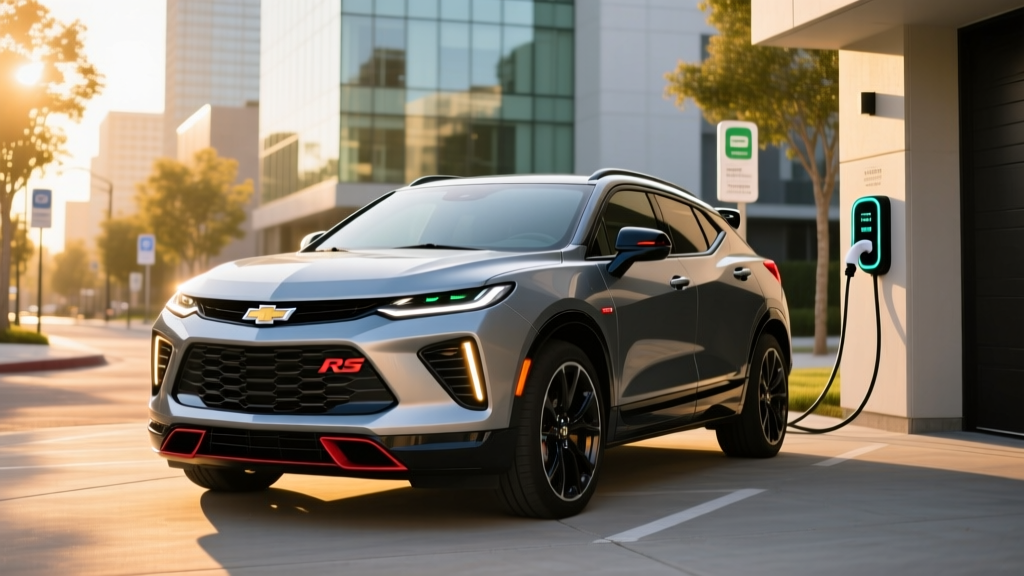
The 2024 Chevrolet Blazer EV RS occupies an unusual space in the midsize electric SUV segment. Built on GM's Ultium platform, it delivers a spacious cabin, competitive EPA range, and the promise of access to Tesla's Supercharger network via adapter. But a rocky launch plagued by software glitches and a recall for brake-system issues means prospective buyers — especially those shopping used or leftover 2024 inventory in 2026 — need to verify that all recall work and over-the-air updates have been completed before signing.
If you're evaluating a 2024 Blazer EV RS today, here's what matters: you're getting a 321-mile EPA range (RWD), a usable 102 kWh battery, and a comfortable daily driver that charges respectably on DC fast chargers but trails Hyundai/Kia's 800V rivals in peak speed. The RS trim starts around $50,300 before incentives, and federal tax credit eligibility is complex — more on that below.
| Spec | RS (RWD) | RS (AWD) |
|---|---|---|
| EPA Range | 321 mi | 279 mi |
| Battery (Usable) | 102 kWh (NMC, Ultium) | |
| Max DC Fast Charge | 190 kW (peak) | |
| 10–80% DC Charge Time | ~34 min (est.) | |
| Level 2 Home Charge | 11.5 kW / ~34 mi/hr | |
| Horsepower | 340 hp | 288 hp |
| 0–60 mph | ~6.2 sec | ~7.0 sec |
| Drivetrain | RWD (single motor) | AWD (dual motor) |
| Efficiency | ~92 MPGe | ~87 MPGe |
| Base MSRP (2024) | $50,300 (RS 2LT RWD) | |
| Battery Warranty | 8 yr / 100,000 mi | |
Range & Efficiency: 321 Miles on Paper, Less on the Interstate
The 2024 Blazer EV RS in rear-wheel-drive form carries an EPA-estimated 321 miles of range, according to fueleconomy.gov. That's competitive with the Ford Mustang Mach-E Extended Range and slightly behind the Hyundai Ioniq 5 Long Range. The AWD RS drops to 279 miles — a meaningful hit if you regularly face mountain passes or northern winters.
EPA: 321 mi (RWD) — Expect roughly 270–290 miles on a mixed highway trip at 70–75 mph in moderate temperatures. In cold weather (below 30°F), plan for 220–250 miles before needing a charger. The Blazer EV's large 102 kWh pack provides a buffer, but the vehicle's 5,800+ lb curb weight and boxy SUV profile work against highway efficiency. Efficiency sits around 36–38 kWh/100 mi in mixed driving, which is average for the class but trails the more aerodynamic Ioniq 5.
For daily commuting under 80 miles round-trip, most owners will charge at home two to three times per week and rarely think about range. The real test comes on road trips, where the Blazer EV's charging speed — not its range — becomes the limiting factor.
Charging: 190 kW Peak, NACS Adapter Included
The Blazer EV uses GM's Ultium battery architecture with a maximum DC fast-charge rate of 190 kW. That's adequate but not class-leading. The Hyundai Ioniq 5 and Kia EV6, with their 800V architectures, can peak above 235 kW and sustain higher rates deeper into the charge curve.
| Level | Power | Speed (Approx.) | Best For |
|---|---|---|---|
| Level 1 (120V) | ~1.4 kW | ~4 mi/hr | Emergency / overnight trickle |
| Level 2 (240V, 48A) | 11.5 kW | ~34 mi/hr | Home daily charging (~9 hrs 0–100%) |
| DC Fast Charge | 190 kW (peak) | ~175 mi in 30 min (ideal) | Road trips; 10–80% in ~34 min |
Charging curve reality: The Blazer EV will hit its 190 kW peak only at a low state of charge (roughly 5–20% SoC) on a compatible 350 kW charger. Expect the rate to taper to ~120 kW around 50% SoC and drop below 60 kW past 80%. This is normal lithium-ion behavior, but it means the last 20% takes nearly as long as the first 50%. Plan road-trip stops to charge from 10–80% and move on rather than topping off to 100%.
Home charging: With an 11.5 kW onboard charger, a Level 2 home station (requiring a 60-amp circuit) will add roughly 34 miles of range per hour. A full charge from empty takes about 9 hours — easily accomplished overnight. Budget $500–$1,500 for a quality Level 2 home charger (ChargePoint Home Flex, Emporia Level 2, or similar) plus electrician installation, which may require a panel upgrade in older homes.
NACS / Supercharger access: The 2024 Blazer EV ships with a CCS1 port. GM provides a NACS adapter (or has made one available) to access Tesla Supercharger stations — a significant advantage for road-trip charging infrastructure. Confirm adapter availability with your dealer, as supply was inconsistent during the 2024 launch period.
Performance & Driving Dynamics
The RS trim in RWD configuration produces 340 horsepower and 325 lb-ft of torque from a single rear motor, delivering a 0–60 mph time of approximately 6.2 seconds. The AWD variant uses dual motors for 288 hp and 355 lb-ft, with a slightly slower 0–60 of around 7.0 seconds. The higher-output SS trim (557 hp, ~4.0 sec 0–60) was announced for 2024 but experienced significant delays — check current availability before budgeting for it.
On the road, the Blazer EV RS prioritizes comfort over sportiness. The ride is well-damped, the cabin is quiet at highway speeds, and the steering is light but predictable. Regenerative braking offers multiple levels selectable via steering-wheel paddles, including a one-pedal driving mode that can bring the vehicle to a complete stop. It's not a performance SUV — it's a comfortable family hauler that happens to be electric.
Towing: When properly equipped, the Blazer EV can tow up to 1,500 lbs — enough for a small utility trailer or a pair of dirt bikes, but not a camper. Towing will reduce range by 30–50% depending on weight and terrain.
Interior, Tech & Cargo Space
The Blazer EV's cabin is one of its stronger selling points. The RS trim features a 17.7-inch diagonal infotainment touchscreen angled toward the driver, paired with an 11-inch digital instrument cluster. Wireless Apple CarPlay and Android Auto are standard. Physical buttons for climate control are minimal — most adjustments route through the touchscreen, which drew criticism during the vehicle's early software issues.
Passenger space:
- Front legroom: 43.2 inches
- Rear legroom: 39.0 inches
- Front headroom: 40.1 inches
- Rear headroom: 38.8 inches
Cargo volume:
- Behind rear seats: 27.4 cu ft
- Rear seats folded: 57.0 cu ft
- Front trunk (frunk): Not available — the Ultium platform in this configuration does not include a frunk, which is a notable omission vs. the Mach-E and Ioniq 5.
Driver assistance: The Blazer EV comes equipped with Chevy Safety Assist, a Level 2 (SAE) driver-assist suite including adaptive cruise control, lane-keeping assist, automatic emergency braking, and blind-spot monitoring. GM's Super Cruise hands-free highway driving system is available on higher trims — a genuine differentiator that allows hands-off driving on over 400,000 miles of mapped highways. Note: Super Cruise is a Level 2 system requiring driver attention; it is not autonomous driving.
The 2024 Blazer EV was subject to a stop-sale and recall in early 2024 due to electrical system and brake-related software faults. GM issued over-the-air updates and dealer-applied fixes. If purchasing a used or leftover 2024 model, verify with the dealer that all recall campaigns (NHTSA recall numbers) have been completed and that the vehicle's software is current. Check the VIN at nhtsa.gov/recalls.
Pricing, Trims & Federal Tax Credit
The 2024 Blazer EV RS launched with a base MSRP of approximately $50,300 for the 2LT RWD configuration. The RS AWD starts around $54,200, and a well-equipped RS with packages can reach $58,000–$62,000. The SS trim was listed above $60,000 but availability has been limited.
| Trim | Drivetrain | Base MSRP |
|---|---|---|
| 2LT | RWD | $44,600 |
| RS | RWD | $50,300 |
| RS | AWD | $54,200 |
| SS | AWD | $60,400 (limited) |
Does the 2024 Blazer EV Qualify for the Federal EV Tax Credit?
This is where it gets complicated. Under current IRS §30D rules, the Blazer EV's eligibility for the full $7,500 federal tax credit depends on several factors:
- MSRP cap: SUVs must be under $80,000 MSRP — the Blazer EV clears this.
- Buyer income cap: Modified AGI must not exceed $150,000 (single), $225,000 (head of household), or $300,000 (joint).
- Battery sourcing: The critical-minerals and battery-component requirements have tightened annually since 2024. GM's Ultium batteries are assembled in the U.S., but critical-mineral sourcing compliance varies by production date. Check the specific VIN on the IRS portal or with your tax professional — eligibility is not guaranteed for every Blazer EV built in 2024.
- Point-of-sale transfer: As of 2024, eligible buyers can transfer the credit to the dealer at purchase, reducing the purchase price directly rather than waiting for a tax refund.
If eligible, a $7,500 credit brings the RS RWD from ~$50,300 to an effective ~$42,800. Combined with typical state incentives (which vary widely — check afdc.energy.gov for your state), the value proposition improves substantially. But never assume eligibility; verify your specific situation with a tax professional and the IRS Clean Vehicle credit lookup tool.
Ownership Costs & Warranty
Battery & powertrain warranty: GM covers the Blazer EV's battery and electric drive components for 8 years or 100,000 miles, whichever comes first. The warranty guarantees the battery will retain at least 70% of its original capacity during that period. The limited vehicle warranty is 3 years / 36,000 miles.
Estimated 5-year operating costs:
- Electricity (home charging, $0.14/kWh national avg): ~$4,200 for 60,000 miles
- Gasoline equivalent (25 MPG SUV, $3.50/gal): ~$8,400 for 60,000 miles
- Maintenance savings: No oil changes, fewer brake replacements (regen braking reduces pad wear). Expect to save $1,500–$2,500 vs. a comparable gas SUV over 5 years.
- Insurance: EV insurance premiums run 10–20% higher than gas equivalents. Budget $1,800–$2,400/year depending on your profile.
Pros & Cons
Pros
- 321-mile EPA range (RWD) is competitive for the class
- Spacious cabin with generous rear legroom (39 in)
- Available Super Cruise hands-free driving
- NACS adapter unlocks Tesla Supercharger network
- Comfortable, quiet ride quality
- Large 102 kWh battery provides range buffer
Cons
- 190 kW peak DC charge rate trails 800V rivals
- No frunk — lost cargo opportunity
- Rocky 2024 launch with software recalls
- Tax credit eligibility uncertain per VIN
- AWD range drops significantly (279 mi)
- Heavy at 5,800+ lbs; efficiency suffers at highway speed
Who Should Buy the 2024 Blazer EV RS?
Choose the Blazer EV RS if: You want a comfortable, spacious midsize EV for commuting and family duty, you can charge at home, you value Super Cruise for highway driving, and you're buying at a price where the tax credit brings it under $45,000 effective.
Look elsewhere if: You need the fastest road-trip charging (Ioniq 5/EV6), you want a frunk for gear storage, you regularly tow more than 1,500 lbs, or you need guaranteed AWD range above 300 miles (consider the Rivian R1S or a Tesla Model X).
Frequently Asked Questions
What is the real-world range of the 2024 Blazer EV RS?
The EPA rates the RWD at 321 miles and AWD at 279 miles. In real-world highway driving at 70–75 mph, expect 270–290 miles (RWD) and 235–255 miles (AWD). Cold weather below 30°F can reduce range by an additional 15–25%.
How fast does it charge at home and on the road?
At home on a Level 2 (240V, 48A) charger, the Blazer EV adds ~34 miles per hour and fully charges in ~9 hours. On a DC fast charger, it peaks at 190 kW and can go from 10–80% in approximately 34 minutes under ideal conditions.
Does the 2024 Blazer EV qualify for the $7,500 federal tax credit?
It can, but eligibility depends on your income, the vehicle's MSRP, and battery-component/critical-mineral sourcing per IRS §30D rules. Verify your specific VIN's eligibility on the IRS portal or with a tax professional before relying on the credit.
Is the Blazer EV RS worth buying vs. the Hyundai Ioniq 5 or Ford Mach-E?
The Blazer EV RS wins on cabin space and available Super Cruise but loses on DC charging speed and lacks a frunk. If fast road-trip charging is a priority, the Ioniq 5's 800V system is superior. If you want a proven platform with strong dealer support, the Mach-E is a safer bet. The Blazer EV makes sense if you value comfort, space, and GM's Super Cruise system.
Were the 2024 Blazer EV's software problems fixed?
GM issued recalls and over-the-air updates to address the early electrical and brake-system software faults. If buying a 2024 model, confirm all recall work is complete by checking the VIN at nhtsa.gov/recalls and asking the dealer for documentation.