Quick Verdict: The Electric Flagship That Doesn't Feel Like a Compromise
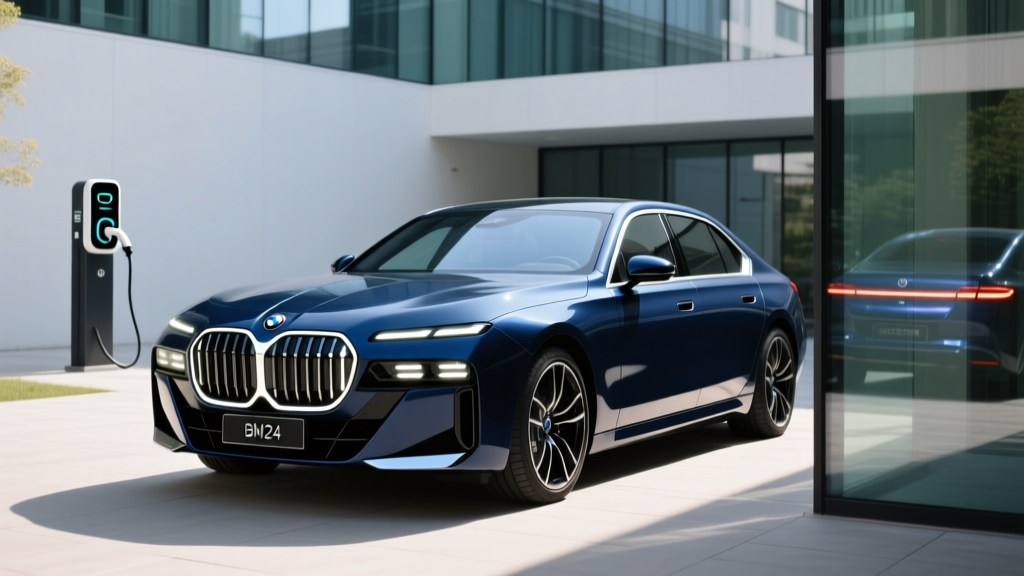
The 2024 BMW i7 is the automaker's all-electric flagship sedan, and it makes a compelling case that full-size luxury and battery-electric propulsion are fully compatible. Built on the same CLAR platform as the 7 Series, the i7 delivers up to 318 miles of EPA-estimated range (in xDrive50 guise), a cabin dripping with technology, and the kind of highway refinement that makes 300-mile road trips genuinely relaxing. But with a base price north of $120,000 and a sedan body in an SUV-obsessed market, the i7 is a deliberate choice — one that rewards buyers who prioritize driving dynamics and interior craftsmanship over cargo volume.
For 2024, BMW expanded the lineup with the high-performance M70 variant, pushing output to 650 horsepower. Both models share the same 101.7 kWh battery pack, DC fast-charging capability up to 195 kW, and BMW's latest iDrive 8.5 infotainment system. Here's everything you need to know before signing the paperwork.
Range, Efficiency & Real-World Expectations
xDrive50: EPA 318 miles | M70 xDrive: EPA 295 miles
Real-world expectation: In mixed driving at 70-75 mph highway speeds, expect approximately 265-285 miles from the xDrive50 and 245-265 miles from the M70. In cold weather (below 32°F), plan for a 15-25% reduction, dropping the xDrive50 to roughly 240-270 miles. City driving with regenerative braking can push the xDrive50 past its EPA estimate, as is typical for large EVs.
The i7 xDrive50 earns an EPA-rated 82 MPGe combined (85 city / 79 highway), translating to roughly 41 kWh per 100 miles. The M70 drops to approximately 74 MPGe combined due to its more aggressive powertrain calibration and wider tires. These efficiency figures are competitive for a 5,800-pound luxury sedan but trail lighter rivals like the Tesla Model S (124 MPGe) and Mercedes EQS (97 MPGe).
The battery pack is an NMC (nickel-manganese-cobalt) lithium-ion unit with 101.7 kWh of usable capacity. BMW does not offer an LFP option in the i7 — NMC chemistry is standard in this segment for its higher energy density, which is critical for packaging enough range into a sedan floorpan without compromising cabin space.
Charging Speed: DC Fast, Level 2 & Home Setup
| Charging Level | Max Power | Speed / Time | Connector |
|---|---|---|---|
| Level 1 (120V) | ~1.4 kW | ~3-4 miles per hour | J1772 / NACS (with adapter) |
| Level 2 (240V, 48A) | 11 kW (onboard limit) | ~25-28 miles per hour; 0-100% in ~11 hours | J1772 / NACS (with adapter) |
| DC Fast Charge | 195 kW peak | 10-80% in ~34 minutes | CCS1 / NACS (2024 models ship with NACS port) |
The i7's 195 kW peak DC fast-charge rate is solid but not class-leading. The Hyundai Ioniq 5 and Kia EV9 hit 350 kW on 800V architectures, though those vehicles are in different price segments. In real-world DC charging, the i7 sustains roughly 150-180 kW from 10% to about 50% State of Charge, then tapers progressively. Expect a typical 10-80% session to take 34-38 minutes at a functioning 200+ kW station.
For home charging, BMW includes a Flexible Fast Charger with the vehicle. To achieve the full 11 kW Level 2 rate, you'll need a 240V, 60-amp circuit (the charger draws 48 amps continuously). Professional installation of a dedicated circuit typically runs $600-$1,500 depending on your panel's proximity to the garage. The i7's 11 kW onboard charger means an overnight charge from 20% to 100% takes roughly 9-10 hours — more than enough for daily driving.
Note: The 2024 i7 ships with a NACS (North American Charging Standard) port, granting native access to Tesla Supercharger stations. For legacy CCS1 networks like Electrify America, BMW provides a NACS-to-CCS adapter.
Performance & Drivetrain
| Specification | xDrive50 | M70 xDrive |
|---|---|---|
| Drivetrain | Dual-motor AWD | Dual-motor AWD |
| Horsepower | 536 hp | 650 hp (657 with M Launch Control) |
| Torque | 553 lb-ft | 749 lb-ft (with M Launch Control) |
| 0-60 mph | 4.5 seconds | 3.5 seconds |
| Top Speed | 130 mph (electronically limited) | 155 mph |
| Curb Weight | ~5,995 lbs | ~6,195 lbs |
Both i7 variants use a dual-motor all-wheel-drive configuration with BMW's fifth-generation eDrive technology. The rear motor is a current-excited synchronous unit (no permanent magnets, eliminating rare-earth dependency), while the front motor is an induction unit that can decouple for efficiency during light-load cruising.
The xDrive50's 4.5-second 0-60 time is effortlessly quick for a full-size sedan — the kind of acceleration that makes highway merging and passing completely stress-free. The M70's 3.5-second sprint enters sports-car territory, though the 6,200-pound curb weight is always present through corners. Air suspension with adaptive dampers is standard, and the ride quality in Comfort mode is genuinely isolating. The M70 adds stiffer tuning and rear-axle steering for sharper handling, but it sacrifices some of the xDrive50's plushness.
Pricing, Trims & Federal Tax Credit Eligibility
| Trim | Base MSRP | As-Tested (Typical) | §30D Tax Credit Eligible? |
|---|---|---|---|
| xDrive50 | $120,295 | $130,000-$145,000 (with options) | No (exceeds MSRP cap) |
| M70 xDrive | $169,695 | $175,000-$190,000 | No (exceeds MSRP cap) |
The 2024 BMW i7 does not qualify for the $7,500 federal EV tax credit under IRS §30D rules. The reason is straightforward: the §30D credit caps eligible sedans at an MSRP of $55,000 (SUVs, vans, and trucks are capped at $80,000). As a sedan priced from $120,295, the i7 is well above the threshold. This is a structural limitation of the current incentive framework for luxury sedans — the Mercedes EQS, Tesla Model S, and Porsche Taycan face the same exclusion.
Buyers should also verify IRS §30D eligibility rules regarding income caps ($300,000 joint / $150,000 single) and battery critical-mineral sourcing requirements, though these are moot points given the MSRP disqualification. Some states offer their own EV incentives that may not carry the same price caps — check your local DMV or energy office for details.
Interior, Cargo & Technology
The i7's cabin is where the six-figure price tag starts to make sense. Standard equipment includes BMW's Curved Display (12.3-inch instrument cluster + 14.9-inch touchscreen running iDrive 8.5), a panoramic LED-lit roof, heated and ventilated front seats, a head-up display, and the Highway Assistant (BMW's Level 2 hands-free driving system for divided highways at up to 85 mph).
Key dimensions:
- Rear legroom: 42.8 inches (class-leading for electric sedans)
- Front legroom: 40.9 inches
- Trunk volume: 17.7 cubic feet (competitive with the Audi A8 and Mercedes S-Class)
- No frunk: The i7 does not include a front trunk; the hood houses HVAC and power electronics
The optional 31.3-inch Theater Screen for rear passengers — an 8K display that drops from the ceiling — is the i7's signature party trick. Paired with the available Bowers & Wilkins Diamond Surround Sound system (1,965 watts, 36 speakers), it transforms the rear seat into a private cinema. This option alone costs roughly $6,500 and is unique in the segment.
The Highway Assistant is BMW's SAE Level 2 driver-assistance system. It allows hands-off driving on mapped divided highways at speeds up to 85 mph, but the driver must keep eyes on the road (monitored by a driver-facing camera). This is not autonomous driving — it is an advanced cruise-and-lane-centering system similar in concept to GM's Super Cruise or Ford's BlueCruise. The system is impressive on long interstate hauls but will not navigate city streets or construction zones independently.
Warranty, Battery Longevity & Ownership Costs
BMW backs the 2024 i7 with the following coverage:
- Limited vehicle warranty: 4 years / 50,000 miles
- Battery & electric powertrain warranty: 8 years / 100,000 miles (covers capacity loss below 70% of original)
- Complimentary maintenance: 3 years / 36,000 miles
- Roadside assistance: 4 years / unlimited miles
The 70% capacity retention threshold over 8 years is industry-standard, matching Tesla, Mercedes, and Audi. Based on NMC degradation data from fueleconomy.gov and long-term fleet studies, most modern NMC packs lose roughly 8-12% capacity over the first 100,000 miles when not routinely charged to 100%. BMW's battery thermal management system is liquid-cooled and actively preconditioned, which should keep degradation within acceptable bounds for most owners.
Insurance premiums for the i7 tend to run 25-40% higher than equivalent gas-powered 7 Series models, driven by the vehicle's repair costs, battery replacement value, and performance. Expect annual premiums of $3,500-$5,000 depending on your profile and state. Charging at home at the national average of $0.16/kWh costs roughly $16 for a full 0-100% charge — approximately $0.05 per mile, compared to $0.15-$0.20 per mile for a gas-powered 7 Series at $3.50/gallon.
How the i7 Stacks Up Against Key Competitors
| Spec | BMW i7 xDrive50 | Mercedes EQS 580 | Tesla Model S Plaid | Lucid Air Grand Touring |
|---|---|---|---|---|
| EPA Range | 318 mi | 371 mi | 396 mi | 516 mi |
| 0-60 mph | 4.5 sec | 4.1 sec | 1.99 sec | 3.0 sec |
| Peak DC Charge | 195 kW | 200 kW | 250 kW | 300+ kW |
| Base MSRP | $120,295 | $127,350 | $89,990 | $125,600 |
| §30D Tax Credit | No | No | Eligible (sedan cap) | No |
| Rear Legroom | 42.8 in | 41.5 in | 35.4 in | 37.6 in |
The i7 trades outright range for interior quality, rear-seat comfort, and driving refinement. The Lucid Air Grand Touring dominates on efficiency and range (516 miles EPA). The Tesla Model S Plaid is faster and cheaper but has a spartan interior and aging platform. The Mercedes EQS offers more range and a comparable luxury experience but draws criticism for its one-piece Hyperscreen learning curve and less engaging driving dynamics.
Choose the i7 xDrive50 if: You want the best rear-seat experience in an electric sedan, value traditional luxury craftsmanship over minimalist tech aesthetics, frequently drive highway commutes where the Highway Assistant shines, and don't need maximum range.
Look elsewhere if: Range is your top priority (Lucid Air), you want track-level performance (Model S Plaid), you need SUV cargo space, or you want to maximize federal tax credit savings (Tesla Model S is the only competitor here that qualifies).
Pros, Cons & Final Assessment
- Class-leading rear-seat legroom (42.8 in) and optional Theater Screen
- Exceptional highway refinement and cabin quietness
- Highway Assistant hands-free driving on divided highways
- 318-mile EPA range adequate for most daily and road-trip use
- NACS port provides native Tesla Supercharger access
- Air suspension delivers outstanding ride quality
- Does not qualify for the $7,500 federal EV tax credit (MSRP cap)
- No front trunk (frunk) — lost cargo opportunity
- DC charging at 195 kW is outpaced by 800V competitors
- Heavy at ~6,000 lbs; efficiency suffers vs. lighter EVs
- Sedan body limits cargo vs. luxury EV SUVs
- High insurance premiums relative to ICE 7 Series
The 2024 BMW i7 is not the most efficient, fastest-charging, or longest-range electric sedan on the market. What it is, arguably, is the most complete luxury experience in the EV flagship segment — a car that makes no apologies for its size, weight, or price, and instead delivers on the traditional luxury sedan promise with electric-motor smoothness. If your budget allows and your lifestyle suits a large sedan, the i7 is genuinely excellent at what it does.
Frequently Asked Questions
What is the real-world range of the 2024 BMW i7?
In mixed driving with moderate highway use, the xDrive50 typically delivers 265-285 miles per charge. Highway-only driving at 75+ mph drops this to roughly 250-270 miles. Cold weather (below freezing) can reduce range by 15-25%, so plan for 240-270 miles in winter conditions. The M70 variant returns approximately 20-30 fewer miles due to its performance tuning.
How fast does the 2024 BMW i7 charge at home and on the road?
At home on a 240V Level 2 charger (48 amps), the i7 charges at up to 11 kW, adding roughly 25-28 miles of range per hour. A full 0-100% charge takes about 11 hours. On DC fast chargers, the i7 peaks at 195 kW and can go from 10% to 80% in approximately 34 minutes, though sustained speeds average 150-180 kW through the mid-range of the charge curve.
Does the 2024 BMW i7 qualify for the federal EV tax credit?
No. Under current IRS §30D rules, sedans must have an MSRP at or below $55,000 to qualify. The i7 starts at $120,295, well above the cap. State-level incentives may still apply depending on your jurisdiction.
Is the BMW i7 worth buying over the Mercedes EQS or Lucid Air?
It depends on your priorities. The i7 wins on rear-seat comfort, build quality, and traditional luxury feel. The Lucid Air wins decisively on range (516 vs. 318 miles) and charging speed. The Mercedes EQS offers more range (371 miles) and a comparable cabin but is less engaging to drive. If back-seat passengers are a priority (executive transport, family), the i7 is the strongest pick.
What is the BMW i7's battery warranty?
BMW covers the i7's battery and electric powertrain for 8 years or 100,000 miles, whichever comes first. The warranty covers capacity loss below 70% of the original usable capacity. The standard vehicle warranty is 4 years / 50,000 miles.