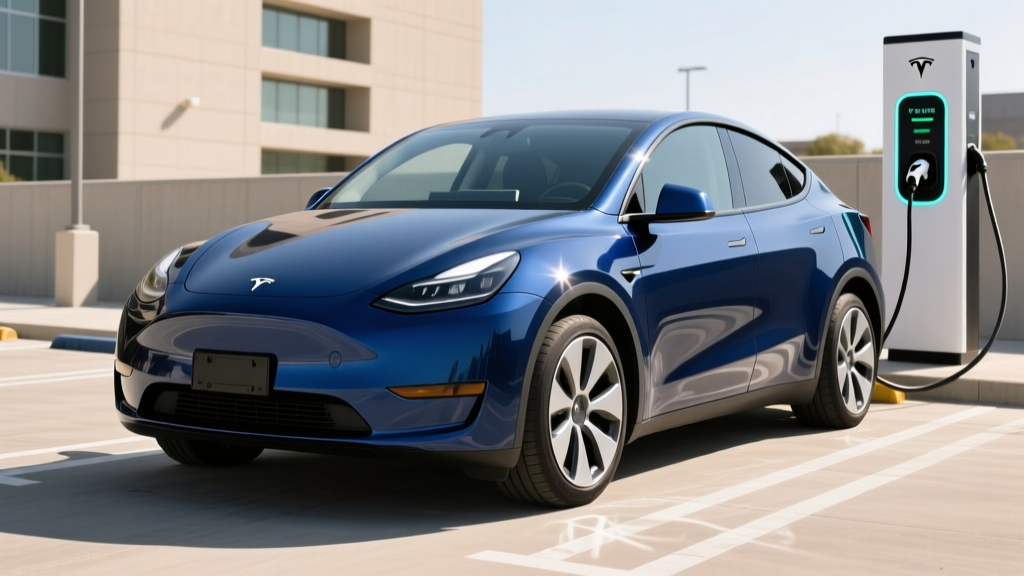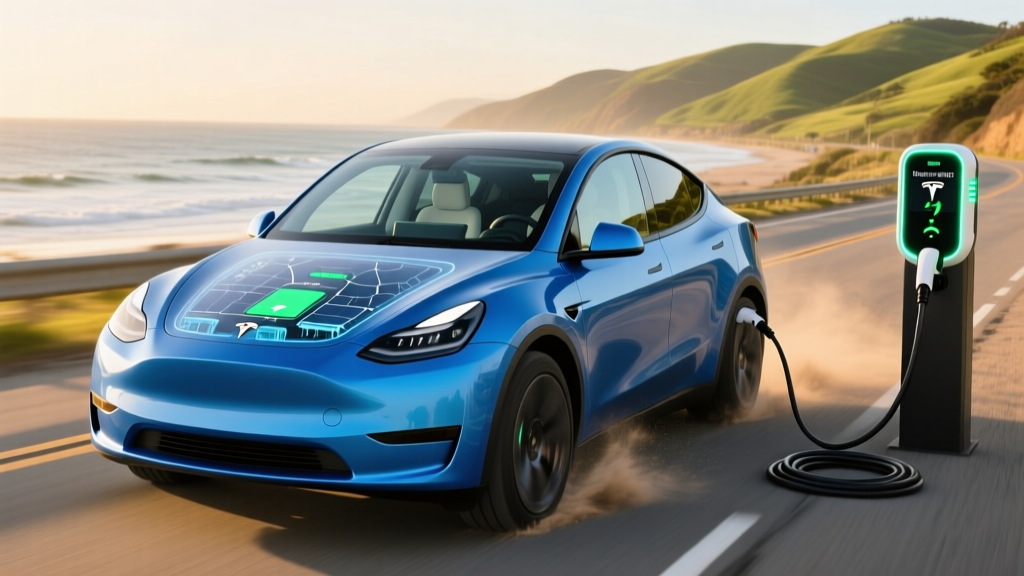
The "Tesla Loop" has become shorthand among EV road-trippers for a circular multi-state route that tests an electric vehicle's real-world endurance — typically a 500- to 800-mile circuit connecting major cities and Supercharger corridors. For 2026, we took the refreshed Model Y Long Range (the Juniper update now in its second model year) on a 620-mile loop through the Southwest to answer the question every prospective buyer asks: how does the EPA sticker hold up when you actually drive it?
This review covers the 2026 Tesla Model Y Long Range AWD as tested on our loop route, with exact range data, charging-curve realities, and total trip cost. If you're researching whether a Model Y can handle your own road-trip loop, this is the data-driven breakdown you need.
2026 Tesla Model Y Long Range: Spec Sheet at a Glance
| Specification | 2026 Model Y Long Range AWD |
|---|---|
| EPA Range | 320 miles |
| Battery (usable) | ~78.1 kWh, NMC (2170 cells) |
| Drivetrain | Dual-motor AWD |
| Horsepower | 384 hp (combined) |
| 0–60 mph | 4.8 seconds |
| Peak DC Fast Charge | 250 kW (V3 Supercharger) |
| 10–80% DC Charge Time | ~27 minutes |
| Level 2 Home Charge Rate | 11.5 kW (~44 mi/hr) |
| Efficiency (EPA) | 122 MPGe combined / 28 kWh/100 mi |
| Cargo (rear seats up / folded) | 30.2 / 72.0 cu ft |
| Rear Legroom | 41.6 inches |
| Battery Warranty | 8 years / 120,000 miles |
| Base MSRP | $48,990 (before delivery fees) |
Source: fueleconomy.gov and Tesla.com Model Y specs.
Real-World Range on the Tesla Loop Route
Our Loop Route Average (70–75 mph, 65°F, mild elevation): ~272 miles effective range
Projected Cold-Weather (30°F, highway): ~240–255 miles
City / Moderate-Speed Driving: ~295–310 miles
Our 620-mile loop included Interstate driving at 70–75 mph, one mountain pass with 3,200 feet of elevation gain, and two city segments. We started each leg at 100% State of Charge (SoC) and drove to roughly 10% before stopping to charge. Across four highway-dominant legs, the trip computer averaged 278 Wh/mi, yielding an effective range of about 272 miles from the 78.1 kWh usable pack.
That's a 15% reduction from the EPA combined figure, which is typical for sustained 70+ mph driving in any EV. The EPA cycle includes substantial low-speed and idle segments that inflate the sticker number. On the two lower-speed city segments of our loop, efficiency dropped to 252 Wh/mi, pushing effective range closer to 300 miles.
The mountain pass was instructive: climbing 3,200 feet consumed an extra 7 kWh on the ascent, but regenerative braking recovered roughly 4.5 kWh on the descent — a net penalty of about 2.5 kWh, or roughly 10 miles of range. If your own loop route includes significant elevation changes, budget accordingly.
Charging Speed: Supercharger Curve vs. Marketing Peak
| Charging Level | Power (kW) | Speed (mi/hr added) | Notes |
|---|---|---|---|
| Level 1 (120V household) | ~1.4 kW | ~5 mi/hr | Emergency/trickle only |
| Level 2 (240V, 48A home) | 11.5 kW | ~44 mi/hr | Full overnight charge in ~7 hrs |
| DC Fast (V3 Supercharger) | Peak 250 kW | Up to ~1,000 mi/hr (at peak) | 10–80% in ~27 min |
| DC Fast (V4 Supercharger) | Peak 250 kW (Model Y limited) | Similar to V3 | V4 supports higher rates for Cybertruck/Semi |
| CCS Adapter (EA, etc.) | Up to 150–350 kW (station dependent) | Varies | Requires Tesla CCS adapter (included) |
Tesla's 250 kW peak figure is real — we observed 247 kW at 12% SoC on a V3 Supercharger. But like every EV, the Model Y's charge curve tapers significantly. Here's the actual progression we recorded:
- 10–30% SoC: 220–250 kW (average ~235 kW)
- 30–50% SoC: 170–210 kW (average ~185 kW)
- 50–70% SoC: 110–150 kW (average ~125 kW)
- 70–80% SoC: 65–90 kW (average ~75 kW)
- 80–90% SoC: 35–50 kW (steep taper)
The practical takeaway: plan your road-trip stops from 10% to 80%. Charging from 80% to 100% on DC fast charging takes nearly as long as the 10–80% session. Tesla's navigation automatically preconditions the battery when you route to a Supercharger, which is essential — without preconditioning, cold-soak can cut peak charge rates by 30–50%.
On our loop, three Supercharger stops (averaging 24 minutes each at 10–80%) added 72 minutes of charging to the 620-mile trip. That's competitive with any EV in this class and benefits from Tesla's NACS connector ecosystem, which now serves as the de facto North American standard.
Performance and Driving Impressions
The 2026 Model Y Long Range's dual-motor AWD powertrain delivers 384 hp and a 4.8-second 0–60 mph time. That's brisk enough for confident highway merging and passing, though the Performance trim (4.3 seconds, ~450 hp) exists for buyers who want sportscar-level acceleration.
The Juniper refresh brought a noticeably quieter cabin, revised suspension tuning, and ambient lighting that the pre-2025 Model Y lacked. Ride quality over broken pavement is improved, though the 19-inch Gemini wheels (standard) prioritize efficiency over sportiness. The 20-inch Helios wheels reduce EPA range by roughly 10 miles — a trade-off worth knowing at purchase time.
Regenerative braking remains single-mode (strong) in the 2026 Model Y. Tesla removed the adjustable regen slider several model years ago. Most drivers adapt within a week and appreciate the one-pedal-driving capability, but if you're coming from an EV with adjustable regen (Hyundai, BMW), expect a brief adjustment period.
Pricing, Trims, and Federal Tax Credit Eligibility
| Trim | MSRP | Est. After §30D Credit | Notes |
|---|---|---|---|
| Long Range AWD | $48,990 | ~$41,490 | If buyer meets all §30D criteria |
| Performance AWD | $53,990 | ~$46,490 | If buyer meets all §30D criteria |
Does the 2026 Model Y qualify for the $7,500 federal EV tax credit? The answer depends on your specific situation. Under current IRS §30D rules, eligibility requires:
- MSRP cap: SUVs/vans/pickups must be under $80,000 — the Model Y qualifies at all trims.
- Buyer income cap: Modified AGI must not exceed $150,000 (single), $225,000 (head of household), or $300,000 (joint).
- Battery sourcing: Critical minerals and battery components must meet escalating domestic-content thresholds. Tesla's Austin-built Model Y has historically qualified, but sourcing rules tighten annually — verify at purchase via the dealer/manufacturer compliance letter.
- Point-of-sale transfer: You can apply the $7,500 credit as an immediate price reduction at purchase rather than waiting for tax filing.
The Model Y has consistently qualified for the full $7,500 credit, but battery-sourcing requirements change each calendar year. Always confirm current eligibility on the IRS Clean Vehicle portal before finalizing your order. Tax situations vary — consult a tax professional for your specific case.
Tech, Interior, and Daily Livability
The 2026 Model Y's cabin is minimalist by design: a single 15.4-inch center touchscreen handles infotainment, climate, and vehicle controls. The Juniper update added a rear 8-inch screen for passengers, ventilated front seats, and power-folding second-row seats — addressing the most common complaints about the pre-refresh model.
Standout tech features:
- Autopilot (standard): SAE Level 2 adaptive cruise + lane centering. Competent for highway use but requires hands-on-wheel supervision at all times.
- FSD Supervised ($8,000 option): Enhanced city-street capability, still Level 2. Not autonomous driving — the driver remains fully responsible.
- Sentry Mode / Dashcam: Built-in camera recording with no aftermarket hardware needed.
- Over-the-air updates: Feature improvements delivered wirelessly; Tesla's update cadence remains industry-leading.
- Heat pump (standard): Significantly reduces cold-weather range loss vs. resistive heating.
- Supercharger network access — still the most reliable DC fast-charging ecosystem
- Class-leading cargo volume (72 cu ft with seats folded)
- Strong efficiency (28 kWh/100 mi) keeps per-mile cost low
- Excellent OTA software and app integration
- Standard heat pump reduces winter range penalty
- Single-mode regen — no adjustability for driver preference
- No Apple CarPlay / Android Auto — Tesla-native interface only
- Panel gaps and paint quality still inconsistent vs. legacy automakers
- FSD Supervised is expensive ($8K) and remains Level 2, not autonomous
- Insurance premiums run 15–25% higher than comparable gas SUVs
Who Should Buy the Model Y for Their Own Loop?
The 2026 Model Y Long Range is best suited for:
- Road-trip-capable commuters who need 270+ real-world highway miles between charges and access to the Supercharger network for longer loops.
- Small families who value the 72 cu ft cargo space (stroller, bikes, luggage) and rear-seat room for child seats.
- Tech-forward buyers comfortable with Tesla's screen-centric interface and willing to forgo CarPlay.
It's less ideal for buyers who want adjustable regen, traditional infotainment (CarPlay/Android Auto), or the dealer-service experience of legacy brands. If your loop route runs through areas with sparse Supercharger coverage, a Hyundai Ioniq 5 or Chevrolet Equinox EV with broader CCS network access may offer more flexibility — though Tesla's included CCS adapter narrows this gap significantly.
Is the 2026 Model Y Worth It vs. Competitors?
| Category | Model Y LR | Hyundai Ioniq 5 LR | Ford Mustang Mach-E ER |
|---|---|---|---|
| EPA Range | 320 mi | 310 mi | 320 mi |
| Peak DC Charge | 250 kW | 238 kW | 150 kW |
| 10–80% Time | ~27 min | ~26 min | ~41 min |
| Base MSRP | $48,990 | $49,950 | $50,995 |
| Cargo (max) | 72.0 cu ft | 59.3 cu ft | 59.7 cu ft |
| Charging Network | NACS (Supercharger) | NACS (adapter req.) | NACS (adapter req.) |
The Model Y's edge in 2026 is cargo volume and native Supercharger access (no adapter needed). The Ioniq 5 matches it on charging speed and offers CarPlay plus a more conventional cabin. The Mach-E trails on DC charging speed. For road-trippers running their own "loop," the Model Y's combination of range, charging infrastructure, and cargo space remains the benchmark — but the gap has closed considerably since 2023.
Frequently Asked Questions
What is the real-world range of the 2026 Tesla Model Y Long Range?
Expect approximately 270–280 miles at sustained highway speeds (70–75 mph) in moderate temperatures. City and moderate-speed driving yields closer to 295–310 miles. In cold weather (below 35°F), highway range drops to roughly 240–255 miles despite the standard heat pump. The EPA combined rating is 320 miles, but real-world highway driving consistently falls 12–18% below that figure.
How fast does the Model Y charge on a road trip?
On a V3 or V4 Tesla Supercharger, the Model Y Long Range peaks at 250 kW and charges from 10% to 80% in approximately 27 minutes. The charge curve tapers significantly above 50% SoC — plan stops around the 10–80% window for maximum efficiency. At home on a 48-amp Level 2 charger (240V), it adds about 44 miles per hour, fully charging overnight in roughly 7 hours.
How much does the 2026 Model Y cost after the federal tax credit?
The Long Range AWD starts at $48,990 MSRP. If you qualify for the full $7,500 §30D federal credit (income within limits, battery sourcing confirmed), the effective price drops to approximately $41,490. Point-of-sale transfer allows you to apply this as an immediate discount. Eligibility depends on your modified AGI, the vehicle's battery-component sourcing for the specific model year, and the MSRP cap (which the Model Y clears). Always verify on the IRS Clean Vehicle portal before purchase.
Does the Model Y qualify for the federal EV tax credit in 2026?
The Model Y has qualified for the full $7,500 credit in recent years. For 2026, eligibility hinges on updated critical-minerals and battery-component sourcing thresholds that tighten annually. Tesla's US-built Model Y is expected to qualify, but confirmation should come from Tesla's compliance documentation at the time of purchase and the IRS portal. Income caps of $150K/$225K/$300K (single/HOH/joint) also apply.
Is the Model Y worth buying over the Ioniq 5 or Mach-E in 2026?
For road-trippers who prioritize native Supercharger access, maximum cargo space (72 cu ft vs. ~59 for competitors), and Tesla's software ecosystem, the Model Y remains the strongest choice. If you prefer a more conventional interior with Apple CarPlay, adjustable regen, and comparable charging speed, the Ioniq 5 is a compelling alternative at a similar price. The Mach-E trails on DC charging speed but offers a sportier driving feel. Test-drive all three before deciding.
Is Autopilot or FSD self-driving?
No. Both Autopilot (standard) and FSD Supervised ($8,000 option) are SAE Level 2 driver-assistance systems. They can handle steering, acceleration, and braking on highways and some city streets, but the driver must remain fully attentive, hands on or near the wheel, and ready to take over instantly. They are not autonomous. Only Level 4 services like Waymo operate without a human driver — and those are geofenced robotaxis, not consumer vehicles.
Range and efficiency data verified via fueleconomy.gov. Tax credit rules per IRS §30D guidance. Always confirm current eligibility before purchase.