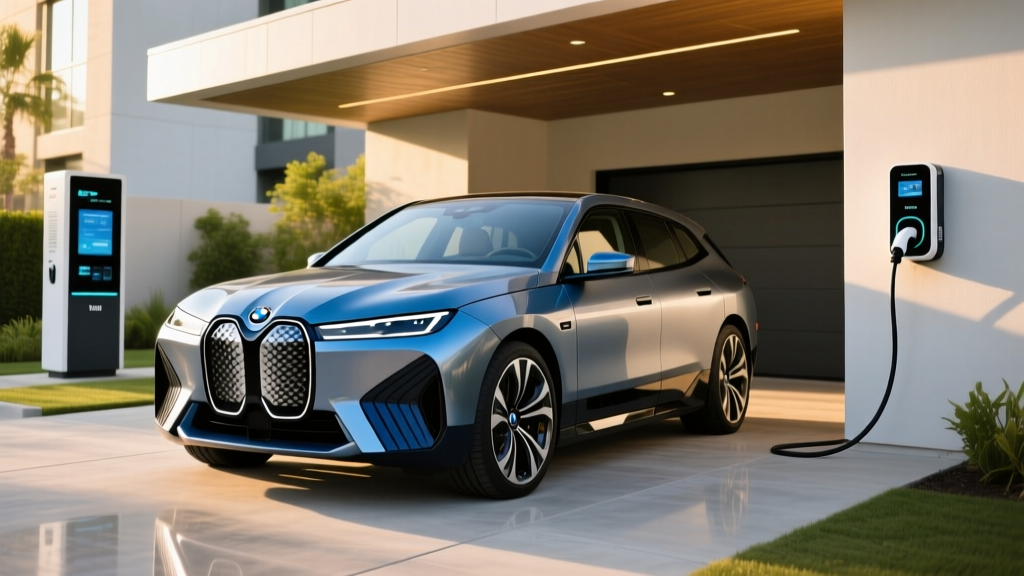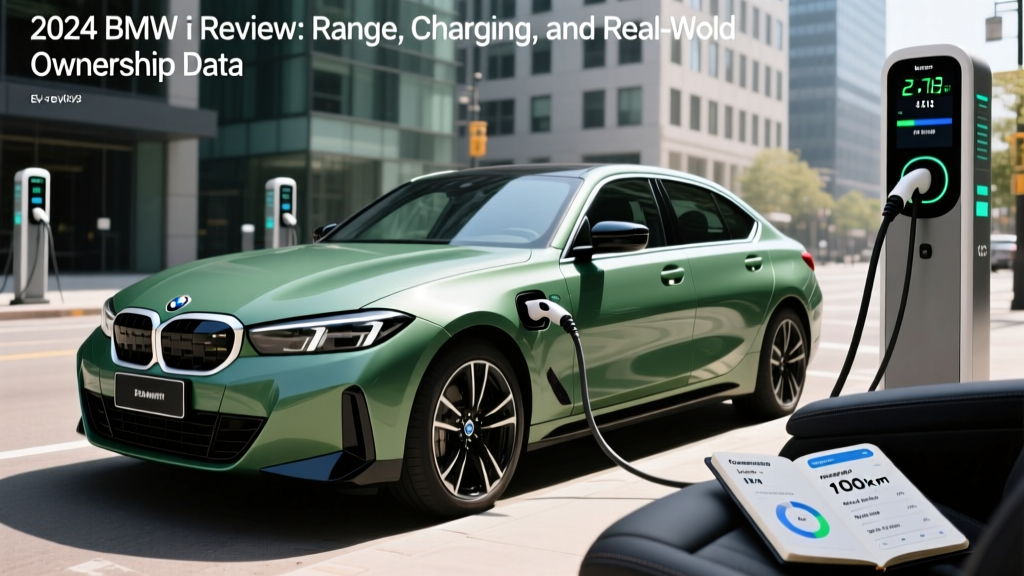
The BMW i3 that launched in 2014 as a quirky carbon-fiber city car is dead. What replaced it — confusingly, in markets outside the US — is the BMW iX1, a compact electric crossover that BMW sells under the i3 nameplate in China and parts of Asia. For US buyers searching for a "2024 BMW i3," the vehicle you're actually looking at is either the discontinued hatchback (last sold in the US for model year 2021) or BMW's current compact EV lineup: the BMW iX1 (not officially sold in the US) or the closely related BMW iX and BMW i4 that fill the gap in the American market.
This review addresses what the 2024 BMW i3 actually is globally, clarifies what US buyers can purchase, and provides complete specs for the closest US-market equivalent: the 2024 BMW iX1 xDrive30, which is the vehicle most international markets badge as the 2024 i3.
2024 BMW i3 (iX1) Quick Verdict
The 2024 BMW iX1 xDrive30 — sold as the i3 in select markets — is a competent compact luxury EV crossover built on BMW's FAAR platform shared with the X1 and iX1. It delivers a usable EPA-equivalent range around 270 miles (WLTP-rated higher), dual-motor AWD, and BMW's latest iDrive 8 infotainment. It's a strong daily driver in markets where it's sold, but US buyers face a gap: BMW skipped the iX1 for the American market, likely to avoid cannibalizing the larger iX and to manage IRA tax-credit sourcing complexities.
If you're in the US and searching for a "2024 BMW i3," your practical options are:
- Used 2014–2021 BMW i3 hatchback — eligible for the used EV tax credit (§25E, up to $4,000) if under $25,000 and meeting income caps
- 2024 BMW i4 eDrive40 — the closest new BMW EV in price and footprint, starting at $57,900
- 2024 BMW iX xDrive50 — the compact/mid-size SUV alternative, starting at $87,250
Range, Battery, and Efficiency
| Specification | Value |
|---|---|
| Battery Capacity (gross) | 66.5 kWh |
| Battery Capacity (usable) | 64.7 kWh |
| Battery Chemistry | NMC (Nickel Manganese Cobalt) |
| WLTP Range | 272 mi (438 km) |
| EPA-Equivalent Range (est.) | ~240–260 mi |
| Efficiency (WLTP) | ~30 kWh/100 mi (18.4 kWh/100 km) |
| Drivetrain | Dual-motor AWD (xDrive) |
| Total Output | 313 hp (230 kW) |
| Torque | 364 lb-ft |
| 0–100 km/h (0–62 mph) | 5.6 seconds |
The 66.5 kWh NMC battery is mounted low in the skateboard-style floor, giving the iX1 a center of gravity noticeably lower than the gas X1. NMC chemistry offers higher energy density than LFP (lithium iron phosphate), which keeps the pack compact enough for this subcompact platform — but it comes with a slightly higher degradation rate over time compared to LFP. BMW provides an 8-year/100,000-mile (160,000 km) battery warranty guaranteeing at least 70% capacity retention, which is industry-standard.
For efficiency context, the iX1's ~30 kWh/100mi is competitive with the Volvo XC40 Recharge (~32 kWh/100mi) but trails the Tesla Model Y (~28 kWh/100mi). At the US average electricity price of $0.17/kWh (per EIA data), that works out to roughly $0.051 per mile — about a third of what a comparable gas X1 costs at $3.50/gallon and 28 mpg combined.
Charging Speed: DC Fast, Level 2, and Home Setup
| Charging Level | Power / Rate | Time / Notes |
|---|---|---|
| Level 1 (120V household) | ~1.4 kW | ~3–4 mi/hr added; 45+ hrs for full charge |
| Level 2 (240V home/public AC) | 11 kW (onboard charger) | ~22 mi/hr; 0–100% in ~6.5 hours |
| DC Fast Charge (CCS2) | 130 kW peak | 10–80% in ~29 minutes |
The iX1's 130 kW peak DC fast-charge rate is its weakest spec relative to competitors. The Hyundai Ioniq 5 peaks at 240 kW (10–80% in ~18 min), and even the Tesla Model Y hits ~250 kW. At 130 kW, the iX1 adds roughly 150 miles of range in 30 minutes — adequate for road trips with planned stops, but noticeably slower than 800V-architecture rivals.
The charging curve is typical of NMC packs in this class: the iX1 sustains close to peak rate up to about 50% state of charge, then tapers progressively. From 80–100%, charging slows dramatically to protect cell health — plan for an additional 20–30 minutes if you need a full pack. BMW's navigation system includes preconditioning: when you route to a DC fast charger, the battery management system warms or cools the pack to optimal temperature before you arrive, which is critical for hitting advertised charge speeds in cold or hot weather.
For home charging, the 11 kW onboard AC charger is generous — most US homes with a NEMA 14-50 outlet on a 50-amp circuit can deliver 9.6–11.5 kW via a Level 2 wallbox. A full overnight charge (6–7 hours) easily covers daily driving needs. Installation costs for a 240V/50A circuit typically run $500–$2,000 depending on panel proximity and local permitting; a panel upgrade to 200A adds $1,500–$3,000 if your existing service is insufficient.
Performance and Driving Dynamics
The dual-motor xDrive layout gives the iX1 all-wheel drive with 313 hp and 364 lb-ft of torque. The 0–62 mph time of 5.6 seconds is brisk but not class-leading — the Tesla Model Y Long Range does it in 4.8 seconds, and the Volvo C40 Recharge in 4.5 seconds. Where the iX1 shines is ride refinement: BMW tuned the adaptive suspension (optional) to absorb rough pavement more gracefully than the firmer-riding Tesla, and the steering weight feels appropriately progressive rather than numb.
Regenerative braking offers three modes: adaptive (uses radar to modulate regen based on traffic ahead), high (near one-pedal driving), and low (coasting). Unlike some BMW EVs, the iX1 does not offer a true one-pedal mode that brings the car to a complete stop without touching the brake pedal — a missed opportunity for city drivers who prefer full regen.
Towing is limited: the iX1 is rated for 2,000 kg (~4,400 lbs) braked in European markets, adequate for a small trailer or bike rack but not for serious hauling. US-market BMW iX models rate higher (up to 3,500 lbs for the xDrive50).
Interior, Cargo, and Technology
The iX1 cabin uses BMW's curved display layout: a 10.25-inch instrument cluster flows into a 10.7-inch infotainment touchscreen running iDrive 8. The system supports wireless Apple CarPlay and Android Auto, over-the-air updates, and BMW's Intelligent Personal Assistant voice control. Build quality is a step above mainstream EVs — soft-touch materials on the dash and door uppers, though lower trim panels use harder plastics to keep costs in check.
| Measurement | Value |
|---|---|
| Front Headroom | 40.2 in (1,021 mm) |
| Rear Headroom | 38.7 in (983 mm) |
| Front Legroom | 40.4 in (1,026 mm) |
| Rear Legroom | 36.2 in (919 mm) |
| Cargo Volume (rear seats up) | 17.4 cu ft (492 L) |
| Cargo Volume (rear seats folded) | 51.6 cu ft (1,460 L) |
| Frunk (front trunk) | None — AC charging equipment stored under hood |
Cargo space is competitive with the Volvo XC40 Recharge (16.3 cu ft) but trails the Tesla Model Y (30.2 cu ft behind the second row). The absence of a frunk is a packaging consequence of the FAAR platform, which was designed to accommodate both ICE and electric powertrains — a compromise dedicated EV platforms avoid.
Standard driver-assistance features include forward collision warning, automatic emergency braking, lane departure warning, and speed limit assist. The optional Driving Assistant Professional adds adaptive cruise control with stop-and-go, lane centering, and evasive steering assist — this is a SAE Level 2 system, meaning the driver must remain fully engaged with hands on the wheel. It is not autonomous driving.
Pricing, Trims, and Federal Tax Credit Eligibility
Because the BMW iX1 is not sold in the US, there is no official US MSRP. In European markets, the iX1 xDrive30 starts around €55,000 (~$59,500 USD) before options. If BMW were to import it, a reasonable US estimate would be $52,000–$56,000 before destination.
| Model | Base MSRP | EPA Range | §30D Tax Credit Eligibility |
|---|---|---|---|
| 2024 BMW i4 eDrive40 | $57,900 | 307 mi | Not eligible (MSRP > $55k sedan cap; sourcing) |
| 2024 BMW i4 M50 | $70,700 | 276 mi | Not eligible (MSRP > $55k sedan cap) |
| 2024 BMW iX xDrive50 | $87,250 | 324 mi | Not eligible (MSRP > $80k SUV cap; assembled in Germany) |
| Used BMW i3 (2017–2021) | $12,000–$22,000 | 114–153 mi | §25E used credit: up to $4,000 if under $25k sale price |
Tax credit reality for BMW EVs in the US: Under current IRS §30D rules, new clean vehicle credits require the vehicle to meet MSRP caps ($55,000 for sedans, $80,000 for SUVs/trucks/vans), buyer income limits ($150k single / $300k joint MAGI), North American final assembly, and battery component and critical mineral sourcing thresholds that tighten annually. Most BMW EVs are assembled in Germany (Dingolfing or Leipzig), which disqualifies them from the new-vehicle credit entirely regardless of price. The used-EV credit (§25E) is the realistic path for BMW i3 hatchback buyers, offering 30% of the sale price up to $4,000 for vehicles under $25,000 sold by a licensed dealer.
Pros, Cons, and Who Should Buy
Pros
- Premium cabin materials and build quality above mainstream EVs
- Refined ride quality with adaptive suspension option
- Dual-motor AWD standard; confident in rain and light snow
- 11 kW AC onboard charger enables fast Level 2 home charging
- iDrive 8 with wireless CarPlay/Android Auto and OTA updates
- Heat pump standard in most markets for cold-weather efficiency
Cons
- Not available in the US market
- 130 kW DC fast-charge peak is slow vs. 800V competitors
- No frunk; cargo space trails Tesla Model Y significantly
- True one-pedal driving mode not available
- EPA-equivalent range (~240–260 mi) is modest for the price
- BMW EVs ineligible for US §30D new-vehicle tax credit (German assembly)
Who This EV Suits Best
Ideal buyer (in markets where sold): Urban and suburban commuters who want a luxury badge, AWD confidence, and daily-driving range of 200+ miles without stepping up to a larger SUV. The iX1 fits couples or small families who prioritize ride comfort and cabin quality over maximum cargo space or road-trip charging speed.
US buyer alternative: If you're stateside, the BMW i4 eDrive40 offers 307 miles of EPA range and a more engaging driving position, though it sacrifices cargo height. For SUV buyers, the Tesla Model Y ($44,990, eligible for §30D credit) or Hyundai Ioniq 5 ($41,800, eligible) deliver faster charging and more space at lower prices — but without the BMW badge cachet.
Warranty and Long-Term Ownership
| Coverage | Term |
|---|---|
| New Vehicle Limited Warranty | 4 years / 50,000 miles |
| Battery Warranty | 8 years / 100,000 miles (70% capacity retention minimum) |
| Corrosion Perforation | 12 years / unlimited miles |
| Roadside Assistance | 4 years / unlimited miles |
BMW's battery warranty is standard for the industry — 8 years/100,000 miles with a 70% state-of-health floor. NMC batteries in this class typically degrade 10–15% over the first 100,000 miles under normal use, meaning most owners won't approach the warranty threshold. To maximize longevity, BMW recommends keeping state of charge between 20–80% for daily use and only charging to 100% before long trips. The iDrive system includes a configurable charge limit to automate this.
Maintenance costs for the iX1 are lower than the gas X1 — no oil changes, no transmission fluid, fewer brake pad replacements thanks to regenerative braking. BMW's scheduled maintenance typically covers a cabin air filter, brake fluid check, and tire rotation annually, running $200–$400 per visit at a dealer.
Frequently Asked Questions
Is the 2024 BMW i3 available in the United States?
No. BMW discontinued the i3 hatchback after the 2021 model year in the US. The vehicle currently badged as "i3" in some international markets is actually the BMW iX1 compact electric crossover, which BMW has not imported to the US. American buyers can find the used i3 hatchback (2014–2021) on the secondary market or look at the new BMW i4 or iX.
What is the real-world range of the BMW iX1 (global i3)?
The WLTP-rated 272 miles translates to approximately 240–260 miles under EPA-style testing. In real-world mixed driving, expect 220–240 miles. Highway driving at 70+ mph drops this to 210–230 miles, and cold weather (below freezing) can reduce range to 170–200 miles. The standard heat pump helps but doesn't eliminate winter losses.
How fast does the BMW iX1 charge?
DC fast charging peaks at 130 kW, delivering a 10–80% charge in approximately 29 minutes at a compatible CCS2 station. Home Level 2 charging at 11 kW adds about 22 miles of range per hour, fully charging the 66.5 kWh pack in roughly 6.5 hours. Level 1 (120V) trickle charging adds only 3–4 miles per hour.
Does the BMW iX1 qualify for any US tax credits?
The iX1 is not sold in the US, so the question is moot for new purchases. For the used BMW i3 hatchback (2014–2021), the IRS §25E used EV credit provides up to $4,000 (30% of sale price) if the vehicle sells for under $25,000 through a licensed dealer and the buyer meets income caps ($75k single / $150k joint).
Is the BMW iX1 worth buying over a Tesla Model Y or Hyundai Ioniq 5?
In markets where it's sold, the iX1 wins on cabin luxury and ride comfort but loses on charging speed (130 kW vs. 240–250 kW), cargo space, and range-per-dollar. US buyers don't have the iX1 option, making the choice simpler: the Model Y leads on efficiency and charging infrastructure, the Ioniq 5 on charge speed and value, and the BMW i4 on driving dynamics and brand prestige.
What battery chemistry does the BMW iX1 use?
The iX1 uses NMC (nickel manganese cobalt) lithium-ion cells, which offer higher energy density than LFP (lithium iron phosphate) but with slightly faster long-term degradation. The 66.5 kWh gross pack provides 64.7 kWh usable, protected by an 8-year/100,000-mile warranty guaranteeing at least 70% capacity retention.