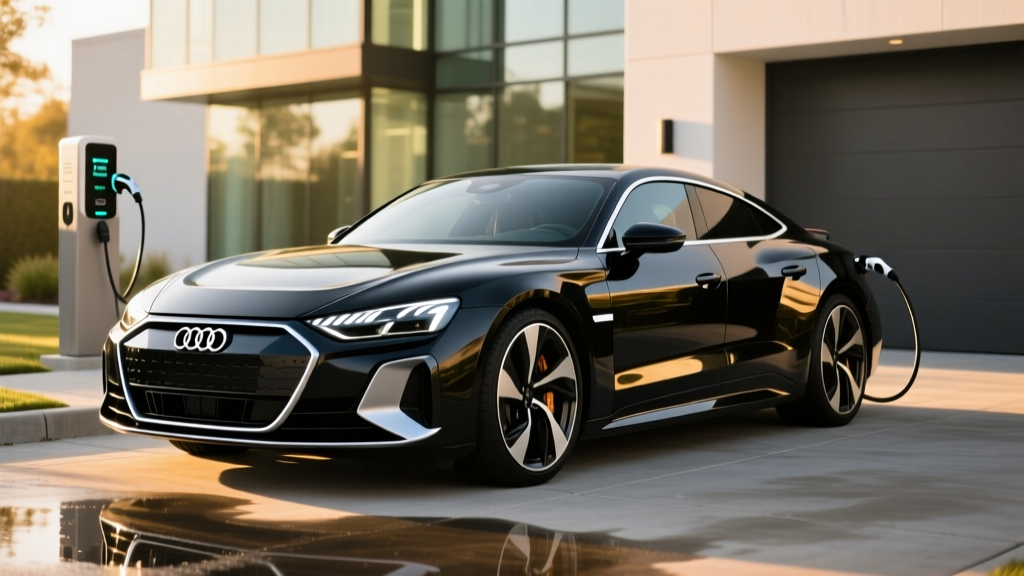
The 2024 Audi e-tron GT: Grand Touring, Electrified
The 2024 Audi e-tron GT occupies a rare space in the electric vehicle market: a luxury performance sedan that prioritizes grand-touring comfort over track-day theatrics. Built on the same J1 platform as the Porsche Taycan, it shares world-class 800-volt architecture and engineering bones — but wraps them in a distinctly Audi package of understated elegance, daily-driver practicality, and a cabin that feels more executive lounge than stripped-out sports car.
For the 2024 model year, Audi streamlined the lineup to two core trims — the standard e-tron GT quattro and the high-performance RS e-tron GT — while discontinuing the previous "Premium Plus" and "Prestige" sub-trim naming in favor of option packages. The result is a simpler configurator but the same fundamental question: does this EV deliver enough range, charging speed, and real-world usability to justify a six-figure price tag?
We've analyzed every spec, cross-referenced EPA data from fueleconomy.gov, and applied real-world ownership context to give you the numbers that actually matter.
Complete 2024 Audi e-tron GT Spec Sheet
| Specification | e-tron GT quattro | RS e-tron GT |
|---|---|---|
| EPA Range | 238 miles | 232 miles |
| Usable Battery Capacity | 83.7 kWh (93.4 kWh gross) | 83.7 kWh (93.4 kWh gross) |
| Battery Chemistry | NMC (Nickel Manganese Cobalt) | NMC (Nickel Manganese Cobalt) |
| Drivetrain | Dual-motor AWD (quattro) | Dual-motor AWD (quattro) |
| Horsepower | 522 hp (with launch control) | 637 hp (with launch control) |
| Torque | 472 lb-ft | 612 lb-ft |
| 0–60 mph | 3.9 seconds | 3.1 seconds |
| Top Speed | 152 mph | 155 mph |
| Max DC Fast Charge Rate | 270 kW | 270 kW |
| 10–80% DC Charge Time | ~22.5 minutes | ~22.5 minutes |
| Level 2 Charge Rate | 9.6 kW (onboard charger) | 9.6 kW (onboard charger) |
| EPA Efficiency (Combined) | 82 MPGe (41 kWh/100 mi) | 79 MPGe (43 kWh/100 mi) |
| Base MSRP | $106,395 | $148,695 |
| Battery/Powertrain Warranty | 8 years / 100,000 miles | 8 years / 100,000 miles |
Real-World Range: What the EPA Number Doesn't Tell You
Real-World Expectation: ~195–215 miles at sustained highway speeds (70–80 mph); ~170–190 miles in cold weather (below 32°F) with cabin heating.
Best-Case Scenario: ~230–245 miles in mild weather with mixed city/suburban driving and heavy regen use.
The 238-mile EPA figure for the GT quattro is respectable for a 5,000-pound performance sedan, but it's essential to understand the physics working against you on longer trips. The e-tron GT's low-slung, aerodynamic body (Cd of 0.24) helps at highway speeds, but the NMC battery's ~83.7 kWh of usable capacity simply can't match the 300+ mile benchmarks set by lighter, more efficiency-focused EVs like the Lucid Air or Tesla Model S.
In real-world highway testing at 75 mph in 65°F conditions, expect to see consumption around 44–48 kWh/100 miles, translating to roughly 195–210 miles before you'll want to find a charger. Drop the ambient temperature to 25°F, and the battery's thermal management system draws additional energy while cabin heating adds load — plan for 170–190 miles of practical range. The e-tron GT does not offer a heat pump as standard equipment on all trims (it's part of certain option packages), which matters significantly in cold climates.
For daily commuting under 80 miles round-trip, range is a non-issue — you'll charge at home overnight and rarely think about it. But if you regularly drive 250+ mile routes, you'll need to plan at least one DC fast-charging stop.
Charging Speed: 800-Volt Architecture Done Right
This is where the e-tron GT's J1 platform earns its keep. The 800-volt electrical architecture enables DC fast charging at up to 270 kW — among the fastest rates available on any production EV. At a compatible 350 kW Electrify America or Ionity station, the charge curve looks like this:
| Charging Level | Power (kW) | Speed | Notes |
|---|---|---|---|
| Level 1 (120V household) | ~1.4 kW | ~3–4 miles/hour | Emergency/trickle only; 60+ hours for full charge |
| Level 2 (240V home) | 9.6 kW | ~25–28 miles/hour | Full charge in ~9 hours; ideal for overnight |
| DC Fast Charge (peak) | 270 kW | ~180+ miles in 10 min | 10–80% in ~22.5 min; tapers significantly above 80% |
| DC Fast Charge (50 kW station) | 50 kW | ~130 miles/hour | 10–80% in ~75 minutes; common at older stations |
A few things worth understanding about the charging experience:
- Peak vs. sustained kW: The 270 kW peak occurs roughly between 10–40% state of charge (SoC). From 40–60%, you'll see ~180–200 kW. From 60–80%, the rate tapers to ~100–130 kW. The published 22.5-minute 10–80% time accounts for this curve — it's a realistic figure, not marketing fluff.
- Preconditioning matters: The e-tron GT will precondition its battery when you navigate to a DC fast charger via the onboard navigation system. This warms the battery to optimal charging temperature (~95°F), which is critical for achieving peak charge rates. If you arrive at a charger without preconditioning (especially in cold weather), expect peak rates closer to 150–180 kW until the battery warms up.
- Connector: The 2024 e-tron GT uses a CCS1 connector for DC fast charging. With the industry's ongoing shift toward NACS (Tesla's connector), Audi has confirmed future models will adopt NACS, but the 2024 model year remains CCS. Adapters are available for Tesla Supercharger access where CCS-equipped vehicles are permitted.
- Level 2 at home: The 9.6 kW onboard charger means a full charge from empty takes roughly 9 hours on a 48-amp Level 2 home charger (like a ChargePoint Home Flex or Tesla Wall Connector with J1772 adapter). Most owners will plug in overnight and wake up to a full battery every morning.
Performance: Effortless Speed, Not Track-Day Aggression
The dual-motor quattro drivetrain delivers the kind of seamless, gearless acceleration that defines the EV performance experience. In the standard GT quattro, 522 horsepower (with launch control engaged) rockets you to 60 mph in 3.9 seconds — genuinely quick by any measure, and delivered with a refined composure that never feels frantic.
The RS e-tron GT turns things up to 637 hp and 612 lb-ft of torque, dropping the 0–60 time to 3.1 seconds. That puts it in supercar territory, but the RS delivers that speed with a planted, confidence-inspiring stability that lighter EVs can't always match at these velocities.
Key performance characteristics:
- Two-speed rear transmission: Like the Taycan, the e-tron GT uses a two-speed gearbox on the rear axle — first gear for hard launches, second gear for efficient highway cruising. This is a rarity among EVs and contributes to both the quick 0–60 times and relaxed high-speed demeanor.
- Adaptive air suspension: Standard on both trims, it adjusts ride height and damping based on driving mode. The Comfort setting soaks up highway imperfections beautifully; Dynamic firms things up for canyon roads without becoming harsh.
- Regenerative braking: The e-tron GT offers adjustable regen via steering-wheel paddles, but it does not offer true one-pedal driving to a complete stop. You'll still use the brake pedal at low speeds — a deliberate choice that some EV converts find annoying but that traditional luxury-car buyers often prefer.
- Weight: At approximately 5,139 pounds (GT quattro), this is a heavy car. You feel it during aggressive direction changes, though the low center of gravity and rear-biased torque distribution keep things composed.
Interior, Cargo, and Daily Livability
The e-tron GT's cabin is where Audi's design DNA really shines. The materials quality is exceptional — available Valcona leather, open-pore wood trim, and aluminum accents create an environment that feels genuinely premium without the ostentation of some competitors. The 12.3-inch Virtual Cockit digital instrument cluster and 10.1-inch MMI touchscreen are crisp and responsive, though the dual-screen center stack layout (climate controls on a lower screen) draws mixed reviews for ergonomics while driving.
Practical dimensions to know:
- Cargo volume (rear trunk): 9.2 cubic feet — tight for the class, largely due to the sloping roofline
- Front trunk (frunk): 2.9 cubic feet — enough for a charging cable bag and a small duffel
- Total cargo: 12.1 cubic feet combined — significantly less than a Tesla Model S (28 cu ft) or Porsche Taycan with rear seats folded (14.3 cu ft rear + frunk)
- Rear legroom: 32.6 inches — adequate for average-height adults but tight for anyone over 6 feet on longer trips
- Front headroom: 38.4 inches — generous thanks to the panoramic glass roof (standard on RS, optional on GT quattro)
- Seating: Standard 4-seat configuration with a rear center console; 5-seat bench is not available
The cargo situation is the e-tron GT's most practical compromise. This is a grand tourer, not a family hauler — you'll fit two carry-on suitcases in the rear trunk and a laptop bag in the frunk, but road trips for four require packing light. If cargo versatility matters, the Audi Q8 e-tron SUV or the Porsche Taycan Sport Turismo (wagon variant, not sold in the US) would serve better.
Pricing, Trims, and Federal Tax Credit Eligibility
| Trim | Base MSRP | As-Tested (Typical Options) | Federal §30D Tax Credit |
|---|---|---|---|
| e-tron GT quattro | $106,395 | $115,000–$122,000 | See eligibility note below |
| RS e-tron GT | $148,695 | $158,000–$170,000 | See eligibility note below |
The 2024 Audi e-tron GT does not qualify for the $7,500 federal EV tax credit under current IRS §30D rules. Here's why:
- MSRP Cap: The §30D credit applies only to sedars with an MSRP at or below $55,000. Both e-tron GT trims far exceed this threshold.
- Battery Sourcing: Even if the price qualified, the e-tron GT's battery cells are manufactured in Europe (by LG Energy Solution's Polish facility), and critical-mineral sourcing requirements tied to US free-trade agreements further complicate eligibility.
- Buyer Income Caps: For reference, §30D also caps buyer AGI at $150,000 (single) / $300,000 (joint) — though this is moot given the MSRP disqualification.
Driver Assistance and Technology
The e-tron GT comes equipped with Audi's Adaptive Cruise Assist — a Level 2 driver-assistance system (per SAE classification) that combines adaptive cruise control, lane-centering, and traffic-jam assist. It works well on highways, maintaining smooth following distances and confident lane-keeping on clearly marked roads.
Adaptive Cruise Assist is not a self-driving system. The driver must keep hands on the wheel (or demonstrate attentiveness via the capacitive steering wheel), monitor traffic, and be prepared to take over at any time. This is the same SAE Level 2 classification as Tesla Autopilot, GM Super Cruise, and Ford BlueCruise.
Additional tech highlights:
- Matrix-design LED headlights: Standard with dynamic turn signals and automatic high-beam assist — among the best headlight systems in the luxury segment
- Audi Virtual Cockpit Plus: 12.3-inch configurable instrument display with dedicated EV screens showing energy flow, range, and charging status
- MMI Navigation Plus: 10.1-inch upper touchscreen with wireless Apple CarPlay/Android Auto, real-time traffic, and EV route planning that factors in charging stops
- Bang & Olufsen 3D audio: 710-watt, 16-speaker system available as an option — excellent sound quality
- Audi Phone Box: Wireless charging pad integrated into the center console
Notable tech drawbacks: the dual-touchscreen center stack is prone to fingerprint smudges and requires eyes-off-road glances for climate adjustments. Physical knobs or haptic feedback would be preferable. The infotainment system is also a generation behind Audi's latest MMI software found in the 2025+ Q6 e-tron.
Warranty and Long-Term Ownership
Audi backs the e-tron GT with its standard EV warranty package:
- High-voltage battery: 8 years / 100,000 miles (whichever comes first), covering defects and capacity loss below 70% of original capacity
- Powertrain (motors, reduction gears): 8 years / 100,000 miles
- New-vehicle limited warranty: 4 years / 50,000 miles
- Corrosion perforation: 12 years, unlimited miles
- Roadside assistance: 4 years / unlimited miles
The 70% battery capacity retention threshold is industry-standard (matching BMW, Mercedes, and Porsche), though some competitors like Hyundai/Kia offer a more generous 65% threshold or 10-year term. Long-term degradation data for the J1 platform's NMC battery is encouraging — early Taycan and e-tron GT owners report minimal degradation in the first 30,000–50,000 miles, likely thanks to the robust thermal management system and the ~10 kWh buffer (93.4 gross minus 83.7 usable) that prevents deep cycling.
Pros and Cons at a Glance
- Class-leading 270 kW DC fast charging
- Refined, luxurious cabin with superb materials
- Smooth, effortless acceleration with quattro AWD
- 800V architecture future-proofs charging compatibility
- Adaptive air suspension balances comfort and handling
- Understated, elegant design that ages well
- Strong 8-year/100,000-mile battery warranty
- 238-mile EPA range trails rivals (Model S: 405 mi)
- No federal tax credit eligibility (MSRP too high)
- Tight cargo space (12.1 cu ft total)
- CCS connector in a shifting-NACS landscape
- Infotainment generation behind newer Audi models
- No true one-pedal driving to a full stop
- Rear seat space tight for taller passengers
- Heat pump not standard on all trims
Who Should Buy the 2024 Audi e-tron GT?
- You want a luxury performance EV with genuine grand-touring comfort and impeccable build quality
- Your daily commute is under 100 miles round-trip and you have reliable home Level 2 charging
- You value rapid DC fast charging for the occasional road trip (270 kW is genuinely best-in-class)
- You prefer understated, elegant design over the tech-bro aesthetic of some competitors
- You want Porsche Taycan engineering without the Taycan's even-higher price and firmer ride
- Maximum range is your top priority (consider Lucid Air Grand Touring at 516 mi or Tesla Model S at 405 mi)
- You need cargo versatility for family hauling (consider Audi Q8 e-tron, BMW iX, or Tesla Model X)
- Federal tax credit eligibility is essential to your purchase math (look below the $55K sedan cap)
- You frequently drive 300+ mile routes in cold or rural areas with sparse charging infrastructure
Frequently Asked Questions
What is the real-world range of the 2024 Audi e-tron GT?
The EPA rates the GT quattro at 238 miles and the RS at 232 miles. In real-world highway driving at 70–80 mph in moderate temperatures, expect 195–215 miles. In cold weather (below freezing), plan for 170–190 miles. City driving with regenerative braking can push closer to or slightly above the EPA figure.
How fast does the e-tron GT charge at home and on the road?
At home on a Level 2 (240V, 48-amp) charger, the 9.6 kW onboard charger adds roughly 25–28 miles of range per hour, fully recharging overnight in about 9 hours. On a DC fast charger, it peaks at 270 kW and charges from 10–80% in approximately 22.5 minutes — one of the fastest rates in the EV market.
Does the 2024 Audi e-tron GT qualify for the federal EV tax credit?
No. Under current IRS §30D rules, the $7,500 federal tax credit applies only to sedans with an MSRP of $55,000 or less. The e-tron GT starts at $106,395, far exceeding the cap. Additionally, its European-manufactured battery does not meet the critical-minerals and battery-component sourcing requirements. Some state-level incentives may still apply.
Is the Audi e-tron GT worth buying vs. the Porsche Taycan or Tesla Model S?
It depends on priorities. The e-tron GT shares the Taycan's platform and charging speed but offers a more comfortable, luxury-focused ride at a slightly lower entry price. The Tesla Model S offers vastly more range (405 miles EPA) and cargo space, plus Supercharger network access, but its interior quality and ride refinement don't match the Audi. If grand-touring comfort and build quality are paramount, the e-tron GT makes a compelling case. If range and practicality lead your decision, the Model S or Lucid Air wins.
What connector does the 2024 e-tron GT use, and can it charge at Tesla Superchargers?
The 2024 e-tron GT uses a CCS1 connector for DC fast charging and a J1772 inlet for Level 1/Level 2 AC charging. Tesla has begun opening select Superchargers to non-Tesla EVs with CCS connectors through the Tesla app, but availability varies by location. A CCS-to-NACS adapter (such as the Ford-approved Lectron or A2Z adapter) can expand Supercharger access where permitted.
How long will the e-tron GT battery last before needing replacement?
Audi warranties the high-voltage battery for 8 years or 100,000 miles against defects and capacity loss below 70%. Based on early J1-platform data from Taycan and e-tron GT owners, degradation is minimal in the first 50,000 miles thanks to the large ~10 kWh buffer and active thermal management. A full battery replacement out of warranty would likely cost $20,000–$30,000 based on current parts pricing, though module-level repair may be possible at lower cost.