Quick Verdict: A Grand Tourer That Actually Tours
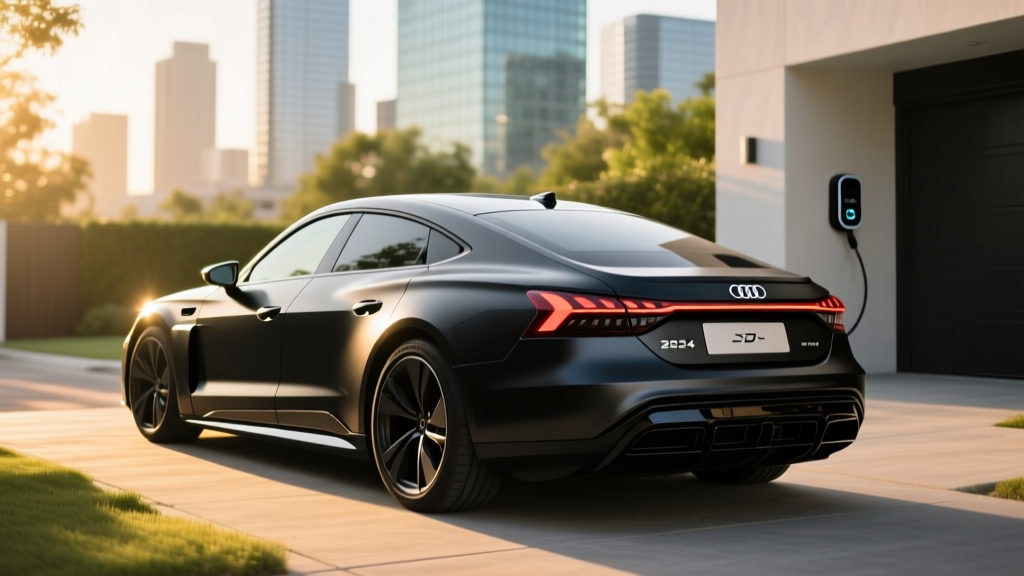
The 2024 Audi e-tron GT occupies a narrow but compelling space in the EV market: it's a four-door luxury grand tourer that shares its J1 performance platform with the Porsche Taycan, yet delivers a distinctly more comfort-oriented character. With EPA-estimated range reaching 238 miles on the base model and blistering 800-volt DC fast-charging capability, the e-tron GT is engineered for drivers who want Autobahn-bred refinement without sacrificing daily usability. But at a starting MSRP above $106,000, buyers need to know exactly what they're getting — and where this EV falls short of its six-figure promise.
This review breaks down every spec that matters for ownership: real-world range expectations, charging curve behavior, federal tax credit eligibility under current IRS §30D rules, and how the e-tron GT stacks up against the Taycan, Tesla Model S, and BMW i7 in the luxury EV sedan segment.
| Spec | e-tron GT quattro | RS e-tron GT |
|---|---|---|
| EPA Range | 238 miles | 232 miles |
| Battery (usable/total) | 84 kWh / 93.4 kWh | 84 kWh / 93.4 kWh |
| Battery Chemistry | NMC (Nickel Manganese Cobalt) | NMC |
| Drivetrain | Dual-motor AWD | Dual-motor AWD |
| Horsepower (boost) | 522 hp | 637 hp |
| 0–60 mph | 3.9 seconds | 3.1 seconds |
| Max DC Fast Charge | 270 kW | 270 kW |
| 10–80% DC Charge Time | ~22.5 minutes | ~22.5 minutes |
| Level 2 Charge Rate | 11 kW (AC) | 11 kW (AC) |
| MPGe (combined) | 82 MPGe | 79 MPGe |
| Efficiency | 41 kWh/100 mi | 43 kWh/100 mi |
| Base MSRP | $106,395 | $148,695 |
| Battery Warranty | 8 yr / 100,000 mi | 8 yr / 100,000 mi |
Range and Efficiency: EPA Numbers vs. Reality
Real-World Expectation: Expect 200–220 miles on mixed highway driving at 70–75 mph. In cold weather (below 35°F), plan for 170–195 miles. City and suburban driving with regenerative braking can approach or slightly exceed the EPA sticker.
The e-tron GT's 93.4 kWh battery pack (84 kWh usable, with a top and bottom buffer to preserve long-term cell health) uses NMC chemistry — the standard for performance-oriented EVs prioritizing energy density over the cycle-life advantages of LFP. According to fueleconomy.gov, the base e-tron GT quattro achieves 82 MPGe combined, translating to roughly 41 kWh per 100 miles.
Those numbers place the e-tron GT squarely in the middle of the luxury performance EV pack. The Porsche Taycan 4S achieves a similar 227-mile EPA rating, while the Tesla Model S Long Range stretches to 402 miles — a gap that matters on road trips. The e-tron GT prioritizes sustained high-speed performance and 800V charging architecture over maximum range, and that tradeoff is evident in the efficiency figures.
A critical ownership note: the e-tron GT's thermal management system is excellent at preserving battery health during repeated hard launches and fast-charging sessions. Audi's heat pump (standard on 2024 models) recovers waste heat from the drivetrain to warm the cabin, reducing the range penalty of winter heating by roughly 10–15% compared to resistive heating systems.
Charging: 800V Architecture Done Right
The e-tron GT's 800-volt electrical architecture is its single biggest practical advantage for road-trip charging. This isn't just a peak kW marketing number — the high-voltage system allows the car to sustain elevated charge rates longer before thermal taper kicks in.
| Charging Level | Power | Speed (miles of range per hour) | Notes |
|---|---|---|---|
| Level 1 (120V household) | ~1.4 kW | ~3–4 mi/hr | Emergency/trickle only; full charge in ~60+ hours |
| Level 2 (240V home) | 11 kW (48A) | ~28–32 mi/hr | Full charge in ~9 hours; requires 60A circuit |
| DC Fast Charge (peak) | 270 kW | Up to ~200 mi in 22.5 min (10–80%) | Requires 350 kW-capable station (EA, Ionity) |
| DC Fast Charge (typical 150 kW) | 150 kW | ~110 mi in 22 min (10–80%) | More common at Electrify America, EVgo stations |
DC Fast Charging — the real-world curve: At a 350 kW-capable Electrify America or Ionity station, the e-tron GT peaks near 270 kW at low state of charge (10–20%), holding above 200 kW through roughly 40% SoC before tapering. The 10–80% sprint takes approximately 22.5 minutes under optimal conditions. At a more common 150 kW station, you'll see sustained rates near 130–145 kW, stretching the 10–80% session to roughly 30 minutes. Above 80% SoC, charging slows dramatically to protect the NMC cells — expect 80–100% to add another 25–30 minutes. Plan your road-trip stops around the 10–80% window.
Home Level 2 charging: The onboard charger accepts up to 11 kW on AC power. On a 48-amp Level 2 home charger (requiring a dedicated 60-amp circuit), you'll add roughly 30 miles of range per hour, or fully recharge from empty overnight in about 9 hours. Most owners will plug in each evening and wake to a full battery — the 11 kW rate is competitive and sufficient for daily use. Note that the e-tron GT uses the CCS1 connector for DC fast charging; if you're charging at a Tesla Supercharger, you'll need an approved adapter, as Audi does not yet include native NACS ports on the 2024 model year.
Performance and Driving Dynamics
Both e-tron GT variants use a dual-motor all-wheel-drive layout with a two-speed transmission on the rear axle — a setup borrowed from the Taycan that improves both launch acceleration and high-speed efficiency.
The e-tron GT quattro produces 469 hp in normal driving and 522 hp during launch-control boost, hitting 0–60 mph in 3.9 seconds. The RS e-tron GT jumps to 590 hp standard and 637 hp on boost, dropping the 0–60 time to 3.1 seconds. Both figures are legitimately quick, and the two-speed rear transmission means the e-tron GT pulls hard well past 100 mph — unlike single-speed EVs that taper off at highway speeds.
Where the e-tron GT distinguishes itself from the Taycan is ride quality. Audi tunes the standard three-chamber air suspension for compliance, absorbing broken pavement and expansion joints with a composure that makes this a genuine 500-mile-per-day grand tourer. The RS model tightens things up with rear-axle steering (optional on the base model) and a more aggressive torque-vectoring rear differential, but even the RS never feels harsh.
Regenerative braking deserves a mention: the e-tron GT offers adjustable regen through steering-wheel paddles, but it does not offer true one-pedal driving to a full stop. You'll still use the brake pedal at low speeds. The system recovers up to 0.3g of deceleration through the electric motors alone, which handles most highway slowdown situations.
Interior, Cargo, and Daily Practicality
The e-tron GT's cabin uses Audi's familiar dual-screen MMI layout: a 12.3-inch digital instrument cluster and a 10.1-inch upper touchscreen for infotainment, with an 8.6-inch lower screen for climate controls. Wireless Apple CarPlay and Android Auto are standard. The Virtual Cockpit Plus display is among the best in the industry, offering a dedicated EV mode with energy flow, range prediction, and nearby charging station overlays.
Driver assistance comes via Audi's adaptive cruise assist with lane guidance — a SAE Level 2 system that handles steering, acceleration, and braking on highways but requires continuous driver supervision. It is not autonomous driving. The system is competent but not class-leading; Tesla's Autopilot and GM's Super Cruise offer more seamless highway experiences.
Cargo space is the e-tron GT's most obvious compromise:
- Rear trunk: 9.2 cubic feet (with a shallow, wide load floor)
- Front trunk (frunk): 3.5 cubic feet (enough for a charging cable kit and a small bag)
- Total cargo: 12.7 cubic feet — significantly less than the Tesla Model S (28 cu ft rear) or even the Porsche Taycan (14.3 cu ft rear + 2.9 cu ft frunk)
Passenger space is adequate for four adults but not generous:
- Front legroom: 41.7 inches
- Rear legroom: 34.7 inches — tight for taller passengers on longer trips
- Rear headroom is limited by the sloping roofline; passengers above 6 feet will notice
This is a grand tourer designed for two people and their luggage, not a family hauler. If rear-seat practicality is a priority, the BMW i7 or Mercedes EQS offer substantially more room.
Pricing, Tax Credits, and Ownership Cost
The 2024 e-tron GT lineup is straightforward but expensive:
| Trim | Base MSRP | As-Tested (typical options) | §30D Federal Tax Credit |
|---|---|---|---|
| e-tron GT Premium Plus | $106,395 | $112,000–$118,000 | Not eligible (MSRP exceeds $55,000 sedan cap) |
| e-tron GT Prestige | $112,295 | $120,000–$130,000 | Not eligible (MSRP exceeds $55,000 sedan cap) |
| RS e-tron GT | $148,695 | $155,000–$168,000 | Not eligible (MSRP exceeds $55,000 sedan cap) |
Federal tax credit reality: Under IRS §30D rules, new EVs classified as sedans must have an MSRP at or below $55,000 to qualify for the up-to-$7,500 credit. The e-tron GT, classified as a sedan, starts at $106,395 — nearly double the cap. No trim in the 2024 e-tron GT lineup qualifies for the federal purchase credit. Additionally, buyer income caps apply ($150,000 single / $300,000 joint for modified AGI), and battery component and critical mineral sourcing requirements further restrict eligibility even for qualifying vehicles. Always verify current rules at IRS.gov before purchasing.
Some buyers may find relief through state-level incentives — California's CVRP, Colorado's state credit, and various utility rebates may apply — but these vary by jurisdiction and are not guaranteed. Check your state's energy office and local utility for current programs.
Five-year ownership costs are substantial but not unreasonable for the segment:
- Insurance: Expect $3,500–$5,000 annually for the base model, higher for the RS. Luxury EVs carry elevated premiums due to repair costs and battery replacement exposure.
- Electricity vs. fuel savings: At the national average of $0.16/kWh, charging the e-tron GT costs roughly $6.50 per 100 miles. A comparable gas-powered Audi A7 (25 MPG combined, $3.50/gal) costs $14.00 per 100 miles — a savings of roughly $7.50 per 100 miles, or about $1,125 per year at 15,000 miles.
- Maintenance: EVs eliminate oil changes, transmission fluid, and spark plugs. Budget for tire rotation, cabin air filter, brake fluid, and wiper fluid — roughly $400–$600/year.
- Depreciation: Luxury EVs have historically depreciated faster than gas counterparts. Expect 45–55% value retention at 5 years / 60,000 miles, though this is improving as the EV market matures.
Pros and Cons
Pros
- 270 kW peak DC fast charging with a flat curve — among the fastest in the luxury segment
- Superb ride quality on the standard air suspension; genuine grand-touring comfort
- Two-speed rear transmission delivers strong acceleration at highway speeds, not just off the line
- Build quality and interior materials are excellent — real aluminum, available Nappa leather
- 84 kWh usable battery with robust thermal management; low degradation expected
- 8-year/100,000-mile battery and powertrain warranty
Cons
- EPA range of 238 miles is modest for a $106K+ vehicle; falls well short of Tesla Model S and Lucid Air
- No federal §30D tax credit eligibility due to MSRP cap
- Cargo space (12.7 cu ft total) is severely limited for the class
- Rear seat headroom and legroom are tight for adults over 6 feet
- Driver-assist system (Level 2) is competent but not as polished as GM Super Cruise or Tesla Autopilot
- CCS1 connector limits Tesla Supercharger access without an adapter
- Infotainment touchscreens can be slow to respond and lack physical shortcut buttons
How It Compares: e-tron GT vs. Key Rivals
The e-tron GT competes in a small but fierce segment. Here's how it measures up:
| Spec | Audi e-tron GT quattro | Porsche Taycan 4S | Tesla Model S LR | BMW i7 xDrive50 |
|---|---|---|---|---|
| EPA Range | 238 mi | 227 mi | 402 mi | 318 mi |
| Battery (usable) | 84 kWh | 84 kWh | ~95 kWh | 101.7 kWh |
| Peak DC Charge | 270 kW | 270 kW | 250 kW | 195 kW |
| 0–60 mph | 3.9 sec | 3.8 sec | 3.1 sec | 4.5 sec |
| Base MSRP | $106,395 | $107,400 | $74,990 | $119,300 |
| Cargo (total) | 12.7 cu ft | 17.2 cu ft | 28.0 cu ft | 31.7 cu ft |
| §30D Credit | No | No | No (sedan cap) | No |
Choose the e-tron GT if: You want Taycan-level performance with a more comfort-forward ride, value Audi's build quality and design language, and your daily driving stays within 200 miles with access to reliable DC fast charging for longer trips.
Choose the Taycan 4S if: Driving dynamics are your top priority and you prefer Porsche's more driver-focused interior, even at the cost of slightly less rear-seat comfort.
Choose the Model S Long Range if: Range is your deciding factor. 402 miles of EPA range, Supercharger network access, and a lower starting price make it the pragmatic choice — though interior quality and ride refinement don't match the German sedans.
Choose the BMW i7 if: You need genuine four-adult comfort, substantial cargo space, and a more traditional luxury sedan experience with over 300 miles of range.
Who Should Buy the 2024 Audi e-tron GT?
This EV is best suited for:
- Premium commuters with home Level 2 charging and a round-trip commute under 150 miles who want a refined, fast, and comfortable daily driver.
- Two-person households who don't need significant rear-seat or cargo space and prioritize design, build quality, and driving dynamics.
- Existing Audi/Porsche owners familiar with the J1 platform who want electric performance without the Taycan's firmer ride.
- Road-trippers willing to plan 20-minute DC fast-charge stops every 180–200 miles on highways, leveraging the excellent 270 kW charge rate.
This EV is not ideal for:
- Families needing rear-seat space for car seats or tall teenagers
- Buyers in rural areas with limited DC fast-charging infrastructure
- Anyone expecting federal tax credit savings — the MSRP cap eliminates eligibility
- Range-prioritized buyers who need 300+ miles between stops
Frequently Asked Questions
What is the real-world range of the 2024 Audi e-tron GT?
In mixed driving at moderate temperatures, expect 200–220 miles from a full charge. Highway driving at 75 mph reduces that to roughly 190–210 miles. In freezing weather with cabin heating, plan for 170–195 miles. The EPA sticker of 238 miles is achievable in city driving with regenerative braking, but most owners should budget around 200 miles as a practical daily range.
How fast does the e-tron GT charge at home and on the road?
At home on a Level 2 (240V, 48A) charger, the e-tron GT accepts up to 11 kW, adding roughly 30 miles of range per hour and fully charging overnight in about 9 hours. On DC fast chargers capable of 350 kW, it peaks at 270 kW and charges from 10–80% in approximately 22.5 minutes. At more common 150 kW stations, the 10–80% session takes about 30 minutes.
Does the 2024 Audi e-tron GT qualify for the federal EV tax credit?
No. Under IRS §30D rules, new sedans must have an MSRP at or below $55,000 to be eligible for the up-to-$7,500 federal clean vehicle credit. The e-tron GT starts at $106,395, which exceeds this cap by a wide margin. No trim qualifies. State and utility incentives may still apply depending on your location — check your state energy office for details.
Is the e-tron GT worth buying over the Porsche Taycan?
They share the same J1 platform, battery, and 800V architecture, so the decision comes down to character. The e-tron GT is tuned for grand-touring comfort with a more compliant air suspension and a slightly more spacious rear seat. The Taycan is sharper and more engaging on back roads. If comfort and daily drivability are your priorities, the Audi is the better choice. If you want a sports car that happens to be electric, choose the Porsche.
What is the battery warranty on the e-tron GT?
Audi covers the high-voltage battery and electric powertrain for 8 years or 100,000 miles, whichever comes first. The warranty guarantees the battery will retain at least 70% of its original capacity during that period. Based on data from the J1 platform (shared with the Taycan, which has been on sale since 2020), real-world degradation has been minimal — most owners report 93–96% state of health after 3 years and 40,000+ miles.
Can I charge the e-tron GT at Tesla Superchargers?
The 2024 e-tron GT uses the CCS1 connector. Tesla has begun opening select Superchargers to non-Tesla EVs via the Magic Dock adapter (built into some stalls) or through a third-party NACS-to-CCS adapter. However, coverage is limited and adapters add cost and complexity. For reliable DC fast charging, the Electrify America network (which Audi has partnered with) and EVgo are your primary options. Audi has confirmed future models will adopt the NACS connector, but the 2024 model year retains CCS1.