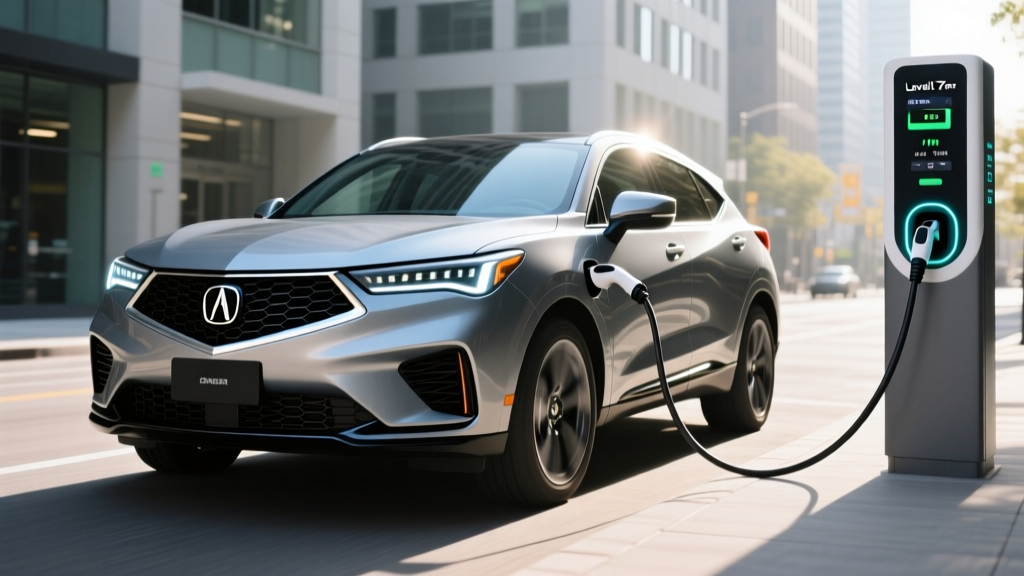
Quick Verdict: Acura's First EV Borrows Heavily from GM
The 2024 Acura ZDX Type S is a luxury electric SUV built on General Motors' Ultium platform — the same architecture underpinning the Cadillac Lyriq and GMC Hummer EV. With 500 horsepower, dual-motor AWD, and a 102 kWh (usable) NMC battery, it targets buyers who want premium branding with serious straight-line performance. But beneath the Acura badge lies a vehicle whose strengths and weaknesses are largely inherited from GM's EV playbook.
For the Type S specifically, Acura tunes the suspension firmer, adds Brembo brakes, and pushes output to 500 HP and 543 lb-ft of torque. The trade-off? Reduced range compared to the base ZDX A-Spec and a ride quality that won't suit everyone on rough pavement. If you're cross-shopping the BMW iX, Audi Q8 e-tron, or Tesla Model X, the ZDX Type S demands a close look at its charging behavior, real-world efficiency, and federal tax credit status before you sign.
Range, Efficiency & Real-World Expectations
Real-World Expectation: Plan for ~230–250 miles on highway-heavy trips at 70+ mph. In cold weather (below 32°F), expect a 20–30% reduction, dropping effective range to roughly 190–220 miles before you need to find a charger.
The Type S sacrifices range for performance. The base ZDX A-Spec with its single-motor RWD layout achieves an EPA-estimated 313 miles, but adding the second motor and the Type S powertrain tune drops that figure by 35 miles. According to fueleconomy.gov, the ZDX Type S returns 94 MPGe combined (97 city / 91 highway), which translates to roughly 36 kWh per 100 miles of driving.
That efficiency figure is middling for the luxury EV SUV segment. The BMW iX xDrive50 achieves 87 MPGe combined but carries a smaller battery and lighter curb weight. The Tesla Model X Plaid, with its more aerodynamic profile and efficient powertrain, posts 101 MPGe. In practical terms, the ZDX Type S's 102 kWh usable battery is large enough to mask some of that inefficiency — but you'll notice it on road trips where DC fast-charging stops become slightly more frequent.
| Spec | Value |
|---|---|
| EPA Range | 278 miles |
| Battery (usable) | 102 kWh, NMC (nickel manganese cobalt) |
| MPGe (city / hwy / combined) | 97 / 91 / 94 |
| Energy Consumption | ~36 kWh/100 mi |
| Drivetrain | Dual-motor AWD |
| Horsepower / Torque | 500 HP / 543 lb-ft |
| 0–60 mph | ~4.5 seconds |
| Max DC Fast Charge | 190 kW (peak) |
| 10–80% DC Charge Time | ~42 minutes |
| Level 2 Home Charge Rate | 11.5 kW (~26 mi/hr) |
| Base MSRP (Type S) | $69,850 (incl. destination) |
| Battery/Powertrain Warranty | 8 years / 100,000 miles |
Charging Speed: DC Fast, Level 2 & Home Setup
The ZDX Type S supports a peak DC fast-charge rate of 190 kW via its CCS1 connector. On paper, that's competitive with the Audi Q8 e-tron (170 kW) but falls short of the Hyundai Ioniq 5 (240 kW) and Porsche Taycan (270 kW). More importantly, peak kW is not sustained kW — the Ultium platform's charge curve tapers noticeably after 60% state of charge, meaning the 10–80% session takes approximately 42 minutes under ideal conditions (battery preconditioned, ambient temperature above 60°F).
| Level | Power | Speed (approx.) | Typical Use |
|---|---|---|---|
| Level 1 (120V) | ~1.4 kW | ~3 miles/hour | Emergency / overnight trickle |
| Level 2 (240V, 48A) | 11.5 kW | ~26 miles/hour | Home daily charging (~11 hrs 0–100%) |
| DC Fast Charge | 190 kW peak | 10–80% in ~42 min | Road trips, public stations |
For home charging, the ZDX's 11.5 kW onboard charger is a strong point — it's faster than the Cadillac Lyriq's 11.5 kW unit and will replenish the large battery from near-empty overnight in about 10–11 hours on a properly installed 240V/48A Level 2 circuit. Expect to budget $800–$2,000 for a professional Level 2 installation (charger + electrician + permit), depending on your panel capacity and run length. A panel upgrade to 200A service can add $1,500–$3,000 if your home needs it.
One practical note: the ZDX uses CCS1 for DC fast charging, not NACS (Tesla's connector). GM has committed to adopting NACS on future models, and Acura's parent company Honda is also moving that direction — but for the 2024 model year, you'll rely on Electrify America, EVgo, ChargePoint, and other CCS networks. Reliability on those networks varies by region, which is worth factoring into your daily routine.
Performance & Driving Dynamics
The Type S badge means something at Acura, and the ZDX Type S delivers on the performance promise. Dual electric motors produce 500 horsepower and 543 lb-ft of torque, launching the 5,800-pound SUV to 60 mph in approximately 4.5 seconds. That's quicker than the base BMW iX xDrive50 (4.6 seconds) and competitive with the Audi Q8 e-tron (5.1 seconds to 60). The instant torque delivery makes highway merging and city acceleration feel effortless.
The Type S adds an adaptive air suspension with a firmer tune, larger Brembo front brakes (12.6-inch rotors), and 22-inch wheels wrapped in summer performance tires. The result is a planted, confident feel on twisty roads — but the ride is noticeably stiffer than the A-Spec trim, and those 22-inch wheels transmit more road imperfections into the cabin. On rough concrete highways, the ride can become fatiguing over long distances.
Regenerative braking is adjustable via steering-wheel paddles, offering everything from mild coasting to near one-pedal driving at the strongest setting. The system is smooth and predictable, though it doesn't quite achieve the aggressive regen of a Tesla or Hyundai Ioniq 5 at max setting.
Interior, Tech & Cargo Space
Inside, the ZDX Type S features an 11.3-inch center touchscreen running Acura's Google Built-in infotainment system — meaning Google Maps, Google Assistant, and the Play Store are native to the vehicle. Wireless Apple CarPlay and Android Auto are also standard. The 11-inch digital driver display is clear but not as configurable as some competitors.
Material quality is a highlight: perforated Milano leather seats (heated and ventilated front, heated rear), open-pore wood trim, and a 18-speaker Bang & Olufsen audio system on the Type S. Build quality is solid, though some lower-dashboard plastics feel borrowed from the GM parts bin — which they are.
| Dimension | Measurement |
|---|---|
| Front Legroom | 42.5 inches |
| Rear Legroom | 37.4 inches |
| Cargo (rear seats up) | 28.4 cu ft |
| Cargo (rear seats folded) | 62.3 cu ft |
| Frunk (front trunk) | None |
The cargo area is adequate but not class-leading. The BMW iX offers 35.5 cu ft behind the rear seats, and the Tesla Model X provides significantly more with its optional third row. The ZDX also lacks a frunk (front trunk), which is a missed opportunity for an EV with no engine bay to fill.
On the driver-assistance front, the ZDX comes equipped with AcuraWatch, which includes adaptive cruise control with low-speed follow, lane-keeping assist, blind-spot monitoring, and traffic-sign recognition. This is an SAE Level 2 system — it assists with steering and speed but requires the driver to remain fully engaged at all times. It is not autonomous driving. The system works well on highways but lacks the hands-free capability of GM's Super Cruise or Ford's BlueCruise, which is a notable omission given the GM platform underneath.
Pricing, Trims & Federal Tax Credit Eligibility
| Trim | Drivetrain | MSRP (incl. dest.) | §30D Credit Eligible? |
|---|---|---|---|
| A-Spec (RWD) | Single-motor RWD | $59,850 | Check current IRS sourcing rules |
| A-Spec (AWD) | Dual-motor AWD | $64,850 | Check current IRS sourcing rules |
| Type S | Dual-motor AWD | $69,850 | Check current IRS sourcing rules |
The ZDX Type S starts at $69,850 including destination charges. Acura doesn't offer extensive option packages the way German rivals do — the Type S comes well-equipped from the factory, so your as-tested price stays close to the sticker.
Regarding the federal EV tax credit under IRS §30D, eligibility is complex and subject to change. Key requirements include:
- MSRP Cap: SUVs must be at or below $80,000 — the ZDX Type S qualifies at $69,850.
- Buyer Income Cap: Modified AGI must not exceed $150,000 (single) / $300,000 (joint filing).
- Battery Sourcing: Critical minerals and battery components must meet phased-in domestic/free-trade-partner sourcing thresholds. These requirements tighten annually — verify current-year compliance on the IRS website or with your tax professional.
- Point-of-Sale Transfer: As of 2024, eligible buyers can transfer the credit to the dealer for an immediate price reduction at purchase, rather than waiting to claim it on their tax return.
Critical caveat: Because the ZDX is built on GM's Ultium platform with battery cells from Ultium Cells LLC (a GM–LG Energy Solution joint venture in the U.S.), it has a strong case for credit eligibility. However, battery component and critical mineral sourcing rules are updated frequently. Always confirm eligibility with the dealer and your tax advisor before relying on the credit in your purchase decision.
Warranty, Ownership Costs & Who Should Buy
Acura backs the ZDX with a 4-year/50,000-mile limited warranty and an 8-year/100,000-mile battery and powertrain warranty. The battery warranty covers capacity loss below 70% of original capacity during the coverage period — consistent with industry norms but less generous than Hyundai/Kia's 10-year/100,000-mile coverage.
Insurance costs for the ZDX Type S run higher than average for the segment. Expect annual premiums in the $2,400–$3,200 range depending on your state and driving record — luxury EV SUVs with 500 HP attract higher rates. Maintenance costs are low (no oil changes, minimal brake wear thanks to regen), but tire replacement on the 22-inch Type S wheels can cost $1,600–$2,400 for a set of premium rubber.
Who the ZDX Type S suits best:
- Commuters with home charging who want a premium badge and strong acceleration without going full Tesla.
- Families needing two rows of comfortable seating and decent cargo space for daily life (though road-trippers may want more range).
- Acura loyalists transitioning from an MDX or RDX who want to stay in the brand family.
Who should look elsewhere:
- Road-trip-heavy drivers who need 300+ miles of real-world range (consider the BMW iX xDrive50 or Tesla Model X).
- Buyers wanting hands-free highway driving — the lack of Super Cruise or equivalent is a miss on a GM-platform vehicle.
- Those who prioritize ride comfort over sporty handling (the A-Spec trim is more compliant).
Pros & Cons
- 500 HP and 4.5-sec 0–60 make it genuinely quick
- Premium interior with B&O audio and Google Built-in
- 11.5 kW Level 2 charging is fast for home use
- MSRP under $80K keeps §30D tax credit in play
- Strong build quality; Ultium platform is proven
- 278-mi EPA range is below rivals; real-world highway ~230 mi
- No frunk; cargo space trails BMW iX and Tesla Model X
- 190 kW peak DC charge is mid-pack; 42 min 10–80%
- No hands-free driving (Super Cruise not offered)
- 22-inch wheels hurt ride quality on rough roads
- CCS1 only — no NACS/Tesla Supercharger access natively
Frequently Asked Questions
What is the real-world range of the 2024 Acura ZDX Type S?
The EPA rates it at 278 miles, but expect roughly 230–250 miles on highway-heavy drives at 70+ mph. In winter conditions below freezing, plan for 190–220 miles of usable range before needing to charge.
How fast does the ZDX Type S charge at home and on the road?
At home on a 240V/48A Level 2 charger (11.5 kW), you'll add about 26 miles of range per hour — a full overnight charge takes 10–11 hours. On a DC fast charger, the 190 kW peak rate delivers a 10–80% charge in approximately 42 minutes under ideal conditions.
Does the 2024 Acura ZDX Type S qualify for the $7,500 federal EV tax credit?
It may. The MSRP of $69,850 is under the $80,000 SUV cap, and the Ultium battery is assembled in the U.S. However, eligibility depends on current-year critical mineral and battery component sourcing rules, plus your personal income. Verify on IRS.gov or with a tax professional before purchase.
Is the ZDX Type S worth buying over the BMW iX or Tesla Model X?
If you value Acura's brand, a firm sporty ride, and want to stay under $70K MSRP, yes. But the BMW iX offers more cargo space and available hands-free driving, while the Tesla Model X delivers more range, Supercharger access, and a frunk. Test-drive all three before deciding.
Does the ZDX Type S have a frunk (front trunk)?
No. Despite being built on a dedicated EV platform, the ZDX does not offer a front trunk. All cargo space is in the rear (28.4 cu ft seats up, 62.3 cu ft folded).
What battery chemistry does the ZDX Type S use?
The ZDX uses an NMC (nickel manganese cobalt) lithium-ion battery pack from the GM Ultium family. NMC offers high energy density but is more sensitive to heat and typically degrades slightly faster than LFP chemistry over very high cycle counts. The 8-year/100,000-mile warranty (covering retention below 70%) provides a reasonable safety net.