Quick Verdict: A Premium Compact EV With Real Trade-Offs
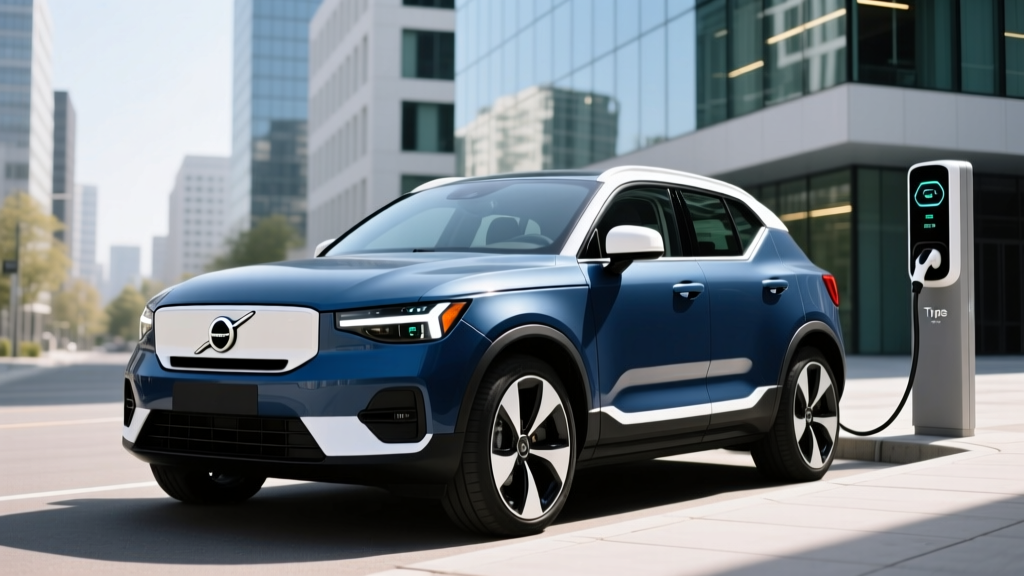
The 2023 Volvo XC40 Recharge is a luxury compact SUV that pairs Scandinavian design with genuine performance credentials. Its dual-motor all-wheel-drive powertrain delivers 402 horsepower and a 4.7-second 0–60 mph time, while the 78 kWh battery (75 kWh usable) provides an EPA-estimated 223 miles of range. That range figure is the XC40 Recharge's most debated spec — competitive in 2021 when it launched, but increasingly squeezed by rivals like the Tesla Model Y, BMW iX, and Hyundai Ioniq 5, which all push past 250 or even 300 miles.
For 2023, Volvo updated the XC40 Recharge with a revised infotainment system running Google Built-in, improved battery thermal management, and a slightly higher DC fast-charge peak of 200 kW (up from 150 kW on earlier models). The starting MSRP of $53,550 (including destination) positions it squarely in the premium compact EV segment. Whether it qualifies for the full $7,500 federal tax credit under IRS §30D rules depends on battery-sourcing requirements that shifted throughout 2023 and into 2024 — more on that below.
If you value build quality, a refined ride, and one of the best driver-assistance suites in the segment, the XC40 Recharge earns a serious look. If maximum range or the lowest cost-per-mile is your priority, competitors offer more electrons per dollar.
Range, Efficiency & Real-World Expectations
Real-World Expectation: 190–210 miles on highway-heavy trips at 70+ mph; 170–190 miles in cold weather (below 30°F) with cabin heating; up to 225 miles in mild city/suburban driving with regenerative braking.
Efficiency: 87 MPGe combined / 39 kWh per 100 miles
The EPA's 223-mile combined estimate for the 2023 XC40 Recharge is measured on a standardized test cycle that blends city and highway driving at moderate temperatures. In practice, this SUV's boxy aerodynamics and 4,758-pound curb weight work against highway efficiency. On a 250-mile road trip at sustained 70–75 mph speeds in 65°F weather, expect to arrive with roughly 20–30 miles of buffer remaining — meaning real highway range lands around 195–205 miles.
Cold weather is the bigger concern for northern-climate buyers. Lithium-ion batteries lose capacity in low temperatures, and cabin heating draws significant energy (the XC40 Recharge uses a resistive PTC heater rather than a more efficient heat pump). In sustained 20°F conditions with the heater running, plan for 170–190 miles of usable range. Volvo offers a battery preconditioning feature that warms the pack when you navigate to a DC fast charger, which helps restore charge speed — but it does not recover lost range.
City and suburban drivers who rely on regenerative braking and drive at lower speeds will see numbers closer to — or even slightly above — the EPA sticker. The XC40 Recharge's one-pedal driving mode is well-calibrated, with strong regen that can bring the car to a full stop without touching the brake pedal.
Compared to key rivals, the 223-mile EPA figure trails the Tesla Model Y Long Range (330 miles), the Hyundai Ioniq 5 (303 miles with the larger battery), and the BMW iX xDrive50 (324 miles). It's roughly on par with the Jaguar I-PACE (234 miles) and the Audi Q4 e-tron (242 miles). For daily commutes under 60 miles round-trip with home charging, 223 miles is more than adequate. For frequent 300+ mile road trips, you'll be stopping more often than Model Y or Ioniq 5 owners.
Battery, Powertrain & Performance Specs
| Specification | 2023 Volvo XC40 Recharge |
|---|---|
| Battery Capacity (total / usable) | 78 kWh / 75 kWh |
| Battery Chemistry | NMC (Nickel Manganese Cobalt) |
| Drivetrain | Dual-motor AWD |
| Horsepower | 402 hp |
| Torque | 486 lb-ft |
| 0–60 mph | 4.7 seconds |
| Top Speed | 112 mph (electronically limited) |
| EPA Range | 223 miles |
| EPA Efficiency | 87 MPGe / 39 kWh/100 mi |
| Curb Weight | 4,758 lbs |
| Towing Capacity | Not rated for towing |
The XC40 Recharge uses an NMC (nickel manganese cobalt) lithium-ion battery pack, which offers higher energy density than LFP (lithium iron phosphate) chemistry but is more sensitive to sustained high states of charge. Volvo recommends daily charging to 80–90% for battery longevity and reserving 100% fills for road trips. The 75 kWh of usable capacity sits behind a 3 kWh buffer that protects against over-discharge and extends cycle life.
The dual-motor setup provides one permanent-magnet synchronous motor on each axle, delivering true all-wheel drive with torque vectoring capability. The 402 hp and 486 lb-ft of torque make this one of the quickest vehicles in its class — the 4.7-second 0–60 time beats the Audi Q4 50 e-tron (5.8 sec) and is competitive with the BMW iX xDrive50 (4.6 sec). Acceleration is immediate and linear, as expected from an EV, and the XC40 Recharge feels genuinely quick merging onto highways or passing on two-lane roads.
The ride quality is firm but well-damped, with Volvo's tuning prioritizing composure over plushness. Road noise is well-managed, and the low center of gravity from the floor-mounted battery pack reduces body roll in corners. However, the 4,758-pound curb weight is noticeable during aggressive direction changes — this is a comfort-oriented luxury SUV, not a sports car.
Charging Speed: DC Fast, Level 2 & Home Setup
| Charging Level | Power / Rate | Speed | Notes |
|---|---|---|---|
| Level 1 (120V household) | 1.4 kW | ~3–4 miles/hour | Emergency/trickle only; 0–100% in ~55 hours |
| Level 2 (240V home/public) | 11 kW (48A) | ~25–30 miles/hour | 0–100% in ~7–8 hours; overnight full charge |
| DC Fast Charge | 200 kW peak | 10–80% in ~37 minutes | Peak rate not sustained; tapers significantly above 80% |
The 2023 XC40 Recharge's onboard charger accepts up to 11 kW on Level 2 AC power, which is among the better rates in this segment (the Hyundai Ioniq 5 accepts 10.9 kW, while the Tesla Model Y accepts 11.5 kW). On a 48-amp home Level 2 charger — the most common residential installation — you'll add roughly 25–30 miles of range per hour. A full overnight charge from near-empty takes about 7–8 hours, meaning most owners wake up to a full battery every morning.
For DC fast charging, Volvo upgraded the 2023 model to accept up to 200 kW at compatible stations (up from 150 kW on 2021–2022 models). On a 350 kW Electrify America or similar high-power charger, the XC40 Recharge can add approximately 80 miles of range in 10 minutes under optimal conditions. However, like all EVs, the charge curve tapers as the battery fills. The 200 kW peak rate is typically sustained only between roughly 10–40% state of charge; from 40–80%, the rate gradually drops to around 100–120 kW. The full 10–80% charge takes approximately 37 minutes, which is competitive but not class-leading — the Hyundai Ioniq 5's 800V architecture achieves 10–80% in about 18 minutes on a 350 kW charger.
The XC40 Recharge uses a CCS1 (Combined Charging System) connector for DC fast charging and a J1772 connector for Level 1/2 AC charging. It does not natively support the NACS (Tesla) connector, though adapters are becoming available. You can charge at Tesla Superchargers with a CCS-to-NACS adapter where Tesla has opened its network to non-Tesla vehicles, but check station compatibility in your area.
Home charging installation for a 48-amp Level 2 charger typically requires a dedicated 60-amp circuit. Total installation costs range from $500 to $2,500 depending on panel capacity, run distance, and local permitting. If your home's electrical panel is already near capacity (common in older homes), a panel upgrade to 200 amps can add $1,500–$3,500 to the project.
Pricing, Trims & Federal Tax Credit Eligibility
| Trim Level | Base MSRP (incl. destination) | Key Features |
|---|---|---|
| Core | $53,550 | 19" wheels, 9" touchscreen, Google Built-in, Pilot Assist, heated front seats, panoramic roof |
| Plus | $56,150 | Adds: 20" wheels, 360° camera, wireless phone charging, heated steering wheel, Harman Kardon audio |
| Ultimate | $59,350 | Adds: Pixel LED headlights, head-up display, premium leather, ventilated front seats, air purifier |
The 2023 XC40 Recharge starts at $53,550 for the Core trim, which is well-equipped with Volvo's full suite of safety and driver-assistance features, a 9-inch portrait-oriented touchscreen running Google Built-in (with native Google Maps, Google Assistant, and Google Play Store), and a panoramic glass roof. The Plus trim at $56,150 adds desirable comfort and convenience upgrades, while the Ultimate at $59,350 pushes into near-full-luxury territory with pixel LED headlights and a head-up display.
A fully optioned Ultimate with premium paint and the optional Climate Package (heated rear seats, heated wiper blades) can approach $62,000 before incentives.
MSRP Cap: The XC40 Recharge is classified as an SUV, so the MSRP cap is $80,000 — all trims qualify.
Buyer Income Cap: Modified AGI must not exceed $150,000 (single), $225,000 (head of household), or $300,000 (joint).
Battery Sourcing: Under the critical minerals and battery component rules that phased in during 2023 and tightened in 2024, the XC40 Recharge's eligibility for the full $7,500 (vs. $3,750 or $0) depends on the specific production batch and where its battery cells and minerals were sourced. Volvo sources cells from CATL (China) and LG Energy Solution (South Korea/Poland), and sourcing compliance has varied by production date.
Point-of-Sale Transfer: Beginning in 2024, eligible buyers can transfer the credit to the dealer for an immediate price reduction at purchase rather than claiming it on their tax return.
Always verify current eligibility on IRS.gov and consult a tax professional before relying on credit amounts for purchase decisions.
For buyers who purchased in early 2023 before the April 18 sourcing rules took effect, the full $7,500 credit was generally available. For later purchases and into 2024, the credit amount may be reduced to $3,750 or eliminated depending on battery component and critical mineral sourcing compliance. This is one of the most frustrating aspects of current EV buying — eligibility can change based on production date, not just the model name.
Interior, Cargo Space & Technology
The XC40 Recharge's interior reflects Volvo's Scandinavian design philosophy: clean lines, high-quality materials, and an emphasis on functionality over flash. The 9-inch portrait touchscreen runs Google Built-in, which provides native Google Maps navigation (with real-time EV range estimation and charger routing), Google Assistant voice control, and access to apps like Spotify and Waze through the Google Play Store. The system is responsive and well-integrated, though some buyers may prefer a larger display or physical climate controls — the XC40 routes nearly all vehicle settings through the touchscreen.
A 12.3-inch digital instrument cluster behind the steering wheel displays speed, range, navigation, and driver-assistance information. Apple CarPlay is supported (wireless on 2023 models), while Android Auto is redundant given the native Google integration.
Passenger space is adequate for a compact SUV but not generous:
- Front headroom: 39.4 inches
- Front legroom: 40.9 inches
- Rear headroom: 39.1 inches
- Rear legroom: 36.1 inches
Rear legroom at 36.1 inches is tighter than the Hyundai Ioniq 5 (39.4 inches) and the Tesla Model Y (41.6 inches). Adults over 6 feet tall will find the rear seat acceptable for short trips but cramped for long journeys. The rear seatback reclines slightly, and the flat floor (no transmission tunnel) helps middle-seat comfort.
Cargo space is a bright spot, aided by the EV platform's packaging advantages:
- Cargo behind rear seats: 20.7 cubic feet
- Cargo with rear seats folded: 57.5 cubic feet
- Front trunk (frunk): 1.1 cubic feet — small but useful for charging cables
The 20.7 cu ft behind the rear seats is competitive with the BMW iX and slightly less than the Model Y (30.2 cu ft). The 1.1 cu ft frunk is modest — enough for a charging cable bag and a few small items, but not the deep storage well you'll find in a Ford Mustang Mach-E or Hyundai Ioniq 5.
Safety & Driver-Assistance Systems
Volvo's reputation for safety is well-earned, and the XC40 Recharge continues that tradition. The vehicle earned the IIHS Top Safety Pick+ award (the highest designation) and a 5-star overall rating from NHTSA.
The standard Pilot Assist system is a Level 2 driver-assistance suite (per SAE classification) that combines adaptive cruise control with lane-centering steering. It works well on highways, maintaining speed and following distance while keeping the vehicle centered in its lane. However, it is not a self-driving system — the driver must remain attentive, keep hands on the wheel, and be prepared to take over at any time. Unlike GM's Super Cruise or Ford's BlueCruise, Pilot Assist does not offer hands-free operation on mapped highways.
Additional standard safety features include:
- Automatic emergency braking with pedestrian, cyclist, and large-animal detection
- Run-off road protection (a Volvo specialty that cushions occupants if the vehicle leaves the pavement)
- Blind-spot monitoring with steering assist
- Rear cross-traffic alert with auto-brake
- 360-degree surround-view camera (Plus and Ultimate trims)
Warranty & Battery Longevity
Volvo provides competitive warranty coverage for the XC40 Recharge:
- Basic vehicle warranty: 4 years / 50,000 miles
- Powertrain warranty: 4 years / 50,000 miles
- Battery warranty: 8 years / 100,000 miles (whichever comes first), covering capacity loss below 70% of original
- Corrosion warranty: 12 years / unlimited miles
- Roadside assistance: 4 years / unlimited miles
The battery warranty's 70% capacity retention threshold is industry-standard, matching Tesla, Hyundai, and most other manufacturers. If the battery degrades below 70% of its original 78 kWh capacity within 8 years or 100,000 miles, Volvo will repair or replace it to bring it back above that threshold. In practice, NMC batteries in thermally managed packs like the XC40 Recharge's typically retain 85–92% capacity after 100,000 miles based on fleet data from similar platforms. A full battery replacement outside of warranty is estimated at $12,000–$16,000 (parts and labor), though this cost is expected to decline as battery technology matures.
To maximize battery longevity, Volvo recommends:
- Setting daily charge limits to 80–90% (configurable in the vehicle settings)
- Avoiding frequent DC fast charging when Level 2 is available
- Using battery preconditioning before fast charging (automatic when navigating to a charger via Google Maps)
- Avoiding leaving the vehicle at 100% charge for extended periods in hot weather
Pros, Cons & Who Should Buy
Pros
- Strong 402 hp dual-motor performance (4.7-sec 0–60)
- Premium interior quality and Scandinavian design
- Excellent safety ratings (IIHS TSP+, NHTSA 5-star)
- Google Built-in infotainment with native EV routing
- Well-equipped base trim at $53,550
- Competitive 11 kW Level 2 charging rate
- Standard AWD with good all-weather capability
Cons
- 223-mile EPA range trails most competitors
- No heat pump — cold-weather range loss is significant
- DC fast-charge speed (37 min 10–80%) is average, not class-leading
- Tight rear legroom (36.1 in) for the segment
- Small frunk (1.1 cu ft)
- Federal tax credit eligibility uncertain due to battery sourcing
- No hands-free highway driving feature (unlike Super Cruise/BlueCruise)
Who the 2023 XC40 Recharge Suits Best
Buy it if: You want a luxury-branded compact EV with excellent build quality, strong all-weather AWD performance, top safety ratings, and your daily commute is under 80 miles round-trip with reliable home charging. It's ideal for urban and suburban professionals who value design and comfort over maximum range.
Look elsewhere if: You regularly drive 250+ miles between charging stops, need maximum rear-seat space for growing families, want the fastest possible DC charging for road trips, or require guaranteed full federal tax credit eligibility. Consider the Tesla Model Y, Hyundai Ioniq 5, or BMW iX instead.
Frequently Asked Questions
What is the real-world range of the 2023 Volvo XC40 Recharge?
The EPA rates it at 223 miles combined. In real-world highway driving at 70+ mph, expect 195–210 miles. In cold weather below 30°F, plan for 170–190 miles. City driving with regenerative braking can match or slightly exceed the EPA figure.
How fast does the XC40 Recharge charge?
On a DC fast charger, it peaks at 200 kW and charges from 10–80% in approximately 37 minutes. On a home Level 2 charger (240V, 48A), it accepts up to 11 kW, adding about 25–30 miles per hour and reaching a full charge overnight in 7–8 hours.
Does the 2023 XC40 Recharge qualify for the $7,500 federal tax credit?
It may qualify for the full $7,500, a reduced $3,750, or no credit depending on battery sourcing compliance, buyer income, and purchase date. The MSRP cap ($80,000 for SUVs) is met by all trims. Check current eligibility on IRS.gov and verify with your dealer and tax professional.
Is the XC40 Recharge worth buying over the Tesla Model Y or Hyundai Ioniq 5?
It depends on priorities. The Model Y offers far more range (330 miles) and access to the Supercharger network. The Ioniq 5 charges faster (18 min 10–80%) and has more rear-seat space. The XC40 Recharge wins on interior material quality, safety features, and luxury-brand prestige. If premium build and safety are your top criteria, it's a strong choice; if range and charging speed matter most, look at the alternatives.
Does the XC40 Recharge have a heat pump?
No. The 2023 XC40 Recharge uses a resistive PTC heater for cabin heating, which draws more energy from the battery than a heat pump would. This contributes to greater range loss in cold weather compared to EVs equipped with heat pumps (like the Hyundai Ioniq 5 or Tesla Model Y).
Can the XC40 Recharge tow a trailer?
Volvo does not rate the 2023 XC40 Recharge for towing in the US market. If towing is a priority, consider the Tesla Model Y (3,500 lb capacity) or the Ford Mustang Mach-E (up to 2,200 lbs with the towing package).
What connector does the XC40 Recharge use?
It uses CCS1 for DC fast charging and J1772 for Level 1/2 AC charging. It does not natively support NACS (Tesla's connector), though CCS-to-NACS adapters are becoming available for use at opened Tesla Supercharger stations.