Why the 2023 Toyota bZ4X Is Generating Lemon Law Searches
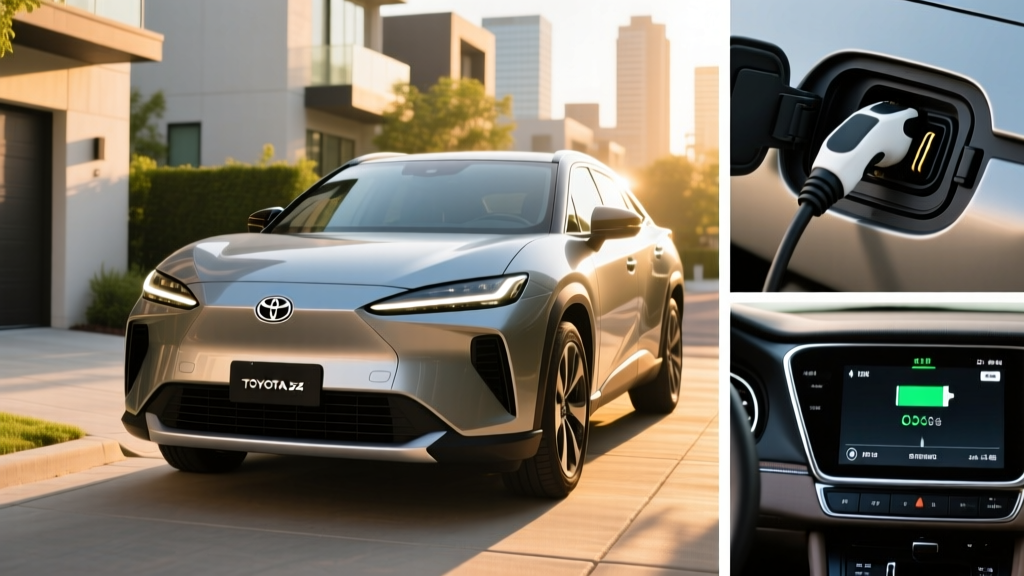
Toyota's first mass-market battery-electric vehicle arrived with enormous fanfare and an equally enormous recall. The 2023 bZ4X — developed jointly with Subaru (which sells the mechanically identical Solterra) — was pulled off dealer lots just weeks after launch in June 2022 due to a wheel-hub bolt defect that could cause a wheel to detach. That early quality stumble, combined with real-world range that fell noticeably short of EPA estimates in cold and highway driving, has pushed a segment of owners to research 2023 Toyota bZ4X lemon law protections and buyback eligibility.
This review examines the bZ4X's actual capabilities, the mechanical issues behind the legal searches, and whether the vehicle — now heavily discounted on the used market — represents smart money in 2026.
2023 bZ4X Specifications at a Glance
| Specification | Value |
|---|---|
| EPA Range (FWD XLE) | 252 miles |
| EPA Range (AWD XLE) | 228 miles |
| EPA Range (Limited FWD) | 236 miles |
| Battery Capacity (Usable) | 65.6 kWh (71.4 kWh gross) |
| Battery Chemistry | NMC (Nickel Manganese Cobalt) |
| Max DC Fast Charge Rate | 150 kW (FWD) / 150 kW (AWD) |
| 10–80% DC Fast Charge Time | ~30 minutes (FWD) / ~30 minutes (AWD) |
| Level 2 Home Charging | 7.2 kW onboard charger (~25 mi/hr) |
| Motor Output (FWD) | 201 hp / 196 lb-ft torque |
| Motor Output (AWD) | 214 hp / 248 lb-ft torque |
| 0–60 mph (FWD) | 7.1 seconds |
| 0–60 mph (AWD) | 5.8 seconds |
| MPGe (FWD Combined) | 119 MPGe |
| Efficiency (FWD) | 28 kWh/100 mi |
| Cargo Volume (rear seats up) | 27.7 cu ft |
| Cargo Volume (rear seats folded) | 56.9 cu ft |
| Rear Legroom | 35.3 inches |
| Battery Warranty | 8 years / 100,000 miles |
| Basic Warranty | 3 years / 36,000 miles |
Real-World Range: Where the bZ4X Falls Short of the Sticker
The bZ4X's range shortfall is the single most cited complaint in owner forums and a factor in some lemon law inquiries. The root cause is a combination of factors:
- Aerodynamic drag: The bZ4X is a tall, blunt-nosed crossover with a higher drag coefficient than sleeker competitors like the Ioniq 5.
- Thermal management: The bZ4X uses a resistive PTC heater in some markets rather than a full heat pump (a heat pump was added for the 2024 model year in the US). This draws heavily from the traction battery in cold weather.
- Battery buffer strategy: Toyota conservatively locks out approximately 5.8 kWh of the 71.4 kWh gross capacity as a buffer to protect long-term battery health, leaving 65.6 kWh usable. This is prudent for longevity but reduces available range.
- Weight: At 4,175 lbs (FWD), the bZ4X is heavier than some rivals with similar battery sizes, demanding more energy per mile.
For daily commuting under 60 miles round-trip with home charging, the real-world range is perfectly adequate. For road trips, plan for stops every 180–200 miles in moderate weather and every 150–170 miles in winter.
Charging Performance: The bZ4X's Weakness on the Road
| Charging Level | Power / Voltage | Speed | Notes |
|---|---|---|---|
| Level 1 (120V household) | 1.2 kW | ~4 miles per hour | Emergency/trickle only; full charge in ~55 hours |
| Level 2 (240V home) | 7.2 kW | ~25 miles per hour | Full charge in ~9.5 hours; adequate for overnight |
| DC Fast Charge (CCS) | Up to 150 kW peak | 10–80% in ~30 min | Peak rate not sustained; tapers sharply above 60% |
Charging speed is where the bZ4X loses ground to its direct competitors. The Hyundai Ioniq 5 and Kia EV6, built on 800-volt architectures, can peak at 230–240 kW and complete a 10–80% session in approximately 18 minutes. The bZ4X, on a conventional 400-volt platform, peaks at 150 kW and takes roughly 30 minutes — a meaningful gap when you're making multiple stops on a road trip.
Worse, the bZ4X's charge curve is conservative. The vehicle sustains peak power only briefly before tapering. Independent testing by outlets like Car and Driver has shown average charging power well below the 150 kW peak, particularly as the battery warms past 60% state of charge. Toyota's decision to prioritize battery longevity over charging speed is consistent with the brand's conservative engineering philosophy, but it's a tangible drawback for frequent travelers.
Preconditioning note: The 2023 bZ4X includes battery preconditioning when a DC fast-charging station is set as your navigation destination. This warms the battery to an optimal temperature for faster charging — critical in cold weather. Always use the nav-based preconditioning to avoid painfully slow charge sessions in winter.
What Triggered Lemon Law Inquiries?
The phrase "2023 Toyota bZ4X lemon law" trends in search because of a convergence of early-production problems:
The Wheel-Hub Bolt Recall (June 2022)
Just weeks after the first US deliveries, Toyota issued a stop-sale and recall (NHTSA Recall 22V441) covering all 2023 bZ4X and Subaru Solterra vehicles. The issue: hub bolts could loosen under hard braking, potentially allowing a wheel to separate from the vehicle. Toyota ultimately redesigned the hub bolt and wheel hub assembly, and owners were notified when repairs were available. However, the months-long grounding of vehicles — some owners went without their cars for 4–6 months — triggered frustration and, in some cases, legal action.
Range and Charging Complaints
Some owners reported real-world range 20–30% below EPA estimates, particularly in cold climates and at highway speeds. When combined with the recall-related downtime, a subset of owners in states with robust lemon law statutes (California, New York, Florida, Texas) pursued buyback or replacement claims. Lemon laws typically require a "reasonable number" of repair attempts (often 3–4 for the same defect, or 30+ cumulative days out of service) within the first 1–2 years or 12,000–18,000 miles.
Software and Infotainment Glitches
Early 2023 models also drew complaints for infotainment freezes, slow boot times, and occasional phantom braking events with the Toyota Safety Sense 3.0 ADAS suite. While most were addressed through over-the-air (OTA) updates, they added to the perception of a rushed launch.
Pricing, Tax Credits, and the Used-EV Opportunity
| Trim | Original MSRP | Current Used Market (2026 est.) | Federal Credit Eligibility |
|---|---|---|---|
| XLE FWD | $43,215 | $22,000–$28,000 | Used-EV credit: up to $4,000 (§25E) |
| XLE AWD | $45,295 | $23,500–$29,500 | Used-EV credit: up to $4,000 (§25E) |
| Limited FWD | $47,915 | $25,000–$32,000 | Used-EV credit: up to $4,000 (§25E) |
| Limited AWD | $49,995 | $27,000–$34,000 | Used-EV credit: up to $4,000 (§25E) |
The 2023 bZ4X did not qualify for the full $7,500 new-vehicle federal tax credit (§30D) during its original sale year because its battery cells and critical minerals did not meet the North American sourcing requirements that phased in during 2023. This was a significant competitive disadvantage against the Tesla Model Y and Ford Mustang Mach-E, which did qualify.
However, in 2026 the bZ4X presents an interesting used-EV value play. Under IRS §25E, buyers of qualifying used EVs can claim a credit equal to 30% of the sale price, up to $4,000, subject to these requirements:
- The vehicle must be purchased from a licensed dealer (not a private party)
- The sale price must be $25,000 or less
- Buyer income caps: $75,000 single / $112,500 head of household / $150,000 joint (modified AGI)
- The credit can be transferred to the dealer as a point-of-sale discount
- The vehicle must be at least 2 model years old (2023 models qualify in 2025+)
At current used-market prices, a well-equipped XLE FWD can be had for under $25,000 from a Toyota dealer, potentially netting the full $4,000 credit. That brings effective cost to roughly $18,000–$24,000 — a remarkable price for a 2-year-old electric crossover with Toyota's 8-year/100,000-mile battery warranty still largely intact.
Interior, Tech, and Daily Livability
The bZ4X cabin is one of its stronger attributes. Toyota designed a distinctive "cockpit" layout with a high-mounted digital instrument cluster positioned above the steering wheel — reminiscent of a head-up display — and a 12.3-inch central touchscreen running Toyota's latest infotainment OS.
Standout features:
- Standard Toyota Safety Sense 3.0: pre-collision system, lane tracing assist, full-speed adaptive cruise control, road sign assist
- Available panoramic fixed-glass roof (Limited trim) with UV-reduction coating
- Heated steering wheel and heated front seats standard on all trims
- Radiant heater (foot-level infrared panel) on select trims — a unique feature that warms occupants' lower bodies without drawing as much energy as cabin air heating
- Wireless Apple CarPlay and Android Auto
- Available JBL 9-speaker premium audio (Limited)
Notable drawbacks:
- No front trunk (frunk) — the space is consumed by HVAC and power electronics
- Infotainment system is functional but not as responsive or graphically polished as Tesla or Hyundai's systems
- Regenerative braking is modest; the bZ4X does not offer true one-pedal driving (the "single pedal" mode was removed after initial announcement)
- Rear visibility is compromised by the thick C-pillar and small rear window
- CCS charging port only (no NACS adapter included from Toyota for 2023 models, though third-party CCS-to-NACS adapters are available)
Passenger and Cargo Dimensions
With 35.3 inches of rear legroom, the bZ4X comfortably seats two adults in the back. Cargo capacity at 27.7 cu ft (rear seats up) and 56.9 cu ft (folded) trails the Hyundai Ioniq 5 (27.2/59.3 cu ft) only slightly and handily beats the Mazda CX-50's non-electric cargo space. The flat load floor and wide hatch opening make it practical for strollers, groceries, and camping gear.
How Does the bZ4X Stack Up Against Competitors?
| Specification | Toyota bZ4X (FWD) | Hyundai Ioniq 5 (RWD) | Tesla Model Y (LR RWD) | Ford Mach-E (RWD) |
|---|---|---|---|---|
| EPA Range | 252 mi | 303 mi | 310 mi | 250 mi |
| Battery (Usable) | 65.6 kWh | 77.4 kWh | 75 kWh | 70 kWh |
| DC Fast Charge Peak | 150 kW | 235 kW | 250 kW | 150 kW |
| 10–80% DC Time | ~30 min | ~18 min | ~20 min | ~30 min |
| 0–60 mph | 7.1 sec | 7.0 sec | 6.5 sec | 6.3 sec |
| MPGe (Combined) | 119 | 117 | 129 | 105 |
| Cargo (rear up) | 27.7 cu ft | 27.2 cu ft | 30.2 cu ft | 29.7 cu ft |
| New-Vehicle Tax Credit (2023) | Not eligible | $7,500 | $7,500 | $3,750 |
The bZ4X's efficiency (119 MPGe) is competitive, and its ride quality and cabin comfort are genuinely excellent — arguably the best in this group for daily commuting. But in range, charging speed, and original tax credit eligibility, it fell behind. The Ioniq 5's 800V architecture and the Model Y's Supercharger network access were decisive advantages for road-trippers.
Pros and Cons Summary
Pros
- Comfortable, quiet ride quality — best-in-class for commuting
- Excellent Toyota Safety Sense 3.0 ADAS suite included standard
- Strong build quality and materials after recall fix
- 8-year/100,000-mile battery warranty provides long-term peace of mind
- Deep used-market discounts + up to $4,000 §25E used-EV credit
- Radiant foot heater is a clever efficiency feature in cold weather
- Competitive 119 MPGe efficiency in mixed driving
Cons
- Real-world range falls 15–35% below EPA in highway/cold driving
- DC fast charging limited to 150 kW with aggressive taper — 30+ min stops
- No frunk; cargo space trails Model Y and Mach-E
- Did not qualify for $7,500 new-vehicle tax credit at launch
- No true one-pedal driving mode
- CCS-only port (NACS adapter required for Tesla Supercharger access)
- Early-production recall and software issues damaged brand trust
- Infotainment system lags behind competitors in responsiveness
Who Should Buy the 2023 bZ4X in 2026?
- You commute under 80 miles round-trip and charge at home nightly
- You value ride comfort, quietness, and Toyota's reliability reputation over tech-forward features
- You live in a moderate climate where cold-weather range loss is minimal
- You can acquire one under $25,000 from a dealer and claim the $4,000 §25E used-EV credit
- You rarely take road trips exceeding 200 miles in a single leg
- You regularly drive 250+ miles between charging stops
- You live in a cold-winter state (Upper Midwest, Northeast, Mountain West) and need maximum range retention
- You want access to the Tesla Supercharger network without an adapter
- You prioritize fast DC charging for frequent road trips
Frequently Asked Questions
What is the real-world range of the 2023 Toyota bZ4X?
The FWD XLE carries a 252-mile EPA estimate, but expect 210–225 miles in warm-weather highway driving and as low as 160–185 miles in sub-freezing temperatures. AWD and Limited trims start from a lower EPA baseline (228–236 miles), further reducing real-world figures. According to fueleconomy.gov, the combined efficiency rating is 119 MPGe.
How fast does the 2023 bZ4X charge at home and on the road?
At home on a Level 2 (240V) charger, the 7.2 kW onboard charger adds approximately 25 miles of range per hour, fully replenishing the battery in about 9.5 hours. On DC fast chargers, it peaks at 150 kW but sustains that rate only briefly — a 10–80% session takes approximately 30 minutes, with significant tapering above 60% state of charge. This is slower than the Ioniq 5 (~18 min) and Model Y (~20 min).
Does the 2023 bZ4X qualify for any federal EV tax credit?
It did not qualify for the $7,500 new-vehicle §30D credit when sold new due to battery-sourcing requirements. However, in 2026 it may qualify for the §25E used-EV credit: up to $4,000 (30% of sale price) when purchased from a dealer for $25,000 or less, subject to buyer income caps ($75K single / $150K joint). The credit can be applied as a point-of-sale discount.
Is the 2023 bZ4X a lemon? Should I be worried about buying one used?
The wheel-hub bolt recall was a serious safety issue, but Toyota redesigned the hub assembly and completed repairs on affected vehicles. Post-recall bZ4X vehicles have not shown elevated failure rates. The range and charging complaints are real but represent design trade-offs rather than defects. If you buy a used 2023 bZ4X, verify that the recall repair was completed (check the VIN on NHTSA's recall lookup) and review the vehicle's service history.
How does the bZ4X battery warranty compare?
Toyota covers the bZ4X's high-voltage battery for 8 years or 100,000 miles (whichever comes first) against defects and excessive capacity loss. Toyota defines excessive loss as dropping below approximately 70% of original capacity. The powertrain (electric motors, reduction gear) is covered for 5 years / 60,000 miles. For a 2023 model purchased in 2026, roughly 5–6 years of battery warranty remain.
What are my lemon law options if I own a problematic 2023 bZ4X?
Lemon laws vary by state. Generally, you must demonstrate that a substantial defect persisted after 3–4 repair attempts (or 30+ cumulative days in the shop) within the first 12–24 months. Contact your state's attorney general office or a lemon law attorney for guidance. Toyota also offers a dispute resolution program through the Better Business Bureau's AUTO LINE. Documentation is critical — keep every repair order, communication with the dealer, and mileage log.
Is the 2023 bZ4X worth buying vs. a used Ioniq 5 or Model Y?
If road-trip capability and charging speed are priorities, the used Ioniq 5 and Model Y are stronger choices. If you prioritize ride comfort, cabin quietness, Toyota dealer service familiarity, and can acquire the bZ4X at a steep discount (under $22,000 after credit), it's a compelling daily commuter. The remaining battery warranty and Toyota's long-term reliability track record add confidence for second ownership.