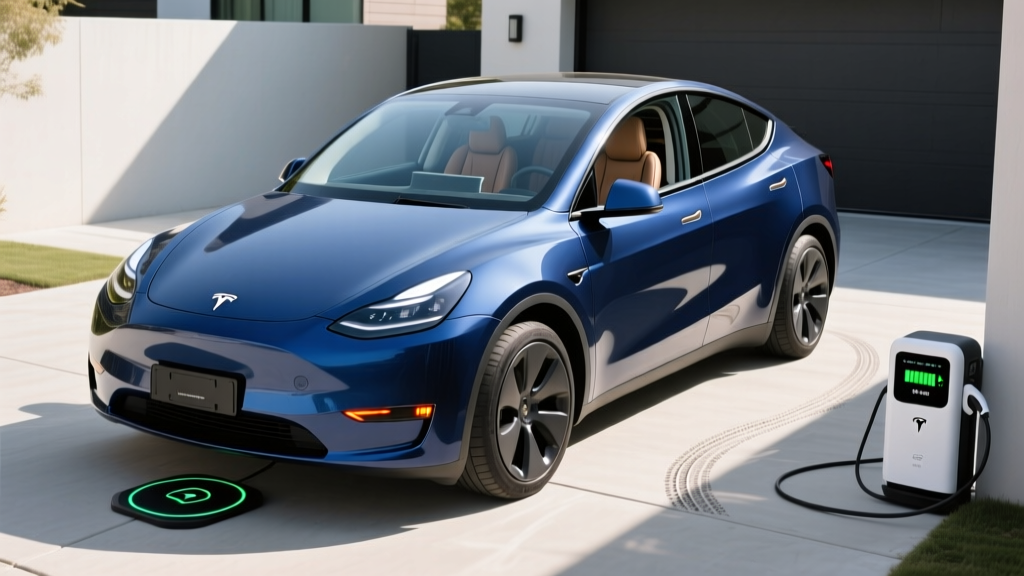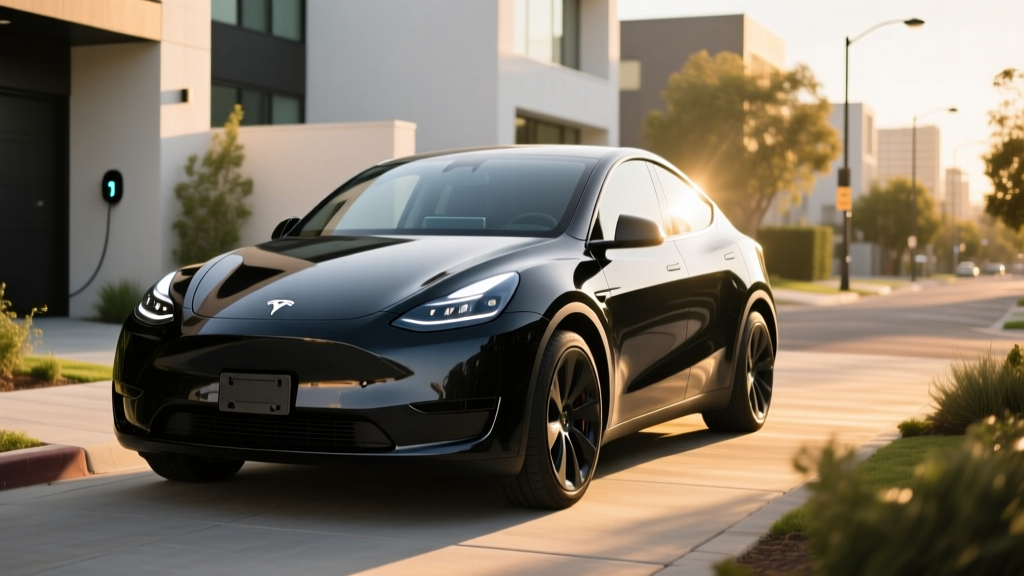
The 2023 Tesla Model Y: Still the EV Benchmark in 2026?
Even three years after its model year, the 2023 Tesla Model Y remains one of the most searched, most registered, and most discussed electric vehicles on the road. If you're researching a used 2023 Model Y or comparing it against newer 2025–2026 competitors, you need hard numbers on range, charging, real ownership costs, and yes — the often-overlooked topic of car registration fees for the 2023 Tesla Model Y, which vary wildly by state and can add hundreds of dollars annually to your EV budget.
This profile covers every spec that matters to a buyer in 2026: EPA range versus real-world results, DC fast-charge curves, battery chemistry, tax-credit eligibility on the used market, and the registration-fee landscape that catches many EV buyers off guard.
Core Specs at a Glance
| Spec | Value |
|---|---|
| EPA Range | 330 miles (Long Range AWD) |
| Battery Capacity | ~75 kWh usable (NMC chemistry, 2023); some RWD trims received LFP (~60 kWh) |
| Max DC Fast Charge | 250 kW peak (V3 Supercharger) |
| 10–80% DC Charge Time | ~27 minutes (preconditioned) |
| Level 2 Home Charge Rate | 11.5 kW / 44 mi/hr (48A Wall Connector) |
| 0–60 mph | 4.8 seconds (Long Range AWD) |
| Horsepower | 384 hp (dual-motor AWD) |
| Drivetrain | Dual-motor AWD (Long Range / Performance); RWD (base) |
| MPGe (combined) | 117 MPGe (Long Range AWD) |
| Efficiency | 28 kWh/100 mi |
| Cargo Volume | 30.2 cu ft (rear seats up) / 72.0 cu ft (rear seats folded) |
| Rear Legroom | 40.5 in |
| Base MSRP (2023) | $47,740 (Long Range AWD, pre-adjustments) |
| Battery Warranty | 8 years / 120,000 miles (70% minimum capacity retention) |
Real-World Range: What the EPA Number Doesn't Tell You
The 2023 Model Y's efficiency — around 28 kWh per 100 miles — is among the best in the midsize electric crossover segment. Tesla's heat pump (standard since the 2021 refresh) significantly reduces cold-weather cabin-heating energy draw compared to resistive heaters used in older EVs. However, physics still governs: cold lithium-ion cells have higher internal resistance, and regenerative braking is restricted until the battery warms up. If you live in the Upper Midwest or Northeast, budget at least 25% less range from November through February.
The RWD variant with the LFP (lithium iron phosphate) battery had a lower EPA rating of 260 miles for 2023. LFP chemistry trades energy density for longevity — these packs tolerate regular 100% charging better than NMC and show slower long-term degradation, making them attractive for high-mileage commuters who charge at home nightly.
Charging Speed: DC Fast, Level 2, and the Curve That Matters
Charging speed is where the 2023 Model Y still competes favorably against newer rivals. On a Tesla V3 Supercharger (250 kW peak), the Long Range AWD can add up to ~200 miles in 15 minutes under ideal conditions — but that peak rate only holds at low states of charge.
| Charging Level | Power / Rate | Miles Added per Hour | Notes |
|---|---|---|---|
| Level 1 (120V household) | ~1.4 kW | ~4–5 mi/hr | Emergency/trickle only |
| Level 2 (240V, 48A Wall Connector) | 11.5 kW | ~44 mi/hr | Full charge in ~7–8 hours |
| Level 2 (240V, 32A mobile connector) | 7.7 kW | ~30 mi/hr | Common NEMA 14-50 setup |
| DC Fast (V3 Supercharger) | 250 kW peak | ~1,000+ mi/hr at peak | 10–80% in ~27 min; tapers sharply above 80% |
| DC Fast (CCS adapter, Electrify America) | ~150–170 kW typical | ~600–700 mi/hr at peak | CCS adapter required for 2023 models (NACS native) |
Understanding the charge curve: The 250 kW peak only applies roughly between 5–25% state of charge (SoC). From 25–50%, expect ~150–180 kW. From 50–80%, the rate tapers to ~75–100 kW. Above 80%, it drops below 50 kW to protect the battery. This is why Tesla's navigation system recommends charging to 80% on road trips — the time penalty from 80–100% is often longer than driving to the next Supercharger and starting at a low SoC.
For home charging, the Tesla Wall Connector at 48 amps on a 60-amp circuit delivers 11.5 kW — enough to replenish a full day's driving (40–60 miles) in about 1 to 1.5 hours. Most owners charging overnight never need public fast chargers for daily use. Installation typically costs $500–$2,000 depending on panel capacity and conduit run; a 200-amp panel is usually sufficient, but older homes may need a $2,000–$4,000 panel upgrade.
Pricing, Tax Credits, and the Registration Fee Question
The 2023 Model Y was sold in three primary trims at launch:
- Long Range AWD: $47,740 base MSRP (before destination)
- Performance AWD: $52,240 base MSRP
- RWD (LFP, added mid-production): ~$43,990 base MSRP
By 2026, used 2023 Model Y pricing typically falls between $28,000–$38,000 depending on mileage, trim, and condition.
Federal Used EV Tax Credit (§25E)
Buying a 2023 Model Y in 2026 means you're shopping the used market, which shifts tax-credit eligibility from the new-vehicle §30D credit to the §25E Used Clean Vehicle Credit. Here's what the IRS requires:
- Credit amount: 30% of sale price, up to $4,000 maximum
- Vehicle sale price must be $25,000 or less
- Buyer income caps: $75,000 (single) / $112,500 (head of household) / $150,000 (joint)
- Vehicle must be at least 2 model years old (a 2023 model qualifies in 2026)
- Must purchase from a licensed dealer (private-party sales do not qualify)
- Credit is non-refundable — you must have tax liability to claim it
At a $25,000 sale price, the maximum $4,000 credit effectively brings a well-equipped 2023 Long Range within reach for qualifying buyers. Note: if the dealer's asking price exceeds $25,000 — as many low-mileage examples do — the §25E credit disappears entirely.
Car Registration Fees for the 2023 Tesla Model Y: A State-by-State Reality
EV registration fees are where ownership costs diverge sharply from state to state. Because EVs don't pay gas taxes, many states have imposed supplemental EV registration fees to recoup lost road-fund revenue. For a 2023 Tesla Model Y, here's what to expect:
| State | Standard Registration | EV Surcharge | Total Annual Est. |
|---|---|---|---|
| California | ~$60–$80 | $100 (zero-emission vehicle fee) | ~$160–$180 |
| Texas | ~$50 | $200 (EV fee, effective 2024) | ~$250 |
| Florida | ~$27–$50 | $200 (new EV fee, effective 2024) | ~$227–$250 |
| Ohio | ~$35 | $200 | ~$235 |
| Illinois | ~$151 | $100 (reduced from $248 in 2020) | ~$251 |
| Washington | ~$30–$50 | $225 (EV registration + transportation fee) | ~$255–$275 |
| Oregon | ~$172 (2-year) | Additional $112/2yr for EVs | ~$142/year |
| New York | ~$26–$50 | No EV surcharge | ~$26–$50 |
| Colorado | ~$45 | $50 (reduced; was higher) | ~$95 |
Key takeaway: Depending on your state, annual car registration fees for the 2023 Tesla Model Y can range from under $50 (New York, no surcharge) to over $275 (Washington). Over a 5-year ownership period, that's a $250–$1,375 spread. Always check your state's DMV or department of revenue for current figures — these fees have been trending upward as EV adoption accelerates.
Performance, Interior, and Daily Livability
The 2023 Model Y Long Range AWD delivers 384 horsepower and a 4.8-second 0–60 mph time — brisk by any measure and quicker than most gas-powered midsize crossovers. The dual-motor AWD system provides confident traction in rain and light snow, though it's not a substitute for dedicated winter tires in severe conditions.
The Performance trim shaves the 0–60 time to 3.5 seconds with 456 hp, adding track mode, larger brakes, and a lowered suspension. The trade-off is a firmer ride that some passengers find harsh on rough pavement.
Cargo and passenger space remain a Model Y strength. With 30.2 cubic feet behind the rear seats and 72.0 cubic feet with them folded, it swallows luggage, strollers, and camping gear without breaking a sweat. The rear legroom of 40.5 inches is generous, though the sloping roofline cuts into headroom for taller passengers. The front trunk (frunk) adds ~4.1 cubic feet for cables and small bags.
Infotainment and tech: The 15-inch center touchscreen runs Tesla's proprietary OS — fast, responsive, and packed with features (navigation with Supercharger routing, Sentry Mode dashcam, streaming media, over-the-air updates). However, there is no Apple CarPlay or Android Auto, which remains a dealbreaker for some buyers. The 2023 model year includes the AMD Ryzen processor, which eliminated the sluggishness that plagued earlier Intel-based units.
Driver assistance: Basic Autopilot (traffic-aware cruise control + lane centering) is standard. Enhanced Autopilot ($6,000 option in 2023) adds auto lane change, navigate on Autopilot, and smart summon. Full Self-Driving (Supervised) was a $15,000 option. All of these are SAE Level 2 systems — the driver must remain fully engaged at all times. Tesla's FSD is not autonomous driving; it is an advanced driver-assist suite that still requires hands-on-wheel attention and visual supervision.
Pros and Cons: The Honest Verdict
Pros
- Class-leading efficiency (28 kWh/100 mi)
- Extensive Supercharger network (20,000+ stalls in North America)
- Strong 250 kW DC fast-charge capability
- Excellent cargo capacity (72 cu ft max)
- OTA updates continue to add features years after purchase
- Low maintenance (no oil changes, minimal brake wear with regen)
- Top safety ratings (IIHS Top Safety Pick+, NHTSA 5-star)
Cons
- No Apple CarPlay / Android Auto
- Firm ride quality, especially on Performance trim
- Minimalist interior lacks physical controls (climate, mirrors adjusted via screen)
- Panel-gap inconsistency on some 2023 Fremont-built units
- Insurance premiums run 15–30% higher than comparable gas crossovers
- Rear visibility limited by sloping roofline and no rear wiper (2023 models)
- EV registration surcharges add $100–$225/year in many states
Who Should Buy the 2023 Model Y in 2026?
Choose the 2023 Model Y if:
- You want proven, reliable EV tech with the largest fast-charging network
- You commute 30–80 miles daily and can charge at home
- You need family-friendly cargo space without stepping up to a larger (and pricier) Model X or Rivian R1S
- You find a used example priced at or below $25,000 to capture the $4,000 §25E credit
- You value over-the-air updates that keep a 2023 vehicle gaining features in 2026
Look elsewhere if:
- You need Apple CarPlay or prefer traditional automotive controls
- You regularly tow — the Model Y's 3,500-lb rating is modest; consider the Rivian R1S or Ford F-150 Lightning
- You live in a state with high EV registration surcharges and no home-charging access (the cost equation shifts unfavorably)
- You want a brand-new vehicle with full §30D $7,500 new-EV credit eligibility — consider the 2026 Model Y (Juniper refresh) or Hyundai Ioniq 5
Battery Longevity and Warranty
Tesla covers the 2023 Model Y's battery and drive unit for 8 years / 120,000 miles (Long Range / Performance) with a minimum 70% capacity retention guarantee. For the RWD LFP variant, the warranty is 8 years / 100,000 miles. As of 2026, a 2023 Model Y is 3 model years old, meaning roughly 5 years of factory battery coverage remain — a meaningful advantage over buying an older, out-of-warranty EV.
Real-world degradation data from Tesla's 2024 Impact Report and owner-collected datasets show NMC packs retaining approximately 88–92% capacity at 60,000 miles. LFP packs show even slower degradation but started with less total capacity. A full battery replacement out of warranty costs an estimated $12,000–$16,000 — a worst-case scenario that rarely materializes before 150,000+ miles on modern Tesla packs.
Frequently Asked Questions
What is the real-world range of the 2023 Tesla Model Y?
The EPA rates the 2023 Long Range AWD at 330 miles. Real-world mixed driving yields 280–310 miles; highway-only driving at 75+ mph drops to 250–270 miles. Cold weather (below freezing) can reduce range by 20–30%, to roughly 230–260 miles. The RWD LFP variant is rated at 260 miles EPA with similar real-world reductions.
How fast does the 2023 Model Y charge?
On a V3 Supercharger (250 kW peak), expect 10–80% in approximately 27 minutes with a preconditioned battery. At home on a 48A Level 2 Wall Connector (11.5 kW), you'll add about 44 miles of range per hour, or a full charge in roughly 7–8 hours.
How much does a used 2023 Model Y cost after tax credits?
Used 2023 Model Y prices range from roughly $28,000–$38,000 in 2026. If you find a dealer listing at $25,000 or below and meet the income requirements ($75K single / $150K joint), the §25E credit provides up to $4,000 off your federal tax liability — bringing effective cost as low as ~$21,000. Most well-equipped examples exceed the $25,000 price cap, however.
Does the 2023 Model Y qualify for the $7,500 federal EV tax credit?
No — the §30D new-vehicle credit of up to $7,500 applies only to new purchases. Since the 2023 Model Y is now a used vehicle, buyers can only access the §25E used-EV credit (up to $4,000, with a $25,000 sale-price cap). The new-vehicle credit is available on the current 2026 Model Y, subject to IRS battery-sourcing and MSRP rules.
Is the 2023 Model Y still worth buying vs. newer competitors?
Yes, with caveats. The Supercharger network, proven efficiency, and strong resale value make it a smart used buy. However, the 2025–2026 Hyundai Ioniq 5, Kia EV6, and refreshed Tesla Model Y (Juniper) offer faster 800V charging, CarPlay compatibility, or improved interiors. If you prioritize lowest cost per mile and charging-network access, the 2023 Model Y remains compelling. If interior refinement or 350 kW charging matters more, look at the newer alternatives.
What are the annual car registration fees for a 2023 Tesla Model Y?
It depends entirely on your state. EV registration surcharges range from $0 (New York) to $225+ (Washington, Ohio, Florida, Texas). Combined with standard registration, expect $50–$275 annually. Check your state DMV for exact figures — these fees are updated frequently as legislatures adjust EV policy.