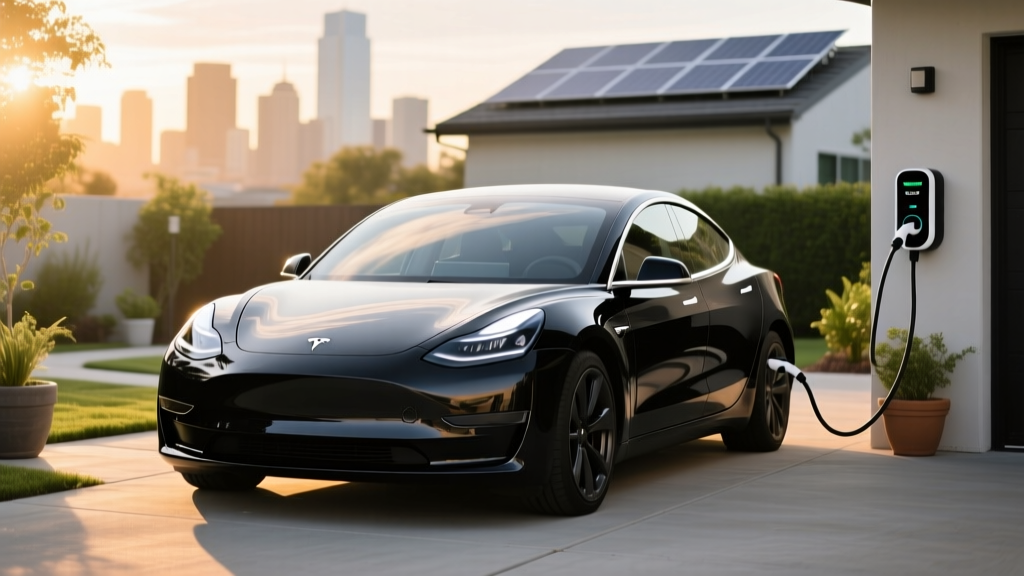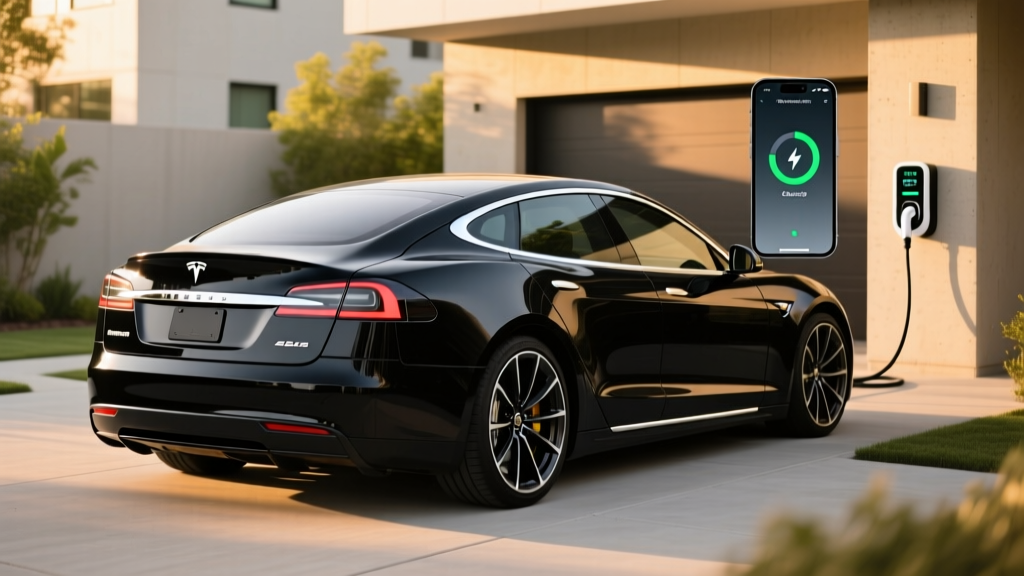
The 2023 Tesla Model S Plaid remains one of the fastest-accelerating production sedans ever built, but buyers in the used and remaining-new market need to look past the 1.99-second 0-60 claim. With a 396-mile EPA range, 250 kW peak DC fast charging, and a starting MSRP that hovered around $108,490 before destination, the Plaid occupies a narrow but compelling niche: hypercar performance in a four-door luxury package. This review breaks down what ownership actually looks like — from real-world range to charging curves, tax credit eligibility under current IRS §30D rules, and how the Plaid stacks up against the Lucid Air Sapphire and Porsche Taycan Turbo S.
Quick Verdict: Who Should Buy the 2023 Model S Plaid?
The Model S Plaid is best suited for performance enthusiasts who also need daily usability — think 300-mile road trips, a usable back seat, and access to Tesla's Supercharger network. It is not the right pick for buyers prioritizing rear-seat comfort over speed, those on a sub-$80K budget, or anyone whose primary concern is tax-credit maximization (the Plaid exceeds the §30D MSRP cap for sedans). If you want a grand-touring EV that can demolish a drag strip on Saturday and handle a 400-mile family road trip on Sunday, the Plaid still has few peers.
Range, Battery, and Real-World Efficiency
Real-World Expectation: Expect 300–340 miles on highway-heavy trips at 70-75 mph. In cold weather (below 32°F), plan for a 20–30% reduction, yielding roughly 240–280 usable miles before needing to charge. City driving with regenerative braking can push closer to the EPA sticker or slightly above.
The 2023 Model S Plaid uses a ~100 kWh battery pack (approximately 95 kWh usable) with NMC (nickel manganese cobalt) chemistry. Tesla does not publish exact usable capacity figures, but teardown data and observed charge logs from owners consistently place usable capacity in the 93–97 kWh range depending on firmware and buffer management. NMC chemistry delivers higher energy density than LFP, which is critical for packing 396 miles of range into a sedan form factor, but it also means Tesla recommends daily charging to 80–90% for longevity rather than 100%.
Efficiency on the EPA cycle is rated at 120 MPGe combined (119 city / 122 highway for the 19-inch wheel configuration), which translates to roughly 28 kWh per 100 miles. In real-world highway driving at sustained speeds above 70 mph, expect consumption closer to 32–36 kWh/100mi, particularly with climate control active. The Plaid's tri-motor powertrain and 5,390-pound curb weight work against efficiency compared to the dual-motor Model S Long Range (405 mi EPA, ~25 kWh/100mi), but few 1,020-hp vehicles achieve anywhere near this efficiency figure.
| Spec | Value |
|---|---|
| EPA Range (19" wheels) | 396 miles |
| EPA Range (21" wheels) | 359 miles |
| Battery Capacity (usable) | ~95 kWh (NMC) |
| MPGe (combined) | 120 MPGe |
| Efficiency | 28 kWh/100mi (EPA) |
| Horsepower | 1,020 hp |
| 0–60 mph | 1.99 seconds (with rollout) |
| Top Speed | 200 mph |
| Drivetrain | Tri-motor AWD |
| Curb Weight | 5,390 lbs |
| Cargo (trunk + frunk) | 28.0 cu ft (rear) + ~2.5 cu ft (frunk) |
| Rear Legroom | 35.4 inches |
| Battery Warranty | 8 years / 150,000 miles (70% retention) |
| Base MSRP (2023) | $108,490 + $1,990 destination |
Charging Speed: DC Fast, Level 2, and the Supercharger Advantage
Charging speed is where the Model S Plaid's ownership experience separates from most competitors. The Plaid supports a peak DC fast-charge rate of 250 kW on Tesla V3 Superchargers, and the vehicle's thermal preconditioning system — activated automatically when you navigate to a Supercharger — brings the battery to optimal temperature before you plug in. This matters enormously for real-world charge times.
| Charging Level | Power | Speed / Time | Notes |
|---|---|---|---|
| Level 1 (120V) | ~1.4 kW | ~3 mi/hr | Emergency only; ~130 hours for full charge |
| Level 2 (240V / 48A) | 11.5 kW | ~34 mi/hr | Full charge in ~10 hours; ideal home setup |
| DC Fast (V3 Supercharger) | 250 kW peak | 10–80% in ~28 min | Peak rate tapers above 50% SoC |
| DC Fast (CCS adapter, 3rd-party) | Up to 250 kW | 10–80% in ~30–35 min | Depends on station output and battery temp |
The 10–80% time of approximately 28 minutes on a V3 Supercharger is respectable but not class-leading — the Hyundai Ioniq 5 and Kia EV6, with their 800V architectures, can achieve 10–80% in roughly 18 minutes at 350 kW chargers. The Model S Plaid's charge curve is front-loaded: you'll see 250 kW briefly in the 10–30% SoC window, then a taper to roughly 150–170 kW through 50%, and a further drop to under 75 kW above 70%. This is typical for NMC packs at this capacity. For road-trip planning, budget 20–25 minutes per stop if you're charging from 15% to 75%.
At home, the Plaid accepts up to 11.5 kW on a 48-amp Level 2 circuit (such as a Tesla Wall Connector on a 60-amp breaker). This adds roughly 34 miles of range per hour, meaning a full overnight charge from 20% to 90% takes about 7–8 hours. If your home electrical panel supports a higher-amperage circuit (e.g., 80A breaker / 64A continuous), you could theoretically push to 15.2 kW, but most residential installations max out at 48A continuous.
Performance: 1,020 HP and the Tri-Motor Drivetrain
The numbers need little embellishment: 1,020 horsepower, 1.99 seconds 0–60 mph (Tesla's figure includes a 1-foot rollout, so expect ~2.1–2.3 seconds in real-world roll-start testing), and a 200-mph top speed. The tri-motor setup — one motor on the front axle and two on the rear — enables torque vectoring across the rear wheels and near-instant traction management. In drag-strip testing by multiple outlets, the Plaid has run consistent sub-10-second quarter-mile passes, placing it in hypercar territory.
Beyond straight-line speed, the Plaid's adaptive air suspension and low center of gravity make it surprisingly composed on canyon roads, though the 5,390-pound weight is felt during hard direction changes. The carbon-sleeve rear rotors (standard on Plaid) provide fade-free braking during repeated high-speed runs. Track Mode allows drivers to adjust torque distribution, stability control, and cooling behavior for closed-course driving.
Pricing, Tax Credits, and Total Cost of Ownership
The 2023 Model S Plaid launched with a base MSRP of $108,490, plus a $1,990 destination charge, for a total starting price of $110,480. Common options included the $4,500 21-inch Arachnid wheels, $1,500 for premium interior colors, and $15,000 for Full Self-Driving (Supervised) capability. A typical as-tested configuration landed between $115,000 and $125,000.
Without the federal credit, ownership economics depend heavily on state-level incentives (California's CVRP, for example, has offered rebates for income-qualified buyers, though the Plaid's price typically exceeds those program caps as well), fuel savings versus a comparable ICE performance sedan, and depreciation. Electricity costs for the Plaid average roughly $0.04–$0.06 per mile on home charging (at $0.15/kWh national average), versus $0.18–$0.25 per mile for a BMW M5 on premium fuel at 16 mpg combined. Over 50,000 miles, that's a fuel savings of approximately $7,000–$9,500 — meaningful, but not enough to offset the Plaid's premium over a Long Range Model S.
| Item | Cost |
|---|---|
| Base MSRP | $108,490 |
| Destination Fee | $1,990 |
| Federal Tax Credit (§30D) | $0 (exceeds $55K sedan MSRP cap) |
| Typical As-Tested Price | $115,000–$125,000 |
| Est. 5-Year Fuel Cost (electricity) | ~$5,200 (50K mi at $0.15/kWh) |
| Est. 5-Year Insurance | $18,000–$24,000 (varies by state/driver) |
Interior, Tech, and Daily Livability
The Model S Plaid's interior underwent a significant refresh for the 2021+ generation, and the 2023 model carries that forward with a 17-inch center touchscreen (now in a landscape orientation and tilting toward the driver), a 12.3-inch digital instrument cluster, and a rear-seat 8-inch entertainment screen. The yoke steering wheel was standard on Plaid for 2023, though a conventional round wheel became available as a no-cost option. Build quality improved noticeably over pre-2021 models, with better panel gaps and material consistency, though it still trails the Audi e-tron GT and Lucid Air in tactile luxury.
Tech highlights include Tesla's infotainment system with native Spotify, Netflix, YouTube, and a full web browser; over-the-air software updates that periodically add features; and the 22-speaker audio system with active noise cancellation, which is genuinely excellent. The glass roof provides an airy cabin but lacks a retractable shade, which can make the interior warm in summer — Tesla includes a removable mesh shade panel that owners should install for hot-climate daily driving.
Driver assistance comes via Tesla's Autopilot (standard) or Full Self-Driving (Supervised) capability ($15,000 option in 2023, later reduced). Important clarification: FSD (Supervised) is an SAE Level 2 system — it requires continuous driver attention and hands-on or eyes-on engagement at all times. It is not autonomous driving. The system excels at highway lane-keeping and navigation-guided lane changes but requires vigilance in construction zones, on poorly marked roads, and in heavy rain.
Cargo space is a genuine strength: 28.0 cubic feet behind the rear seats (with a deep, wide trunk opening) plus approximately 2.5 cubic feet in the front trunk (frunk). With the rear seats folded, total cargo volume reaches roughly 79 cubic feet — enough for road-trip luggage for four people. Rear-seat legroom at 35.4 inches is adequate for adults up to about 6 feet tall but tighter than a Mercedes EQS or Lucid Air.
Pros and Cons
Pros
- 1,020 hp and sub-2-second 0-60 — hypercar performance in a sedan
- 396-mile EPA range is among the longest of any performance EV
- Access to Tesla Supercharger network (17,000+ V3 stalls in North America)
- Tri-motor AWD with torque vectoring provides exceptional traction
- Generous cargo space (28 cu ft trunk + frunk) for the class
- Over-the-air updates continuously improve the vehicle
- Strong battery warranty: 8 years / 150,000 miles at 70% retention
Cons
- No federal tax credit eligibility (exceeds $55K MSRP cap)
- 250 kW peak DC charge rate trails 800V competitors (Ioniq 5, Taycan)
- Yoke steering has a steep learning curve and is controversial for daily use
- Rear-seat comfort and legroom lag behind Lucid Air and Mercedes EQS
- No physical buttons or stalks — all controls via touchscreen (including turn signals on yoke)
- Insurance premiums are significantly above average for the class
- Heavy at 5,390 lbs — tire wear is accelerated under spirited driving
How It Compares: Plaid vs. Lucid Air Sapphire vs. Porsche Taycan Turbo S
The Plaid's most direct competitors are the Lucid Air Sapphire ($249,000 MSRP, 1,234 hp, 427-mi EPA range) and the Porsche Taycan Turbo S ($187,600 MSRP, 750 hp with overboost, 222-mi EPA range). The Air Sapphire is more expensive and more exclusive but offers superior range and rear-seat space. The Taycan Turbo S delivers sharper handling dynamics and an 800V architecture for faster charging (up to 270 kW, 10–80% in ~22 minutes) but sacrifices over 170 miles of range. The Plaid occupies a middle ground: less exclusive than the Sapphire, more practical than the Taycan, and with a Supercharger network advantage neither competitor can match.
Warranty and Long-Term Battery Outlook
Tesla covers the 2023 Model S Plaid's battery and drive unit for 8 years or 150,000 miles, whichever comes first, with a guaranteed minimum 70% capacity retention. This is a stronger warranty than the Long Range Model S (8 years / 150,000 miles as well, but the Plaid's higher-stress tri-motor setup makes the coverage reassuring). The basic vehicle limited warranty is 4 years / 50,000 miles.
NMC battery degradation in Tesla's high-performance models has historically followed a pattern of 5–8% loss in the first 30,000 miles, followed by a slower linear decline of roughly 1–2% per year. Owners who follow Tesla's recommendation of keeping daily SoC between 20–80% and only charging to 100% for road trips tend to see better long-term retention. The Plaid's thermal management system is among the best in the industry, actively cooling and heating the pack to minimize degradation during fast charging and high-load driving.
Frequently Asked Questions
What is the real-world range of the 2023 Tesla Model S Plaid?
On the EPA cycle, the Plaid is rated at 396 miles with 19-inch wheels. In real-world highway driving at 70–75 mph, expect 300–340 miles. In cold weather below freezing, plan for 240–280 miles. City driving with regenerative braking can approach or slightly exceed the EPA figure.
How fast does the Model S Plaid charge?
On a Tesla V3 Supercharger, the Plaid peaks at 250 kW and charges from 10–80% in approximately 28 minutes. At home on a 48-amp Level 2 charger (11.5 kW), it adds about 34 miles per hour, with a full charge taking roughly 10 hours. Peak charge rate tapers significantly above 50% SoC.
Does the 2023 Model S Plaid qualify for the federal EV tax credit?
No. Under IRS §30D rules, the Plaid's $108,490 base MSRP far exceeds the $55,000 cap for sedans. Buyer income limits and battery sourcing requirements are additional factors, but the MSRP alone disqualifies it. Check IRS.gov for the latest rules.
Is the 2023 Model S Plaid worth buying vs. competitors?
If you prioritize straight-line performance, Supercharger network access, and 396 miles of range in a single package, the Plaid is compelling. If rear-seat luxury is paramount, the Lucid Air or Mercedes EQS are better. If handling dynamics and faster DC charging matter more than range, the Porsche Taycan Turbo S is the pick — though at a higher price and with far less range.
What are the biggest drawbacks of the Model S Plaid?
The main cons are the lack of federal tax credit eligibility, a 250 kW peak charge rate that trails 800V competitors, controversial yoke steering (standard in 2023), higher-than-average insurance costs, and rear-seat space that doesn't match the price point. Build quality has improved but still isn't at Mercedes or Lucid levels.
Is Tesla's FSD self-driving?
No. Tesla's Full Self-Driving (Supervised) is an SAE Level 2 driver-assistance system. The driver must remain fully engaged, monitor the road, and be prepared to take over at any moment. It is not autonomous driving. Only Level 4 services like Waymo operate without a human driver in defined geographic areas.