Quick Verdict: Is the Tesla Model 3 Still the Incentive King?
The 2026 Tesla Model 3 remains the default benchmark for premium electric sedans, and for buyers chasing the best deal, understanding Tesla incentives Model 3 eligibility is half the battle. With a starting MSRP that keeps all trims under the federal price cap and battery sourcing that has historically qualified for the full §30D credit, the Model 3 is one of the few EVs where the advertised $7,500 federal incentive is actually within reach — provided your income and tax liability align. But the car itself has to earn the purchase, not just the credit. Here is every number that matters.
Range, Battery, and Real-World Efficiency
The 2026 Model 3 is offered in three trims, each with a distinct battery chemistry and range profile. Tesla does not publish official usable kWh figures, but teardown data and EPA test filings give us reliable estimates.
| Trim | EPA Range | Battery (est. usable) | Chemistry | MPGe (combined) | kWh/100mi |
|---|---|---|---|---|---|
| Model 3 RWD | 363 mi | ~57.5 kWh | LFP | 132 MPGe | 25 |
| Model 3 Long Range AWD | 363 mi | ~75 kWh | NMC (CATL/BYD blend) | 134 MPGe | 25 |
| Model 3 Performance | 315 mi | ~75 kWh | NMC | 121 MPGe | 28 |
LFP vs NMC: What It Means for Your Model 3
The RWD trim uses a lithium iron phosphate (LFP) battery, which is heavier and less energy-dense than the nickel manganese cobalt (NMC) packs in the Long Range and Performance. However, LFP offers a longer cycle life, better thermal stability, and Tesla recommends charging it to 100% regularly — something you should not do daily with NMC. If you charge at home every night and want maximum daily range without babying the battery, the RWD's LFP chemistry is arguably the better ownership experience despite its lower energy density.
Charging Speed: DC Fast Charge and Home Level 2
Charging speed is where the 2026 Model 3 continues to outpace most rivals, thanks to Tesla's Supercharger network and the vehicle's efficient thermal preconditioning.
| Charging Level | Max Rate | Speed / Notes |
|---|---|---|
| Level 1 (120V household) | ~1.4 kW | ~3–4 miles per hour |
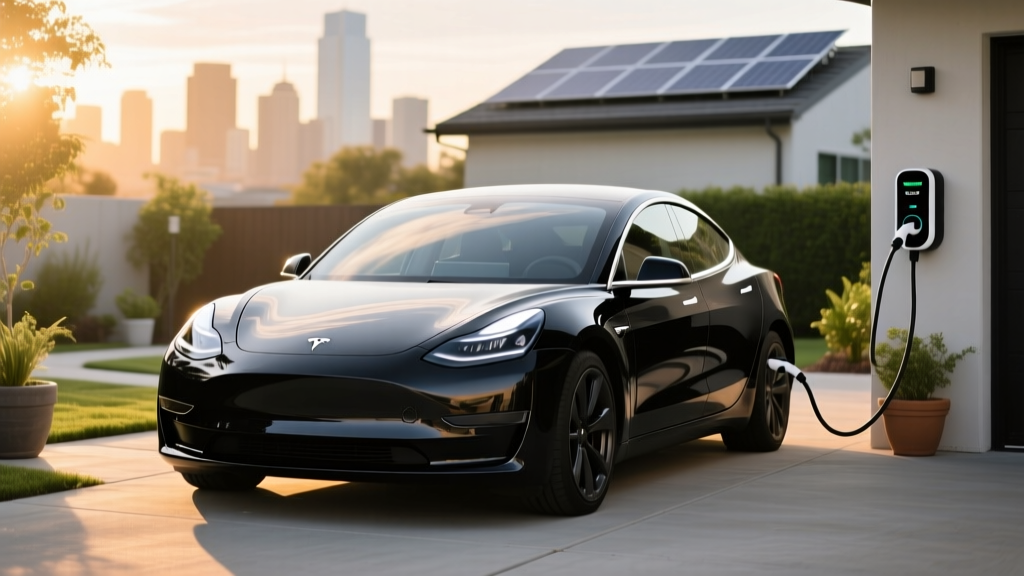
| Level 2 (240V home, 48A) | 11.5 kW | ~44 miles per hour; full charge in ~7–8 hours |
| DC Fast Charge (Supercharger V3) | 250 kW peak | 10–80% in ~25 min (Long Range/Perf); ~22 min (RWD) |
| DC Fast Charge (Supercharger V4) | Up to 250 kW (Model 3 limited) | Same peak; V4 stalls offer better cable reach and payment |
Charge curve reality: The Model 3 peaks at 250 kW only briefly, typically between 10% and 25% state of charge. By 50% SoC, the rate tapers to roughly 120 kW, and above 80% it drops below 50 kW. This is why Tesla and the navigation system recommend charging to 80% at Superchargers — the last 20% takes almost as long as the first 60%. Preconditioning the battery (automatic when you navigate to a Supercharger) is essential; arriving at a charger with a cold pack can cut peak rates by 40% or more.
With the NACS connector now standard across the industry, the Model 3 also gains access to select Electrify America, EVgo, and ChargePoint stalls equipped with NACS cables — though Superchargers remain the most reliable option by a wide margin.
Performance, Drivetrain, and Driving Dynamics
The 2026 lineup carries over the refreshed "Highland" chassis introduced for 2024, with improved ride quality, quieter cabin insulation, and ventilated front seats across all trims.
| Trim | Drivetrain | 0–60 mph | Horsepower | Top Speed |
|---|---|---|---|---|
| RWD | Rear-wheel drive, single motor | 5.8 sec | ~283 hp | 125 mph |
| Long Range AWD | Dual-motor AWD | 4.2 sec | ~384 hp | 125 mph |
| Performance | Dual-motor AWD | 2.9 sec | ~510 hp | 163 mph |
The RWD is perfectly adequate for commuting and highway merging. The Long Range adds meaningful all-weather traction and a noticeable torque bump. The Performance trim, with its new adaptive dampers, track mode, and 20-inch wheels, is a legitimate sports sedan that embarrasses cars costing three times as much — but you sacrifice roughly 50 miles of range for the privilege.
Pricing, Trims, and Tesla Incentives for the Model 3
Understanding the total cost after incentives is where the Model 3 makes its strongest case. Here is the 2026 pricing breakdown before and after the federal credit.
| Trim | Base MSRP | Federal §30D Credit | Effective Price (if eligible) |
|---|---|---|---|
| RWD | $38,990 | Up to $7,500 | ~$31,490 |
| Long Range AWD | $45,740 | Up to $7,500 | ~$38,240 |
| Performance | $52,990 | Up to $7,500 | ~$45,490 |
Destination fee ($1,390) not included. State incentives vary — check your local DMV and energy office.
Does the Model 3 Qualify for the Full $7,500 Federal Tax Credit?
As of 2026, all three Model 3 trims are manufactured at the Fremont, California plant and use battery components and critical minerals that meet IRS §30D sourcing requirements, making them eligible for the full $7,500 credit. However, eligibility is not universal. You must meet all of the following:
- Income cap: Modified adjusted gross income (MAGI) must not exceed $150,000 (single), $225,000 (head of household), or $300,000 (joint) for the current or prior tax year.
- MSRP cap: The vehicle MSRP must not exceed $55,000 for sedans. The RWD and Long Range qualify; the Performance trim at $52,990 also qualifies, but adding certain options could push it over — verify on the window sticker.
- Tax liability: The credit is non-refundable, meaning you need at least $7,500 in federal tax liability to capture the full amount. If your liability is $4,000, you capture $4,000 and forfeit the rest.
- Point-of-sale transfer: As of 2024, buyers can transfer the credit to the dealer at purchase, receiving the $7,500 as a price reduction regardless of tax liability. Tesla supports this at delivery.
- Battery sourcing: Critical minerals and battery components must meet phased annual thresholds. Tesla's supply chain has consistently met these, but always verify at fueleconomy.gov before purchasing.
Interior, Cargo, and Technology
The 2026 Model 3 cabin is minimalist by design — some say too minimalist. There is no instrument cluster; all information routes through the 15.4-inch center touchscreen. A rear 8-inch screen was added with the Highland refresh for climate and media control by rear passengers.
| Dimension | Measurement |
|---|---|
| Front headroom | 40.3 in |
| Rear legroom | 34.9 in |
| Cargo volume (trunk) | 21.0 cu ft |
| Frunk (front trunk) | 3.1 cu ft |
| Total cargo | 24.1 cu ft |
Tech highlights: Tesla's infotainment remains the industry benchmark for responsiveness, over-the-air updates, and integrated navigation with real-time Supercharger routing. The available FSD (Supervised) package ($8,000 one-time or $99/month) offers lane changes, traffic light recognition, and city street navigation — but this is an SAE Level 2 system requiring constant driver supervision. It is not autonomous driving.
Notable drawbacks: No physical buttons for climate or mirror adjustment (all touchscreen). No Apple CarPlay or Android Auto. Rear visibility is limited. Turn signal stalks were removed in favor of steering-wheel buttons in the Highland refresh — a polarizing change that many owners still complain about.
Warranty, Safety, and Ownership Costs
Tesla's warranty is competitive but not class-leading:
- Basic vehicle: 4 years / 50,000 miles
- Battery & drive unit (RWD): 8 years / 100,000 miles, minimum 70% capacity retention
- Battery & drive unit (Long Range/Performance): 8 years / 120,000 miles, minimum 70% capacity retention
The Model 3 earns a 5-star overall rating from NHTSA and Top Safety Pick+ from IIHS (when equipped with acceptable headlights). Insurance premiums run 15–30% higher than comparable gas sedans due to repair costs — budget $150–$220/month depending on your profile.
How It Stacks Up: Model 3 vs. Key Competitors
| Spec | Tesla Model 3 LR AWD | Hyundai Ioniq 6 SEL | BMW i4 xDrive40 |
|---|---|---|---|
| EPA Range | 363 mi | 361 mi | 307 mi |
| Base MSRP | $45,740 | $42,600 | $57,900 |
| Peak DC Charge | 250 kW | 233 kW | 205 kW |
| 10–80% Time | ~25 min | ~18 min | ~31 min |
| Federal Credit | $7,500 | $7,500 | $7,500 |
| Supercharger Access | Native | NACS adapter needed | NACS adapter needed |
The Ioniq 6 charges faster thanks to its 800V architecture and offers a more conventional interior with physical controls. The BMW i4 wins on build quality and driving refinement but costs significantly more. The Model 3's advantage remains the Supercharger network — still the most reliable and extensive DC fast-charging infrastructure in the U.S.
Choose a competitor if: You need physical buttons and Apple CarPlay (Ioniq 6), you prioritize luxury and ride quality over tech (BMW i4), or you want a faster 10–80% charge time for heavy road-trip use (Ioniq 6's 800V system).
Pros and Cons
- Full $7,500 federal credit eligibility on all trims
- Native Supercharger network access — no adapters needed
- Industry-leading software, navigation, and OTA updates
- LFP battery on RWD allows daily 100% charging
- Strong resale value relative to EV segment average
- 5-star NHTSA safety rating
- No Apple CarPlay or Android Auto
- Touchscreen-only controls frustrate some drivers
- Rear seat space is tighter than midsize competitors
- Insurance premiums 15–30% above gas sedan average
- Steering-wheel turn signal buttons are a learning curve
- FSD (Supervised) remains Level 2 — not self-driving
Who the 2026 Model 3 Suits Best
Commuters and daily drivers: The RWD at ~$31,490 after the federal credit, paired with home Level 2 charging, delivers 300+ real-world miles and minimal running costs. LFP chemistry means you can charge to 100% nightly without guilt.
Road-trip enthusiasts: The Long Range AWD and Supercharger network make cross-country travel the least stressful of any EV. Plan for 25-minute stops every 250–280 miles.
Performance seekers on a budget: The Performance trim at ~$45,490 after credit delivers supercar acceleration with daily-driver practicality — if you can accept the range trade-off.
Not ideal for: Families needing spacious rear seats and cargo room (consider the Model Y), buyers who refuse to live without CarPlay, or those without home charging access who live far from Superchargers.
What is the real-world range of the 2026 Tesla Model 3?
The EPA rates the Long Range AWD at 363 miles, but real-world highway driving at 75 mph yields approximately 300–320 miles. In cold weather below freezing, expect 240–270 miles. City driving with regenerative braking can match or exceed the EPA number.
How fast does the Model 3 charge at home and on the road?
At home on a 240V Level 2 charger (48A), the Model 3 adds about 44 miles per hour, fully charging overnight in 7–8 hours. On a Tesla V3 Supercharger, it peaks at 250 kW and charges from 10–80% in roughly 25 minutes, with significant tapering above 80%.
How much does the Model 3 cost after federal tax credits?
The RWD starts at $38,990 and drops to approximately $31,490 with the full $7,500 §30D credit. The Long Range AWD falls from $45,740 to ~$38,240. The Performance drops from $52,990 to ~$45,490. Eligibility depends on income, tax liability, and MSRP caps — verify at irs.gov.
Does the 2026 Model 3 qualify for the full federal EV tax credit?
Yes, all three trims currently qualify for the full $7,500 under IRS §30D, as they are assembled in the U.S. with compliant battery sourcing. Buyers must meet income caps ($150K single / $300K joint) and the vehicle must stay under the $55,000 sedan MSRP cap. The point-of-sale transfer option is available at Tesla delivery.
Is the Tesla Model 3 worth buying over the Hyundai Ioniq 6 or BMW i4?
The Model 3 wins on Supercharger access, software, and value after incentives. The Ioniq 6 charges faster and offers CarPlay. The BMW i4 offers superior build quality and ride comfort at a higher price. For most buyers prioritizing total cost of ownership and charging convenience, the Model 3 remains the strongest choice.
What are the biggest drawbacks of the Model 3?
The touchscreen-only interface, lack of Apple CarPlay/Android Auto, tight rear seat, higher insurance costs, and polarizing steering-wheel turn signal buttons are the most common complaints. FSD (Supervised) is a Level 2 system and does not replace driver attention.