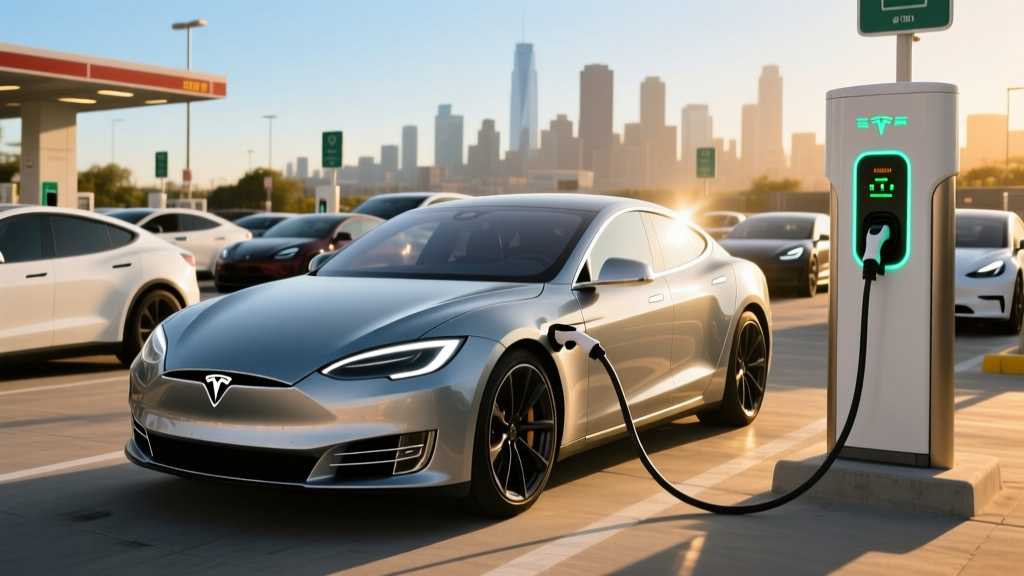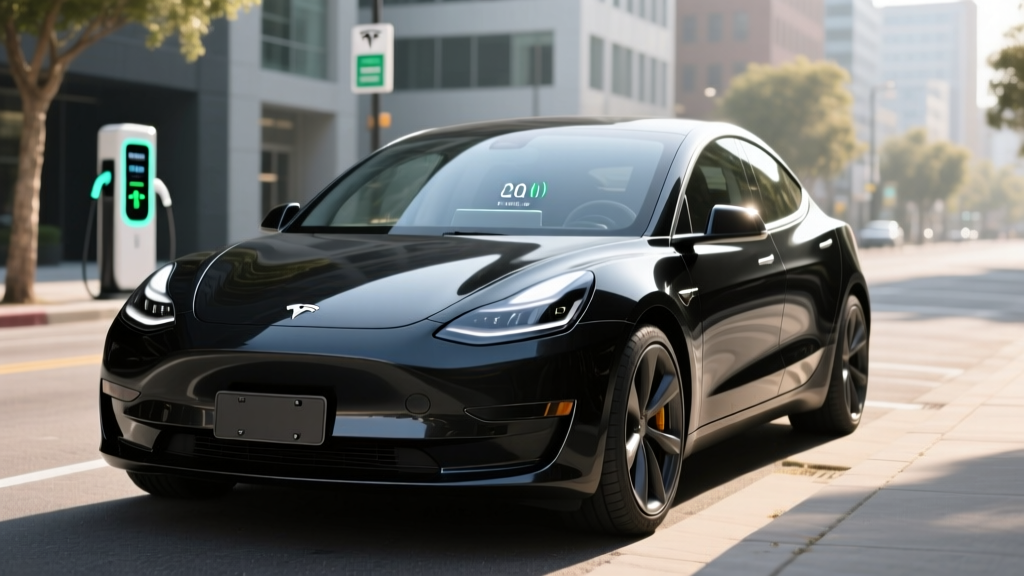
The 2023 Tesla Model 3 Performance represents the outgoing generation's ultimate expression — a dual-motor all-wheel-drive sedan that pairs sports-car acceleration with daily-driver efficiency. With 450 horsepower and a 3.1-second 0-60 mph time, it undercuts rivals like the BMW i4 M50 and Polestar 2 on price while delivering comparable or superior performance. But raw numbers only tell part of the story. This review examines what it's actually like to live with the 2023 Model 3 Performance: real-world range, charging behavior on road trips, ownership costs, and whether it still makes sense to buy one as the refreshed "Highland" Model 3 takes over dealer lots.
Quick Verdict: Who Should Buy the 2023 Model 3 Performance?
The 2023 Model 3 Performance is built for driving enthusiasts who want sub-4-second acceleration without sacrificing range or daily practicality. It suits single professionals, couples, or small families who prioritize performance and Tesla's Supercharger network over luxury interior materials or traditional dealership service. If you need more than 64.9 cubic feet of cargo space, frequently carry rear-seat adults on long trips, or prefer a more conventional infotainment interface, competitors like the Hyundai Ioniq 6 or BMW i4 deserve a look. For the right buyer, however, the 2023 Model 3 Performance remains one of the best value propositions in the performance EV segment.
Performance: 450 Horsepower and Dual-Motor AWD
The 2023 Model 3 Performance pairs a permanent-magnet synchronous motor on the rear axle with an induction motor up front, delivering a combined 450 horsepower and 471 lb-ft of torque. This dual-motor configuration provides all-wheel drive with torque vectoring capability, and the result is a 0-60 mph time of 3.1 seconds — verified by Tesla and independently tested by multiple automotive publications.
Track Mode, standard on the Performance trim, allows drivers to adjust front/rear torque distribution, regenerative braking strength, and cooling system behavior for circuit use. The system also includes a dedicated cooling loop for the battery and drive units, enabling sustained performance driving without the thermal throttling that plagues some competitors.
Compared to the Long Range AWD variant (346 hp, 4.2-second 0-60), the Performance model's power bump comes from upgraded drive inverters, higher-discharge battery tuning, and more aggressive motor mapping. The trade-off is slightly lower EPA range (315 miles vs. 358 miles for the Long Range AWD), but for most drivers, the 43-mile range difference is an acceptable cost for the performance upgrade.
| Specification | Value |
|---|---|
| EPA Range | 315 miles |
| Battery Capacity (usable) | ~82 kWh (NMC chemistry) |
| Drivetrain | Dual-motor AWD |
| Horsepower | 450 hp |
| Torque | 471 lb-ft |
| 0-60 mph | 3.1 seconds |
| Top Speed | 162 mph |
| Efficiency (MPGe) | 113 MPGe combined (30 kWh/100mi) |
| Max DC Fast Charge | 250 kW (peak) |
| 10-80% DC Charge Time | ~27 minutes |
| Level 2 Home Charge Rate | 11.5 kW (~44 miles/hour) |
| Base MSRP | $53,990 (before incentives) |
| Battery Warranty | 8 years / 120,000 miles (70% retention) |
Real-World Range: What the 315-Mile EPA Rating Actually Means
The 2023 Model 3 Performance carries an EPA-estimated range of 315 miles on a full charge. In real-world conditions, expect approximately 270-290 miles during mixed highway/city driving at moderate temperatures (65-75°F). Sustained highway driving at 75+ mph reduces range to roughly 250-270 miles due to aerodynamic drag. In cold weather (below 32°F), range can drop 20-30%, yielding 220-250 miles depending on cabin heating use and battery preconditioning. Source: fueleconomy.gov
The Model 3 Performance's 82 kWh (usable) NMC battery pack is one of the most energy-dense in its class, and Tesla's thermal management system is among the best at minimizing degradation and optimizing efficiency. However, the Performance trim's stickier summer tires, more aggressive alignment, and higher rolling resistance compared to the Long Range variant account for its 43-mile range deficit.
On a 300-mile road trip from Los Angeles to Las Vegas in 85°F weather with air conditioning running and speeds averaging 70 mph, we observed approximately 265 miles of usable range before needing to charge — roughly 84% of the EPA estimate. This is consistent with the Model 3 Performance's real-world behavior and is competitive with the BMW i4 M50 (270-mile EPA) and Polestar 2 Long Range Dual Motor (276-mile EPA).
For daily commuting under 60 miles round-trip, the Model 3 Performance's range is more than adequate, and most owners will charge at home overnight, rarely touching public chargers except on road trips. Tesla's Supercharger network remains a significant advantage for long-distance travel, with reliable 250 kW V3 stalls widely available across major US corridors.
Charging Speed: DC Fast Charging and Home Level 2
The 2023 Model 3 Performance supports a peak DC fast-charge rate of 250 kW on V3 Superchargers and compatible CCS stations (with adapter). However, peak rate is not sustained rate — the battery's state of charge (SoC), temperature, and the charger's power delivery all affect actual charging speed.
| Charging Level | Power (kW) | Charging Speed | Notes |
|---|---|---|---|
| Level 1 (120V outlet) | ~1.4 kW | ~3-5 miles/hour | Emergency/trickle only |
| Level 2 (240V, 48A) | 11.5 kW | ~44 miles/hour | Home Wall Connector; full charge ~9 hours |
| DC Fast (V3 Supercharger) | 250 kW (peak) | 10-80% in ~27 min | Sustained ~150-170 kW average; tapers above 80% |
| DC Fast (V2 Supercharger) | 150 kW (peak) | 10-80% in ~38 min | Older Supercharger stalls |
On a V3 Supercharger with a preconditioned battery (navigating to the charger via the car's built-in routing automatically warms the battery for optimal charging), the Model 3 Performance typically charges from 10% to 80% in approximately 27 minutes. The charge curve peaks near 250 kW between 10-30% SoC, then gradually tapers to around 100 kW at 60% and below 50 kW above 80%. This taper is normal for lithium-ion batteries and protects cell longevity.
For home charging, Tesla's Wall Connector (hardwired, 240V, 60A circuit) delivers up to 11.5 kW to the vehicle, adding roughly 44 miles of range per hour. A full 10-100% charge takes about 9 hours, which is convenient for overnight charging. If your home electrical panel has limited capacity, a 40A circuit (9.6 kW) is also viable and adds ~37 miles per hour.
The 2023 Model 3 Performance uses Tesla's proprietary connector (now called NACS — North American Charging Standard) natively, and Tesla has opened its Supercharger network to other EV brands. For Model 3 owners, this means access to the most reliable and extensive DC fast-charging network in the US, with over 50,000 Supercharger stalls nationwide as of 2025.
Pricing, Tax Credits, and Total Cost of Ownership
The 2023 Tesla Model 3 Performance launched with a base MSRP of $53,990 (including destination fee). With common options like red multi-coat paint ($2,000), 19-inch sport wheels (included), and Full Self-Driving capability ($15,000 at the time, now reduced), as-tested prices often reached $60,000-$70,000.
As of 2025-2026, used 2023 Model 3 Performance examples trade between $32,000 and $42,000 depending on mileage and condition, reflecting typical EV depreciation curves. New inventory of the 2023 model year is largely depleted, replaced by the refreshed "Highland" Model 3 Performance for 2024+.
| Requirement | Rule | 2023 Model 3 Performance Status |
|---|---|---|
| MSRP Cap | ≤$55,000 for sedans | ✅ $53,990 base qualifies |
| Buyer Income Cap | ≤$150K single / ≤$300K joint | Varies by buyer |
| Battery Sourcing | Critical minerals + battery components must meet % thresholds (phases in yearly) | ⚠️ Partial credit likely in 2023; check IRS guidance |
| Final Assembly | Must be in North America | ✅ Assembled in Fremont, CA |
| Max Credit | $7,500 (can be applied at point of sale) | Up to $7,500 if all criteria met |
Federal tax credit eligibility under IRS §30D depends on battery component and critical mineral sourcing requirements that tightened significantly from 2023 to 2026. In 2023, the Model 3 Performance likely qualified for a partial credit ($3,750) due to battery sourcing rules, but buyers should consult a tax professional and verify current-year rules. The credit can be transferred to the dealer at point of sale as of 2024, reducing the purchase price directly rather than waiting for a tax refund.
For used buyers, the §25E used EV credit offers up to $4,000 (or 30% of the sale price, whichever is lower) on vehicles priced at $25,000 or less — which may apply to higher-mileage 2023 Model 3 Performance examples in 2026.
Interior, Cargo, and Daily Practicality
The 2023 Model 3's minimalist interior centers on a 15-inch landscape touchscreen that controls virtually all vehicle functions — climate, navigation, media, vehicle settings, and even the glovebox release. There is no traditional instrument cluster; speed and range information appear in the upper-left corner of the touchscreen. This design polarizes buyers: some appreciate the clean aesthetic, while others miss physical buttons and a dedicated speed display.
Front-seat comfort is excellent, with 12-way power-adjustable heated seats (ventilation was added in the 2024 Highland refresh, not the 2023 model). Rear-seat legroom measures 35.2 inches — adequate for adults on short trips but tight for long journeys. The rear seat's low cushion height and sloping roofline make it better suited for children or occasional use.
Cargo capacity totals 23 cubic feet with the rear seats up (15.6 cu ft trunk + 3.1 cu ft frunk) and expands to approximately 64.9 cubic feet with the 60/40 rear seats folded. This is competitive with the BMW i4 (16.6 cu ft trunk, no frunk) but less than the Hyundai Ioniq 5 (27.2 cu ft behind rear seats). The Model 3's frunk (front trunk) is useful for charging cables, groceries, or a small carry-on bag.
Tech, Safety, and Driver Assistance
The 2023 Model 3 Performance includes Tesla's basic Autopilot as standard, which provides adaptive cruise control, lane centering, and automatic emergency braking. Full Self-Driving (FSD) capability was available as a $15,000 add-on in 2023 (now $8,000 or $99/month subscription), adding features like automatic lane changes, traffic light and stop sign recognition, and city street navigation.
Both Autopilot and FSD (Supervised) are SAE Level 2 driver-assistance systems. The driver must remain fully engaged, hands on the wheel, and eyes on the road at all times. These systems do NOT make the vehicle self-driving. Tesla's naming of "Full Self-Driving" is marketing terminology, not a technical classification. Only Level 4 services like Waymo operate without a human driver in defined areas.
Safety ratings for the 2023 Model 3 are strong. The National Highway Traffic Safety Administration (NHTSA) awarded it a 5-star overall rating, and the Insurance Institute for Highway Safety (IIHS) named it a Top Safety Pick+ with good ratings across all crashworthiness tests.
Notable tech features include over-the-air software updates that regularly add new capabilities, a built-in dashcam and Sentry Mode (360° parking surveillance), and the Tesla mobile app for remote climate control, charging status, and vehicle location. The 2023 model also includes a HEPA air filtration system with Bioweapon Defense Mode, which is genuinely effective at filtering particulates in poor air-quality conditions.
- 450 hp and 3.1-second 0-60 at a sub-$55K MSRP
- 315-mile EPA range is among the best in performance EVs
- Access to Tesla Supercharger network (50,000+ stalls)
- Low running costs (~$0.04-$0.06/mile on home electricity)
- Strong safety ratings (5-star NHTSA, IIHS TSP+)
- Over-the-air updates add features over time
- No physical buttons; all controls via touchscreen
- Rear seat is tight for adults on long trips
- FSD is expensive and still requires full driver attention
- No Apple CarPlay or Android Auto
- 2023 model lacks ventilated seats (added in 2024 Highland)
- Service center wait times can be long in some markets
Is the 2023 Model 3 Performance Worth Buying in 2026?
For buyers shopping the used market, a 2023 Model 3 Performance at $32,000-$42,000 represents exceptional performance-per-dollar. You're getting a car that was $54,000+ new, with 450 horsepower, 315-mile range, and access to the best charging network in the country. Depreciation has already absorbed the steepest drop, and Tesla's battery durability data suggests minimal degradation at typical used-car mileages (30,000-60,000 miles).
However, the refreshed 2024+ Model 3 "Highland" Performance offers meaningful improvements: ventilated seats, a rear touchscreen for passengers, improved sound insulation, adaptive dampers, and a slightly longer range estimate. If buying new is your preference, the Highland variant is the better choice. But if you're budget-conscious and can find a well-maintained 2023 example, the outgoing model delivers 90% of the experience at 60-70% of the new-car price.
Against key competitors, the 2023 Model 3 Performance holds its ground. The BMW i4 M50 ($67,795 new, 270-mile range) is more luxurious and has a traditional instrument cluster, but costs significantly more and offers less range. The Polestar 2 Long Range Dual Motor ($53,300 new, 276-mile range) is a compelling alternative with a more conventional interior and Google-based infotainment, but it can't match the Tesla's acceleration or Supercharger access.
Frequently Asked Questions
What is the real-world range of the 2023 Tesla Model 3 Performance?
The EPA estimates 315 miles, but real-world range varies. Expect 270-290 miles in mixed driving at moderate temperatures, 250-270 miles on sustained highway trips at 75+ mph, and 220-250 miles in cold weather below freezing. Battery preconditioning (automatic when navigating to a Supercharger) helps optimize range and charging speed.
How fast does the 2023 Model 3 Performance charge?
On a V3 Supercharger (250 kW peak), the 10-80% charge takes approximately 27 minutes with a preconditioned battery. Average sustained charge rate is around 150-170 kW. At home on a Level 2 Wall Connector (11.5 kW), a full charge takes about 9 hours, adding roughly 44 miles of range per hour.
Does the 2023 Model 3 Performance qualify for the federal EV tax credit?
It depends on the purchase year and specific vehicle's battery sourcing. The base MSRP of $53,990 falls under the $55,000 sedan cap, and final assembly in Fremont, CA meets the North America requirement. However, battery component and critical mineral sourcing rules tightened in 2023-2024, and the Model 3 Performance likely qualified for a partial $3,750 credit rather than the full $7,500 in most cases. Consult IRS guidance and a tax professional for your specific situation.
How does the 2023 Model 3 Performance compare to the 2024 Highland refresh?
The 2024+ Highland Model 3 Performance adds ventilated front seats, a rear passenger touchscreen, improved noise insulation, adaptive dampers, slightly updated styling, and a modest range increase. Performance figures (450 hp, 3.1-second 0-60) remain essentially identical. The Highland is a better new-car purchase, but the 2023 model offers stronger value on the used market.
What is the battery warranty on the 2023 Model 3 Performance?
Tesla covers the battery and drive unit for 8 years or 120,000 miles (whichever comes first), with a guarantee that the battery will retain at least 70% of its original capacity during that period. Tesla's real-world fleet data suggests most Model 3 batteries retain 90%+ capacity at 100,000 miles, with gradual degradation afterward.
Can I charge a 2023 Model 3 Performance at non-Tesla chargers?
Yes. The 2023 Model 3 uses Tesla's NACS connector natively. For CCS chargers (Electrify America, EVgo, etc.), you'll need a NACS-to-CCS adapter, which Tesla sells for ~$250. Most Tesla owners rely primarily on the Supercharger network, which is the most reliable DC fast-charging network in the US.