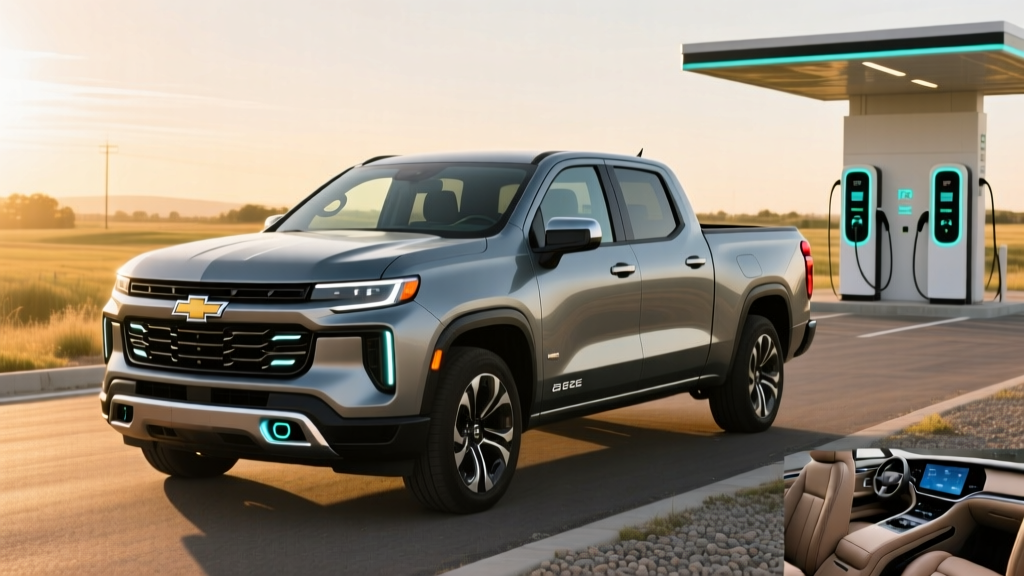
The 2023 Chevrolet Silverado EV arrived with bold promises: over 400 miles of range, 754 horsepower, and a starting price that undercut the Ford F-150 Lightning. But as any EV owner knows, the sticker is only half the story. After spending time with the Work Truck (WT) and the range-topping RST First Edition, we've compiled the exact numbers, real-world caveats, and ownership realities you need before signing a lease or purchase agreement.
Range & Efficiency: EPA vs. Reality
The 2023 Silverado EV comes in two primary configurations for range and efficiency. The WT (Work Truck) with the smaller battery pack delivers a more modest but still competitive figure, while the RST First Edition with the massive 200+ kWh Ultium pack pushes into rare territory for electric pickups.
- Silverado EV WT (Standard Battery): ~240 miles EPA
- Silverado EV RST First Edition (200+ kWh pack): 440 miles EPA (4WT trim with max battery)
Real-World Expectation: On mixed highway driving at 70-75 mph, expect 340-380 miles from the RST. In cold weather (below 32°F), plan for a 25-35% reduction — that 440-mile sticker can drop to 285-330 miles on a freezing winter road trip. City driving with regenerative braking maximizes range and can approach or slightly exceed the EPA figure.
Efficiency varies heavily by trim and driving style. The RST First Edition, with its dual-motor AWD and 754 hp, achieves approximately 59 MPGe combined (EPA), translating to roughly 57 kWh per 100 miles. That's thirsty by EV standards — comparable to the GMC Hummer EV and heavier than the F-150 Lightning Extended Range (~49 kWh/100mi). The WT fleet-oriented trim, with less power and often RWD, performs slightly better per mile.
| Specification | WT (Standard) | RST First Edition |
|---|---|---|
| EPA Range | ~240 mi | 440 mi |
| Battery Capacity (usable) | ~100 kWh (est.) | ~200 kWh (Ultium NMC) |
| Battery Chemistry | NMC (Nickel Manganese Cobalt) | NMC (Nickel Manganese Cobalt) |
| Drivetrain | RWD / AWD available | AWD (Dual Motor) |
| Horsepower | Up to 510 hp | 754 hp (Wide Open Watts mode) |
| 0-60 mph | ~5.5 sec (est.) | ~4.5 sec |
| Max Towing | 8,000 lbs (10,000 w/ max tow pkg) | 8,000 lbs (10,000+ future rating) |
| MPGe (combined) | ~65 MPGe (est.) | 59 MPGe |
| Cargo Bed Length | 5'11" (with Multi-Flex Midgate) | 5'11" (up to 10'10" w/ midgate open) |
Battery Chemistry and Longevity
Chevrolet uses GM's Ultium platform for the Silverado EV, featuring large-format NMC (nickel manganese cobalt) pouch cells. Unlike the LFP (lithium iron phosphate) packs found in some Tesla Model 3 Standard Range vehicles, NMC offers higher energy density — critical for fitting 200+ kWh into a pickup chassis — but requires more careful thermal management and typically shows slightly faster degradation over 10-15 years.
GM provides a battery warranty of 8 years / 100,000 miles with a capacity retention threshold of 70%. Real-world degradation data for Ultium packs is still accumulating given the platform's youth, but GM's testing suggests 10-15% degradation over 150,000 miles under normal use. For fleet buyers running the WT trim, this is a manageable figure; for individual owners planning 10+ years of ownership, it's worth monitoring State of Health (SoH) through the MyChevrolet app.
Charging Speed: DC Fast, Level 2, and the Curve Reality
Charging is where the Silverado EV's massive battery becomes a double-edged sword. The peak DC fast-charge rate is impressive, but filling a 200 kWh pack from empty takes time regardless of the kW number.
| Charging Level | Max Rate | Miles Added per Hour | Notes |
|---|---|---|---|
| Level 1 (120V household) | 1.4 kW | ~2-3 mi/hr | Emergency/trickle only |
| Level 2 (240V home) | 11.5 kW (onboard charger) | ~23-27 mi/hr | Full charge in ~18-20 hrs (200 kWh pack) |
| Level 2 (240V, 19.2 kW capable) | 19.2 kW | ~38-44 mi/hr | Requires compatible station; full charge ~10-11 hrs |
| DC Fast Charge (CCS/NACS) | 350 kW peak | ~250-300 mi in 20 min (10-80%) | Peak rate sustained briefly; tapers above 60% SoC |
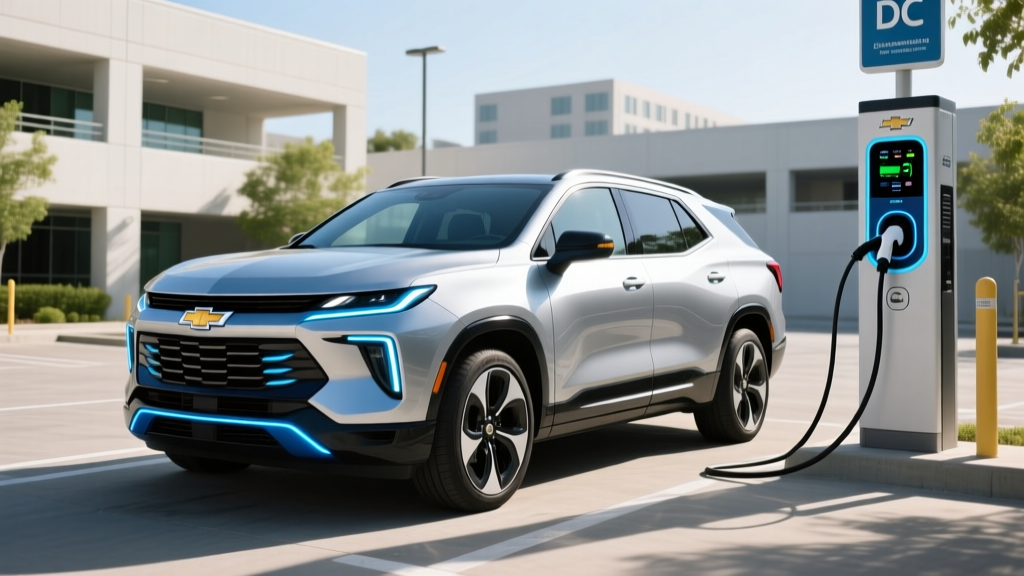
The 350 kW peak DC fast-charge rate is among the highest of any production pickup. On a 350 kW-capable Electrify America or Tesla Supercharger (with NACS adapter), the Silverado EV RST can add approximately 100 miles of range in under 10 minutes under ideal conditions. However, the charging curve tapers significantly above 60% State of Charge. A 10-80% session takes roughly 25-30 minutes at a high-power station — competitive with the F-150 Lightning but slower than the Hyundai Ioniq 5's 18-minute benchmark due to the Silverado's sheer battery volume.
Preconditioning matters. The Silverado EV's thermal management system will precondition the battery when a DC fast-charging station is entered into the navigation. Skipping this step — or arriving at a charger with a cold-soaked battery in winter — can cut peak charge rates by 40-50%.
For home charging, the 19.2 kW onboard charger is a standout. Most EVs cap at 11.5 kW, meaning a full overnight charge for the 200 kWh pack is impractical. With a 19.2 kW Level 2 station (requiring a dedicated 100-amp circuit), you can replenish roughly 40 miles of range per hour — enough to fully recharge overnight after a typical day's driving. Installation of a 19.2 kW home charger typically costs $1,500-$3,000 including electrical work; consult a licensed electrician to verify your panel can handle the load.
Performance and Drivetrain
The RST First Edition's Wide Open Watts (WOW) mode unlocks the full 754 horsepower and 785 lb-ft of torque, launching this 9,000-pound truck to 60 mph in approximately 4.5 seconds. That's supercar territory from a decade ago, delivered silently and with zero drama. The dual-motor AWD system provides excellent traction in rain and light off-road conditions, though this is firmly a street-and-lifestyle truck, not a purpose-built off-roader like the Rivian R1T or Hummer EV with its CrabWalk.
The WT trim offers up to 510 horsepower in its top dual-motor configuration, with RWD single-motor variants available for fleet buyers prioritizing efficiency and cost. Towing capacity maxes out at 10,000 pounds with the available max tow package on the WT — competitive with the F-150 Lightning's 10,000-pound rating but below the Rivian R1T's 11,000-pound capacity. Note that towing at max capacity will slash range by 40-50%, bringing the 440-mile RST down to approximately 220-260 miles per charge while hauling.
Pricing, Trims, and Federal Tax Credit Eligibility
The 2023 Silverado EV launched with a trim strategy that aimed to undercut the competition at the base level while commanding a premium at the top.
| Trim | Base MSRP | Est. Federal Credit (§30D) | Effective Price |
|---|---|---|---|
| WT (Standard Battery, RWD) | ~$39,900 | Up to $7,500* | ~$32,400 |
| WT (Max Battery, AWD) | ~$55,000 | Up to $7,500* | ~$47,500 |
| RST First Edition | $105,000 | $0 (exceeds MSRP cap) | $105,000 |
Critical tax credit caveats: The IRS §30D federal EV tax credit has an MSRP cap of $80,000 for trucks. The RST First Edition at $105,000 exceeds this cap entirely and does not qualify. The WT trims fall under the cap but must also satisfy buyer income limits ($150,000 single / $300,000 joint AGI), critical mineral sourcing requirements, and battery component sourcing rules that phase in progressively. For 2023-2024, qualifying WT trims may receive $3,750 or $7,500 depending on battery sourcing compliance. Always verify current eligibility on IRS.gov before purchasing. The credit is now available as a point-of-sale transfer to the dealer, reducing your out-of-pocket cost at purchase rather than waiting for tax filing.
Interior, Cargo, and Technology
The Silverado EV's interior represents a significant departure from the conventional Silverado. The RST First Edition features a portrait-oriented 17-inch infotainment touchscreen running GM's latest Ultifi software, paired with an 11-inch digital instrument cluster. The system supports wireless Apple CarPlay and Android Auto, over-the-air updates, and integrated Google Built-In (Maps, Assistant, Play Store).
The party trick is the Multi-Flex Midgate: a fold-down partition between the cab and bed that extends the effective load floor from 5'11" to over 10 feet with the tailgate closed. This allows hauling lumber, kayaks, or ladders entirely within the vehicle's footprint — a feature the F-150 Lightning lacks. Cargo volume behind the rear seats (with midgate closed) is approximately 43 cu ft; with the midgate open and rear seats folded, the Silverado EV offers a nearly flat load floor rivaling a long-bed conventional pickup.
Front legroom measures 45.2 inches; rear legroom is 43.4 inches — generous for a crew cab. The rear floor is flat (no transmission tunnel), improving middle-seat comfort. A front trunk (frunk) is absent on the RST First Edition due to the massive battery packaging, though some WT configurations offer limited front storage.
Driver assistance comes via GM's Super Cruise on the RST, a Level 2 hands-free driving system operational on over 750,000 miles of mapped highways in the US and Canada. Super Cruise is not self-driving — the driver must remain attentive, and a camera monitors eye gaze — but it significantly reduces fatigue on long hauls. The WT trim receives the more basic Chevy Safety Assist suite (automatic emergency braking, lane keep assist, adaptive cruise control).
Pros, Cons, and Who Should Buy
Pros
- Class-leading 440-mile EPA range (RST max battery)
- 350 kW peak DC fast charging — top-tier for pickups
- Multi-Flex Midgate enables 10'+ cargo hauling
- Super Cruise hands-free highway driving (RST)
- 19.2 kW onboard Level 2 charger (faster than most competitors)
- WT trim starting near $40K undercuts F-150 Lightning base
Cons
- RST First Edition at $105K exceeds tax credit MSRP cap
- Heavy weight (~9,000 lbs) hurts efficiency (57 kWh/100mi)
- No frunk on RST trim
- Real-world highway range drops significantly in cold weather
- Towing at max capacity cuts range by 40-50%
- WT availability limited; long wait times for retail buyers
Who this EV suits best: The Silverado EV WT is ideal for fleet operators and commercial buyers who need a zero-emission work truck with low running costs and can charge at a depot overnight. The RST First Edition targets affluent lifestyle buyers who want maximum range for road trips, cutting-edge tech, and the midgate versatility for weekend projects — and who aren't dependent on the federal tax credit. If you tow frequently over long distances, the F-150 Lightning or a diesel remains more practical; if you commute 50+ miles daily and want to avoid gas entirely, the Silverado EV's range buffer is a genuine advantage.
How It Compares: Silverado EV vs. Key Competitors
The electric pickup segment is competitive. Here's how the 2023 Silverado EV stacks up against its two primary rivals:
| Attribute | Silverado EV RST | F-150 Lightning Ext. Range | Rivian R1T (Dual Max) |
|---|---|---|---|
| EPA Range | 440 mi | 320 mi | 410 mi |
| Battery (kWh) | ~200 | 131 | 149 |
| Peak DC Charge | 350 kW | 150 kW | 200 kW |
| 0-60 mph | ~4.5 sec | ~4.0 sec | ~3.5 sec |
| Max Towing | 10,000 lbs | 10,000 lbs | 11,000 lbs |
| Base MSRP | $105,000 (RST) | ~$70,000 | ~$87,000 |
| Tax Credit Eligible | No (MSRP cap) | Yes (select trims) | Yes (select trims) |
The Silverado EV wins on raw range and peak charging speed. The F-150 Lightning wins on price, availability, and tax credit access. The Rivian R1T wins on performance, off-road capability, and build quality — at a significant premium. Your priority ranking among these attributes should drive your decision.
Frequently Asked Questions
What is the real-world range of the 2023 Silverado EV?
The EPA rates the RST First Edition at 440 miles, but expect 340-380 miles on highway road trips at 70-75 mph, and 285-330 miles in freezing temperatures. The WT standard battery delivers approximately 200-220 real-world highway miles. City driving with regenerative braking recovers more energy and can approach the EPA sticker.
How fast does the Silverado EV charge at home and on DC fast chargers?
On a 350 kW DC fast charger, the Silverado EV can add ~100 miles in under 10 minutes and complete a 10-80% session in approximately 25-30 minutes. At home on a 240V Level 2 charger at 19.2 kW, it adds roughly 40 miles per hour — a full charge of the 200 kWh pack takes 10-11 hours. On a standard 11.5 kW Level 2, plan for 18-20 hours for a full charge.
Does the 2023 Silverado EV qualify for the $7,500 federal tax credit?
The WT trims (under $80,000 MSRP) may qualify for partial or full §30D credits depending on battery sourcing compliance and buyer income limits ($150K single / $300K joint). The RST First Edition at $105,000 exceeds the $80,000 truck MSRP cap and does not qualify. Verify current eligibility at fueleconomy.gov and IRS.gov.
Is the Silverado EV worth buying over the F-150 Lightning?
If maximum range and the midgate cargo system are your top priorities and budget is flexible, the Silverado EV RST offers capabilities the Lightning cannot match. If you need tax credit eligibility, lower upfront cost, and broader dealer availability, the F-150 Lightning Extended Range is the more practical choice for most buyers. Test-drive both and compare real charging infrastructure in your area.
What is the battery warranty on the Silverado EV?
GM covers the Ultium battery pack for 8 years or 100,000 miles, whichever comes first, against defects and capacity loss below 70% of original capacity. The powertrain (motors, power electronics) carries the same 8-year/100,000-mile coverage. This matches the industry standard for EV battery warranties.
Can the Silverado EV power my home during an outage?
GM has announced V2H (vehicle-to-home) capability for the Silverado EV via the Energy Transfer Pro accessory, enabling the truck's battery to supply power to a home during outages. However, this requires a compatible bidirectional home charger and professional installation. Availability and pricing of the V2H system should be confirmed with your dealer at time of purchase.
Sources: EPA range and efficiency data via fueleconomy.gov; manufacturer specifications from Chevrolet.com; federal tax credit rules per IRS.gov §30D guidance. All specifications reflect 2023 model year as published; verify with dealer for latest production changes.