Quick Verdict: The Driver's EV That Compromises on Range
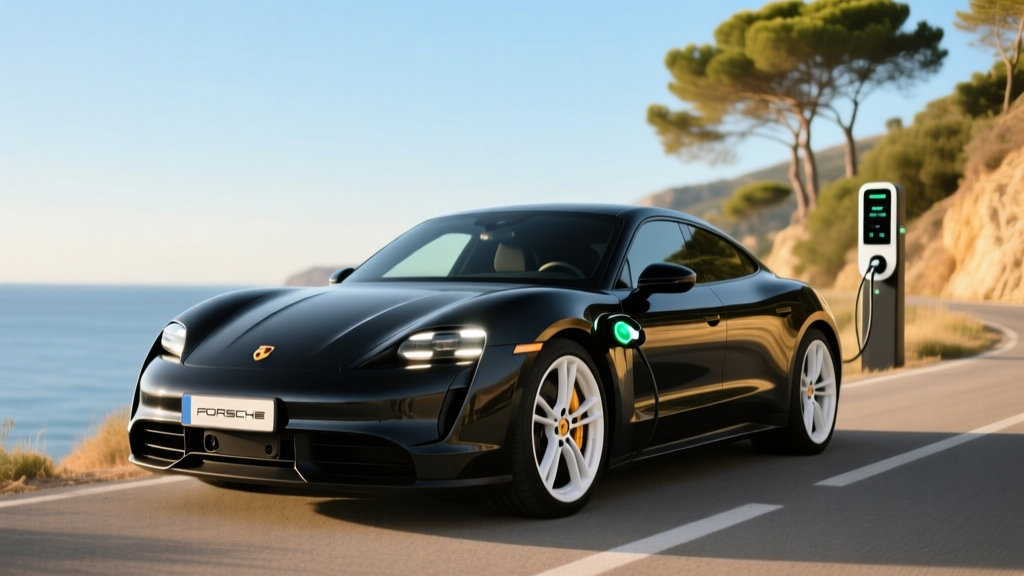
The 2023 Porsche Taycan remains the benchmark for electric sports sedan dynamics — a car that proves electrification and driving engagement aren't mutually exclusive. But in a market where the Tesla Model S and Lucid Air push past 400 miles of EPA range, the Taycan's 206–246 mile window (depending on trim) demands honest conversation about what you're trading for that chassis wizardry.
After spending significant time across the Taycan lineup — from the base rear-wheel-drive model to the Turbo S — the pattern is clear: Porsche prioritized 800-volt charging architecture, repeatable performance, and build quality over maximizing battery size. If your daily routine includes home charging and your road trips can accommodate 20–25 minute DC fast-charge stops, the Taycan delivers an ownership experience few EVs can match. If you regularly drive 300+ miles between charging opportunities, look elsewhere.
| Spec | Base RWD | 4S | GTS | Turbo | Turbo S |
|---|---|---|---|---|---|
| EPA Range | 225 mi | 227 mi | 246 mi | 238 mi | 222 mi |
| Battery (usable) | 79.2 kWh (Performance Battery) | 79.2 kWh / 93.4 kWh opt. | 93.4 kWh | 93.4 kWh | 93.4 kWh |
| Chemistry | NMC (LG) | NMC (LG) | NMC (LG) | NMC (LG) | NMC (LG) |
| Drivetrain | RWD, single motor | AWD, dual motor | AWD, dual motor | AWD, dual motor | AWD, dual motor |
| Horsepower | 402 hp | 562 hp | 590 hp | 670 hp | 750 hp |
| 0–60 mph | 5.1 sec | 3.8 sec | 3.5 sec | 3.0 sec | 2.6 sec |
| Peak DC Charge | 225 kW | 225–270 kW | 270 kW | 270 kW | 270 kW |
| 10–80% DC Time | ~23 min | ~22 min | ~22 min | ~22 min | ~22 min |
| Level 2 Rate | 9.6 kW | 9.6 kW | 9.6 kW | 9.6 kW | 9.6 kW |
| MPGe (combined) | 79 MPGe | 82 MPGe | 83 MPGe | 80 MPGe | 74 MPGe |
| Base MSRP | $86,700 | $106,550 | $134,100 | $162,450 | $190,500 |
Range and Efficiency: EPA Numbers vs. Reality
EPA Range: 225–246 miles (trim-dependent)
Real-World Expectation: 190–230 miles highway; 220–260 miles mixed city; 160–190 miles in freezing temperatures with cabin heat
The Taycan's efficiency story is more nuanced than the EPA sticker suggests. According to fueleconomy.gov, the Taycan 4S with the larger Performance Battery Plus (93.4 kWh usable) achieves 82 MPGe combined — roughly 41 kWh per 100 miles. That's less efficient than a Tesla Model S Long Range (124 MPGe) or Lucid Air Grand Touring (131 MPGe), and the reason is physics: the Taycan is heavy (4,900–5,100 lbs depending on trim) and uses a two-speed rear transmission optimized for performance rather than maximum efficiency.
In real-world highway driving at 70–75 mph in moderate temperatures, expect the Taycan 4S to deliver approximately 200–215 miles before reaching 10% state of charge. City driving with regenerative braking extends this to 230+ miles. The Taycan GTS, with its slightly optimized tuning, has been documented achieving 250+ miles in mixed driving by multiple independent testers — occasionally exceeding its EPA rating, a rarity among EVs. Porsche's conservative EPA methodology is well-documented; the Taycan routinely outperforms its sticker in temperate conditions.
Cold weather is the Taycan's efficiency enemy, as with all EVs. In sub-30°F conditions with the cabin heater active, plan for a 20–25% range reduction. The Taycan lacks a heat pump (standard on the Tesla Model S and Hyundai Ioniq 5), relying instead on resistive cabin heating that draws directly from the traction battery. Preconditioning the battery while plugged in mitigates this, but it's a notable omission for a vehicle in this price bracket.
Charging Speed: The 800-Volt Advantage
The Taycan was the first production EV to use an 800-volt architecture, and this remains its strongest practical advantage for road-trip charging. Here's how the numbers break down across charging levels:
| Charging Level | Power | Speed (approx.) | Time |
|---|---|---|---|
| Level 1 (120V household) | 1.4 kW | ~4 mi/hr | ~65 hr (0–100%) |
| Level 2 (240V, 40A circuit) | 9.6 kW | ~28 mi/hr | ~10 hr (0–100%) |
| DC Fast (50 kW station) | 50 kW | ~140 mi/hr | ~45 min (10–80%) |
| DC Fast (150 kW station) | ~130 kW sustained | ~360 mi/hr | ~28 min (10–80%) |
| DC Fast (350 kW station) | 270 kW peak | ~750 mi/hr | ~22 min (10–80%) |
The headline 270 kW peak charge rate (225 kW on the smaller 79.2 kWh battery) is achievable only at 350 kW-capable DC fast chargers — currently Electrify America's newer stations and a growing subset of EVgo and ChargePoint locations. The Taycan uses the CCS1 connector standard; in 2026, NACS adapters are available for Tesla Supercharger access.
Understanding the charge curve is essential. The Taycan hits its peak 270 kW briefly between roughly 10–30% state of charge, then tapers to approximately 170 kW through 60%, and further to 80–100 kW above 80%. The 10–80% time of ~22 minutes is among the fastest in production, but you won't see 270 kW sustained. Porsche's thermal management system is exceptionally good at maintaining charge speed — in back-to-back testing, the Taycan has demonstrated remarkably consistent charge curves even after repeated hard driving, unlike competitors that throttle charge speed to protect battery temperature.
For home Level 2 charging, the onboard 9.6 kW charger adds approximately 28 miles of range per hour. A full overnight charge from 10% takes roughly 9–10 hours on a 40-amp circuit (48-amp breaker). Upgrading to a 60-amp circuit won't speed this up — the Taycan's onboard charger caps at 9.6 kW. Porsche includes a Porsche Mobile Charger Connect (up to 9.6 kW) with the vehicle; the optional Porsche Mobile Charger Plus offers the same rate with a more compact form factor.
Performance and Driving Dynamics
This is where the Taycan justifies its price premium over every competitor except perhaps the Lucid Air Sapphire. The dual-motor AWD models use a two-speed transmission on the rear axle — first gear for brutal launch acceleration, second gear for high-speed efficiency — while the front motor uses a single-speed reduction gear.
The Turbo S delivers a 2.6-second 0–60 mph time with Launch Control engaged, placing it among the quickest production cars ever built. But raw acceleration is only part of the story. The Taycan's adaptive air suspension, rear-axle steering (optional on 4S, standard on GTS and above), and torque vectoring create a sedan that corners with sports-car precision. In real-world canyon and track driving, the Taycan communicates through its steering and chassis in a way the Model S simply does not.
Launch Control is repeatable — Porsche engineered the thermal system to handle multiple consecutive hard launches without power degradation. This is a genuine engineering differentiator; many EVs will pull one impressive 0–60 run and then limit power to manage battery and inverter temperatures.
The base RWD Taycan (402 hp, 5.1 seconds to 60) is the value play in the lineup. It's rear-wheel drive only, lighter by roughly 200 lbs, and still delivers the core Taycan chassis experience. For daily commuting and spirited weekend driving without the need for sub-3-second sprints, the RWD model at $86,700 is arguably the sweet spot.
Interior, Cargo, and Daily Practicality
The Taycan is a four-door sports sedan, not a crossover, and its interior dimensions reflect that priority. Front legroom is generous at 41.5 inches, but rear legroom is tight at 32.7 inches — adequate for adults on short trips but noticeably cramped compared to the Tesla Model S (35.4 inches rear) or Lucid Air (36.3 inches). The transmission tunnel hump (a legacy of the platform's architecture) further limits rear middle-seat comfort.
Cargo volume is the Taycan's most practical weakness:
- Rear trunk: 14.3 cubic feet (sedan), 15.7 cubic feet (Sport Turismo/Cross Turismo wagon variants)
- Front trunk (frunk): 2.9 cubic feet — enough for a charging cable bag and a small duffel
- Total: ~17.2 cu ft (sedan) — roughly half of what a Model S offers (28 cu ft rear + 5.3 cu ft frunk)
The Cross Turismo and Sport Turismo wagon variants significantly improve cargo utility with a hatchback design and up to 44.6 cubic feet with rear seats folded. If cargo matters, these body styles are worth the premium.
The infotainment system uses a 10.9-inch central touchscreen with an optional 10.9-inch passenger display and a curved 16.8-inch digital instrument cluster. Apple CarPlay is wireless; Android Auto is wired. The center console also features an 8.4-inch haptic touch panel for climate and handwriting input. The system is responsive but not class-leading — Tesla's interface and Lucid's glass cockpit feel more modern. Porsche's PCM (Porsche Communication Management) is functional and well-integrated but doesn't offer the over-the-air feature expansion of its competitors.
Driver assistance features include adaptive cruise control, lane-keeping assist, and night vision (optional). This is SAE Level 2 driver assistance — hands must remain on the wheel and eyes on the road. Porsche's InnoDrive adds predictive cruise control that uses navigation and road-sign data to adjust speed for curves and speed limits, and it works well on highways. However, it does not approach the hands-free capability of GM's Super Cruise or Ford's BlueCruise on mapped roads.
Pricing, Trims, and Federal Tax Credit Eligibility
The 2023 Taycan lineup spans a wide price range, and options can add $20,000–$40,000 to any trim:
| Trim | Base MSRP | Typical As-Tested | §30D Credit Eligible? |
|---|---|---|---|
| Base RWD | $86,700 | $95,000–$105,000 | No — exceeds $55,000 sedan MSRP cap |
| 4S | $106,550 | $120,000–$140,000 | No — exceeds $55,000 sedan MSRP cap |
| GTS | $134,100 | $145,000–$165,000 | No — exceeds $55,000 sedan MSRP cap |
| Turbo | $162,450 | $175,000–$195,000 | No — exceeds $55,000 sedan MSRP cap |
| Turbo S | $190,500 | $205,000–$225,000 | No — exceeds $55,000 sedan MSRP cap |
| Cross Turismo (all trims) | $93,700–$197,400 | Varies | No — exceeds $80,000 SUV/van MSRP cap (classified as sedan by EPA) |
Under current IRS §30D rules, the new clean vehicle credit is capped at $55,000 MSRP for sedans and $80,000 for SUVs, vans, and trucks. Every Taycan trim far exceeds these thresholds, making no new 2023 Taycan eligible for the $7,500 federal tax credit. Additionally, buyer income caps ($150,000 single / $300,000 joint AGI) would disqualify many Taycan buyers regardless of MSRP.
For used Taycan buyers, the §25E used clean vehicle credit offers up to $4,000 (or 30% of the sale price, whichever is less) on vehicles priced at $25,000 or below — a threshold that no 2023 Taycan will meet in the near term. Some state-level incentives (California's CVRP, for example) may apply, but these vary by jurisdiction and income. Consult your tax professional for eligibility specifics.
Warranty, Battery Longevity, and Ownership Costs
Porsche covers the Taycan with the following warranty structure:
- Limited vehicle warranty: 4 years / 50,000 miles
- Battery and powertrain warranty: 8 years / 100,000 miles (whichever comes first), covering capacity loss below 70% of original
- Corrosion warranty: 12 years, unlimited miles
- Complimentary maintenance: 1 year / 10,000 miles (Porsche Scheduled Maintenance)
The 70% capacity retention threshold at 8 years/100,000 miles is industry-standard, matching Tesla and most competitors. Real-world degradation data from early Taycan owners (2020–2022 models) suggests NMC battery degradation of approximately 5–8% over the first 50,000 miles, with the curve flattening thereafter. The 800V system's sophisticated thermal management — including active liquid cooling and heating of the battery pack — appears to be effective at preserving long-term battery health.
A full battery replacement out of warranty is estimated at $25,000–$35,000 based on current parts pricing, though this is expected to decrease as the supply chain matures. Insurance costs are elevated: expect annual premiums of $3,500–$5,500 depending on trim, location, and driving record — significantly more than a Tesla Model 3 or Model S.
Total cost of ownership over five years is high relative to mainstream EVs but competitive within the luxury performance sedan segment. Electricity costs approximately $0.04–$0.06 per mile (at $0.15/kWh national average), compared to $0.12–$0.15 per mile for a comparable BMW M5 or Mercedes-AMG GT on premium fuel.
Pros, Cons, and the Competition
Pros
- Best-in-class driving dynamics — steering feel, chassis balance, and braking are sports-car caliber
- Fastest repeatable DC charging among production sedans (22 min 10–80%)
- Build quality and materials exceed Tesla and rival Lucid
- Conservative EPA ratings — real-world range often exceeds sticker in moderate conditions
- Repeatable Launch Control without thermal throttling
- Strong resale value relative to EV segment averages
Cons
- Lowest EPA range in its price class (206–246 mi vs. Model S 405 mi, Lucid Air 516 mi)
- Tight rear seat and minimal cargo space
- No heat pump — cold-weather efficiency suffers
- Not eligible for any federal EV tax credit (MSRP cap)
- Infotainment feels a generation behind Tesla/Lucid
- Options inflate price rapidly — $30K+ in add-ons is common
Taycan vs. Tesla Model S: The Model S Long Range wins on range (405 mi EPA), cargo space, tech features, and price. The Taycan wins on build quality, driving dynamics, and charging speed consistency. If driving engagement matters most, the Taycan. If range and utility matter most, the Model S.
Taycan vs. Lucid Air: The Air Grand Touring offers 516 miles of EPA range and a more spacious interior, but its charging speed (~20 min 10–80% at peak 300 kW) is only marginally faster, and its driving dynamics don't match Porsche's precision. The Air is the efficiency and range champion; the Taycan is the driver's champion.
Taycan vs. BMW i5 M60: BMW's electric 5 Series is newer, offers 295 miles of range, and provides a more traditional luxury sedan experience. The Taycan is sportier and charges faster; the i5 is more practical and more efficient. Close competitors with different priorities.
Who Should Buy the 2023 Porsche Taycan?
The Taycan is the right EV if you:
- Prioritize driving dynamics above all else in an electric vehicle
- Have reliable home Level 2 charging and a daily commute under 150 miles round-trip
- Take road trips that can accommodate 20–25 minute charge stops every 180–200 miles
- Value build quality, dealer service experience, and brand prestige
- Don't need spacious rear seating or maximum cargo volume
Look elsewhere if you:
- Regularly drive 300+ miles between charging stops
- Live in a cold climate where range loss compounds the Taycan's already modest EPA numbers
- Need a family sedan with comfortable rear seating for adults
- Want to maximize federal or state EV incentives
- Prioritize range-per-dollar above driving experience
Frequently Asked Questions
What is the real-world range of the 2023 Porsche Taycan?
In mixed driving at moderate temperatures, expect 210–250 miles depending on trim and driving style. Highway-only driving at 75 mph reduces this to 190–220 miles. Cold weather (below 30°F) can drop range to 160–190 miles. The Taycan GTS consistently delivers the best real-world range in the lineup, often exceeding its 246-mile EPA rating in temperate conditions.
Does the 2023 Porsche Taycan qualify for the federal EV tax credit?
No. Under IRS §30D rules, new sedans must have an MSRP at or below $55,000 to qualify for the $7,500 credit. Every Taycan trim starts well above this threshold. Buyer income limits ($150K single / $300K joint) would further disqualify many buyers. State-level incentives may still apply — check your local programs.
How fast does the Taycan charge at home?
On a Level 2 home charger (240V, 40-amp circuit), the Taycan charges at 9.6 kW, adding approximately 28 miles of range per hour. A full charge from 10% takes about 9–10 hours. The Taycan's onboard charger caps at 9.6 kW, so a higher-amperage home circuit won't reduce charge time.
Is the Taycan worth buying over a Tesla Model S?
It depends on priorities. The Model S offers nearly double the range (405 vs. ~225 mi), more cargo space, more advanced Autopilot (Level 2), and a lower starting price. The Taycan offers superior build quality, significantly better driving dynamics, faster DC charging on 350 kW stations, and a more traditional luxury dealer experience. For a driver-focused buyer, the Taycan justifies its premium. For a range-focused buyer, the Model S wins clearly.
Does the Taycan have a heat pump?
No. The 2023 Taycan uses resistive cabin heating, which draws more energy from the traction battery in cold weather compared to a heat pump system. This contributes to the Taycan's 20–25% range loss in freezing conditions — a larger penalty than heat-pump-equipped competitors like the Tesla Model S or Hyundai Ioniq 5.
What connector does the Taycan use?
The 2023 Taycan uses the CCS1 connector for DC fast charging and J1772 for Level 1/Level 2 AC charging. NACS adapters are available for Tesla Supercharger network access. Porsche has announced future models will transition to NACS natively, but the 2023 Taycan retains CCS1.