Quick Verdict: The Driver's EV That Compromises on Range
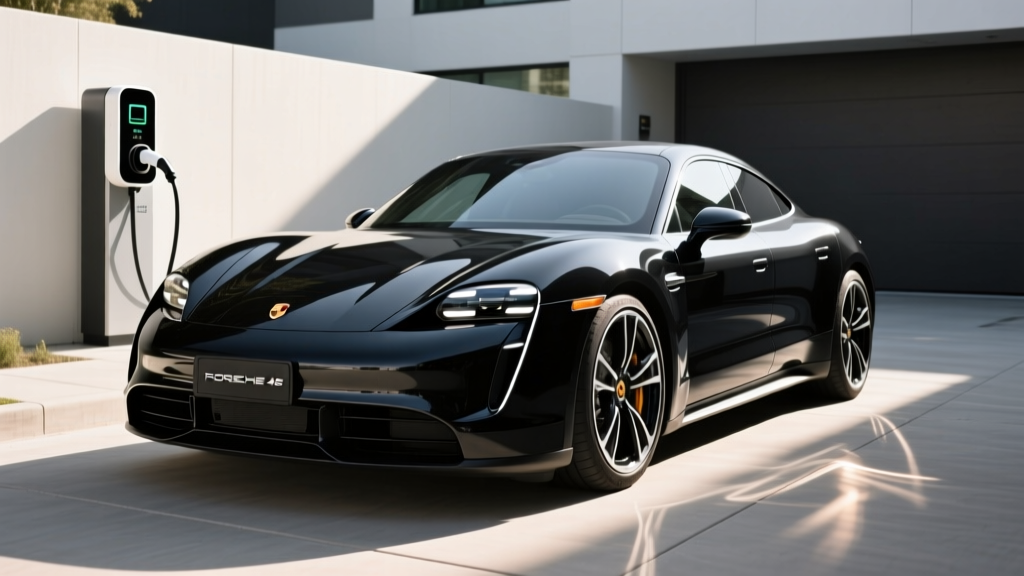
The 2023 Porsche Taycan 4S occupies a specific niche in the EV market: it's a luxury performance sedan that prioritizes driving dynamics over maximum range. With an EPA-estimated 227 miles on the larger Performance Battery Plus, the Taycan 4S trades distance for repeatable performance, 800-volt charging architecture, and chassis tuning that embarrasses rivals twice its price. For buyers who value corner-carving precision and can accommodate charging stops on road trips, it remains a benchmark. For those needing 300+ miles between plugs, look elsewhere.
| Specification | Standard Battery | Performance Battery Plus |
|---|---|---|
| EPA Range | 206 miles | 227 miles |
| Battery Capacity (Usable) | 71.0 kWh (NMC) | 83.7 kWh (NMC) |
| Peak DC Fast Charge | 225 kW | 270 kW |
| 10-80% DC Charge Time | ~22.5 minutes | ~22.5 minutes |
| Level 2 Home Charging | 9.6 kW (~32 mi/hr) | 9.6 kW (~32 mi/hr) |
| 0-60 mph | 3.8 seconds | 3.8 seconds |
| Horsepower (Launch Control) | 522 hp | 562 hp |
| Drivetrain | Dual-motor AWD | |
| MPGe (Combined) | 75 MPGe | 78 MPGe |
| Base MSRP | $106,400 | |
| Battery Warranty | 8 years / 100,000 miles | |
Real-World Range: What the EPA Number Doesn't Tell You
The EPA estimates 227 miles for the Taycan 4S with the Performance Battery Plus—the pack we recommend for most buyers. But Porsche's 800-volt architecture and conservative battery management mean real-world results vary significantly by driving style and conditions.
Real-World Range Expectations (Performance Battery Plus)
- EPA Sticker: 227 miles
- Highway (70-75 mph, 70°F): ~190-210 miles
- City/Mixed (moderate speeds): ~220-240 miles (regen-friendly)
- Cold Weather (32°F, highway): ~150-175 miles (25-30% loss typical for NMC chemistry without heat pump optimization)
- Sport/Spirited Driving: ~140-170 miles (high power draw)
The Taycan 4S uses a 93.4 kWh gross / 83.7 kWh usable lithium-ion pack with NMC (nickel-manganese-cobalt) chemistry. Porsche reserves a ~10% buffer top and bottom to protect long-term health—this conservative approach aids longevity but limits usable capacity versus competitors with similar gross figures.
On a 300-mile road trip at 75 mph in moderate temperatures, expect two DC fast-charge stops of roughly 20-25 minutes each. The Taycan's charging speed partially offsets its range deficit (more on that below), but trip planning remains essential. In winter conditions, range drops significantly—preconditioning the battery before fast charging helps, but cold-weather owners should budget for 160-180 miles of practical range.
Charging Performance: 800-Volt Architecture Delivers
Porsche's 800-volt electrical architecture is the Taycan 4S's party trick. While most 2023 EVs use 400-volt systems limited to 150-200 kW peak charging, the Taycan can accept up to 270 kW at a compatible DC fast charger (Electrify America, Tesla Supercharger with adapter, IONITY in Europe).
| Charging Method | Power | Charge Time | Miles Added |
|---|---|---|---|
| Level 1 (120V household) | ~1.4 kW | ~60 hours (0-100%) | ~4 mi/hr |
| Level 2 (240V, 40A home) | 9.6 kW | ~9 hours (0-100%) | ~32 mi/hr |
| DC Fast Charge (peak) | 270 kW | 10-80% in ~22.5 min | ~180 mi in 22 min |
| DC Fast Charge (50 kW) | 50 kW | 10-80% in ~95 min | ~55 mi in 30 min |
The charge curve matters: the Taycan sustains near-peak rates (250-270 kW) from 10-40% state of charge, then tapers progressively. By 80%, you're seeing ~80-100 kW. This is typical for NMC chemistry protecting cell health, but it means the advertised "22.5 minutes to 80%" assumes ideal conditions—battery preconditioned to ~95°F, plugged into a 350 kW-capable charger, starting at low SoC.
For home charging, a Level 2 wallbox delivering 9.6 kW (40 amps at 240V) adds ~32 miles per hour. Most owners charging overnight from 20-80% will wake to a full battery in 6-7 hours. Upgrading to a 48-amp circuit (11.5 kW) reduces this slightly, but the onboard charger caps at 9.6 kW unless you opt for the available 19.2 kW AC charger (rare, requires 80-amp circuit).
Performance: Repeatable, Track-Capable Acceleration
The dual-motor AWD system produces 482 horsepower in standard driving, rising to 562 hp (with Performance Battery Plus) when Launch Control is engaged. The 0-60 mph sprint takes 3.8 seconds—a figure the Taycan 4S can repeat multiple times without power degradation, thanks to robust thermal management.
This repeatability separates Porsche from competitors that overheat after 2-3 hard launches. The Taycan's two-speed transmission on the rear axle (a first for production EVs) optimizes both launch acceleration and highway efficiency. Top speed is electronically limited to 155 mph.
Beyond straight-line speed, the Taycan 4S excels in chassis balance. The low center of gravity, rear-axle steering (optional), and adaptive air suspension deliver handling that rivals the Panamera and 911 in real-world canyon roads. Steering feel is communicative—rare for an EV—and brake pedal modulation (blending regen and friction brakes) is linear and predictable.
Interior, Cargo, and Daily Practicality
The Taycan 4S seats four adults comfortably (five in a pinch with the optional rear middle seat). Front legroom measures 41.3 inches; rear legroom is 33.3 inches—adequate for adults under 6 feet on shorter trips, tight for longer journeys. The cabin uses Porsche's familiar design language: a 16.8-inch curved instrument cluster, 10.9-inch central touchscreen, and optional passenger-side 10.9-inch display.
Cargo space is the Taycan's weak point. The rear trunk holds 14.3 cubic feet (sedan) or 15.7 cubic feet (Cross Turismo wagon variant). The front trunk (frunk) adds 2.9 cubic feet—enough for a charging cable and small bag, but not a full suitcase. Total cargo capacity trails the Tesla Model S (28 cu ft rear) and Audi e-tron GT (which shares the Taycan platform but offers slightly more space).
Build quality is excellent—typical Porsche fit and finish, with soft-touch materials, solid switchgear, and minimal panel gaps. The optional 14-way or 18-way adaptive sport seats are among the best in the industry for long-distance comfort and lateral support.
Pricing, Trims, and Federal Tax Credit Reality
The 2023 Taycan 4S starts at $106,400 (including destination). Real-world transaction prices climb quickly with options: the Performance Battery Plus adds $0 (standard on 4S in most markets), but Premium Package ($3,770), Adaptive Sport Seats ($3,090), and Rear-Axle Steering ($1,620) push most examples to $115,000-$125,000 before incentives.
| Item | Amount |
|---|---|
| Base MSRP | $106,400 |
| Typical As-Tested Price | $115,000 - $125,000 |
| Federal EV Tax Credit (§30D) | $0 (exceeds MSRP cap) |
| State Incentives (varies) | $0 - $7,500 (check local rules) |
| Estimated Out-of-Pocket | $106,400 - $125,000 |
The Taycan 4S does not qualify for the federal §30D tax credit because its MSRP exceeds the $55,000 sedan cap (or $80,000 SUV/truck cap). This is a dealbreaker for buyers relying on the $7,500 credit to offset purchase price. State-level incentives (California's CVRP, Colorado's tax credit, etc.) may apply—check your jurisdiction's current rules.
For used 2023 Taycan 4S models purchased in 2026, the §25E used-EV credit (up to $4,000) may apply if the sale price is under $25,000—unlikely for this model, but theoretically possible on high-mileage examples in 2027+.
Efficiency and Operating Costs
The Taycan 4S achieves 78 MPGe combined (with Performance Battery Plus), translating to roughly 43 kWh per 100 miles. This is less efficient than the Tesla Model S (120 MPGe, 28 kWh/100mi) due to the Porsche's weight (4,900+ lbs), all-wheel-drive losses, and performance-oriented tuning.
At the national average electricity rate of $0.16/kWh, charging costs ~$6.88 per 100 miles. Compare this to a BMW M5 (17 mpg combined) at $4.00/gallon: ~$23.50 per 100 miles. The Taycan saves ~$1,600 annually in fuel costs for a 10,000-mile driver, but the upfront price premium over a gas equivalent takes years to recoup.
Warranty, Reliability, and Long-Term Ownership
Porsche covers the Taycan 4S with a 4-year/50,000-mile limited warranty and an 8-year/100,000-mile battery warranty (whichever comes first). The battery warranty guarantees at least 70% capacity retention over the coverage period—if degradation exceeds 30%, Porsche replaces or repairs the pack at no cost.
Real-world degradation data for 2020-2023 Taycans shows ~5-8% capacity loss after 60,000 miles, well within warranty thresholds. The 800-volt system and conservative battery management appear to aid longevity. However, out-of-warranty battery replacement costs are steep: estimates range from $25,000-$35,000 for a full pack swap, though individual module repairs may be less.
Insurance costs are high—expect $3,500-$5,000 annually for a typical driver, reflecting the Taycan's repair costs and performance profile. Maintenance is minimal (no oil changes, brake pad life extended by regen), but tire replacement is frequent and expensive: the standard 20-inch Michelin Pilot Sport EV tires cost $400-$500 each and may need replacement every 20,000-25,000 miles under spirited driving.
Tech, Driver Assists, and Notable Drawbacks
The Taycan 4S includes Porsche Communication Management (PCM) with navigation, Apple CarPlay (wireless), and Android Auto (wired). The optional Passenger Display ($1,160) adds a 10.9-inch screen for front-seat entertainment. The system is responsive but lags Tesla's interface in over-the-air update frequency and feature depth.
Driver-assistance features include adaptive cruise control, lane-keeping assist, and automatic emergency braking. These are SAE Level 2 systems—meaning the driver must remain engaged and hands-on (or eyes-on, depending on the system). Porsche does not offer hands-free driving like GM's Super Cruise or Ford's BlueCruise. The optional InnoDrive ($3,020) adds predictive cruise control that adjusts speed for curves and traffic signs, but it's not autonomous.
Pros
- Class-leading driving dynamics and steering feel
- 270 kW DC fast charging (10-80% in ~22.5 min)
- Repeatable performance without thermal degradation
- Excellent build quality and interior materials
- 800-volt architecture future-proofs charging
Cons
- 227-mile EPA range trails rivals (Model S: 405 mi)
- No federal tax credit (MSRP exceeds cap)
- Limited cargo space (14.3 cu ft trunk + 2.9 cu ft frunk)
- High insurance and tire replacement costs
- Rear seat tight for tall adults on long trips
Who Should Buy the 2023 Taycan 4S?
The Taycan 4S suits driving enthusiasts who prioritize handling and build quality over maximum range. It's ideal for:
- Commuters with home charging and round-trip distances under 150 miles
- Performance buyers cross-shopping the BMW i4 M50, Audi e-tron GT, or Tesla Model S Plaid
- Porsche loyalists transitioning from a Panamera or 911 to an EV
It's a poor fit for:
- Road-trip families needing 300+ miles between stops and spacious cargo areas
- Budget-conscious buyers relying on the $7,500 federal tax credit
- Efficiency-focused owners prioritizing kWh/100mi over driving dynamics
Competitor Comparison: Taycan 4S vs. Key Rivals
The Taycan 4S competes with the Tesla Model S Dual Motor ($89,990, 405-mile range), Audi e-tron GT Premium Plus ($107,900, 238-mile range), and BMW i4 M50 ($67,300, 270-mile range). The Tesla wins on range, charging network access, and price. The Audi shares the Taycan's platform but offers slightly more cargo space and a quieter ride. The BMW i4 is smaller and less powerful but significantly cheaper.
Choose the Taycan 4S if driving dynamics and build quality are non-negotiable. Choose the Model S if range and charging convenience dominate your decision. Choose the e-tron GT if you want Taycan underpinnings with a more comfort-focused tune.
Frequently Asked Questions
What is the real-world range of the 2023 Porsche Taycan 4S?
The EPA estimates 227 miles with the Performance Battery Plus. Real-world highway driving at 70-75 mph yields 190-210 miles in moderate temperatures, dropping to 150-175 miles in cold weather (32°F). City driving with regenerative braking can exceed the EPA estimate, reaching 230-240 miles.
How fast does the Taycan 4S charge?
At a 350 kW-capable DC fast charger, the Taycan 4S peaks at 270 kW and charges from 10-80% in approximately 22.5 minutes under ideal conditions (preconditioned battery, optimal temperature). Home Level 2 charging at 9.6 kW adds ~32 miles per hour, fully recharging overnight in 6-9 hours.
Does the 2023 Taycan 4S qualify for the federal EV tax credit?
No. The Taycan 4S's MSRP ($106,400 base) exceeds the $55,000 sedan cap for the §30D federal tax credit. State-level incentives may apply depending on your jurisdiction—check local rules. The used-EV credit (§25E) is unlikely to apply unless sale price drops below $25,000 in future years.
Is the Taycan 4S worth buying over a Tesla Model S?
Depends on priorities. The Model S offers 405 miles of range, Supercharger network access, and a lower price ($89,990). The Taycan 4S delivers superior steering feel, chassis balance, build quality, and repeatable performance. If driving dynamics matter more than range, the Porsche wins. If range and charging convenience dominate, the Tesla is the pragmatic choice.
What are the biggest pros and cons?
Pros: 270 kW fast charging, class-leading handling, excellent build quality, repeatable performance. Cons: 227-mile range trails rivals, no federal tax credit, limited cargo space, high insurance and tire costs, rear seat tight for tall adults.
How long will the Taycan 4S battery last?
Porsche warranties the battery for 8 years or 100,000 miles, guaranteeing at least 70% capacity retention. Real-world data from 2020-2023 models shows ~5-8% degradation after 60,000 miles, suggesting the pack should retain 85-90% capacity at 100,000 miles under normal use. Out-of-warranty replacement costs $25,000-$35,000.