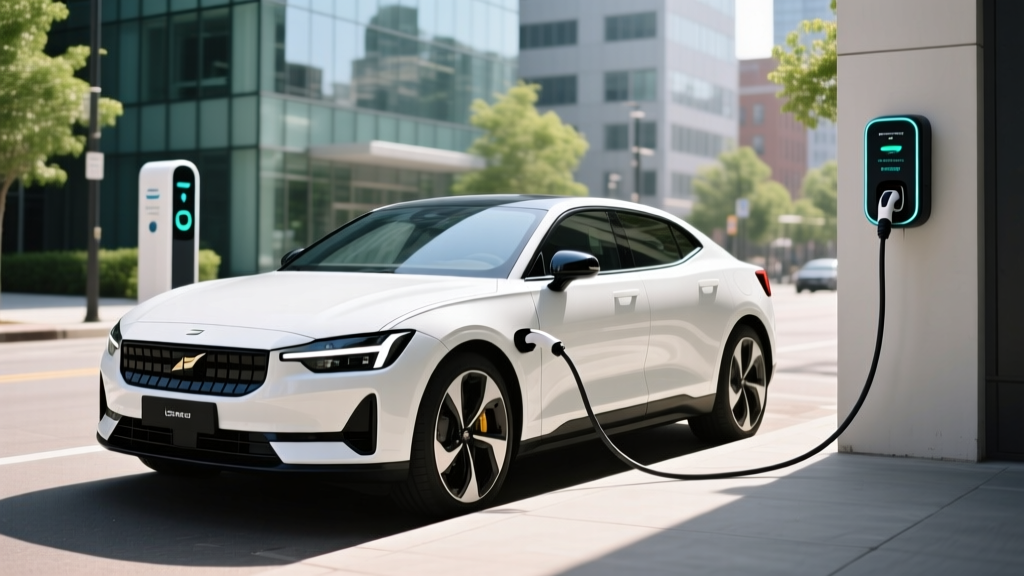
The 2023 Polestar 2 occupies a unique space in the used-EV market of 2026. Originally launched as Polestar's first volume vehicle — a sleek, Scandinavian-designed fastback built on Volvo's CMA platform — it has aged into a compelling value proposition. With prices dropping on the secondary market and the IRS §25E used-EV credit potentially shaving up to $4,000 off a qualifying purchase, the 2023 Polestar 2 deserves a hard look from buyers who want premium build quality without Tesla's polarizing brand or Hyundai's crossover styling.
But the 2023 model year also carries some baggage: a smaller battery by today's standards, a CCS1 connector (not NACS), and DC fast-charging speeds that lag behind the 2026 competition. Let's break down the exact numbers so you can decide if this is the right EV for your driveway.
Range, Efficiency, and the Real-World Reality Check
The 2023 Polestar 2 came in two main configurations for the US market: the Single Motor (front-wheel drive) with the Standard Range or Long Range battery, and the Dual Motor (all-wheel drive) with the Long Range pack. Here's what the EPA says and what you should actually expect:
| Trim | EPA Range | Real-World Highway (70 mph) | Cold Weather (32°F, mixed) |
|---|---|---|---|
| Single Motor Long Range | 270 miles | ~225–240 miles | ~190–210 miles |
| Single Motor Standard Range | 249 miles | ~210–220 miles | ~175–190 miles |
| Dual Motor Long Range | 249 miles | ~205–220 miles | ~170–190 miles |
Source: fueleconomy.gov. Real-world estimates based on highway driving at sustained speeds and cold-weather testing. The heat pump (optional on 2023 models via the Plus Pack) significantly reduces cold-weather range loss.
The 2023 Long Range Single Motor's 270-mile EPA rating was competitive at launch but has since been eclipsed by vehicles like the 2025 Tesla Model 3 Long Range (341 mi) and the 2025 Hyundai Ioniq 6 (361 mi). On the highway, the Polestar 2's boxier fastback shape creates more aerodynamic drag than sleeker competitors, which is why real-world highway range drops to roughly 225–240 miles. That's still enough for most daily commutes and manageable road trips with one charging stop, but it's not a "skip the charger" proposition on a 400-mile drive.
Efficiency for the Long Range Single Motor lands at approximately 97 MPGe combined (about 34 kWh per 100 miles) per EPA figures. The Dual Motor drops to around 89 MPGe combined. These are mid-pack numbers — not as efficient as a Tesla Model 3 but on par with the Volvo XC40 Recharge, which shares the same platform DNA.
Battery Chemistry, Capacity, and Degradation
| Spec | Standard Range | Long Range |
|---|---|---|
| Usable Capacity | 67 kWh | 75 kWh (78 kWh gross) |
| Chemistry | NMC (nickel manganese cobalt) | NMC (nickel manganese cobalt) |
| Supplier | CATL (LG Energy Solution on some batches) | LG Energy Solution |
| Thermal Management | Liquid-cooled/heated | Liquid-cooled/heated |
Both battery packs in the 2023 Polestar 2 use NMC (nickel manganese cobalt) chemistry, which offers higher energy density than LFP (lithium iron phosphate) but is more sensitive to sustained high states of charge. For daily driving, Polestar recommends setting the charge limit to 90% and only charging to 100% before longer trips. This is standard practice for NMC packs and helps minimize degradation over time.
Real-world degradation data from high-mileage Polestar 2 owners (100,000+ miles) suggests approximately 8–12% capacity loss by the five-year mark, which is within normal NMC expectations. The battery warranty backs this up — see the warranty section below.
Charging Speed: Where the 2023 Polestar 2 Shows Its Age
| Charging Level | Rate | Time / Miles Added |
|---|---|---|
| Level 1 (120V household) | ~1.4 kW | ~3–4 miles per hour |
| Level 2 (240V home/public) | Up to 11 kW | ~30–37 miles per hour; 0–100% in ~8 hours |
| DC Fast Charge (CCS1) | Peak 150 kW | 10–80% in ~32–35 minutes |
The 2023 Polestar 2's 150 kW peak DC fast-charging rate was acceptable in 2021 when the car debuted, but by 2026 standards it's a notable weak point. Competitors like the Hyundai Ioniq 5 (peak 240 kW, 10–80% in ~18 minutes) and the Tesla Model 3 (peak 250 kW, 10–80% in ~25 minutes) leave the Polestar 2 waiting at the charger.
Here's what the charging curve actually looks like: the Polestar 2 holds close to its 150 kW peak from roughly 15% to 40% state of charge, then tapers to around 100 kW through 60%, and drops further to 50–60 kW above 75%. The 10–80% charge takes approximately 32–35 minutes at a capable CCS1 station. That's 10–15 minutes longer than the fastest-charging rivals — a meaningful difference on road trips with multiple stops.
One critical note for 2026 buyers: the 2023 Polestar 2 uses a CCS1 connector, not the Tesla NACS port that has become the North American standard. However, Polestar has confirmed that existing CCS-equipped Polestar 2 vehicles can use Tesla Superchargers via a CCS-to-NACS adapter, and an expanding number of Electrify America, EVgo, and ChargePoint stations still offer CCS1 connectors. You won't be stranded, but you may find fewer open stalls at some networks as NACS adoption accelerates.
Performance and Driving Dynamics
| Trim | Drivetrain | Horsepower | Torque (lb-ft) | 0–60 mph |
|---|---|---|---|---|
| Single Motor Standard Range | FWD | 231 hp | 243 | 7.0 sec |
| Single Motor Long Range | FWD | 231 hp | 243 | 7.0 sec |
| Dual Motor Long Range | AWD | 408 hp | 487 | 4.5 sec |
| Dual Motor + Performance Pack | AWD | 476 hp | 502 | 4.1 sec |
The Dual Motor Long Range with the optional Performance Software upgrade (an over-the-air purchase) transforms the Polestar 2 into a legitimate sports sedan rival. The 4.1-second 0–60 mph time and Öhlins dampers (included with the Performance Pack) give it cornering composure that few EVs in this price range can match. The steering is precise and weighted — more Volvo than Tesla — and the one-pedal driving mode with adjustable regen makes city driving effortless.
The Single Motor variants feel adequate for commuting but not exciting. The 231 hp and 7.0-second 0–60 time are perfectly fine for highway merging, but if you're cross-shopping against a Tesla Model 3 RWD (5.8 seconds to 60), the Polestar feels a step behind in straight-line urgency.
Interior, Tech, and Daily Livability
The Polestar 2's interior is where Scandinavian minimalism meets genuine premium quality. The vegan WeaveTech upholstery (standard) and optional Nappa leather both feel durable and upscale. Build quality is excellent — panel gaps are tight, and the materials outclass most competitors in this price bracket.
Infotainment: The 2023 model runs Google Automotive OS natively — meaning Google Maps, Google Assistant, and the Play Store are built into the 11.2-inch portrait touchscreen. This was a standout feature at launch and remains one of the best native EV infotainment systems. Navigation via Google Maps with real-time traffic and integrated charging route planning is genuinely useful.
Driver Assistance: The Polestar 2 comes with Pilot Assist, a Level 2 ADAS system offering adaptive cruise control with lane centering. It's competent on highways but not class-leading — it lacks the hands-free capability of GM's Super Cruise or Ford's BlueCruise. You must keep your hands on the wheel at all times. The system can feel conservative in its lane-keeping, occasionally braking more aggressively than necessary when cut off.
Cargo and Passenger Space:
- Rear cargo (behind second row): 14.4 cu ft (hatchback-style liftgate makes it more usable than the number suggests)
- Cargo with rear seats folded: 37.8 cu ft
- Front trunk (frunk): 1.4 cu ft (small — fits a charging cable bag)
- Rear legroom: 35.7 inches (tight for tall passengers; the Model 3 offers 35.2 inches but feels roomier due to a lower floor)
- Front headroom: 40.1 inches
The rear seat is the Polestar 2's most practical weakness. The high floor (due to the battery pack) creates a knees-up seating position that adults on longer trips will notice. Families with rear-facing car seats will find the space tight compared to a Hyundai Ioniq 5 or Tesla Model Y.
Pricing, Tax Credits, and Ownership Costs
The 2023 Polestar 2 originally started at $49,800 (Single Motor Standard Range) and climbed to $64,300 for a fully loaded Dual Motor with the Performance and Plus packs. In the 2026 used market, expect to find:
| Trim | Original MSRP | 2026 Used Market (est.) | §25E Used EV Credit (potential) |
|---|---|---|---|
| Single Motor Std Range | $49,800 | $22,000–$27,000 | Up to $4,000 |
| Single Motor Long Range | $53,550 | $25,000–$31,000 | Up to $4,000 |
| Dual Motor Long Range | $57,050 | $28,000–$35,000 | Up to $4,000 |
Tax credit details (IRS §25E — Used Clean Vehicle Credit): As of 2026, qualified used EV buyers may be eligible for a credit equal to 30% of the sale price, up to $4,000. To qualify per IRS guidelines, the vehicle must be purchased from a licensed dealer for $25,000 or less, the buyer must meet income thresholds (modified AGI ≤ $75,000 single / $150,000 joint), and the vehicle must be at least two model years old (the 2023 model qualifies in 2026). Many Single Motor Standard Range examples now fall under the $25,000 cap, making the full $4,000 credit attainable. Always consult a tax professional for your specific eligibility.
Note on the §30D new-vehicle credit: When new, the 2023 Polestar 2 was eligible for up to $7,500 under the federal §30D credit, subject to MSRP caps ($55,000 for sedans — which disqualified some Dual Motor builds), buyer income limits, and battery-sourcing requirements that shifted throughout 2023. This is no longer relevant for new purchases but affects residual values.
Warranty Coverage
- Basic vehicle warranty: 4 years / 50,000 miles
- Battery & powertrain: 8 years / 100,000 miles (capacity retention threshold: 70% of original capacity)
- Corrosion: 12 years / unlimited miles
- Roadside assistance: 4 years / unlimited miles
The 8-year/100,000-mile battery warranty is industry-standard and matches Tesla, Hyundai, and most mainstream competitors. The 70% capacity threshold is also typical. If you're buying a 2023 Polestar 2 in 2026 with 30,000–50,000 miles, you'll still have several years of battery warranty coverage remaining.
Pros and Cons
- Premium Scandinavian design and interior quality punch above its price
- Google Automotive OS is one of the best native infotainment systems in any EV
- Dual Motor with Performance Pack offers genuine sports-sedan dynamics
- Strong used-market value in 2026 — potential $4,000 §25E tax credit
- Standard heat pump availability (Plus Pack) improves cold-weather range
- Solid safety ratings from IIHS and Euro NCAP
- 150 kW peak DC charging is slow by 2026 standards
- CCS1 connector requires adapter for Tesla Superchargers
- Rear seat legroom and floor height are compromises for adults
- 270-mile max EPA range trails current competitors by 60–90 miles
- Pilot Assist is competent but not class-leading among Level 2 systems
- Small frunk (1.4 cu ft) limits front storage
Who Should Buy the 2023 Polestar 2 in 2026?
The 2023 Polestar 2 is best suited for:
- Design-conscious commuters who value premium materials and distinctive styling over maximum range
- Home-charging households with a Level 2 setup who rarely need public DC fast charging
- Used-EV bargain hunters who can leverage the §25E credit to land a luxury EV for under $25,000 net
- Driving enthusiasts who opt for the Dual Motor with the Performance Pack
It's less ideal for families needing spacious rear seats, frequent long-distance road-trippers who want 15-minute charge stops, or buyers in areas with limited CCS1 charging infrastructure.
Frequently Asked Questions
What is the real-world range of the 2023 Polestar 2?
The EPA rates the Long Range Single Motor at 270 miles, but expect roughly 225–240 miles on the highway at 70 mph and 190–210 miles in cold weather (32°F). The heat pump option helps mitigate winter losses by 10–15%.
How fast does the 2023 Polestar 2 charge?
On a DC fast charger, it peaks at 150 kW and charges from 10–80% in about 32–35 minutes. At home on Level 2 (240V), it charges at up to 11 kW, adding roughly 30–37 miles per hour, with a full charge in about 8 hours.
Does the 2023 Polestar 2 qualify for any EV tax credit in 2026?
As a used vehicle in 2026, it may qualify for the IRS §25E Used Clean Vehicle Credit — up to $4,000 (30% of sale price) if purchased from a dealer for $25,000 or less and you meet income thresholds. Check IRS.gov for current rules and consult a tax professional.
Is the 2023 Polestar 2 worth buying vs. the Tesla Model 3 or Hyundai Ioniq 5?
It depends on your priorities. The Polestar 2 wins on interior quality, design, and driving dynamics (especially with the Performance Pack). The Tesla Model 3 wins on range, charging speed, and Supercharger network access. The Ioniq 5 wins on charging speed, interior space, and value. On the used market, the Polestar 2 often undercuts both on price while delivering a more premium feel.
Can the 2023 Polestar 2 use Tesla Superchargers?
Yes, with a CCS-to-NACS adapter. Polestar has confirmed compatibility, and the growing number of Supercharger stations open to non-Tesla EVs makes this increasingly practical. However, native CCS1 networks (Electrify America, EVgo) remain widely available.
What's the biggest drawback of the 2023 Polestar 2?
The 150 kW DC charging speed is the most significant limitation by 2026 standards. On road trips requiring multiple fast-charge stops, you'll spend 10–15 extra minutes per stop compared to an Ioniq 5 or Model 3. For home-charging commuters, this is a non-issue.