The 2023 Tesla Model 3 Performance occupies a narrow but compelling lane in the EV market: a luxury sport sedan that hits 60 mph in 3.1 seconds, delivers over 300 miles of EPA-rated range, and undercuts German rivals on price by a wide margin. Now that the refreshed "Highland" Model 3 has replaced it for 2024 and beyond, the 2023 Performance is available only on the used market — but it remains one of the most capable electric sedans you can buy secondhand. This review covers the exact specs, real-world range expectations, charging behavior, and ownership economics you need before purchasing one today.
2023 Model 3 Performance: Key Specifications at a Glance
| Spec | Value |
|---|---|
| EPA Range | 315 miles |
| Battery (usable) | ~75 kWh, NMC (nickel manganese cobalt) |
| Drivetrain | Dual-motor AWD |
| Horsepower | ~450 hp (combined) |
| 0–60 mph | 3.1 seconds |
| Top Speed | 162 mph |
| Peak DC Fast Charge | 250 kW (CCS via adapter or native, market-dependent) |
| 10–80% DC Charge Time | ~27 minutes |
| Level 2 Home Charging | 11.5 kW (~44 mi/hr) |
| EPA Efficiency | 125 MPGe combined / 27 kWh/100 mi |
| Cargo Volume | 23 cu ft (trunk 15 cu ft + frunk 3.1 cu ft + rear seats folded) |
| Rear Legroom | 35.2 inches |
| Battery/Drive Unit Warranty | 8 years / 120,000 miles (70% capacity retention) |
| Original Base MSRP | ~$53,990 (before incentives) |
Real-World Range: What the EPA Sticker Doesn't Tell You
EPA estimate: 315 miles
Real-world highway (70–80 mph, mild weather): ~260–280 miles
Real-world mixed city/highway: ~280–300 miles
Cold-weather (below 32°F, highway): ~210–240 miles
The 315-mile EPA figure for the 2023 Performance is among the best in its class, but as with every EV, real-world results depend heavily on driving style, speed, and temperature. According to fueleconomy.gov, the Model 3 Performance achieves 125 MPGe combined. In practice, sustained highway driving at 75+ mph pushes consumption closer to 30–32 kWh/100 mi, dropping effective range to roughly 260–280 miles on a full charge.
Cold weather is the bigger range killer. The 2023 Model 3 uses a heat pump (standard from 2021 onward), which helps cabin efficiency, but battery chemistry itself loses throughput in freezing temperatures. Expect a 20–30% range reduction in sustained sub-freezing conditions. If your commute is under 60 miles round-trip, this is a non-issue. If you're planning 300-mile winter road trips, plan charging stops around a ~220-mile practical range.
The NMC (nickel manganese cobalt) battery chemistry in the Performance trim offers higher energy density than the LFP (lithium iron phosphate) pack found in the base RWD Model 3. The trade-off: Tesla recommends daily charging to 80% for NMC packs to preserve long-term health, reserving 100% for road trips. LFP owners can charge to 100% daily without degradation concern.
Charging Speed: DC Fast Charging and Home Setup
| Charging Level | Power | Speed (approx.) |
|---|---|---|
| Level 1 (120V household) | ~1.4 kW | ~4–5 mi/hr |
| Level 2 (240V, 48A Wall Connector) | 11.5 kW | ~44 mi/hr |
| DC Fast Charge (peak) | 250 kW | ~170 mi in 15 min (10–80% in ~27 min) |
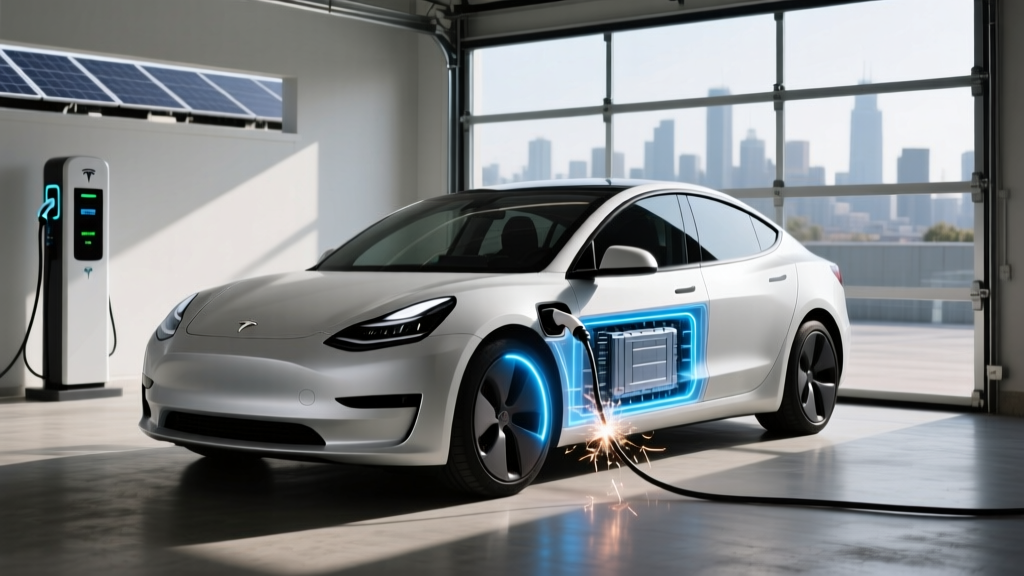
The 2023 Model 3 Performance can accept up to 250 kW at a V3 Tesla Supercharger or compatible CCS station (using an adapter, which Tesla began including for non-Tesla charging). However, peak charge rate is not sustained rate. The charging curve tapers meaningfully above 50% state of charge (SoC). You'll see 250 kW briefly between roughly 10–25% SoC, then it steps down to ~175 kW through 50%, and further to ~100 kW by 70%. This is why the 10–80% time is approximately 27 minutes — not the ~15 minutes you'd calculate from peak rate alone.
For home charging, Tesla's Wall Connector at 48 amps on a 60-amp circuit delivers the full 11.5 kW the onboard charger supports. That translates to roughly 44 miles of range per hour of charging — enough to fully replenish the 75 kWh battery in about 7 hours. Most owners charging overnight from 20–80% will wake up to a full daily charge in under 5 hours. Installation costs for a Level 2 home setup typically range from $500 (simple outlet near panel) to $2,500+ (panel upgrade, long conduit run), depending on your electrical setup.
One practical note: the 2023 Model 3 uses Tesla's proprietary connector in North America. With Tesla opening the Supercharger network to other brands and adopting NACS for future vehicles, adapters are widely available. For CCS public charging (Electrify America, EVgo), you'll need the CCS adapter that Tesla sells or that some 2023 vehicles shipped with.
Performance, Drivetrain, and Efficiency
The dual-motor all-wheel-drive powertrain in the 2023 Performance produces approximately 450 hp and delivers a 3.1-second 0–60 mph time, verified by multiple independent tests. Track Mode, included on the Performance trim, allows adjustable front/rear torque distribution and regenerative braking intensity — useful for closed-course driving but irrelevant for daily commuting.
Efficiency is where the Model 3 platform shines relative to heavier EVs. At 27 kWh/100 mi (EPA combined), the Performance trim is slightly less efficient than the Long Range AWD (25 kWh/100 mi) due to its stickier tires, sport-tuned suspension, and marginally higher curb weight. Still, 27 kWh/100 mi translates to roughly $0.04–$0.06 per mile at average US residential electricity rates ($0.16/kWh) — dramatically cheaper than a comparable BMW M3 or Audi S4 at $0.15–$0.20 per mile on premium gasoline.
Pricing, Tax Credits, and Used Market Value
The 2023 Model 3 Performance originally carried an MSRP of approximately $53,990 (including destination) before any incentives. By mid-2023, Tesla had adjusted pricing several times, and some buyers paid between $50,000 and $54,000 depending on the exact delivery date and configuration.
As of 2026, the 2023 Performance is available only as a used vehicle. Pricing on the used market typically falls between $32,000 and $40,000 depending on mileage, condition, and region.
If you purchase this vehicle used from a dealer, you may qualify for the Used Clean Vehicle Credit (IRC §25E): up to $4,000 or 30% of the sale price, whichever is less.
Requirements:
• Sale price must be $25,000 or below
• Buyer income: ≤$75,000 (single) / ≤$150,000 (joint)
• Vehicle must be at least 2 model years old
• Purchased from a licensed dealer
Source: IRS §25E
Because the 2023 Model 3 Performance typically sells above $25,000 on the used market, most buyers will not qualify for the used EV credit. The original §30D new-vehicle credit of up to $7,500 is no longer available for a 2023 purchase. Always verify current incentive rules with a tax professional and the IRS clean vehicle credits page.
Interior, Tech, and Daily Livability
The 2023 Model 3 interior follows Tesla's minimalist ethos: a single 15-inch center touchscreen handles all infotainment, climate, and vehicle controls. There is no traditional instrument cluster — speed and range information appear in the upper-left corner of the main display. This is polarizing; some owners adapt within days, others find it a persistent frustration.
Standout tech features:
- Over-the-air (OTA) software updates that add features post-purchase
- Tesla Autopilot (standard) with adaptive cruise and lane centering — SAE Level 2, requiring full driver engagement
- Full Self-Driving (Supervised) available as a paid add-on — still Level 2, not autonomous
- Sentry Mode dashcam recording, Dog Mode climate control, and Tesla app remote preconditioning
- 15-speaker premium audio with immersive sound
Notable drawbacks:
- No Apple CarPlay or Android Auto — Tesla's proprietary system only
- Rear visibility is limited by the sloping roofline and small rear window
- Rear seat cushion is relatively flat and low — taller passengers may find long rides uncomfortable
- Build quality on 2023 models improved over earlier years but still shows occasional panel-gap variation
- No physical buttons for climate or audio — everything requires the touchscreen
Tesla Autopilot and Full Self-Driving (Supervised) are SAE Level 2 driver-assistance systems. The driver must remain fully attentive, keep hands on the wheel, and be prepared to take over at any moment. These are not self-driving systems. Only Level 4 services like Waymo operate without a human driver in defined areas.
Warranty Coverage and Long-Term Battery Outlook
Tesla provides a 4-year/50,000-mile basic vehicle warranty and an 8-year/120,000-mile battery and drive unit warranty for the Model 3 Performance (AWD variants receive the higher 120,000-mile threshold vs. 100,000 for RWD). The battery warranty guarantees at least 70% capacity retention over the warranty period. If degradation drops the usable capacity below 70% within 8 years or 120,000 miles, Tesla will repair or replace the battery.
Real-world degradation data from fleet aggregators and owner surveys suggests NMC packs in the Model 3 lose approximately 10–12% capacity over the first 100,000 miles, with the steepest drop in the first 20,000 miles before leveling off. With proper care — avoiding frequent 100% charges, minimizing DC fast charging to only when needed, and using scheduled departure preconditioning — most owners report 85–90% state of health (SoH) at 80,000 miles.
Out-of-warranty battery replacement for the Model 3 currently ranges from $10,000 to $16,000 depending on whether you receive a new or remanufactured pack. This is a real but low-probability cost; the vast majority of packs outlast the vehicle's useful life.
Pros, Cons, and Who Should Buy
- 3.1-second 0–60 mph — supercar acceleration at sedan pricing
- 315-mile EPA range covers most road trips with one stop
- Access to Tesla Supercharger network (most reliable DC network)
- Low running cost: ~$0.05/mi electricity vs. $0.18/mi gas equivalent
- OTA updates keep the vehicle current
- Strong resale value relative to other EVs
- No Apple CarPlay/Android Auto
- Minimalist interior lacks physical controls
- Rear seat comfort trails BMW 3 Series and Genesis G70
- Ride quality on Performance 20" wheels can be firm on rough roads
- Insurance premiums run 20–40% higher than comparable gas sedans
- Used market pricing may exceed $25K, disqualifying from §25E credit
Best for: Driving enthusiasts who want a daily-driver EV with serious acceleration, access to the best DC fast-charging network, and enough range for occasional 250-mile road trips. It works well as a commuter car for singles or couples without large cargo needs.
Not ideal for: Families needing easy rear-seat access for car seats (the sloping roofline makes loading difficult), buyers who insist on Apple CarPlay, or those in extreme cold climates where a longer-range buffer is essential.
Frequently Asked Questions
What is the real-world range of the 2023 Model 3 Performance?
Expect 260–280 miles on the highway in mild weather, and 210–240 miles in freezing temperatures. The EPA rates it at 315 miles, but sustained 75+ mph driving and cold weather significantly reduce that figure. City driving with regenerative braking can actually exceed the EPA estimate in mild conditions.
How fast does the 2023 Model 3 Performance charge?
At a 250 kW DC fast charger (Tesla V3 Supercharger or compatible CCS station), the 10–80% charge takes approximately 27 minutes. Peak rate of 250 kW is only sustained briefly at low state of charge; the curve tapers substantially above 50%. At home on a Level 2 Wall Connector (11.5 kW), a full charge takes about 7 hours.
Does the 2023 Model 3 Performance qualify for any federal tax credit?
As a used vehicle, it may qualify for the §25E Used Clean Vehicle Credit of up to $4,000 — but only if the dealer sale price is $25,000 or less and the buyer's income is within limits ($75K single / $150K joint). Since most 2023 Performance examples sell above $25,000, the credit is unlikely to apply. Verify with a tax professional.
Is the 2023 Model 3 Performance worth buying vs. competitors?
Against the BMW i4 M50 (270-mile range, heavier, ~$45K used), the Model 3 offers better efficiency, faster charging, and Supercharger network access. Against the Hyundai Ioniq 6 Limited AWD (316-mile range, ~$35K used), the Tesla has the performance edge and superior charging infrastructure but a less comfortable rear seat. If charging network reliability and acceleration are priorities, the Model 3 Performance remains the benchmark.
How long will the battery last?
Tesla warranties the NMC battery for 8 years/120,000 miles at 70% capacity retention. Real-world data suggests most Model 3 packs retain 85–90% capacity at 80,000 miles with proper charging habits. Full battery replacement, if needed out of warranty, costs $10,000–$16,000.
What is the insurance cost for a 2023 Model 3 Performance?
Insurance premiums for the Performance trim typically run 20–40% higher than a comparable gasoline sedan due to repair costs and vehicle value. Expect $2,000–$3,500 annually depending on your driving record, age, and state. Tesla Insurance is available in select states and can be competitive — get quotes from multiple providers.