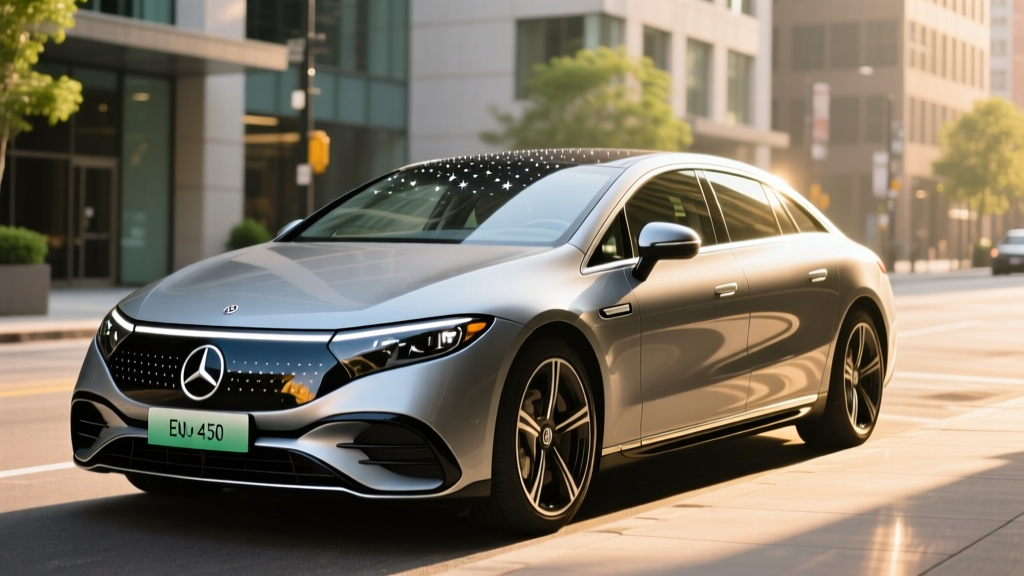
The 2023 Mercedes EQS 450+ arrived as the brand's flagship electric sedan, promising S-Class luxury with zero tailpipe emissions. But does a 350-mile EPA range and a six-figure price tag make sense in 2026's competitive EV landscape? We break down the real-world efficiency, charging performance, and ownership economics to help you decide if this electric luxury cruiser fits your garage.
Range and Efficiency: EPA vs. Reality
Real-World Expectation: 290-320 miles highway; 260-280 miles in cold weather (below 40°F)
The EQS 450+ pairs a 107.8 kWh usable battery (NMC chemistry) with a single rear motor producing 329 horsepower. The EPA rates it at 97 MPGe combined, translating to 34 kWh per 100 miles. That efficiency figure is impressive for a 5,800-pound sedan, but real-world testing tells a more nuanced story.
On a 70-mph highway loop in moderate temperatures (65-75°F), expect 290-320 miles before needing a charge. Cold weather hits the EQS hard—the massive battery lacks the heat pump efficiency of smaller EVs, and cabin heating draws significant power. Winter drivers in northern states should budget for 25-30% range loss. City driving with regenerative braking can push range closer to the EPA sticker, but this isn't a hypermiler's vehicle.
The dual-motor EQS 450 4MATIC sacrifices 20 miles of range (330 EPA) for all-wheel grip, while the performance-oriented EQS 580 4MATIC drops to 340 miles but adds 188 horsepower.
Charging Performance: Peak Speeds and Sustained Reality
| Charging Level | Power/Rate | Time/Miles Added |
|---|---|---|
| Level 1 (120V) | 1.4 kW | ~3 miles/hour |
| Level 2 (240V, 48A) | 11.5 kW | ~32 miles/hour; full charge in 11.5 hours |
| DC Fast Charge | 200 kW peak | 10-80% in 31 minutes (optimal conditions) |
Mercedes quotes a 200 kW peak DC fast-charge rate, but the EQS's charging curve tells a different story. The sedan sustains 150-180 kW through 40% state of charge, then tapers aggressively. That 10-80% time of 31 minutes assumes perfect battery preconditioning and a 350 kW charger—not the 150 kW units still common on Electrify America and EVgo networks.
At a typical 150 kW public charger, plan on 40-45 minutes for a 10-80% session. The EQS's thermal management system prioritizes battery longevity over peak speed, which is smart for long-term health but frustrating when you're watching a Tesla Model S pull away from a Supercharger in half the time.
Home charging on a Level 2 wallbox adds about 32 miles per hour—enough to replenish a day's driving overnight. The onboard charger maxes at 11.5 kW, so installing a 19.2 kW charger won't speed things up.
Performance and Driving Dynamics
The EQS 450+ hits 60 mph in 5.9 seconds—quick for a luxury barge but hardly sports-sedan territory. The dual-motor 450 4MATIC cuts that to 5.3 seconds, while the 580 4MATIC drops to 4.1 seconds with 516 horsepower.
Where the EQS excels is isolation. The air suspension soaks up imperfections, and the cabin stays whisper-quiet even at 80 mph. Rear-axle steering (optional, 10-degree angle) shrinks the 17.4-foot sedan in parking lots, cutting the turning circle to a manageable 35.4 feet. This is a cruiser, not a canyon carver, and that's intentional.
The regenerative braking system offers three levels via paddle shifters, but the lack of true one-pedal driving (the car won't come to a complete stop) frustrates EV veterans accustomed to Teslas and Hyundais.
Interior, Tech, and the Hyperscreen Question
The EQS's cabin is a masterclass in material quality—open-pore wood, Nappa leather, and ambient lighting that makes nighttime drives feel like a lounge experience. The 56-inch Hyperscreen (standard on 450 4MATIC and 580, optional on 450+) spans the dash with three displays under one glass panel. It's visually stunning but introduces glare issues in direct sunlight and a learning curve for climate controls buried in menus.
Passenger space is generous: 42.1 inches of front legroom and 40.1 inches rear, rivaling the long-wheelbase S-Class. Cargo volume measures 22 cubic feet in the trunk—deep but narrow, with no frunk to compensate. The 40/20/40 split rear seats fold, but the sedan's fastback shape limits practicality compared to the EQS SUV.
Driver assistance includes adaptive cruise with stop-and-go, lane centering, and automatic parking. Mercedes calls this "Level 2 automation," meaning you must stay engaged—despite marketing that hints at autonomy. The system is competent but no class leader; BMW's i7 and Lucid's DreamDrive Pro offer smoother lane changes and more natural steering inputs.
Pricing, Trims, and Tax Credit Eligibility
| Trim | Base MSRP | Federal Tax Credit | Effective Price |
|---|---|---|---|
| EQS 450+ Sedan | $104,400 | $0 (MSRP cap) | $104,400 |
| EQS 450 4MATIC Sedan | $108,550 | $0 (MSRP cap) | $108,550 |
| EQS 580 4MATIC Sedan | $125,950 | $0 (MSRP cap) | $125,950 |
| EQS 450+ SUV | $105,550 | Up to $7,500* | ~$98,050* |
*SUV eligibility depends on buyer income (≤$150K single, $300K joint) and battery sourcing compliance. Verify at IRS.gov and fueleconomy.gov before purchase.
Here's the hard truth: the EQS sedan doesn't qualify for the federal §30D tax credit. The $80,000 MSRP cap for sedans disqualifies all EQS sedan trims, regardless of income or battery sourcing. The EQS SUV, classified as a light truck, faces a $100,000 cap and may qualify if your income and the vehicle's critical-mineral content align.
Options escalate pricing fast. The Hyperscreen adds $8,500, the Executive Rear Seat Package runs $5,000, and AMG Line trim costs $4,000. A well-equipped EQS 450+ easily crosses $125,000—territory where the Lucid Air Grand Touring (405-mile range, $138,000) and Tesla Model S Plaid (396 miles, $108,000) offer more range and performance for similar money.
Warranty and Long-Term Ownership
Mercedes covers the EQS with a 4-year/50,000-mile basic warranty and an 8-year/100,000-mile battery warranty that guarantees 70% capacity retention. That's industry-standard but trails Hyundai's 10-year/100,000-mile powertrain coverage.
The 107.8 kWh NMC battery should last 15-20 years under normal use, but replacement costs hover around $30,000-$35,000 out of warranty. Mercedes offers prepaid maintenance plans, but expect higher service costs than mainstream EVs—this is a luxury vehicle with luxury labor rates.
Insurance premiums run 15-25% higher than a gas S-Class, averaging $3,200-$4,000 annually depending on your state and driving record. Depreciation is the bigger concern: the EQS sedan loses 45-50% of its value in three years, per Kelley Blue Book data, steeper than the Model S or Lucid Air.
Who Should Buy the 2023 EQS 450?
- You prioritize ride comfort and cabin quiet over range-per-dollar
- You have home Level 2 charging and mostly drive under 250 miles daily
- You want S-Class luxury without the six-figure gas bill
- Rear-seat passengers matter (executive transport, family hauls)
- Maximum range is critical (Lucid Air, Tesla Model S)
- You need the federal tax credit (EQS sedan doesn't qualify)
- You want one-pedal driving or sport-sedan dynamics
- Cargo versatility matters (consider the EQS SUV or Rivian R1S)
Pros and Cons
- Class-leading ride comfort and noise isolation
- 350-mile EPA range is competitive for the luxury segment
- Rear-axle steering makes the big sedan surprisingly maneuverable
- Hyperscreen is a conversation piece (when it works)
- Strong build quality and material selection
- No federal tax credit for sedan trims (MSRP cap)
- DC charging curve tapers early; slower than Tesla/Lucid
- Hyperscreen glare and menu-diving for basic controls
- No true one-pedal driving
- Steep depreciation and high insurance costs
FAQ: 2023 Mercedes EQS 450
What is the real-world range of the 2023 EQS 450+?
Expect 290-320 miles on the highway in moderate weather, dropping to 260-280 miles in cold conditions. City driving with regen can approach the 350-mile EPA estimate, but most owners report 300-320 miles in mixed use.
How fast does the EQS 450 charge at home and on the road?
Level 2 home charging adds 32 miles per hour (11.5 kW), fully replenishing the battery in 11.5 hours. DC fast charging peaks at 200 kW but sustains 150-180 kW, delivering a 10-80% charge in 31-45 minutes depending on charger capability and battery temperature.
Does the 2023 EQS 450 qualify for the $7,500 federal tax credit?
No. The EQS sedan exceeds the $80,000 MSRP cap for sedans under §30D rules. The EQS SUV may qualify if your income is under the threshold ($150K single, $300K joint) and the vehicle meets battery-sourcing requirements. Always verify at IRS.gov before purchase.
Is the EQS 450 worth buying over the Tesla Model S or Lucid Air?
If you value traditional luxury, ride comfort, and dealer service, the EQS delivers. If range, charging speed, and tax credits matter more, the Lucid Air (405 miles, qualifies for credit) or Tesla Model S (405 miles, Supercharger network) are stronger choices. Test-drive all three before deciding.
What are the biggest drawbacks of owning an EQS 450?
The sedan's lack of federal tax credit, slower DC charging curve, Hyperscreen usability issues, and steep depreciation are the main pain points. Insurance costs also run higher than expected for the segment.
How long will the EQS battery last, and what does replacement cost?
The 107.8 kWh NMC battery is warrantied for 8 years/100,000 miles at 70% capacity. Real-world degradation data suggests 15-20 years of service life. Out-of-warranty replacement costs $30,000-$35,000.