Quick Verdict: A Luxury EV That Prioritizes Comfort Over Cutting-Edge
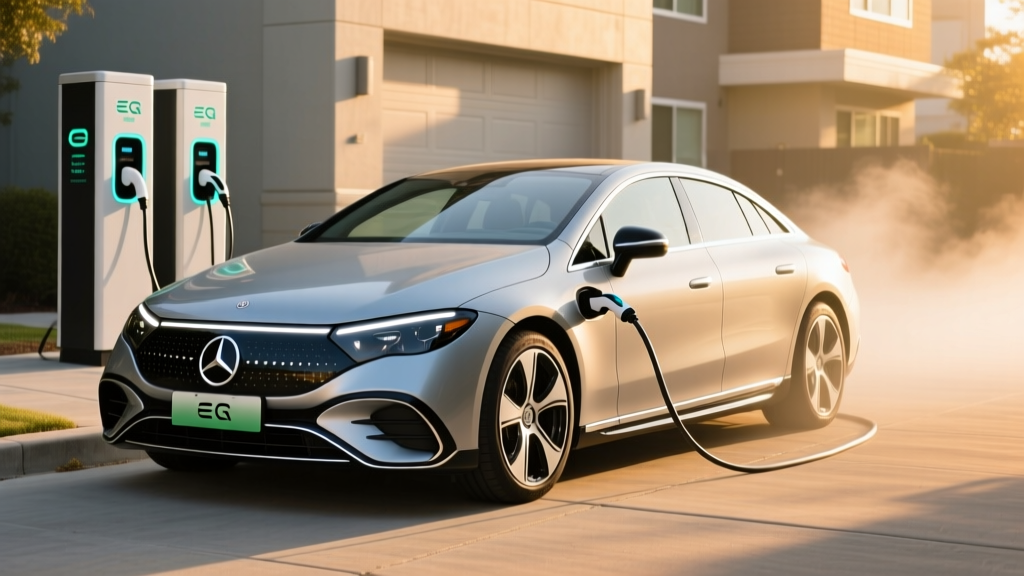
The 2023 Mercedes-Benz EQE sedan arrived as the automaker's mid-size electric offering — a smaller sibling to the flagship EQS, built on the same EVA2 platform. With a starting MSRP around $74,900 and an EPA-estimated range up to 305 miles, the 2023 EQE targets buyers who want Mercedes refinement in an electric package but don't need the full-size luxury (or price tag) of the EQS. It's a compelling cruiser, though its charging speeds and rear-seat space fall short of some rivals.
Now that the 2023 model year has been on the road for a few years, we have solid real-world data on range, charging behavior, and ownership costs. Here's everything you need to know before picking one up on the used or certified pre-owned market — or comparing it against newer alternatives.
Range, Efficiency, and the Real-World Reality
The 2023 EQE lineup offers three main configurations, each with different range and efficiency figures. The rear-wheel-drive EQE 350+ leads the pack in efficiency, while the dual-motor all-wheel-drive variants trade some range for traction and power.
| Trim | Drivetrain | EPA Range | MPGe (City/Hwy/Combined) | kWh/100 mi |
|---|---|---|---|---|
| EQE 350+ | RWD | 305 mi | 93 / 93 / 93 | 36 |
| EQE 350 4MATIC | AWD | 260 mi | 86 / 86 / 86 | 39 |
| EQE 500 4MATIC | AWD | 269 mi | 84 / 85 / 85 | 40 |
Source: fueleconomy.gov
The EPA 305-mile figure on the EQE 350+ is achievable in mild city and suburban driving. On highway trips at 70-75 mph, expect closer to 250-270 miles in fair weather. In cold conditions (below 32°F), range drops an additional 15-25%, putting realistic winter highway range at roughly 200-230 miles for the RWD model. The AWD trims see proportionally lower real-world numbers. The EQE's heat pump (standard equipment) helps mitigate winter losses compared to EVs without one, but physics still wins.
Battery Specs: Chemistry, Capacity, and Degradation Outlook
All 2023 EQE variants share the same battery pack: a 90.6 kWh usable lithium-ion module using NMC (nickel manganese cobalt) chemistry. This is a larger pack than what you'll find in many competitors (the BMW i5 uses ~81 kWh usable, for instance), which partly explains the EQE 350+'s strong range figure despite its modest efficiency.
NMC chemistry offers high energy density, which lets Mercedes package a large battery without excessive weight. However, NMC cells are generally more sensitive to sustained high state-of-charge (above 90%) and extreme heat than LFP (lithium iron phosphate) packs. For long-term health, Mercedes recommends setting the daily charge limit to 80% and only charging to 100% before long trips.
Mercedes-Benz provides an 8-year / 100,000-mile high-voltage battery warranty, guaranteeing the pack will retain at least 70% of its original capacity during that period. This aligns with industry norms from BMW, Audi, and Tesla.
Charging Speeds: DC Fast, Level 2, and the Curve
The 2023 EQE supports DC fast charging at a peak rate of 170 kW via its CCS1 connector. That's adequate but not class-leading — the Hyundai Ioniq 5 and Kia EV6 can peak above 235 kW on 800V architecture, and even the Tesla Model S hits 250 kW on V3 Superchargers.
| Charging Level | Power | Speed / Time |
|---|---|---|
| Level 1 (120V household) | ~1.4 kW | ~3-4 miles per hour |
| Level 2 (240V home/public) | Up to 9.6 kW (onboard charger) | ~25-28 miles per hour; 0-100% in ~10 hours |
| DC Fast Charge (CCS1) | Peak 170 kW | 10-80% in ~32 minutes |
Charging curve reality: The 170 kW peak only holds between roughly 10-30% state of charge. From 30-60%, the rate tapers to around 120-130 kW, and above 80%, it drops significantly to protect the battery — often below 50 kW. This is normal behavior for NMC packs, but it means a 10-90% session will take closer to 45-50 minutes, not the 32-minute figure quoted for 10-80%. If you're road-tripping, plan your stops around 10-80% sessions and skip the temptation to top off to 100% at a DC charger.
The onboard AC charger is rated at 9.6 kW, which is standard for this segment. A full Level 2 charge from empty takes about 10 hours — easily handled overnight with a home wallbox. Mercedes offers its own Wallbox, but any quality J1772 Level 2 station (ChargePoint Home Flex, Emporia Vue, Wallbox Pulsar Plus) will work at the full 9.6 kW rate.
Performance: Smooth Power, Not Sports-Car Thrills
| Trim | Horsepower | Torque (lb-ft) | 0-60 mph | Drivetrain |
|---|---|---|---|---|
| EQE 350+ | 288 hp | 391 | 6.2 sec | RWD (single motor) |
| EQE 350 4MATIC | 288 hp | 564 | 6.0 sec | AWD (dual motor) |
| EQE 500 4MATIC | 402 hp | 633 | 4.5 sec | AWD (dual motor) |
Source: Mercedes-Benz USA
The EQE 350+ delivers adequate acceleration for highway merging and passing, with the instant torque of its rear-mounted motor providing a smooth, linear surge. The 4MATIC dual-motor variants add all-weather confidence and, in the 500's case, genuine quickness. None of these feel like performance EVs in the Tesla Model S Plaid or Porsche Taycan sense — the EQE is tuned for refinement, not lap times.
Ride quality is where the EQE shines. The standard steel suspension with adaptive dampers soaks up road imperfections, and the optional AIRMATIC air suspension (standard on the 500, available on 350 trims) adds a floating, S-Class-like serenity. Rear-axle steering (available as an option) tightens the turning circle to just 32.5 feet, making this mid-size sedan surprisingly maneuverable in city parking.
Interior, Cargo, and Standout Tech
The EQE's cabin is a highlight. The standard 12.8-inch OLED center touchscreen runs Mercedes' MBUX infotainment system with wireless Apple CarPlay and Android Auto, natural-language voice control ("Hey Mercedes"), and over-the-air updates. The 12.3-inch digital instrument cluster is clear and configurable. Available features include the Burmester 3D surround sound system, active ambient lighting with 64 colors, and heated/ventilated/massaging front seats.
Space dimensions:
- Front legroom: 41.7 inches
- Rear legroom: 36.9 inches
- Cargo volume (trunk): 15.2 cubic feet
- No front trunk (frunk) — the EVA2 platform doesn't offer one
Rear-seat space is the EQE's most notable compromise. At 36.9 inches of legroom, it falls well short of the EQS (43.3 inches) and even some mid-size gas sedans. Tall adults will find the rear seat adequate but not generous, and the sloping roofline cuts into headroom. The 15.2 cu-ft trunk is reasonable but smaller than the EQS's 22 cu-ft and the Tesla Model S's combined cargo area.
Driver assistance: The EQE comes equipped with Mercedes' Driver Assistance Package, which includes adaptive cruise control with stop-and-go, active lane-keeping assist, active blind-spot monitoring, and evasive steering assist. This is a SAE Level 2 system — the driver must remain fully engaged and hands on the wheel at all times. The optional DRIVE PILOT system (where available) can handle limited highway driving in heavy traffic at speeds under 40 mph, but it's geofenced and weather-dependent.
All driver-assistance features on the 2023 EQE are SAE Level 2. The system provides steering and acceleration/braking support, but the driver is responsible for monitoring the road and must intervene at any time. This is not autonomous or self-driving capability.
Pricing, Trims, and Federal Tax Credit Eligibility
| Trim | Base MSRP | Typical As-Tested Price |
|---|---|---|
| EQE 350+ Sedan | $74,900 | $82,000-$90,000 |
| EQE 350 4MATIC Sedan | $77,900 | $85,000-$93,000 |
| EQE 500 4MATIC Sedan | $89,900 | $97,000-$108,000 |
Federal tax credit status: When new, the 2023 EQE did not qualify for the full $7,500 federal EV tax credit under IRS §30D. The primary reason: the EQE's battery cells and critical minerals did not meet the domestic sourcing thresholds that took effect in April 2023. Additionally, the EQE 500 4MATIC exceeded the $55,000 MSRP cap for sedans under §30D rules. Buyer income caps also apply ($150,000 single / $300,000 joint filers for modified adjusted gross income).
For buyers considering a used 2023 EQE on the secondary market, the used clean vehicle credit (up to $4,000 or 30% of the sale price, whichever is less) may apply if the sale price is $25,000 or below — which is unlikely for this model in the near term. Always verify current eligibility with a tax professional and the IRS §30D guidelines.
- ❌ Sedan MSRP cap: $55,000 (EQE 350+ starts at $74,900 — exceeds cap)
- ❌ Battery sourcing: Did not meet critical mineral + battery component thresholds for 2023
- ✅ Buyer income cap: $150K single / $225K head of household / $300K joint
- ✅ Point-of-sale transfer: Available for eligible vehicles (but EQE didn't qualify)
How It Stacks Up: 2023 EQE vs. Key Competitors
| Spec | 2023 EQE 350+ | 2023 BMW i5 eDrive40 | 2023 Tesla Model S (LR) | 2023 Lucid Air Pure |
|---|---|---|---|---|
| EPA Range | 305 mi | 295 mi | 405 mi | 410 mi |
| Battery (usable) | 90.6 kWh (NMC) | 81.2 kWh (NMC) | ~100 kWh | 88 kWh (NMC) |
| Peak DC Charge | 170 kW | 205 kW | 250 kW | 220 kW |
| 10-80% DC Time | ~32 min | ~30 min | ~25 min | ~30 min |
| 0-60 mph | 6.2 sec | 5.7 sec | 3.1 sec | 3.8 sec |
| Rear Legroom | 36.9 in | 36.8 in | 40.9 in | 37.6 in |
| Base MSRP | $74,900 | $66,800 | $74,990 | $87,400 |
The EQE 350+ leads its closest rivals in EPA range (305 vs. 295 for the i5) but trails the Tesla Model S and Lucid Air by a wide margin — over 100 miles in both cases. Charging speed is the EQE's weakest competitive showing; at 170 kW peak, it's noticeably slower than every competitor here. The BMW i5 undercuts the EQE on price by about $8,000 while offering similar refinement and slightly faster charging.
Where the EQE wins is interior ambiance and ride comfort. No competitor in this price range matches the cabin material quality, noise isolation, and suspension sophistication of the Mercedes. If your priority is arriving relaxed rather than arriving fast, the EQE has a genuine edge.
Pros, Cons, and Who Should Buy
- 305-mile EPA range (RWD) is competitive
- Exceptional ride comfort and cabin quietness
- Strong build quality and premium materials
- Rear-axle steering makes city driving easy
- Heat pump standard (helps winter range)
- Comprehensive driver-assist suite included
- 170 kW peak DC charging is slow for the class
- Rear legroom (36.9 in) is tight for the price
- No frunk — lost cargo opportunity
- Did not qualify for $7,500 federal tax credit new
- MBUX learning curve; touch-heavy interface
- AWD trims lose significant range vs. RWD
- Choose the EQE 350+ if: You want a refined luxury EV sedan for commuting and moderate road trips, prioritize ride comfort over acceleration, and can charge at home nightly. The 305-mile range covers most daily needs with margin.
- Choose the BMW i5 instead if: You want a lower entry price (~$8K less), slightly faster DC charging, and similar cabin quality. The i5 sacrifices ~10 miles of EPA range but gains on value.
- Choose the Tesla Model S if: Range (405 mi), charging speed (250 kW), and performance (3.1 sec 0-60) are your top priorities, and you're comfortable with Tesla's minimalist interior.
- Skip the EQE if: You regularly carry tall rear-seat passengers, need maximum road-trip range, or rely heavily on DC fast charging for long commutes.
Frequently Asked Questions
What is the real-world range of the 2023 EQE?
The EPA rates the EQE 350+ at 305 miles, but real-world highway driving at 70-75 mph typically yields 250-270 miles in mild weather. In cold conditions (below freezing), expect 200-230 miles. City and suburban driving with regenerative braking gets closest to the EPA figure.
How fast does the 2023 EQE charge at home and on the road?
On a Level 2 home charger (240V, 9.6 kW), the EQE gains about 25-28 miles of range per hour, with a full 0-100% charge taking roughly 10 hours. On a DC fast charger, it peaks at 170 kW and charges from 10-80% in approximately 32 minutes — though the charging curve tapers significantly above 60%.
Does the 2023 EQE qualify for the federal EV tax credit?
When purchased new, the 2023 EQE did not qualify for the $7,500 federal tax credit under §30D. Its MSRP exceeded the $55,000 sedan cap, and its battery sourcing did not meet the critical mineral and component thresholds. Used buyers may be eligible for the up-to-$4,000 used clean vehicle credit if the sale price drops to $25,000 or below — unlikely in the near term. Consult IRS guidelines and a tax professional for your situation.
Is the 2023 EQE worth buying vs. the BMW i5 or Tesla Model S?
The EQE is worth considering if interior refinement, ride comfort, and brand prestige are your top priorities. It loses to the BMW i5 on price and charging speed, and to the Tesla Model S on range, performance, and cargo space. For most buyers cross-shopping this segment, the BMW i5 offers the best balance of price, range, and charging — but the EQE remains the comfort king.
What is the battery warranty on the 2023 EQE?
Mercedes-Benz covers the high-voltage battery for 8 years or 100,000 miles (whichever comes first), guaranteeing at least 70% capacity retention during that period. The general vehicle warranty is 4 years / 50,000 miles.
Does the EQE have a frunk?
No. The EVA2 platform does not include a front trunk. All cargo space is in the rear trunk (15.2 cubic feet). This is a missed opportunity for a dedicated EV platform and a disadvantage versus the Tesla Model S and Lucid Air, both of which offer front cargo storage.