Quick Verdict: The Performance EV That Doubles as a Daily Driver
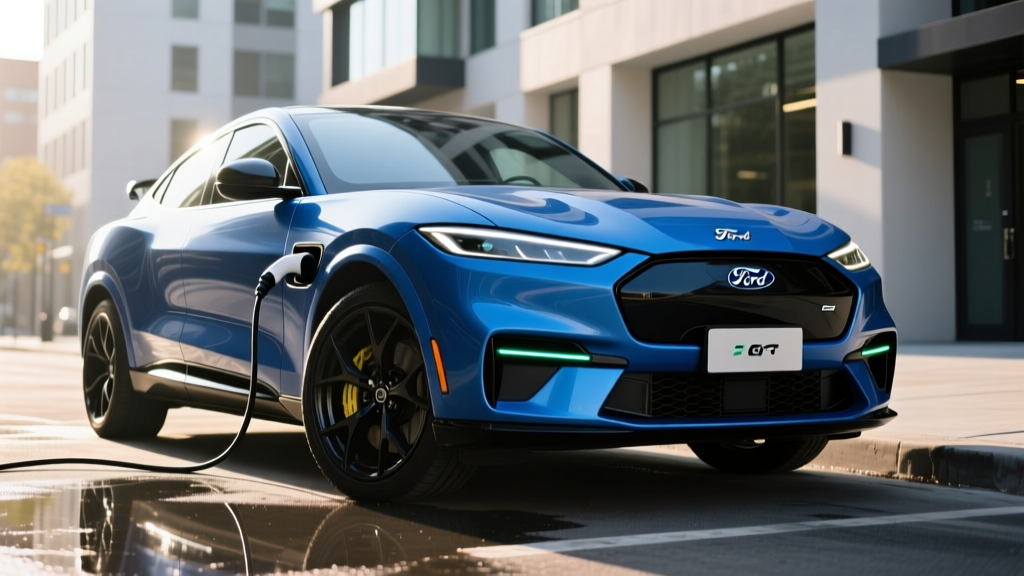
The 2023 Ford Mustang Mach-E GT occupies a specific niche: a dual-motor, all-wheel-drive electric crossover that delivers genuine sports-sedan acceleration without sacrificing the cargo space and ride height buyers actually use every day. With 480 horsepower (536 lb-ft with the Performance Edition), a 91 kWh usable NMC battery, and an EPA-estimated 270 miles of range, it threads the needle between thrill and practicality. But at a starting MSRP of $61,795, and with real-world highway range closer to 230–245 miles, it demands a clear-eyed look at what you're getting — and what you're giving up — versus rivals like the Tesla Model Y Performance and Hyundai Ioniq 5 N.
EPA-estimated: 270 miles (GT standard); 260 miles (GT Performance Edition).
Real-world highway (70 mph, mild weather): ~230–245 miles.
Cold weather (below 32°F, mixed driving): ~195–215 miles. Expect 20–28% range loss in sustained sub-freezing conditions due to cabin heating and battery chemistry. The Mach-E GT lacks a heat pump, relying on resistive PTC heating, which compounds winter energy draw.
Spec Table: 2023 Mustang Mach-E GT at a Glance
| Attribute | GT | GT Performance Edition |
|---|---|---|
| EPA Range | 270 mi | 260 mi |
| Battery (usable) | 91 kWh NMC (nickel manganese cobalt) | |
| Horsepower | 480 hp | 480 hp |
| Torque | 600 lb-ft | 634 lb-ft |
| 0–60 mph | 3.8 sec | 3.5 sec |
| Drivetrain | Dual-motor AWD (eAWD) | |
| Max DC Fast Charge | 150 kW (peak) | |
| 10–80% DC Time | ~45 min | |
| Level 2 Home Charge | 10.5 kW (~30 mi/hr) | |
| MPGe (combined) | 84 MPGe | 82 MPGe |
| Efficiency | 40 kWh/100 mi | 41 kWh/100 mi |
| Cargo (rear seats up) | 29.7 cu ft | |
| Cargo (rear seats folded) | 59.7 cu ft | |
| Frunk | 4.7 cu ft (drainable, washable) | |
| Rear Legroom | 38.1 in | |
| Base MSRP | $61,795 | $67,795 |
| Battery/Powertrain Warranty | 8 years / 100,000 miles | |
Range and Efficiency: What the EPA Number Doesn't Tell You
The 270-mile EPA figure for the GT (260 for the Performance Edition) is measured on a blended cycle that doesn't reflect sustained highway driving or extreme temperatures. According to fueleconomy.gov, the Mach-E GT achieves 84 MPGe combined, which translates to roughly 40 kWh consumed per 100 miles. That's less efficient than the RWD extended-range Mach-E (101 MPGe / 33 kWh/100mi) because the GT's dual motors, heavier curb weight (~4,900 lbs), and stickier summer tires increase rolling resistance and energy draw.
In real-world testing at sustained 70–75 mph highway speeds in 65–75°F conditions, the GT typically delivers 230–245 miles before hitting 10% state of charge. Push to 80 mph, add a roof cargo box, or climb mountain grades, and that number drops to 210–220 miles. Winter is the bigger penalty: the Mach-E GT uses a resistive PTC heater rather than a heat pump, meaning cabin warmth draws significantly more energy. Owners in northern climates should plan for 195–215 miles of usable range in January and February.
The battery itself is a 91 kWh usable (98.8 kWh gross) NMC pack. NMC chemistry offers higher energy density than LFP, which is why Ford fits it into the performance-oriented GT, but it also means Ford recommends daily charging to 90% rather than 100% to maximize long-term state of health. Reserve 100% for road-trip days.
Charging: DC Fast, Level 2, and the 150 kW Ceiling
The 2023 Mach-E GT maxes out at 150 kW peak DC fast charging on a CCS1 connector. That's a meaningful limitation compared to the Hyundai Ioniq 5 (240 kW) or Tesla Model Y on V3 Superchargers (250 kW). Ford's charge curve is relatively flat between 10–50% SoC, but it tapers noticeably above 80%, which is why the 10–80% session takes approximately 45 minutes — roughly 10–15 minutes longer than the quickest competitors in this segment.
| Charging Level | Power | Speed | Notes |
|---|---|---|---|
| Level 1 (120V) | ~1.4 kW | ~3 mi/hr | Emergency/trickle only |
| Level 2 (240V, 48A) | 10.5 kW | ~30 mi/hr | Full charge overnight (~9 hrs) |
| DC Fast (CCS1) | 150 kW peak | ~105 mi in 20 min (10–50%) | 10–80% in ~45 min; tapers hard above 80% |
For home Level 2 charging, the onboard charger accepts up to 10.5 kW (48 amps on a 60-amp circuit). A full 10–100% session takes roughly 9 hours, making overnight replenishment straightforward. Ford includes the Mobile Power Cord with the vehicle, which handles both 120V and 240V outlets, but most GT buyers will want a dedicated hardwired wall connector installed by a licensed electrician — budget $800–$1,800 for the unit and installation depending on your panel's proximity to the garage.
One practical note: preconditioning the battery before a DC fast-charge stop is critical. Use the built-in navigation to route to a charger, and the car will warm the pack to optimal temperature, improving charge speed by 15–25% in cool weather. Skipping this step in winter can drop your peak charge rate below 80 kW.
Performance: 3.5 Seconds and a Chassis That Keeps Up
The GT Performance Edition hits 60 mph in 3.5 seconds — verified by multiple independent tests — putting it in the same acceleration bracket as a Porsche Macan GTS or BMW X3 M. The standard GT runs 3.8 seconds. Both versions use a dual-motor eAWD setup with a front induction motor and rear permanent-magnet synchronous motor, providing torque vectoring that feels genuinely rear-biased under hard acceleration.
The Performance Edition adds MagneRide adaptive dampers, a stiffer stabilizer bar, and a unique drive mode called Unbridled Extend (Ford's track-oriented setting that manages battery temperature more aggressively). The result is a crossover that handles canyon roads with surprising composure, though the ~4,900-lb curb weight is always present during transitions. Steering is precise but light — this is a grand-touring machine, not a track car, despite the GT badge.
Braking feel deserves mention: the blended regen-to-friction brake transition is one of the better implementations in the EV space. One-pedal driving is available and holds the car at a stop, but the regen strength maxes out below what you'll feel in a Tesla or Ioniq 5, meaning you'll use the friction brakes more often in stop-and-go traffic.
Pricing, Trims, and Federal Tax Credit Eligibility
The 2023 Mach-E GT starts at $61,795 (including destination). The GT Performance Edition adds $6,000, landing at $67,795. With typical options — FordCoPilot360 Active 2.0 (BlueCruise hands-free driving, $2,100), panoramic roof ($1,795), and Star White paint ($795) — an as-tested GT Performance Edition can reach $72,000–$74,000.
| Trim | MSRP | §30D Credit Eligibility | Effective Price |
|---|---|---|---|
| GT | $61,795 | Up to $3,750 (battery components); $7,500 requires critical minerals + component sourcing thresholds | ~$58,045 – $54,295 |
| GT Performance Edition | $67,795 | Same as above | ~$64,045 – $60,295 |
Federal tax credit eligibility for the 2023 Mach-E GT is nuanced under IRS §30D rules. The vehicle qualifies as an SUV for the $80,000 MSRP cap (the GT trims fall under it), but the credit amount depends on battery-sourcing requirements that tightened in April 2023. Buyers must also meet income caps: $150,000 single / $300,000 joint modified adjusted gross income. The credit can now be transferred to the dealer at point of sale, reducing your out-of-pocket cost at purchase rather than waiting for a tax refund. Consult a tax professional to confirm your specific eligibility — sourcing rules change periodically, and Ford's supply chain disclosures determine whether the full $7,500 or a partial $3,750 applies at time of delivery.
Tech, Interior, and Daily Livability
The cabin centers on a 15.5-inch vertically oriented touchscreen running Ford's SYNC 4A system. It's responsive, supports wireless Apple CarPlay and Android Auto, and includes a physical volume knob at the base — a small detail that owners consistently praise over fully touch-based competitors. The digital gauge cluster is a 10.2-inch screen behind a heated steering wheel.
BlueCruise (Ford's Level 2 hands-free driver-assist system) operates on over 130,000 miles of pre-mapped divided highways. It's genuinely useful for long interstate stretches, but the driver-monitoring camera requires your eyes on the road — this is not autonomous driving. Expect the system to prompt for hand-on-wheel or eye-attention confirmation every 20–40 seconds in active zones.
Cargo space is competitive: 29.7 cu ft behind the rear seats and 59.7 cu ft with them folded — roughly on par with the Model Y. The 4.7 cu ft front trunk (frunk) is drainable and washable, making it practical for wet gear or tailgating. Rear-seat legroom is 38.1 inches, adequate for adults on long trips, though the sloping roofline cuts into headroom for passengers over 6 feet.
Notable drawbacks: no rear wiper (visibility suffers in rain), no heat pump (winter efficiency penalty), and Ford's mobile app connectivity has drawn complaints for intermittent remote-command failures. Build quality on 2023 models improved over 2021–2022 launch units, but some owners report wind noise from the frameless windows above 75 mph.
Pros, Cons, and Who Should Buy
Pros
- 3.5-sec 0–60 (Perf. Ed.) with composed handling
- Comfortable, well-isolated cabin with quality materials
- BlueCruise hands-free on 130K+ miles of highway
- Drainable frunk adds genuine utility
- Strong 8-yr/100K-mi battery warranty
- CCS1 access to Electrify America, EVgo, and growing NACS adapter network
Cons
- 150 kW peak DC charge rate trails rivals (Ioniq 5: 240 kW)
- No heat pump — significant winter range penalty
- Real-world highway range 230–245 mi, not the 270 EPA sticker
- Higher starting price than Model Y Performance
- No rear wiper
- Regen braking strength below one-pedal-driving standards
Look elsewhere if: You prioritize fastest-possible DC charging (Ioniq 5), maximum range per dollar (Model Y Long Range), or need a heat pump for harsh-winter driving (Ioniq 5, EV6). If you tow, note the GT is rated for only 2,700 lbs — adequate for a small trailer, not a camper.
Warranty and Long-Term Ownership
Ford covers the Mach-E GT's battery and electric powertrain for 8 years or 100,000 miles, whichever comes first, with a capacity-retention threshold of 70% state of health. The bumper-to-bumper warranty is 3 years / 36,000 miles. NMC batteries in liquid-cooled packs like Ford's have shown degradation curves of roughly 8–12% over the first 100,000 miles based on fleet data from earlier Mach-E model years — well within the warranty buffer.
Insurance costs run 15–25% higher than a comparable gas-powered Mustang EcoBoost, according to industry averages. Expect annual premiums in the $1,800–$2,400 range depending on your state, driving record, and coverage level. Depreciation has been steeper than Tesla's — 2023 GT models are trading at 55–65% of original MSRP on the used market as of early 2026, reflecting broader EV resale softening and Ford's subsequent price cuts on newer models.
Frequently Asked Questions
What is the real-world range of the 2023 Mach-E GT?
Expect 230–245 miles on the highway in mild weather, dropping to 195–215 miles in sustained cold (below 32°F). The EPA rates it at 270 miles (260 for the Performance Edition), but that figure reflects a blended cycle that doesn't match sustained high-speed or winter driving.
How fast does the Mach-E GT charge at home and on the road?
At home on a Level 2 (240V, 48A) charger, it adds roughly 30 miles of range per hour, fully replenishing overnight in about 9 hours. On a DC fast charger, it peaks at 150 kW, reaching 10–80% in approximately 45 minutes. That's competitive but not class-leading — the Hyundai Ioniq 5 charges 10–80% in roughly 18 minutes at 240 kW.
Does the 2023 Mach-E GT qualify for the federal EV tax credit?
Yes, but the amount varies. Under IRS §30D, it can receive up to $7,500 if battery critical-mineral and component sourcing thresholds are met; partial credit of $3,750 may apply if only one threshold is satisfied. Buyer income must not exceed $150K (single) or $300K (joint), and the MSRP must stay under the $80,000 SUV cap. The credit can be transferred to the dealer at point of sale.
Is the Mach-E GT worth it versus the Tesla Model Y Performance or Ioniq 5?
It depends on priorities. The Model Y Performance offers more range (303 mi EPA), faster Supercharging, and a lower starting price, but with a starker interior and Tesla's polarizing brand. The Ioniq 5 N delivers 641 hp and 240 kW charging in a more distinctive design but with less cargo space and a firmer ride. The Mach-E GT wins on ride comfort, cabin quietness, and hands-free BlueCruise — making it the best choice for buyers who want performance without sacrificing daily-driver refinement.
What are the biggest ownership complaints?
The most common are the lack of a heat pump (winter range loss), 150 kW charging ceiling (longer road-trip stops), absent rear wiper, and intermittent FordPass app connectivity. Some owners also note that the GT's summer tires wear faster than expected under spirited driving — budget for replacement rubber at 20,000–25,000 miles if you use the car's full performance envelope.