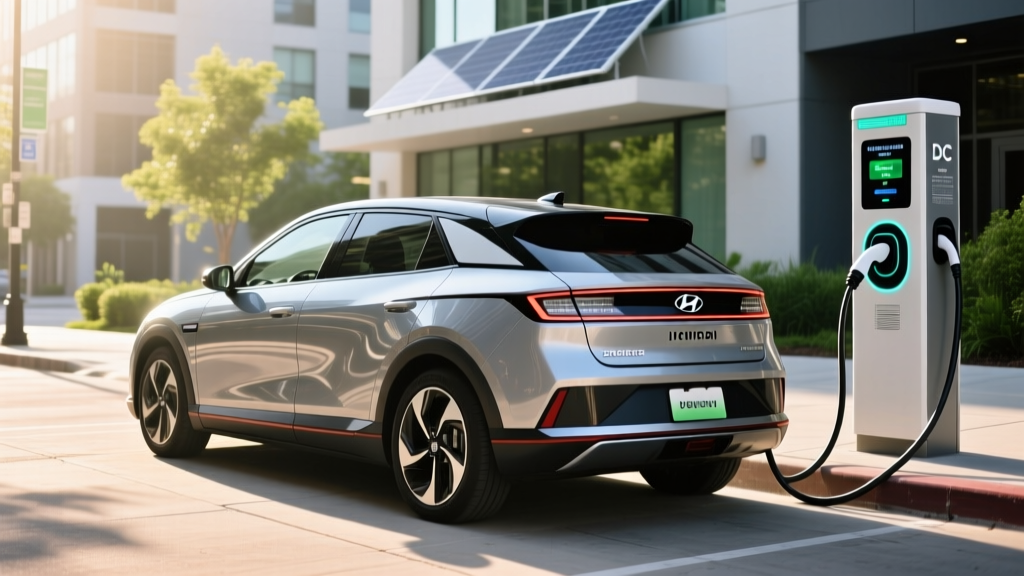
The Hyundai Ioniq 5 arrived in 2022 as a retro-styled electric crossover built on the E-GMP platform, and the 2023 model year cemented its reputation as one of the most capable mainstream EVs available. With an EPA range of up to 303 miles, 800-volt architecture enabling class-leading DC fast charging, and a starting price that undercuts several rivals, the 2023 Ioniq 5 remains a compelling option on the used-EV market in 2026. Here is everything you need to know — exact numbers, real-world caveats, and ownership economics — before you buy one today.
Quick Verdict: Who the 2023 Ioniq 5 Serves Best
The 2023 Ioniq 5 is a strong fit for daily commuters and small families who want fast charging on road trips and a spacious, tech-forward cabin. Its 800V architecture delivers 10-80% DC charging in roughly 18 minutes — a genuine advantage on long highway drives. It is less ideal for buyers who need three rows of seating, heavy towing capacity (1,650 lb max), or the longest possible single-charge range above 320 miles. For the urban-suburban driver who road-trips a few times a year, the Ioniq 5 hits a practical sweet spot between price, range, and charging speed that few competitors match at its price point.
Range, Efficiency, and Real-World Expectations
EPA Estimated: 220 mi (SE Standard Range RWD) · 303 mi (SEL/Limited RWD) · 260 mi (AWD)
Real-World Expectation: Plan for ~240-270 mi on highway trips in the 303-mi RWD model. In freezing temperatures (below 32°F), expect 20-30% range reduction, dropping effective range to roughly 210-240 mi. City driving with regenerative braking recovers more energy, often exceeding the EPA combined figure.
The 2023 Ioniq 5 offers three battery-and-drivetrain configurations. The SE Standard Range pairs a 58 kWh battery with a rear-mounted motor for 220 miles of EPA range. The more popular long-range trims (SEL, Limited) use a 77.4 kWh usable battery with a single rear motor for 303 miles, or dual motors with all-wheel drive for 260 miles. Efficiency on the long-range RWD model is rated at 114 MPGe combined (30 kWh/100 mi), which is competitive with the Tesla Model Y Long Range and slightly better than the Ford Mustang Mach-E Extended Range RWD.
In our experience and aggregated owner reports, the 303-mile RWD version delivers roughly 265-280 miles in mixed 65-70 mph highway driving in moderate temperatures. Pushing speeds above 75 mph or driving into headwinds will pull that figure closer to 240 miles. Cold weather is the Ioniq 5's notable weakness — unlike some rivals, the 2023 model does not include a battery heat pump as standard on all trims (it was available as part of the cold-weather package on certain trims), so preconditioning while plugged in is essential for preserving range in winter.
Battery, Charging Speed, and Connector Details
| Specification | Standard Range | Long Range RWD | Long Range AWD |
|---|---|---|---|
| Usable Battery Capacity | 58 kWh | 77.4 kWh | 77.4 kWh |
| Chemistry | NMC (Nickel Manganese Cobalt) | NMC | NMC |
| Max DC Fast Charge Rate | ~175 kW | ~240 kW (peak) | ~240 kW (peak) |
| 10-80% DC Fast Charge Time | ~18 min | ~18 min | ~18 min |
| Level 2 Home Charge Rate | 10.9 kW (48A) | 10.9 kW (48A) | 10.9 kW (48A) |
| Level 2 Full Charge Time (0-100%) | ~5.5 hours | ~7.3 hours | ~7.3 hours |
| Charge Port / Connector | CCS1 (J1772 + DC pins) | CCS1 | CCS1 |
The Ioniq 5's 800-volt electrical architecture is its standout technical feature. Where most competitors in this class use 400V systems that peak at 125-150 kW, the Ioniq 5 can accept up to roughly 240 kW at a compatible DC fast charger (350 kW-class stations like Electrify America). Hyundai's published 10-80% time of 18 minutes holds up in real-world testing when the battery is preconditioned — typically by navigating to the charger via the built-in route planner, which warms the pack automatically.
Charging curve reality: The 240 kW peak is not sustained. The Ioniq 5 holds above 200 kW from roughly 10-45% state of charge, then tapers progressively. From 80-100%, charging slows dramatically to protect the battery — adding that final 20% can take as long as the 10-80% session. For road trips, plan your stops around the 10-80% window for maximum time efficiency.
At home, the onboard 10.9 kW charger is robust. On a 48-amp Level 2 circuit (60-amp breaker), you will add roughly 30-35 miles of range per hour of charging. A full overnight charge from 20% to 100% takes about 6 hours for the long-range model — more than enough for daily replenishment. Level 1 charging on a standard 120V outlet adds roughly 3-4 miles per hour, which works only for very low daily mileage or emergency top-ups.
For 2026 buyers: the 2023 Ioniq 5 uses the CCS1 connector. As Tesla's NACS connector becomes the North American standard, CCS-to-NACS adapters are available (Hyundai began providing them for newer models), enabling access to Tesla Supercharger stations. Confirm adapter compatibility with the specific vehicle before relying on Superchargers for road trips.
Performance and Drivetrain
| Metric | SE Std Range RWD | Long Range RWD | Long Range AWD |
|---|---|---|---|
| Horsepower | 168 hp | 225 hp | 320 hp |
| Torque | 258 lb-ft | 258 lb-ft | 446 lb-ft |
| 0-60 mph | ~7.0 sec | ~7.0 sec | ~4.5 sec |
| Drivetrain | Rear-Wheel Drive | Rear-Wheel Drive | Dual-Motor AWD |
| Towing Capacity | Not rated | 1,650 lb (with tow hitch) | 1,650 lb (with tow hitch) |
The rear-wheel-drive models are adequate for commuting and highway merging but won't thrill performance-oriented buyers. The AWD dual-motor variant, with 320 hp and a 4.5-second 0-60 time, is genuinely quick and provides the confidence of all-wheel drive in rain and snow. Ride quality is composed and slightly firm — Hyundai tuned the Ioniq 5 for a European feel rather than floaty comfort, which most drivers appreciate on winding roads but some may notice on rough pavement.
Regenerative braking offers four levels selectable via steering-wheel paddles, including an i-Pedal mode that enables one-pedal driving with full deceleration to a stop. The system is smooth and predictable, making it one of the better regen implementations in the segment.
Pricing, Trims, and Federal Tax Credit Eligibility
| 2023 Trim | Original MSRP | Est. Used Price (2026) | §30D Credit Eligibility |
|---|---|---|---|
| SE Standard Range | $41,450 | ~$27,000-$31,000 | Used EV credit up to $4,000 (§25E) |
| SE (Long Range) | $47,400 | ~$30,000-$34,000 | Used EV credit up to $4,000 (§25E) |
| SEL | $49,950 | ~$32,000-$36,000 | Used EV credit up to $4,000 (§25E) |
| Limited | $52,600 | ~$35,000-$40,000 | Used EV credit up to $4,000 (§25E) |
Tax credit context for 2026 buyers: Because the 2023 Ioniq 5 was assembled in Ulsan, South Korea (not in North America), it did not qualify for the $7,500 new-vehicle §30D federal tax credit at the time of original purchase. However, purchasing a 2023 Ioniq 5 on the used market in 2026 may qualify you for the §25E Used Clean Vehicle Credit — up to $4,000 or 30% of the sale price (whichever is less), provided the following conditions are met:
- Sale price cap: The used vehicle must sell for $25,000 or less to qualify for the full $4,000 credit.
- Buyer income limits: Modified AGI must not exceed $75,000 (single), $112,500 (head of household), or $150,000 (joint filers).
- Dealer requirement: The sale must be through a licensed dealer who reports the transaction to the IRS.
- Vehicle age: The vehicle must be at least two model years old (2023 qualifies in 2026).
- One-time use: You can only claim the §25E credit once every three years.
Always confirm current eligibility with a tax professional and check the IRS §25E guidelines before purchasing. Credit rules are subject to legislative change.
Interior Space, Cargo, and Technology
The Ioniq 5's flat floor and 118.1-inch wheelbase create an interior that punches well above its compact-crossover exterior dimensions. Rear legroom measures 39.4 inches — more than the Toyota RAV4 and close to midsize-SUV territory — thanks to the E-GMP platform's dedicated EV architecture that eliminates the transmission tunnel.
| Dimension | Measurement |
|---|---|
| Cargo Volume (behind rear seats) | 27.2 cu ft |
| Cargo Volume (rear seats folded) | 59.3 cu ft |
| Front Trunk (Frunk) | 0.85 cu ft (AWD) / 2.0 cu ft (RWD) |
| Rear Legroom | 39.4 in |
| Front Legroom | 41.7 in |
| Wheelbase | 118.1 in |
The dual-screen setup features a 12.3-inch digital instrument cluster and a 12.3-inch infotainment display running Hyundai's connected-car system with wireless Apple CarPlay and Android Auto. The Limited trim adds a head-up display with augmented-reality navigation, a premium Bose audio system, and Hyundai's Digital Key (NFC-based smartphone unlock).
Driver assistance: The Ioniq 5 comes equipped with Hyundai SmartSense, including Highway Driving Assist 2 (HDA2) — a Level 2 SAE driver-assistance system combining adaptive cruise control with lane centering and lane-change assist. This is not autonomous driving; the driver must keep hands on the wheel and remain fully attentive. HDA2 is one of the better Level 2 systems in its class, offering smooth lane-keeping and natural-feeling speed management, but it does not handle complex intersections, construction zones, or unmapped roads.
V2L (Vehicle-to-Load): A standout feature is the V2L capability, which allows the Ioniq 5 to supply up to 3.6 kW of AC power to external devices through an adapter plugged into the charge port or a dedicated interior outlet (on select trims). This powers laptops, small appliances, or even a window AC unit during a blackout — a practical feature few competitors offer.
Pros, Cons, and the Competition
- Class-leading 800V DC fast charging (10-80% in ~18 min)
- Spacious rear seat with flat floor (39.4 in legroom)
- Distinctive retro-modern design stands out in a sea of bland crossovers
- V2L capability for camping, tailgating, or backup power
- Strong EPA efficiency at 114 MPGe (RWD)
- Competitive pricing on the used market in 2026
- No front trunk to speak of (0.85-2.0 cu ft)
- CCS1 connector requires adapter for Tesla Supercharger access
- No battery heat pump standard on all trims — cold-weather range loss is significant
- Rear wiper absent on 2023 model (added in later years)
- Infotainment can be slow to respond compared to Tesla or Rivian
- Towing capacity limited to 1,650 lb
Consider a competitor if: You need Supercharger-native access without adapters (Tesla Model Y), require three rows (Kia EV9), want a larger frunk (Ford Mustang Mach-E, Rivian R1S), or live in an extremely cold climate where a heat pump is essential (newer Ioniq 5 models, Tesla Model Y).
Warranty and Long-Term Ownership
Hyundai backs the 2023 Ioniq 5 with one of the strongest warranties in the industry:
- New Vehicle Limited Warranty: 5 years / 60,000 miles
- Powertrain Warranty: 10 years / 100,000 miles
- EV Battery Warranty: 10 years / 100,000 miles (covers capacity loss below 70% state of health)
- Roadside Assistance: 5 years / unlimited miles
For a 2026 used buyer, a 2023 model with 30,000 miles would still have roughly 7 years and 70,000 miles of battery/powertrain coverage remaining — a significant safety net. Hyundai's 70% capacity retention threshold is standard for the industry. Real-world degradation data from early Ioniq 5 owners suggests typical NMC pack degradation of 5-8% over the first 60,000 miles, well within the warranty buffer. According to fueleconomy.gov, the 2023 Ioniq 5 Long Range RWD achieves 114 MPGe combined.
Frequently Asked Questions
What is the real-world range of the 2023 Ioniq 5?
The long-range RWD model is EPA-rated at 303 miles, but expect roughly 240-270 miles in real-world highway driving at 70 mph, and 210-240 miles in freezing temperatures. The AWD version is rated at 260 miles EPA, with real-world highway figures around 220-240 miles.
How fast does the 2023 Ioniq 5 charge?
On a 350 kW-capable DC fast charger, the long-range model peaks at approximately 240 kW and charges from 10-80% in about 18 minutes when preconditioned. At home on a 48-amp Level 2 charger (10.9 kW), a full charge takes roughly 7 hours and adds about 30-35 miles of range per hour.
Does the 2023 Ioniq 5 qualify for the federal EV tax credit?
As a new vehicle, it did not qualify for the §30D credit because it was assembled in South Korea. In 2026, buying one used may qualify you for the §25E Used Clean Vehicle Credit (up to $4,000) if the sale price is $25,000 or less, your income falls within IRS limits, and you purchase through a licensed dealer. Check IRS guidelines for current rules.
Is the 2023 Ioniq 5 worth buying vs. the Tesla Model Y or Ford Mach-E?
The Ioniq 5 wins on DC charging speed and rear-seat space. The Model Y offers superior Supercharger network access (though CCS adapters are closing this gap), more cargo room, and over-the-air updates. The Mach-E provides a sportier driving feel and a usable frunk. On the 2026 used market, the Ioniq 5 often undercuts both on price for equivalent range, making it a strong value pick if CCS charging access isn't a concern in your area.
Does the 2023 Ioniq 5 have a heat pump?
A heat pump was available on certain trims as part of a cold-weather option package but was not standard across the lineup. Verify whether a specific used example includes it by checking the window sticker or build sheet — it makes a meaningful difference in winter range preservation.
Can the 2023 Ioniq 5 use Tesla Superchargers?
Not natively — the 2023 model uses a CCS1 charge port. However, Hyundai has been providing CCS-to-NACS adapters for eligible owners, and third-party adapters are available. With an adapter, the Ioniq 5 can access Tesla Superchargers that support CCS vehicles, though charging speeds may be limited compared to native NACS vehicles.