Quick Verdict: The Ioniq 5 Limited at a Glance
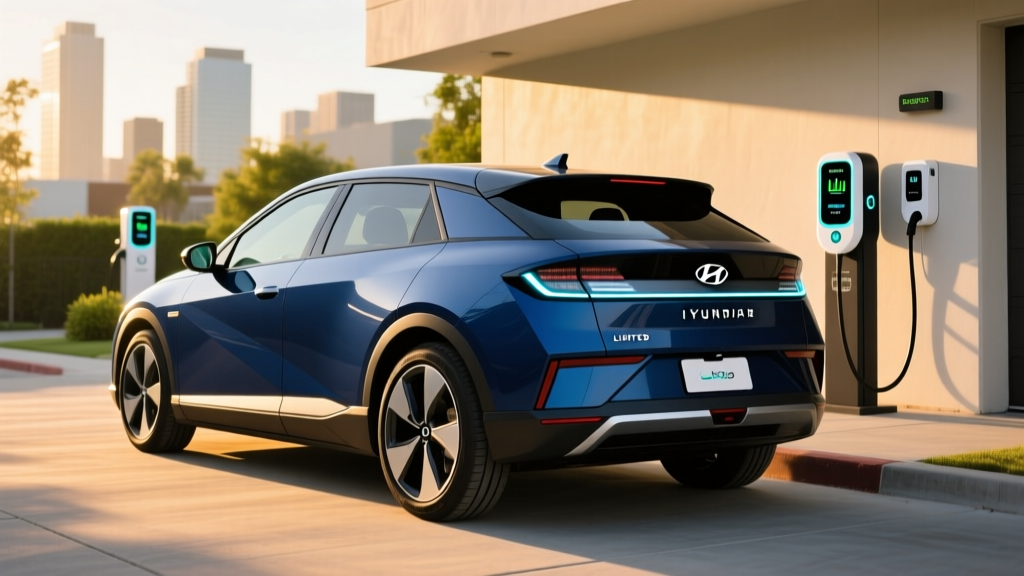
The 2023 Hyundai Ioniq 5 Limited remains one of the most compelling used-EV purchases available in 2026. Built on Hyundai's E-GMP platform with an 800-volt architecture, it delivers DC fast-charging speeds that still rival vehicles costing $20,000 more. The Limited trim adds premium features — a panoramic fixed glass roof, ventilated front seats, a head-up display with augmented-reality navigation, and Highway Driving Assist 2 — that push it into near-luxury territory at a mainstream price.
For buyers evaluating a pre-owned 2023 Ioniq 5 Limited in today's market, the key questions are range adequacy, battery longevity, charging practicality, and whether the federal used-EV tax credit applies. This review breaks down every number that matters.
| Spec | AWD (Dual-Motor) | RWD (Single-Motor) |
|---|---|---|
| EPA Range | 260 miles | 303 miles |
| Battery (usable) | 77.4 kWh (NMC) | 77.4 kWh (NMC) |
| Horsepower | 320 hp | 225 hp |
| 0–60 mph | 4.5 seconds | 7.0 seconds |
| Max DC Fast Charge | 235 kW (peak) | 235 kW (peak) |
| 10–80% DC Time | ~18 minutes | ~18 minutes |
| Level 2 Rate | 10.9 kW | 10.9 kW |
| MPGe (combined) | 110 MPGe | 114 MPGe |
| Drivetrain | Dual-motor AWD | Single-motor RWD |
Real-World Range: What the EPA Sticker Doesn't Tell You
EPA estimated range: 260 miles (AWD) / 303 miles (RWD)
Real-world highway (70–75 mph, mild weather): ~220–240 miles (AWD)
Real-world highway (freezing temps, heater on): ~175–200 miles (AWD)
City/mixed driving (moderate climate): ~250–270 miles (AWD)
The AWD Limited's 260-mile EPA figure is achievable in mixed suburban driving at moderate speeds. However, sustained highway travel at 75 mph typically yields 220–240 miles before you need to stop, based on owner-reported data and independent testing. The Ioniq 5's boxy, upright design creates more aerodynamic drag at speed than sleeker competitors like the Tesla Model Y, and that drag penalty shows up most at highway velocities.
Cold weather compounds the loss. The Ioniq 5 uses a heat pump (standard on all trims), which helps — but in temperatures below 25°F, expect a 20–30% reduction from EPA range. That puts winter highway range in the 175–200 mile band for the AWD model. The RWD variant, with its 303-mile EPA rating, provides a more comfortable buffer in all conditions, though it sacrifices the 320 hp and 4.5-second 0–60 time.
The 77.4 kWh usable battery uses NMC (nickel manganese cobalt) chemistry, which offers higher energy density than LFP alternatives but is more sensitive to sustained high states of charge. For daily driving, setting the charge limit to 80% preserves long-term battery health — Hyundai's battery management system already includes a buffer above and below the stated capacity.
Charging Speed: The 800-Volt Advantage Still Matters
The Ioniq 5's 800-volt electrical architecture is its strongest competitive differentiator. While most mainstream EVs in this price class use 400-volt systems, the higher voltage allows the Ioniq 5 to accept up to 235 kW at a DC fast charger — meaning shorter stops on road trips.
| Charging Level | Power | Speed / Time | Typical Use Case |
|---|---|---|---|
| Level 1 (120V household) | ~1.4 kW | ~4–5 miles/hour | Emergency / overnight trickle |
| Level 2 (240V home) | 10.9 kW | ~35–40 miles/hour | Daily home charging |
| DC Fast Charge | Up to 235 kW (peak) | 10–80% in ~18 min | Road trips |
| DC Fast Charge (sustained) | ~150–180 kW avg. | 10–80% realistic: ~22 min | Actual road-trip stops |
The headline 18-minute 10–80% claim requires a 350 kW-capable charger (such as Electrify America's latest stalls) and optimal battery temperature. In practice, the charge curve tapers significantly above 80% state of charge — going from 80% to 100% can add another 25–35 minutes. This is normal lithium-ion behavior: the battery management system restricts current to protect the cells at higher states of charge.
At home, the 10.9 kW onboard charger replenishes the full 77.4 kWh battery in roughly 7.5 hours on a Level 2 wallbox. Most owners charging overnight from a daily 60–70% state of depletion will see a full charge in 4–5 hours. A 48-amp Level 2 home charger (hardwired, requiring a 60-amp circuit) is the recommended setup; expect installation costs of $800–$2,000 depending on your electrical panel's capacity and distance from the panel to the garage.
The Ioniq 5 ships with a CCS1 connector. For Tesla Supercharger access, Hyundai began providing NACS adapters to Ioniq 5 owners in 2025, and the Supercharger network is now accessible via the Hyundai app or a plug-and-charge adapter. This dramatically expands the available fast-charging network for road trips.
Performance and Driving Dynamics
The AWD Limited's dual-motor setup produces 320 hp and 446 lb-ft of torque, delivering a 4.5-second 0–60 mph time. That puts it in the same acceleration bracket as a BMW M340i or Audi S4, but with instantaneous electric torque delivery that makes it feel quicker in real-world passing situations. The single-motor RWD variant, at 225 hp and 7.0 seconds to 60, is adequate for commuting but noticeably less engaging.
Ride quality is compliant and well-damped, with the Limited's 20-inch alloy wheels trading a small amount of ride comfort for visual appeal. Road noise is moderate — the absence of an engine makes tire and wind noise more apparent, and the Ioniq 5's upright greenhouse generates more wind rush at highway speeds than lower-slung EVs.
Regenerative braking offers four levels, selectable via steering-wheel paddles. Level 3 (the maximum) provides near-one-pedal driving in city traffic, though it doesn't bring the car to a complete hold — you still need the brake pedal for final stops. The i-Pedal mode enables full one-pedal operation with a complete stop.
Interior, Cargo, and Technology
The Ioniq 5's "Living Space" interior concept uses a flat floor (enabled by the E-GMP skateboard platform) and a sliding center console that moves up to 5.5 inches fore and aft. This creates flexible storage and makes it easy to exit through the passenger side in tight parking spaces. Material quality on the Limited is impressive: eco-processed leather seats, recycled PET fabric headliner, and soft-touch surfaces throughout.
| Measurement | Value |
|---|---|
| Front legroom | 41.7 inches |
| Rear legroom | 39.4 inches |
| Cargo (behind rear seats) | 27.2 cu ft |
| Cargo (rear seats folded) | 59.3 cu ft |
| Frunk (front trunk) | 0.85 cu ft (AWD) / 2.0 cu ft (RWD) |
The Limited trim's technology suite includes dual 12.3-inch displays (instrument cluster and infotainment in a single curved panel), a head-up display with augmented-reality navigation overlays, a Bose premium audio system, wireless Apple CarPlay and Android Auto (though wireless smartphone mirroring requires a wired connection on some early 2023 builds — check the specific VIN), and Hyundai's Digital Key, which lets you use a smartphone as the key fob.
Highway Driving Assist 2 (HDA2) is Hyundai's Level 2 driver-assistance system. It combines adaptive cruise control with stop-and-go, lane-centering steering, and lane-change assist. HDA2 is competent for highway cruising but requires continuous driver supervision — it is not a self-driving system and will issue warnings if hands are removed from the wheel for more than ~15 seconds. It lacks the hands-free capability of GM's Super Cruise or Ford's BlueCruise on mapped highways.
Notable drawbacks: The Ioniq 5 has no rear wiper (a common complaint in rain and snow), the frunk on the AWD model is nearly useless at 0.85 cu ft, and the infotainment system relies on capacitive-touch climate controls that are harder to adjust while driving than physical buttons.
Pricing, Tax Credits, and 2026 Used-EV Value
When new, the 2023 Ioniq 5 Limited AWD carried an MSRP of $52,600 (plus $1,395 destination, totaling $53,995). The RWD Limited started at $50,900 plus destination. In the 2026 used-EV market, well-maintained examples with 25,000–40,000 miles typically list between $32,000 and $39,000, depending on condition, mileage, and regional demand.
| Trim | Original MSRP | 2026 Used Range (est.) |
|---|---|---|
| Limited RWD | $50,900 | $30,000–$36,000 |
| Limited AWD | $52,600 | $32,000–$39,000 |
- Credit amount: 30% of the sale price, up to a maximum of $4,000
- Vehicle price cap: Sale price must not exceed $25,000
- Vehicle age: Must be at least 2 model years old (2023 qualifies in 2026)
- Buyer income caps: $75,000 (single) / $112,500 (head of household) / $150,000 (joint)
- Dealer requirement: Must purchase from a licensed dealer; private-party sales do not qualify
- Point-of-sale: Credit can be transferred to the dealer at purchase for an immediate price reduction
Source: IRS §25E Used Clean Vehicle Credit. Eligibility varies — consult a tax professional.
An important caveat: the $25,000 sale-price cap for the used-EV credit (§25E) means most 2023 Ioniq 5 Limited examples will not qualify, since market prices generally exceed that threshold. Some higher-mileage or cosmetically imperfect units may fall below $25,000, making them eligible for up to $4,000 off. Buyers should verify the final sale price with the dealer and confirm income eligibility before counting on the credit. The §30D new-vehicle credit no longer applies to 2023 models sold as used.
Battery Warranty and Long-Term Ownership
Hyundai provides one of the strongest battery warranties in the industry: 10 years or 100,000 miles (whichever comes first) for the high-voltage battery, with a capacity-retention threshold of 70%. If the battery degrades below 70% of its original capacity within that window, Hyundai will repair or replace it at no cost. The powertrain warranty covers 10 years/100,000 miles for the original owner, and 5 years/60,000 miles for subsequent owners.
For a 2023 model purchased used in 2026, approximately 7 years and 60,000–75,000 miles of battery warranty coverage typically remain, assuming average mileage accumulation. This is a significant advantage over competitors with shorter battery warranties and provides meaningful peace of mind for second owners.
NMC battery degradation in the Ioniq 5 has been mild in real-world use. Owner-reported data from high-mileage examples (60,000+ miles) suggests capacity loss of approximately 5–8% over the first three years — well within the 70% warranty threshold. Following best practices — avoiding routine 100% charges, minimizing DC fast-charging frequency, and using the vehicle's built-in battery preconditioning before fast charging — will help preserve long-term health.
How It Compares: Ioniq 5 Limited vs. Key Rivals
Against the Tesla Model Y Long Range (330-mile EPA, 2023), the Ioniq 5 trades roughly 70 miles of range for significantly faster DC charging (235 kW vs. ~250 kW peak, though Tesla's sustained curve is comparable), a more comfortable ride, and a quieter cabin. The Model Y has more cargo space (76 cu ft vs. 59.3) and access to the full Supercharger network natively. For road-trip-heavy buyers, the Model Y's range advantage matters; for daily-driving comfort and charging speed, the Ioniq 5 holds its own.
Against the Ford Mustang Mach-E Premium AWD (270-mile EPA, 2023), the Ioniq 5 charges significantly faster (235 kW vs. ~150 kW peak on the extended-range battery) and offers a more refined interior. The Mach-E has sportier handling dynamics and a slightly larger frunk.
Against the Kia EV6 GT-Line AWD (its E-GMP platform sibling), the differences are primarily stylistic. The EV6 has a slightly lower roofline, marginally better aerodynamics (274-mile EPA for the GT-Line AWD), and a sportier driving position. The Ioniq 5 offers more rear headroom and a more distinctive retro-futuristic design.
Pros
- 800V architecture: 10–80% in ~18 min at 350 kW chargers
- Spacious, flat-floor interior with premium materials
- Strong 10-year/100,000-mi battery warranty (transferable)
- Competent HDA2 driver assist with lane-change feature
- Vehicle-to-load (V2L) capability — power devices from the car
- AR head-up display on Limited trim
Cons
- AWD range of 260 mi is below class leaders
- No rear wiper — visibility issue in rain/snow
- AWD frunk is nearly useless (0.85 cu ft)
- Capacitive-touch climate controls distract while driving
- 20-inch wheels reduce ride comfort vs. 18-inch option
- Likely exceeds $25K used-EV credit cap on most examples
Who Should Buy the 2023 Ioniq 5 Limited?
The 2023 Ioniq 5 Limited is best suited for daily commuters and urban/suburban families who prioritize cabin comfort, fast public charging, and a strong warranty over maximum range. If your typical day involves 40–80 miles of mixed driving with home Level 2 charging overnight, the 260-mile AWD range is more than adequate, and you'll rarely need to fast-charge during the week.
It's less ideal for frequent long-distance road trippers who regularly drive 300+ miles between stops in cold climates — the real-world winter range drops below 200 miles on the highway, which requires more frequent charging stops than a Tesla Model Y Long Range or an RWD Ioniq 5. It's also not a towing vehicle (maximum tow rating is just 1,650 pounds with a factory hitch, and only on certain trims).
If you can find a well-maintained 2023 Ioniq 5 Limited AWD in the $33,000–$37,000 range, it represents strong value in the 2026 used-EV market — especially with 7+ years of battery warranty remaining and Hyundai's proven reliability record on the E-GMP platform.
Frequently Asked Questions
What is the real-world range of the 2023 Hyundai Ioniq 5 Limited AWD?
The EPA rates it at 260 miles. In real-world highway driving at 70–75 mph in mild weather, expect 220–240 miles. In freezing temperatures with the heater running, that drops to approximately 175–200 miles. The RWD Limited achieves 303 miles EPA and roughly 260–280 miles in real-world highway use.
How fast does the Ioniq 5 charge at home and on the road?
At home on a Level 2 (240V) charger, it charges at 10.9 kW, adding roughly 35–40 miles of range per hour — a full charge takes about 7.5 hours. On a DC fast charger rated at 350 kW, it peaks at 235 kW and reaches 10–80% in approximately 18 minutes under optimal conditions, though 22–25 minutes is more typical accounting for the charge-curve taper.
Does the 2023 Ioniq 5 qualify for any federal tax credit in 2026?
As a used vehicle in 2026, it may qualify for the §25E Used Clean Vehicle Credit — up to $4,000 (30% of sale price). However, the vehicle must sell for $25,000 or less, the buyer must meet income caps ($75K single / $150K joint), and the sale must be through a licensed dealer. Most 2023 Ioniq 5 Limited examples sell above $25,000, so only higher-mileage or discounted units will qualify. Consult the IRS §25E guidelines and a tax professional.
Is the 2023 Ioniq 5 Limited worth buying over a Tesla Model Y?
It depends on priorities. The Ioniq 5 offers a more comfortable ride, faster peak charging, a more distinctive design, and a quieter cabin. The Model Y offers longer range (330 miles), more cargo space, native Supercharger access, and over-the-air software updates that add features over time. For buyers who value daily-driving comfort and charging speed over maximum range, the Ioniq 5 is a strong choice.
How long will the Ioniq 5 battery last?
Hyundai warranties the battery for 10 years/100,000 miles at 70% capacity retention. Real-world data from high-mileage E-GMP vehicles shows approximately 5–8% degradation over the first 3 years/60,000 miles. With proper care (avoiding routine 100% charges, limiting DC fast-charging frequency), the battery should retain 85–90%+ of its original capacity at 100,000 miles.
What is the biggest drawback of the Ioniq 5?
The most commonly cited issues are the lack of a rear wiper (a genuine safety concern in rain and snow), the tiny frunk on AWD models (0.85 cu ft), and the AWD's 260-mile EPA range, which falls short of key competitors. The capacitive-touch climate controls are also a frequent frustration for drivers who prefer physical buttons.