Quick Verdict: A Luxury EV That Punches Above Its Price
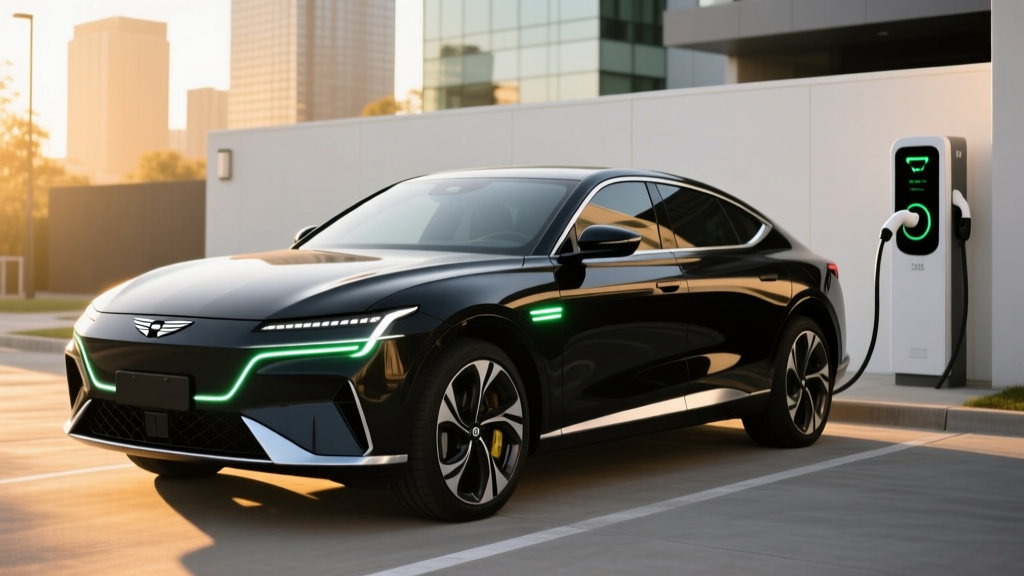
The 2023 Genesis GV60 is the brand's first dedicated electric vehicle, built on Hyundai Motor Group's E-GMP platform — the same architecture underpinning the Hyundai Ioniq 5 and Kia EV6. But where those siblings lean into retro-futurism or sportback aggression, the GV60 wraps its 77.4 kWh battery and dual-motor powertrain in a genuinely premium package that rivals the BMW iX and Audi Q4 e-tron on refinement while undercutting them on price. With an EPA-estimated range of up to 248 miles, peak DC fast-charging at 233 kW, and Genesis's signature 5-year/60,000-mile vehicle warranty plus a 10-year/100,000-mile powertrain guarantee, the GV60 is a compelling luxury EV compact crossover — particularly for buyers who value interior quality and charging speed over maximum range.
Range, Efficiency, and Real-World Expectations
The 2023 GV60 comes in three configurations, each with distinct range and efficiency profiles. The Advanced and Performance trims share a dual-motor all-wheel-drive layout, while the single-motor rear-wheel-drive variant was not offered for the U.S. market in 2023, limiting maximum range compared to some competitors.
| Trim | Drivetrain | EPA Range | MPGe (City/Hwy/Combined) | kWh/100 mi |
|---|---|---|---|---|
| Advanced (Dual-Motor AWD) | AWD | 248 miles | 98 / 84 / 91 MPGe | 37 |
| Performance (Dual-Motor AWD) | AWD | 235 miles | 90 / 78 / 85 MPGe | 40 |
The GV60's efficiency of 37 kWh per 100 miles (Advanced trim) is competitive with the Audi Q4 e-tron quattro (38 kWh/100 mi) but trails the lighter, single-motor variants of the Ioniq 5 and EV6. According to fueleconomy.gov, the GV60 Advanced's combined 91 MPGe places it mid-pack in the luxury compact EV crossover segment.
Battery Chemistry, Degradation, and Warranty Coverage
Under the floor sits a 77.4 kWh usable lithium-ion battery pack using NMC (nickel-manganese-cobalt) chemistry — chosen for its higher energy density versus LFP (lithium iron phosphate). This is a trade-off: NMC offers more range per kilogram but is more sensitive to sustained high state-of-charge storage and extreme temperatures. Genesis does not publish official degradation curves, but E-GMP platform siblings have shown approximately 8–12% capacity loss over 100,000 miles in fleet data, which is typical for liquid-cooled NMC packs.
Genesis backs the battery and electric powertrain components with a 10-year/100,000-mile warranty, which covers defects and capacity loss below a threshold (typically 70% state of health, though Genesis has not published an explicit retention guarantee as of this writing). The basic vehicle warranty covers 5 years/60,000 miles, and complimentary scheduled maintenance runs 3 years/36,000 miles — a meaningful ownership perk.
Charging Speed: DC Fast, Level 2, and the 800-Volt Advantage
The GV60 uses the E-GMP platform's native 800-volt electrical architecture, which allows it to accept significantly higher DC fast-charging power than 400-volt competitors like the BMW iX or Audi Q4 e-tron without excessive heat buildup. Here's the full charging picture:
| Charging Level | Power / Rate | Time / Range Added | Connector |
|---|---|---|---|
| Level 1 (120V household) | ~1.4 kW | ~4 miles per hour | J1772 adapter |
| Level 2 (240V home/public) | 10.9 kW (max onboard) | ~33 miles per hour; 0–100% in ~7.5 hours | J1772 / CCS1 |
| DC Fast Charge (peak) | 233 kW (peak) | 10–80% in ~18 minutes | CCS1 |
| DC Fast Charge (350 kW station) | Sustains ~175–200 kW to 55% SoC, tapers to ~80 kW above 80% | 80–100% adds ~12 additional minutes | CCS1 |
The 10–80% time of approximately 18 minutes is among the fastest in the segment when using a 350 kW-capable CCS charger (such as Electrify America's latest stations). However, the charging curve is not flat: peak 233 kW is available only between roughly 10–55% state of charge. Above 55%, the rate tapers progressively, and charging above 80% slows significantly to protect the NMC cells. For road trips, plan to charge from 10–80% and move on rather than topping off to 100%.
At home on a Level 2 wall connector delivering the GV60's maximum 10.9 kW, a full charge takes roughly 7.5 hours — easily achievable overnight. If your home charger or electrical panel is limited to 7.7 kW (a common 32-amp circuit), expect closer to 10–11 hours for a full charge. A dedicated 48-amp circuit is recommended to extract the full 10.9 kW.
Performance, Drivetrain, and Driving Dynamics
| Spec | Advanced AWD | Performance AWD |
|---|---|---|
| Horsepower | 314 hp | 429 hp (Boost mode) |
| Torque | 446 lb-ft | 446 lb-ft (516 lb-ft Boost) |
| 0–60 mph | 5.3 seconds | 3.9 seconds |
| Drivetrain | Dual-motor AWD | Dual-motor AWD with Boost |
| Towing Capacity | Not rated | Not rated |
The Performance trim's Boost mode — activated via a dedicated button on the steering wheel — temporarily increases output for 20-second bursts, dropping the 0–60 time to a genuinely quick 3.9 seconds. Both trims feature a low center of gravity thanks to the floor-mounted battery, and the adaptive suspension on the Performance trim (with electronic damping) delivers a compliant yet controlled ride that out-handles most luxury EV crossovers in this price range. The steering is precise if slightly numb — a common EV trait — and the regenerative braking offers multiple levels adjustable via steering-wheel paddles, including a near-one-pedal-driving i-Pedal mode.
Interior, Cargo Space, and Technology
The GV60's interior is where it most clearly separates itself from its E-GMP platform siblings. Genesis uses genuine aluminum trim, quilted leather upholstery (on Performance), and a unique crystal shifter that rotates into position when the vehicle is started — a theatrical touch that owners consistently cite as a favorite detail. The dual 12.3-inch displays (instrument cluster and infotainment) are housed in a single curved panel, and the infotainment system supports wireless Apple CarPlay and Android Auto.
Space is adequate for the compact luxury crossover segment but not class-leading:
- Cargo volume (rear seats up): 24.0 cubic feet
- Cargo volume (rear seats folded): 54.7 cubic feet
- Front legroom: 41.9 inches
- Rear legroom: 37.5 inches
- Frunk (front trunk): 0.7 cubic feet — essentially a small cable-storage compartment, not functional luggage space
The small frunk is a consequence of the E-GMP platform's front-mounted power electronics and HVAC components. Competitors like the Ford Mustang Mach-E (13.9 cu ft frunk) offer far more front storage.
Driver-Assistance Tech: The GV60 comes standard with Genesis's Highway Driving Assist II (HDA II), which provides adaptive cruise control with stop-and-go, lane-centering, and automated lane changes when the turn signal is activated. This is an SAE Level 2 system — the driver must keep hands on the wheel and eyes on the road at all times. It is not autonomous driving. The system performs well on divided highways but requires active supervision and will issue escalating warnings if driver engagement lapses. Remote Smart Parking Assist allows the vehicle to park and unpark itself in tight spaces via the key fob — a genuinely useful party trick.
Pricing, Trims, and Federal Tax Credit Eligibility
| Trim | Base MSRP (2023) | Destination | As-Tested (Typical) | Federal Tax Credit (§30D) |
|---|---|---|---|---|
| Advanced AWD | $59,290 | $1,395 | $60,685–$63,500 | Up to $7,500 (see eligibility below) |
| Performance AWD | $65,290 | $1,395 | $67,500–$72,000 | Up to $7,500 (see eligibility below) |
The 2023 GV60 qualifies for the full $7,500 federal EV tax credit under IRS §30D, provided the buyer meets income thresholds and the vehicle's battery components and critical minerals satisfy sourcing requirements that phased in throughout 2023–2024. Key eligibility rules, per irs.gov:
- Buyer income caps: Modified adjusted gross income (MAGI) must not exceed $300,000 (married filing jointly), $225,000 (head of household), or $150,000 (single filers).
- MSRP cap: The GV60's MSRP is under the $80,000 cap for SUVs/crossovers — both trims qualify.
- Battery sourcing: As of 2023, a percentage of critical minerals and battery components must be sourced from the U.S. or free-trade-agreement countries. The GV60's eligibility for the full $7,500 (vs. $3,750) depends on the specific build date and battery supply chain — confirm with your dealer and reference the IRS's eligible-vehicle list at the time of purchase.
- Point-of-sale transfer: Beginning in 2024, buyers can elect to transfer the credit to the dealer for an immediate price reduction at purchase. For 2023 tax-year purchases, the credit is claimed on your federal tax return (Form 8936). Consult a tax professional for your specific situation.
After the maximum $7,500 credit, the Advanced trim's effective price drops to approximately $51,790–$56,000, making it one of the most affordable luxury EV crossovers with premium materials and 233 kW charging capability.
Who Should Buy the 2023 Genesis GV60?
- You want a genuinely premium interior without paying BMW iX or Mercedes EQB pricing.
- Fast DC charging (18-min 10–80%) matters for your road-trip habits.
- You drive under 250 miles daily and can charge at home overnight.
- You value a comprehensive 10-year/100,000-mile powertrain warranty.
- You need maximum range — the Tesla Model Y Long Range (330 mi EPA) and single-motor Ioniq 5 (303 mi) go farther.
- Cargo space is a priority — the Mach-E and Model Y offer significantly more room.
- You want a frunk for charging cables or groceries — the GV60's is nearly useless.
- You need towing capability — the GV60 is not rated for towing.
Pros and Cons
- 233 kW peak DC fast charging (10–80% in ~18 min) is among the fastest in the luxury compact EV crossover class.
- Premium interior materials and design details (crystal shifter, quilted leather) exceed expectations at this price point.
- 10-year/100,000-mile powertrain/battery warranty provides long-term peace of mind.
- Performance trim's 3.9-second 0–60 mph is genuinely thrilling with Boost mode.
- Complimentary 3-year/36,000-mile maintenance and Genesis's valet service reduce ownership friction.
- Highway Driving Assist II is a competent, smooth Level 2 system for highway commuting.
- 248-mile EPA range (Advanced) trails key competitors — Model Y LR offers 330 miles.
- Real-world highway range drops to ~200–220 miles; cold weather pushes it to ~160–180 miles.
- Tiny 0.7 cu ft frunk is essentially non-functional.
- No towing rating — a limitation for buyers who need even light trailer capability.
- CCS1 connector (2023 model year) requires an adapter for Tesla Supercharger access, though NACS adoption is coming for future models.
- Rear visibility is compromised by thick C-pillars; the digital rearview camera mirror helps but takes adjustment.
How It Compares to Key Competitors
| Spec | 2023 Genesis GV60 Advanced | 2023 Hyundai Ioniq 5 SEL AWD | 2023 Tesla Model Y Long Range | 2023 BMW iX xDrive50 |
|---|---|---|---|---|
| EPA Range | 248 mi | 260 mi | 330 mi | 324 mi |
| Battery (usable) | 77.4 kWh (NMC) | 77.4 kWh (NMC) | ~75 kWh (NMC) | 105.2 kWh (NMC) |
| Peak DC Charge | 233 kW | 233 kW | ~250 kW | ~150 kW |
| 10–80% Time | ~18 min | ~18 min | ~20 min | ~35 min |
| 0–60 mph | 5.3 sec | 5.2 sec | 4.8 sec | 4.4 sec |
| Horsepower | 314 hp | 320 hp | 384 hp | 516 hp |
| Cargo (seats up) | 24.0 cu ft | 27.2 cu ft | 30.2 cu ft | 35.5 cu ft |
| Base MSRP | $59,290 | $47,500 | $52,990 | $87,100 |
| Federal Credit | Up to $7,500 | Up to $7,500 | Up to $7,500 | Up to $7,500 |
| Safety (IIHS) | Top Safety Pick+ | Top Safety Pick+ | Not tested (IIHS) | Not tested (IIHS) |
The GV60 trades range and cargo space for interior luxury and charging speed. The Ioniq 5 is the value play on the same platform. The Model Y dominates on range, cargo, and Supercharger network access. The BMW iX offers more space and power but at nearly double the price and with slower charging.
Frequently Asked Questions
What is the real-world range of the 2023 Genesis GV60?
The EPA rates the Advanced AWD trim at 248 miles and the Performance AWD at 235 miles. In real-world highway driving at 70–75 mph, expect 200–220 miles. In cold weather (below freezing), that drops to roughly 160–180 miles due to battery chemistry limitations and cabin heating demands, even with the standard heat pump.
How fast does the GV60 charge at home and on the road?
On a 350 kW DC fast charger, the GV60 peaks at 233 kW and charges from 10–80% in approximately 18 minutes, though the rate tapers significantly above 55% state of charge. At home on a Level 2 (240V) charger delivering 10.9 kW, a full 0–100% charge takes about 7.5 hours. A 48-amp dedicated circuit is recommended.
Does the 2023 Genesis GV60 qualify for the $7,500 federal EV tax credit?
Yes, the GV60 qualifies for up to $7,500 under IRS §30D, subject to buyer income caps ($150K single / $300K joint), MSRP limits (under $80K for SUVs — both trims qualify), and battery-sourcing requirements that vary by build date. Confirm eligibility against the IRS eligible vehicle list and consult a tax professional before purchase.
Is the Genesis GV60 worth buying over the Tesla Model Y or Hyundai Ioniq 5?
It depends on priorities. If you value interior luxury, ride refinement, and the fastest DC charging in the segment, the GV60 is worth a serious look — especially after the tax credit. If maximum range, cargo space, or Supercharger network access are your top concerns, the Model Y is the stronger choice. If you want the same E-GMP platform at a lower price with slightly more range, the Ioniq 5 is the pragmatic pick.
What are the biggest drawbacks of the GV60?
The primary limitations are its 248-mile EPA range (below segment leaders), a nearly non-functional frunk (0.7 cu ft), no towing rating, and real-world highway range that can dip to 200 miles or less in cold conditions. The CCS1 connector also requires an adapter for Tesla Supercharger access, though this is a diminishing concern as adapters become widely available.
Is the GV60's Highway Driving Assist actually self-driving?
No. HDA II is an SAE Level 2 driver-assistance system. It handles adaptive cruise control, lane centering, and even automated lane changes on signal, but the driver must remain fully engaged — hands on the wheel, eyes on the road. It does not navigate intersections, handle construction zones autonomously, or replace driver attention.
What is the battery warranty on the 2023 GV60?
Genesis covers the high-voltage battery and electric powertrain components for 10 years or 100,000 miles, whichever comes first. This covers manufacturing defects and significant capacity loss. The standard vehicle warranty is 5 years/60,000 miles, and Genesis includes 3 years/36,000 miles of complimentary scheduled maintenance with valet pickup and delivery.
Sources: U.S. Department of Energy / fueleconomy.gov, IRS New Clean Vehicle Tax Credit, Genesis USA official specifications.