Quick Verdict: The GV60 Performance Is a Luxury EV Sleeper
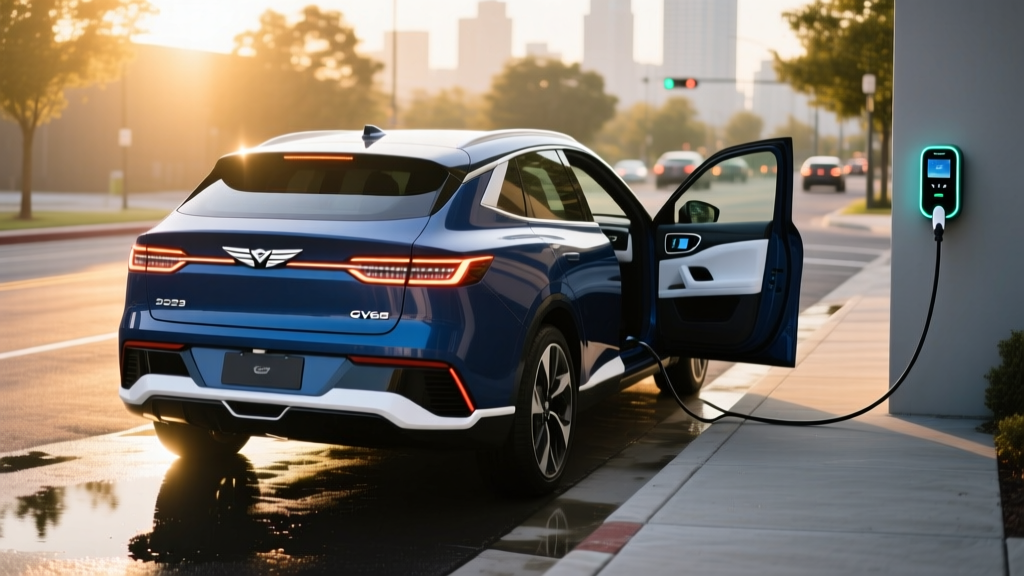
The 2023 Genesis GV60 Performance is the automaker's first dedicated electric vehicle, and it doesn't ease into the segment — it kicks the door down. Built on Hyundai Motor Group's E-GMP platform (shared with the Ioniq 5 and EV6), the Performance trim pairs dual motors, all-wheel drive, and 429 horsepower with a genuinely upscale cabin that undercuts European rivals on price. But with an EPA range of 235 miles and a starting MSRP near $69,000, it occupies a specific niche: luxury buyers who want punchy acceleration, premium materials, and fast 800-volt charging — and who don't need 300+ miles of range.
This review breaks down every number that matters for ownership: real-world range expectations, DC fast-charging curves, Level 2 home charging, §30D tax credit eligibility under current IRS rules, and how the GV60 Performance stacks up against the BMW iX, Audi Q4 e-tron, and its platform-mate, the Kia EV6 GT.
Range, Efficiency, and Real-World Expectations
The 2023 Genesis GV60 Performance carries a 77.4 kWh usable lithium-ion battery pack using NMC (nickel manganese cobalt) chemistry. The EPA rates the GV60 Performance AWD at 235 miles of combined range, with an efficiency rating of 95 MPGe (36 kWh per 100 miles).
EPA sticker: 235 miles. In mixed highway driving at 70-75 mph, expect approximately 200-215 miles before needing a charge. In cold weather (below 32°F), range can drop to 165-185 miles due to cabin heating demands and reduced battery chemistry efficiency. City driving with regenerative braking can push real-world results closer to or slightly above the EPA estimate, around 240-250 miles.
The 235-mile figure places the GV60 Performance behind the Advanced trim (248 miles EPA, single-motor RWD) and significantly behind the Tesla Model Y Long Range (330 miles EPA). This is the trade-off for 429 hp and all-wheel drive. If your commute is under 60 miles round-trip and you have home charging, the range is manageable. For frequent 250+ mile road trips, you'll be planning DC fast-charging stops.
| Trim | Drivetrain | EPA Range | MPGe (Combined) | kWh/100 mi |
|---|---|---|---|---|
| Standard | AWD | 248 mi | 98 MPGe | 34 |
| Advanced | AWD | 248 mi | 97 MPGe | 35 |
| Performance | AWD | 235 mi | 95 MPGe | 36 |
Charging Speed: 800-Volt Architecture Pays Off
The GV60's E-GMP platform supports 800-volt DC fast charging, which is a significant hardware advantage over 400-volt competitors like the BMW iX and Audi Q4 e-tron. Higher voltage allows faster charging at lower current, reducing heat buildup and cable weight.
| Charging Level | Max Rate | Speed / Time | Notes |
|---|---|---|---|
| Level 1 (120V) | 1.4 kW | ~3-4 mi/hr | Emergency/trickle only |
| Level 2 (240V, 48A) | 10.9 kW | ~32 mi/hr; full charge in ~7.5 hr | Home or workplace; requires 60A circuit |
| DC Fast Charge | 233 kW peak | 10-80% in ~18 min | On 350 kW station; tapers sharply above 80% |
Charging curve reality: The 233 kW peak is achievable on a 350 kW charger (like Electrify America or Ionity) when the battery is preconditioned and at a low state of charge (around 10-15%). Sustained charging from 10-50% averages roughly 180-200 kW, then tapers progressively. From 80-100%, the rate drops to under 30 kW — this is standard for NMC chemistry to protect long-term battery health. Don't plan your road trip around 0-100% fills; the 10-80% window is where the GV60 shines.
For home charging, the GV60 includes a Face Connect system and supports Genesis's connected charging scheduler, which lets you set off-peak charging windows via the app to take advantage of time-of-use electricity rates. A full Level 2 home install (60A dedicated circuit, hardwired Wallbox or ChargePoint unit) typically costs $800-$2,200 depending on panel proximity and local permit fees.
Performance: 429 HP and a 3.9-Second 0-60
The Performance trim earns its name. Dual electric motors produce a combined 429 horsepower and 446 lb-ft of torque. Genesis claims a 0-60 mph time of 3.9 seconds with Boost Mode engaged (activated via a dedicated button on the steering wheel, which temporarily increases output to 483 hp for short bursts).
| Battery (usable) | 77.4 kWh, NMC |
| Power | 429 hp (483 hp Boost Mode) |
| Torque | 446 lb-ft |
| Drivetrain | Dual-motor AWD |
| 0-60 mph | 3.9 seconds |
| EPA Range | 235 miles |
| MPGe (combined) | 95 MPGe |
| DC Fast Charge | 233 kW peak, 10-80% in ~18 min |
| Level 2 Charge | 10.9 kW (~32 mi/hr) |
| Base MSRP | $68,790 (incl. $1,095 destination) |
| Battery Warranty | 10 years / 100,000 miles |
Driving dynamics are composed rather than track-focused. The adaptive dampers (standard on Performance) manage the 4,730-lb curb weight well through corners, though you feel the mass over sharp bumps. The e-Terrain mode adjusts torque distribution and regen for snow, sand, and mud. Regenerative braking offers four levels adjustable via steering-wheel paddles, including an i-Pedal one-pedal-driving mode that brings the car to a full stop without touching the brake pedal.
Compared to the Kia EV6 GT (576 hp, 0-60 in 3.4s, 206 miles EPA), the GV60 Performance sacrifices some raw output for a more refined ride and a substantially more luxurious interior. It's a grand-touring EV, not a track weapon.
Interior, Cargo, and Technology
The GV60's cabin is where Genesis justifies its premium positioning. The Performance trim includes Nappa leather seats, a heated steering wheel, ventilated front seats, heated rear seats, a 17-speaker Bang & Olufsen audio system, and the distinctive crystal sphere shifter that rotates when the vehicle starts — a design flourish that impresses every passenger.
Passenger and cargo dimensions:
- Front legroom: 41.9 inches
- Rear legroom: 37.8 inches
- Front headroom: 39.6 inches
- Rear headroom: 37.7 inches
- Cargo (rear seats up): 24.0 cubic feet
- Cargo (rear seats folded): 54.7 cubic feet
- Frunk (front trunk): 0.7 cubic feet (minimal — fits a charging cable bag)
The cargo area is competitive with the Audi Q4 e-tron but smaller than the Tesla Model Y (30.2 cu ft behind the second row). The near-flat floor and wide hatch opening make loading practical, though the modest frunk is a missed opportunity given the E-GMP platform's packaging flexibility.
Infotainment: Dual 12.3-inch displays (instrument cluster + infotainment) run Genesis's latest software with wireless Apple CarPlay and Android Auto, navigation-based preconditioning for DC fast charging, and over-the-air updates. The system is responsive but relies on a combination of touch and physical controls — the haptic-touch climate panel below the main screen draws mixed reactions for usability while driving.
Driver assistance (SAE Level 2): The GV60 includes Highway Driving Assist 2 (HDA2), which combines adaptive cruise control with lane-centering on highways, automatic lane-change assist when the turn signal is activated, and navigation-based speed adjustment. This is a Level 2 system — the driver must keep hands on the wheel and eyes on the road at all times. It is not self-driving. Additional features include Remote Smart Parking Assist (the car parks itself while you stand outside), a 360-degree camera, blind-spot view monitor, and forward/side/rear collision-avoidance assist.
Pricing, Tax Credits, and Ownership Cost
The 2023 Genesis GV60 Performance starts at an MSRP of $68,790 (including $1,095 destination charge). A fully loaded example with the Prestige package — adding a head-up display, digital side mirrors, heated armrests, and a fingerprint-authentication system — reaches approximately $74,790.
| Trim | MSRP (incl. destination) | Key Additions |
|---|---|---|
| Standard | $59,290 | 314 hp, 248 mi range, leatherette |
| Advanced | $65,290 | Nappa leather, B&O audio, HUD |
| Performance | $68,790 | 429 hp, adaptive dampers, 21" wheels |
Federal Tax Credit Eligibility (§30D)
The 2023 GV60 Performance may qualify for up to $7,500 under the IRS §30D Clean Vehicle Credit, but eligibility depends on several requirements that buyers must verify:
- MSRP cap: Vehicle MSRP must not exceed $80,000 for SUVs (GV60 qualifies — classified as a small SUV by the IRS). ✓
- Buyer income cap: Modified AGI must not exceed $150,000 (single), $225,000 (head of household), or $300,000 (joint). Check your tax situation.
- Battery sourcing: A percentage of critical minerals and battery components must be sourced from the US or FTA partners. The GV60's SK On battery cells are manufactured in Georgia, but critical-mineral sourcing requirements phase up annually. Check the IRS qualified vehicles list for the specific build date and credit amount.
- Assembly: Final assembly must occur in North America. The GV60 is assembled in South Korea — this may disqualify it from the new-vehicle §30D credit depending on the model year and specific IRS guidance. Verify on fueleconomy.gov before purchasing.
- Point-of-sale transfer: Since 2024, eligible buyers can transfer the credit to the dealer for an immediate price reduction at purchase rather than claiming it at tax filing.
Tax rules change frequently. Consult a tax professional and verify current eligibility on irs.gov before making a purchase decision.
Warranty coverage is a Genesis strong suit: 5 years/60,000 miles bumper-to-bumper, 10 years/100,000 miles on the battery and powertrain, 3 years/36,000 miles of complimentary maintenance, and 5 years of complimentary Genesis Connected Services. The battery warranty guarantees a minimum 70% capacity retention over the 10-year/100,000-mile period.
How It Compares: GV60 Performance vs. Key Rivals
| Spec | Genesis GV60 Perf. | BMW iX xDrive50 | Tesla Model Y LR | Kia EV6 GT |
|---|---|---|---|---|
| Base MSRP | $68,790 | $87,100 | $47,740 | $61,600 |
| Horsepower | 429 hp | 516 hp | 384 hp | 576 hp |
| 0-60 mph | 3.9s | 4.4s | 4.8s | 3.4s |
| EPA Range | 235 mi | 324 mi | 330 mi | 206 mi |
| DC Fast Charge | 233 kW | 150 kW | 250 kW | 233 kW |
| Cargo (seats up) | 24.0 cu ft | 35.5 cu ft | 30.2 cu ft | 24.4 cu ft |
| Battery Warranty | 10yr/100k mi | 8yr/80k mi | 8yr/120k mi | 10yr/100k mi |
- You want a luxury interior that rivals BMW/Audi at a lower price
- Fast 800V DC charging matters for your road trips
- You value a 10-year powertrain/battery warranty
- Your daily driving is under 150 miles with home charging
- You need 300+ miles of range (choose Model Y LR or iX)
- Cargo space is a priority (Model Y or iX offer more)
- You want maximum performance per dollar (EV6 GT is faster and cheaper)
- North American assembly is required for your tax credit strategy
Pros, Cons, and Who Should Buy the GV60 Performance
- 233 kW DC fast charging on 800V architecture (10-80% in ~18 min)
- Genuinely luxurious cabin with crystal sphere shifter, Nappa leather, B&O audio
- 3.9-second 0-60 with Boost Mode — quick yet composed
- 10-year/100,000-mile battery and powertrain warranty
- 3 years of complimentary scheduled maintenance
- Quiet, well-damped ride quality at highway speeds
- 235-mile EPA range trails most competitors in this price range
- Small frunk (0.7 cu ft) — barely fits the mobile charger
- Cargo space (24.0 cu ft) is tight for a luxury SUV
- South Korean assembly may disqualify from §30D new-vehicle credit
- Haptic climate controls can be distracting while driving
- No NACS port — requires CCS-to-NACS adapter for Tesla Superchargers
Who this EV suits best: The GV60 Performance is ideal for luxury-oriented commuters and couples who prioritize interior quality, ride comfort, and brisk acceleration over maximum range or cargo utility. If you have Level 2 home charging, a sub-100-mile daily commute, and take road trips of 200-300 miles where you don't mind one DC fast-charge stop, the GV60 Performance delivers a compelling ownership experience. It is not the right choice for large families needing cargo space, frequent 400-mile road trippers, or buyers whose tax-credit strategy depends on North American assembly.
Frequently Asked Questions
What is the real-world range of the 2023 Genesis GV60 Performance?
The EPA rates it at 235 miles combined. In real-world highway driving at 70-75 mph, expect 200-215 miles. In cold weather below freezing, range drops to approximately 165-185 miles. City driving with regen braking can yield 240-250 miles. Always plan road trips with a 20-30% buffer below EPA estimates.
How fast does the GV60 Performance charge at home and on DC fast chargers?
On a DC fast charger rated at 350 kW, the GV60 Performance peaks at 233 kW and charges from 10-80% in approximately 18 minutes. At home on a Level 2 charger (240V, 48A), it charges at 10.9 kW, adding roughly 32 miles per hour — a full charge takes about 7.5 hours overnight.
Does the 2023 Genesis GV60 qualify for the $7,500 federal EV tax credit?
Possibly, but it depends on several factors. The GV60's MSRP is under the $80,000 SUV cap, and its SK On battery has US-manufactured cells. However, final assembly occurs in South Korea, which may disqualify it under §30D's North American assembly requirement. Buyer income caps also apply ($150K single / $300K joint). Always verify current eligibility on the IRS qualified vehicles list and consult a tax professional.
Is the GV60 Performance worth buying over the BMW iX or Tesla Model Y?
It depends on your priorities. The GV60 Performance offers a more luxurious cabin than the Model Y at $19,000 less than the iX, plus faster DC charging than the BMW. However, both the Model Y Long Range (330 mi) and iX xDrive50 (324 mi) offer significantly more range, and the Model Y provides more cargo space. If interior luxury and value matter most, the GV60 is compelling. If range and practicality lead your decision, look at the alternatives.
What is the battery warranty on the Genesis GV60?
Genesis covers the high-voltage battery and electric powertrain for 10 years or 100,000 miles, whichever comes first. The warranty guarantees a minimum of 70% battery capacity retention over that period. If degradation exceeds 30% within the warranty window, Genesis will repair or replace the battery at no cost. This is among the best battery warranties in the luxury EV segment.
Can the GV60 charge at Tesla Superchargers?
The 2023 GV60 uses a CCS1 connector. As Tesla has opened its Supercharger network to non-Tesla EVs via the built-in Magic Dock adapter at select stations, the GV60 can charge at participating Superchargers. For broader compatibility, Genesis provides a CCS-to-NACS adapter for use at NACS-equipped Tesla Superchargers. Charging speed will be limited to the station's adapter capability — typically 150-250 kW.