Quick Verdict: The Quirky City EV That Still Makes Sense Used
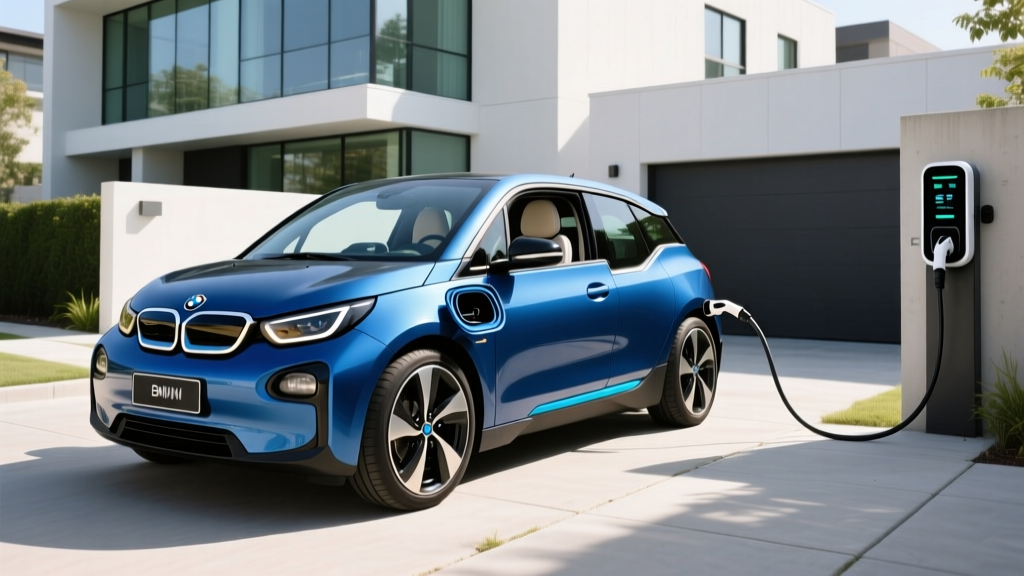
The BMW i3 was discontinued after the 2021 model year, ending a seven-year run as one of the most unconventional electric vehicles ever mass-produced. Its carbon-fiber-reinforced plastic (CFRP) passenger cell, skinny 19-inch wheels, and coach-door "suicide" rear layout made it unlike anything else on the road. In 2026, the 2021 i3 lives on exclusively as a used EV — and thanks to the IRS §25E used clean vehicle credit, it may be more attainable than ever for urban commuters who don't need 300+ miles of range.
But the i3's compact battery, modest DC fast-charging speed, and cramped rear seat mean it's not for everyone. This review breaks down exactly what you're getting with a 2021 BMW i3 in 2026 — EPA range, real-world efficiency, charging speeds, used pricing, and how it stacks up against modern alternatives.
| Spec | Value |
|---|---|
| EPA Range (BEV) | 153 miles |
| EPA Range (REx w/ Range Extender) | 126 mi electric + ~70 mi gas |
| Battery (Usable) | 37.9 kWh (42.2 kWh gross) |
| Battery Chemistry | NMC (Nickel Manganese Cobalt) |
| MPGe (Combined) | 113 MPGe |
| Efficiency | 30 kWh / 100 mi |
| Motor | 170 hp / 184 lb-ft, RWD |
| 0–60 mph | 6.9 seconds |
| DC Fast Charge (Peak) | 50 kW (CCS) |
| 10–80% DC Charge Time | ~36 minutes |
| Level 2 Charge Rate | 7.4 kW (~25 mi/hr) |
| Cargo Volume | 15.1 cu ft (rear seats up) |
| Rear Legroom | 31.9 inches |
| Battery Warranty (Original) | 8 years / 100,000 miles |
| Original Base MSRP | $45,445 |
Range and Real-World Efficiency
The 2021 BMW i3 (120 Ah version) carries a 42.2 kWh gross / 37.9 kWh usable NMC lithium-ion battery pack. The EPA rates it at 153 miles of combined range for the pure-electric BEV model. The Range Extender (REx) variant pairs the same battery with a 0.65-liter two-cylinder gasoline generator, adding roughly 70 miles of extended range once the battery depletes — but the electric-only portion drops to 126 EPA miles due to the added weight.
Real-World Range Expectations
EPA Sticker: 153 miles (BEV)
Real-World Highway (70 mph, moderate temps): ~120–135 miles. The i3's tall, narrow profile and relatively small battery mean highway speeds drain it faster than the EPA combined cycle suggests.
City / Mixed Commuting: 145–160 miles. Regenerative braking is aggressive (the i3 pioneered one-pedal driving), and stop-and-go traffic plays to its strengths.
Cold Weather (below 32°F): Expect 95–115 miles. The i3 lacks a heat pump — it uses resistive cabin heating, which is a significant energy draw in winter. Battery preconditioning is limited compared to modern EVs.
Efficiency is respectable at 113 MPGe combined (30 kWh/100 mi), per fueleconomy.gov. That's competitive with many modern EVs, a testament to the i3's lightweight CFRP construction — it weighs just 2,976 lbs, roughly 1,000 lbs less than a Tesla Model 3. But lightweight only goes so far when the battery holds just 37.9 usable kWh.
Charging Speed: DC Fast, Level 2, and Level 1
This is where the 2021 i3 shows its age most clearly. By 2026 standards, its charging performance is modest. Here's the full breakdown:
| Level | Connector | Max Power | Speed |
|---|---|---|---|
| Level 1 (120V) | J1772 | ~1.4 kW | ~4–5 mi/hr |
| Level 2 (240V) | J1772 | 7.4 kW | ~25 mi/hr (full charge ~5.5 hrs) |
| DC Fast Charge | CCS1 | 50 kW (peak) | 10–80% in ~36 min |
The 50 kW peak DC fast-charge rate was adequate in 2014 when the i3 launched, but by 2026, most new EVs charge at 150–350 kW. At 50 kW, a 10–80% session takes roughly 36 minutes — fine for a planned stop, but you'll feel it on longer road trips. The charge curve is relatively flat (the small battery doesn't taper as dramatically as larger packs), but you're still limited by the 50 kW ceiling.
Level 2 home charging at 7.4 kW is more practical for daily use. A full overnight charge from empty takes about 5.5 hours — easily within the window of a typical evening-to-morning cycle. Most owners will plug in at 20–30% remaining and wake up at 100%.
Connector note: The 2021 i3 uses a J1772 inlet for AC charging and a CCS1 inlet for DC fast charging. It does not have a NACS (Tesla) port. In 2026, as the industry transitions to NACS, CCS infrastructure remains widely available but is no longer the growth focus. You may need a CCS-to-NACS adapter for some newer charging stations — verify adapter compatibility before relying on one.
Performance and Driving Experience
The 2021 i3 is powered by a single rear-mounted electric motor producing 170 horsepower and 184 lb-ft of torque. That sends it from 0–60 mph in 6.9 seconds — brisk for city driving, but a full second or two behind competitors like the Chevrolet Bolt EV (6.5 sec) and well off the pace of a Tesla Model 3 RWD (5.8 sec).
What the i3 lacks in outright acceleration, it makes up for in urban agility. The electromechanical power steering is quick, the turning radius is tight (32.3 feet), and the tall seating position gives excellent visibility. The skinny 155/70R19 Bridgestone Ecopia tires are optimized for low rolling resistance, not cornering grip — this is a car designed for efficiency, not canyon carving.
The Range Extender (REx) model adds a 34-hp, 647cc two-cylinder BMW motorcycle engine that acts as a generator. It maintains battery charge at roughly 6–7% State of Charge (SoC) once activated, extending total range to approximately 195–200 miles. However, the REx adds weight, reduces electric-only range, and introduces gasoline maintenance (oil changes, fuel stabilizer if rarely used). The REx also cannot sustain highway speeds uphill indefinitely — it's a range extender, not a performance booster.
Interior, Tech, and Practicality
The i3's interior was radical at launch and still feels distinctive in 2026. BMW used renewable materials extensively: eucalyptus wood dash trim, recycled-plastic seat fabrics, and kenaf-fiber door panels. The result is an airy, loft-like cabin that stands apart from the black-plastic norm.
Infotainment: The 2021 model features BMW's iDrive 6.0 system with a 10.25-inch touchscreen, navigation, Apple CarPlay (wireless), and Android Auto (wired). It's responsive and well-organized, though the interface looks dated next to 2026 systems. There's no over-the-air (OTA) update capability for core vehicle functions.
Driver Assistance: The i3 offers basic SAE Level 1 assists: forward collision warning, automatic emergency braking (city and pedestrian detection), lane departure warning, and park distance control. Optional Adaptive Cruise Control with Stop & Go and Traffic Jam Assistant provides low-speed semi-autonomous following, but the system requires hands on the wheel and does not approach the capability of modern Level 2 systems like Tesla Autopilot or Ford BlueCruise. There is no lane-centering steering assist at highway speeds.
Pros
- Extremely lightweight and efficient (30 kWh/100 mi)
- Tight turning radius — ideal for city parking
- Unique, sustainable interior materials
- Aggressive regenerative braking enables true one-pedal driving
- CFRP structure is strong and corrosion-resistant
- Eligible for up to $4,000 used EV tax credit (§25E)
Cons
- 153-mile EPA range limits road-trip practicality
- 50 kW DC fast charging is slow by 2026 standards
- Cramped rear seat (31.9" legroom) and coach doors limit access
- No heat pump — significant winter range loss
- Discontinued: no new parts pipeline, limited dealer EV support
- CCS connector in a NACS-transitioning world
- No modern Level 2 highway driver assist
Used Pricing and Tax Credit Eligibility
Since the i3 was discontinued after 2021, you'll only find it on the used market in 2026. Prices have settled significantly from the original $45,445 MSRP:
| Trim / Config | Original MSRP | Est. Used Price (2026) | After §25E Credit |
|---|---|---|---|
| i3 BEV (Base) | $45,445 | $18,000–$22,000 | $14,000–$18,000 |
| i3 BEV (w/ Tech + Driving Assist) | $49,000–$52,000 | $20,000–$25,000 | $16,000–$21,000 |
| i3s BEV (Sport) | $48,645 | $20,000–$24,000 | $16,000–$20,000 |
| i3 REx (Range Extender) | $49,245 | $19,000–$23,000 | $15,000–$19,000 |
Federal used EV tax credit (§25E): The i3 qualifies for up to $4,000 or 30% of the sale price (whichever is less) under the IRS used clean vehicle credit, provided you meet these requirements per IRS.gov:
- Income caps: Modified AGI ≤ $75,000 (single), $112,500 (head of household), $150,000 (joint)
- Vehicle price cap: Sale price must be $25,000 or less
- Dealer requirement: Must be purchased from a licensed dealer (private-party sales don't qualify)
- Vehicle age: Must be at least 2 model years old (2021 i3 qualifies in 2026)
- Battery sourcing: The §25E credit does not have the same critical-mineral/battery-component restrictions as the §30D new-vehicle credit — a significant advantage for used buyers
- One-time use: You can only claim the §25E credit once every 3 years per buyer
Most 2021 i3 listings in 2026 fall under the $25,000 cap, making the full $4,000 credit available. At a $20,000 sale price, 30% equals $6,000, but the credit maxes at $4,000 — still a meaningful 20% price reduction. Consult a tax professional for your specific eligibility.
Who Should Buy the 2021 BMW i3 in 2026?
Choose the i3 if:
- You're a city commuter with a round-trip under 80 miles and reliable home Level 2 charging
- You want a distinctive, premium-brand EV at a budget price (under $20k after credit)
- You value efficiency, lightweight construction, and one-pedal driving
- You need a second car for errands and commuting, not a primary road-trip vehicle
- You live in a mild climate where cold-weather range loss is manageable
Look elsewhere if:
- You need 250+ miles of range or regular road-trip capability
- You need a practical rear seat for adults or child-seat installation
- You want fast DC charging (150+ kW) for public charging convenience
- You live in a cold climate and can't tolerate 30–40% winter range loss
- You want modern Level 2 driver assistance (highway lane centering, etc.)
Battery Longevity and Warranty
The 2021 i3's NMC battery was engineered for durability. BMW's original warranty covers 8 years or 100,000 miles against capacity loss below 70% of original. A 2021 model's warranty runs through the 2029 model year, meaning most used examples in 2026 still carry 3+ years of factory battery coverage.
Real-world degradation data from i3 owners shows the 120 Ah battery holding up well. Most high-mileage examples (60,000+ miles) report State of Health (SoH) between 88–94%, based on community tracking via OBD-II diagnostic apps. The i3's conservative usable buffer (37.9 kWh from a 42.2 kWh gross pack) helps protect long-term health by avoiding deep charge/discharge extremes.
If you're evaluating a used i3, request a battery health report from the dealer or use an OBD-II tool (such as a BimmerCode-compatible scanner) to check SoH directly. Avoid examples with SoH below 85% unless the price reflects imminent battery service.
Competitor Comparison: i3 vs. Used Alternatives
| Spec | 2021 BMW i3 BEV | 2021 Chevy Bolt EV | 2021 Nissan Leaf SV+ | 2021 Tesla Model 3 SR+ |
|---|---|---|---|---|
| EPA Range | 153 mi | 259 mi | 215 mi | 263 mi |
| Battery (Usable) | 37.9 kWh | 65 kWh | 62 kWh | 50 kWh (est.) |
| DC Fast Charge | 50 kW | 55 kW | 100 kW | 170 kW |
| 0–60 mph | 6.9 sec | 6.5 sec | 6.8 sec | 5.3 sec |
| MPGe (Combined) | 113 | 118 | 108 | 142 |
| Cargo (cu ft) | 15.1 | 16.6 | 23.6 | 22.6 |
| Est. Used Price | $18–25k | $16–21k | $15–19k | $22–28k |
| §25E Eligible | Yes | Yes | Yes | Often exceeds $25k cap |
The Bolt EV offers substantially more range at a similar or lower used price. The Leaf SV+ provides more cargo space and faster DC charging (though its CHAdeMO connector is increasingly orphaned in 2026). The Model 3 delivers the most range, the fastest charging, and the best tech — but often sits above the §25E credit's $25,000 price cap. The i3 wins on premium build quality, urban maneuverability, and the uniqueness factor — but loses on nearly every measurable spec.
Frequently Asked Questions
What is the real-world range of the 2021 BMW i3?
The EPA rates the 2021 i3 BEV at 153 miles combined. In real-world driving, expect 145–160 miles in city conditions, 120–135 miles on the highway at 70 mph, and 95–115 miles in freezing weather due to resistive cabin heating and battery chemistry limitations.
How fast does the 2021 BMW i3 charge?
DC fast charging peaks at 50 kW via CCS, achieving a 10–80% charge in approximately 36 minutes. Level 2 home charging runs at 7.4 kW, adding about 25 miles of range per hour and fully recharging the battery in roughly 5.5 hours. Level 1 (120V) trickle charging adds 4–5 miles per hour.
Does the 2021 BMW i3 qualify for any federal tax credit?
As a used vehicle, the 2021 i3 is eligible for the IRS §25E Used Clean Vehicle Credit — up to $4,000 or 30% of the sale price (whichever is less). The buyer must meet income caps ($75k single / $150k joint), purchase from a licensed dealer at a price of $25,000 or less, and can only claim the credit once every 3 years. The §30D new-vehicle credit does not apply since the i3 is discontinued.
Is the 2021 BMW i3 worth buying in 2026?
For the right buyer — an urban commuter with home charging, a sub-80-mile daily drive, and a budget under $20,000 after the used EV credit — the i3 is a compelling premium-brand bargain. Its efficiency, build quality, and one-pedal driving remain excellent. But if you need more range, faster charging, rear-seat practicality, or modern driver assists, the Chevy Bolt EV, Hyundai Kona Electric, or a used Tesla Model 3 are stronger choices.
What happens if the i3's battery degrades?
BMW's battery warranty covers 8 years/100,000 miles against capacity falling below 70%. A 2021 model's warranty extends through approximately January 2029. Real-world data shows most i3 batteries retaining 88–94% SoH at 60,000+ miles. Out-of-warranty battery replacement is expensive ($12,000–$16,000 estimated), but the conservative buffer and NMC chemistry suggest most packs will outlast the car's economic life.
Can I use Tesla Superchargers with a 2021 BMW i3?
Not natively. The i3 uses a CCS1 DC fast-charge connector. As of 2026, some Tesla Supercharger stations have opened to non-Tesla EVs via the built-in CCS cable at select locations, or through Tesla's Magic Dock adapter. However, coverage is not universal. Third-party CCS-to-NACS adapters exist, but verify compatibility and safety certifications before purchasing one. For reliable public charging, rely on Electrify America, EVgo, and ChargePoint CCS stations.