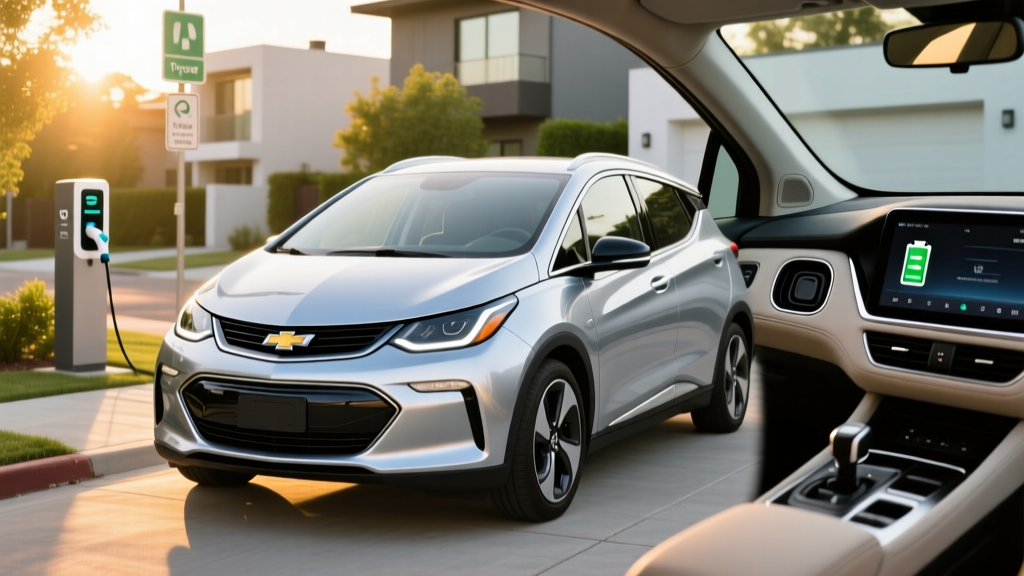
The 2023 Chevrolet Bolt EV remains one of the most affordable long-range electric vehicles ever sold in the United States, even as newer competitors crowd the market. Originally launched with a modest range, the Bolt EV received a major battery upgrade for the 2020 model year and carried that improved pack through its final 2023 production run. For used-EV shoppers and budget-minded buyers in 2026, understanding the exact 2023 Chevrolet Bolt EV specs — from real-world range to charging limitations — is essential before signing any paperwork.
This review breaks down every critical number: battery chemistry and capacity, EPA versus real-world efficiency, DC fast-charge behavior, home charging setup, and the federal tax credit landscape as it applies to this model today. We'll also address the Bolt EV's biggest weakness head-on — its DC charging speed — so you know exactly what you're getting.
Quick Verdict: Who Should Buy the 2023 Bolt EV?
Choose the 2023 Bolt EV if: You want the lowest-cost entry into a 250+ mile EV, primarily drive in urban or suburban environments, can charge at home overnight, and rarely take road trips exceeding 200 miles one-way.
Look elsewhere if: You rely on public DC fast charging for long highway trips, need all-wheel drive, want the latest ADAS features, or require more than 100 kW charging speeds for frequent travel.
The Bolt EV is a commuter car disguised as a subcompact hatchback. It excels at daily driving efficiency and city maneuverability, but its 55 kW peak DC charge rate means it's not built for cross-country road-tripping. If that trade-off works for your lifestyle, few EVs deliver more value per dollar.
2023 Chevrolet Bolt EV Specs at a Glance
| Specification | 2023 Chevrolet Bolt EV (1LT / 2LT) |
|---|---|
| EPA Range | 259 miles |
| Battery (Usable) | 65 kWh (NMC lithium-ion) |
| Efficiency | 120 MPGe combined / 28 kWh/100 mi |
| Motor | Single front-mounted permanent-magnet |
| Horsepower | 200 hp |
| Torque | 266 lb-ft |
| 0–60 mph | ~6.5 seconds |
| Drivetrain | FWD |
| DC Fast Charge (Peak) | 55 kW (CCS1) |
| 10–80% DC Charge Time | ~55 minutes |
| Level 2 Home Charge | 11.5 kW (48A) — ~39 mi/hr |
| Cargo Volume | 16.3 cu ft (rear seats up) / 56.6 cu ft (folded) |
| Rear Legroom | 36.0 inches |
| Battery Warranty | 8 years / 100,000 miles |
| Base MSRP (2023) | $26,500 (1LT) / $29,700 (2LT) |
Sources: EPA Fuel Economy — 2023 Chevrolet Bolt EV, Chevrolet official specifications.
Range and Efficiency: EPA vs. Real World
EPA Estimated Range: 259 miles
Real-World Expectation: 220–245 miles in mixed suburban/highway driving; 180–210 miles in sustained 75+ mph highway driving or cold weather (below 30°F).
The Bolt EV's 259-mile EPA rating was competitive when the 2023 model hit showrooms and still holds up well for the price point. The 65 kWh usable NMC (nickel-manganese-cobalt) battery pack delivers strong city efficiency thanks to generous regenerative braking — Chevy's "One Pedal Driving" mode recaptures energy aggressively in stop-and-go traffic, often pushing real-world city range above the EPA estimate.
Highway efficiency is a different story. The Bolt EV's relatively narrow tires and tall hatchback body create more aerodynamic drag than a sedan-shaped EV. At 70–75 mph, expect consumption around 32–35 kWh/100 mi, which drops effective range to roughly 200–220 miles on a full charge. In freezing temperatures, the Bolt EV lacks a heat pump (it uses resistive cabin heating), so cold-weather range loss of 25–35% is typical. Plan for ~180 miles of usable range in a Midwestern winter.
The combined 120 MPGe / 28 kWh per 100 miles rating from fueleconomy.gov remains one of the most efficient figures in the EV segment, rivaling the Tesla Model 3 and Hyundai Ioniq 5.
Charging Speeds: The Bolt EV's Achilles' Heel
This is where the 2023 Chevrolet Bolt EV specs demand honest scrutiny. The Bolt EV's DC fast-charging capability is its single biggest limitation and the reason many buyers cross it off their list.
| Charging Level | Power / Rate | Time / Range Added |
|---|---|---|
| Level 1 (120V household) | ~1.4 kW | ~4 miles per hour |
| Level 2 (240V home/public) | Up to 11.5 kW (48A) | ~39 miles per hour; full charge in ~7 hours |
| DC Fast Charge (CCS1) | Peak 55 kW | 10–80% in ~55 min; ~100 mi in 30 min |
The 55 kW peak DC charge rate is the Bolt EV's most-cited flaw. Most 2023-era competitors — the Hyundai Kona Electric (100 kW), Volkswagen ID.4 (125+ kW), Tesla Model 3 (250 kW) — charge at roughly two to four times this speed. On a road trip, a Bolt EV stop for 10–80% takes nearly an hour, while a Model 3 accomplishes the same in roughly 20 minutes.
The charge curve also lacks a strong sustained plateau. The Bolt EV hits 55 kW at low state of charge (roughly 5–15% SoC) but begins tapering noticeably by 50% SoC and drops below 30 kW past 70%. This means the published 55 kW figure is a peak, not a sustained rate — a critical distinction many spec sheets gloss over.
Home charging is excellent. The 11.5 kW onboard charger is best-in-class for the subcompact segment. With a Level 2 home wallbox (such as a ChargePoint Home Flex or Emporia Vue), a full overnight charge from 10% to 100% takes about 7 hours. For most commuters adding 40–60 miles per day, a 2–3 hour nightly top-up is more than sufficient.
Performance and Driving Dynamics
The Bolt EV's 200-horsepower, single front motor produces 266 lb-ft of instant torque — enough for a 0–60 mph sprint of roughly 6.5 seconds. That's quick for a subcompact hatchback and makes highway merging and city acceleration feel effortless. The instant torque delivery means the Bolt EV feels faster than its 0–60 time suggests in everyday driving.
Handling is competent but not sporty. The heavy battery pack sits low in the chassis, giving the Bolt EV a planted feel through corners, but the FWD-only layout and comfort-tuned suspension prioritize ride quality over engagement. There is no AWD or dual-motor option.
Regenerative braking is a highlight. Chevy's "L" mode (low gear) and the steering-wheel-mounted "Regen on Demand" paddle allow aggressive one-pedal driving that can bring the car to a near-complete stop without touching the brake pedal. Once accustomed to it, most owners rarely use the friction brakes in daily driving.
Interior, Tech, and Driver Assistance
Inside, the 2023 Bolt EV uses a 10.2-inch touchscreen running Chevrolet's Infotainment 3 system with wireless Apple CarPlay and Android Auto. The interface is responsive and straightforward — not flashy, but functional. A 8-inch digital driver display provides speed, range, and energy-flow information.
Driver assistance (SAE Level 2): The available Chevy Safety Assist suite includes:
- Automatic Emergency Braking with pedestrian detection
- Lane Keep Assist with Lane Departure Warning
- Forward Collision Alert
- Following Distance Indicator
- IntelliBeam automatic high beams
- Adaptive Cruise Control (available on 2LT)
These are Level 2 driver-assist features — the driver must remain fully engaged with hands on the wheel and eyes on the road at all times. The Bolt EV does not offer GM's Super Cruise hands-free system (reserved for higher-tier models like the Cadillac Lyriq and Silverado EV).
Cargo and space: With 16.3 cubic feet behind the rear seats and 56.6 cubic feet with the 60/40 split rear seats folded, the Bolt EV is practical for a subcompact. It swallows a week's groceries or two carry-on suitcases easily. Rear legroom at 36.0 inches is adequate for adults on shorter trips but snug compared to a crossover.
Pricing, Trims, and Federal Tax Credit
The 2023 Bolt EV was offered in two trims, both with the same 65 kWh battery and powertrain:
| Trim | 2023 Base MSRP | Key Features |
|---|---|---|
| 1LT | $26,500 | 17" wheels, cloth seats, 10.2" touchscreen, Chevy Safety Assist, heated front seats |
| 2LT | $29,700 | Leatherette seats, Bose 7-speaker audio, adaptive cruise, 360° camera, heated steering wheel, EV navigation |
Federal tax credit — used EV rules (2026): Since the Bolt EV is no longer sold new, buyers in 2026 purchase it on the used market. Under IRS §25E (Previously Owned Clean Vehicle Credit), qualifying used EVs may be eligible for up to $4,000 (or 30% of the sale price, whichever is lower), provided:
- The vehicle is purchased from a licensed dealer (not private party)
- The sale price is $25,000 or less
- Buyer adjusted gross income is under $75,000 (single) / $112,500 (head of household) / $150,000 (joint)
- The vehicle is at least 2 model years old (2023 qualifies in 2025+)
- The buyer has not claimed another used-EV credit in the prior 3 years
This makes the Bolt EV a standout: a used 2023 Bolt EV 1LT purchased from a dealer for $18,000 could net a $4,000 credit, dropping the effective cost to around $14,000 — making it one of the cheapest 250+ mile EVs available in 2026.
Note: Tax credit eligibility is complex and subject to change. Consult a tax professional and review current IRS guidance before relying on credit estimates.
Pros and Cons
Pros
- Lowest entry price for 250+ mile range (especially used with §25E credit)
- Best-in-class 11.5 kW Level 2 home charging speed
- Strong 120 MPGe combined efficiency — low cost per mile
- Peppy 200 hp / 266 lb-ft instant torque for a subcompact
- Excellent one-pedal driving and regen braking
- Generous 8-year / 100,000-mile battery warranty
- Wireless Apple CarPlay / Android Auto standard
Cons
- 55 kW peak DC fast charging — painfully slow for road trips
- FWD only — no AWD option for snow-belt buyers
- No heat pump — significant cold-weather range loss
- Rear seat is tight for tall adults on long trips
- No Super Cruise or advanced hands-free driving option
- Discontinued after 2023 — no new units available
- CCS1 connector (no native NACS; adapter required for Tesla Superchargers)
Warranty and Long-Term Battery Outlook
Chevrolet backs the Bolt EV's battery pack and electric drive components with an 8-year / 100,000-mile warranty against defects and capacity loss below 60% of original capacity. The limited vehicle warranty is 3 years / 36,000 miles, and the powertrain warranty extends to 5 years / 60,000 miles.
The NMC battery chemistry in the Bolt EV has demonstrated solid longevity in real-world fleet data. Most Bolt owners report degradation in the 5–10% range after 80,000–100,000 miles, meaning a 259-mile Bolt EV might realistically offer 230–245 miles of range after several years of use. This is within normal expectations for liquid-cooled NMC packs.
For 2026 used buyers, verify the battery's State of Health (SoH) before purchase. Many dealers can pull a battery health report, or you can use an OBD-II dongle with apps like Car Scanner to check remaining capacity percentage.
Frequently Asked Questions
What is the real-world range of the 2023 Chevrolet Bolt EV?
The EPA rates the Bolt EV at 259 miles. In real-world mixed driving, expect 220–245 miles. Sustained highway driving at 75 mph drops this to about 200–220 miles, and cold weather (below 30°F) can reduce range to 180–200 miles due to the resistive cabin heater and lack of a heat pump.
How fast does the Bolt EV charge at home and on DC fast chargers?
At home on a 240V Level 2 charger, the Bolt EV accepts up to 11.5 kW (48 amps), adding roughly 39 miles of range per hour — a full charge in about 7 hours. On a DC fast charger, it peaks at 55 kW, which is slow by modern standards: a 10–80% charge takes approximately 55 minutes.
Does the 2023 Bolt EV qualify for the federal EV tax credit?
As a used vehicle in 2026, the Bolt EV may qualify for the IRS §25E Previously Owned Clean Vehicle Credit of up to $4,000, provided the sale price is $25,000 or less, you buy from a licensed dealer, and your income falls below IRS thresholds. It does not qualify for the new-vehicle §30D credit since it is no longer sold new.
Is the 2023 Bolt EV worth buying vs. the Kona Electric or Model 3?
It depends on your priorities. The Bolt EV wins on price — especially used with the §25E credit. The Hyundai Kona Electric offers faster DC charging (100 kW) and slightly more space. The Tesla Model 3 offers far faster charging (250 kW), Supercharger network access, and AWD options but costs significantly more on the used market. For a budget commuter, the Bolt EV is hard to beat.
What connector does the Bolt EV use?
The 2023 Bolt EV uses a CCS1 (Combined Charging System) connector for DC fast charging and a J1772 connector for Level 1/Level 2 AC charging. To use Tesla Superchargers (NACS), you'll need a CCS-to-NACS adapter — GM has approved the use of Tesla's adapter for Bolt EV owners.
How long will the Bolt EV battery last?
The battery is warrantied for 8 years / 100,000 miles with a 60% capacity retention floor. Real-world data from high-mileage Bolt owners suggests 5–10% degradation over 80,000–100,000 miles with normal use. Full battery replacement (if needed out of warranty) typically costs $14,000–$18,000 including labor, though this is rare.