Quick Verdict: A Luxury EV Grand Tourer With Real Substance
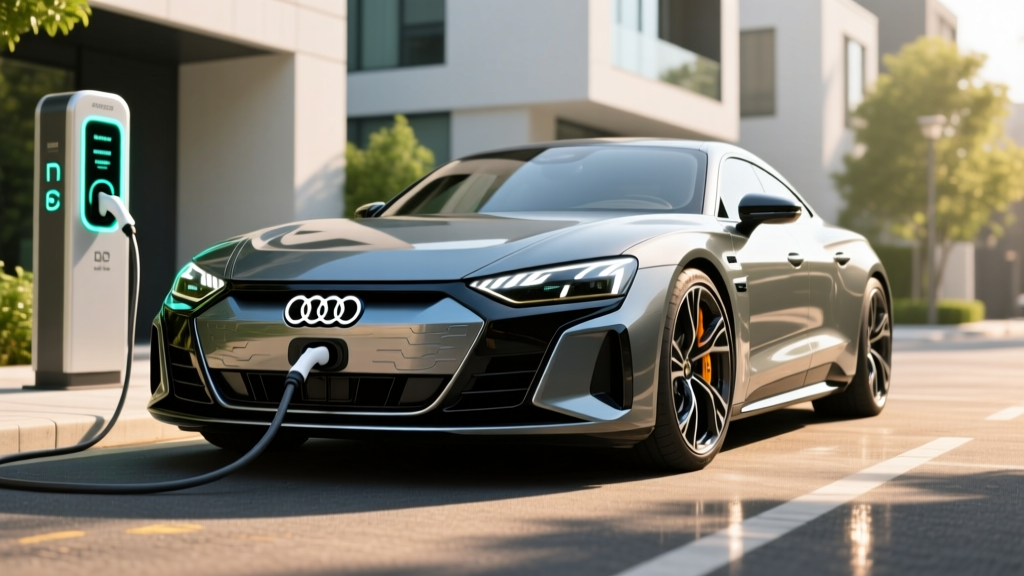
The 2023 Audi e-tron GT is a low-slung, dual-motor electric grand tourer built on the same J1 platform as the Porsche Taycan. It pairs striking design with 522 horsepower (590 hp on launch control), a 93.4 kWh battery, and one of the fastest DC charging architectures in production. But at a starting MSRP above $106,000 and with an EPA range of just 238 miles, it's a car that rewards buyers who prioritize performance and build quality over maximum range. As a used-EV purchase in 2026, depreciation has made it significantly more attainable — and the IRS §25E used-EV credit may apply for qualifying buyers.
| Spec | e-tron GT Premium Plus | e-tron GT Prestige | RS e-tron GT |
|---|---|---|---|
| EPA Range | 238 mi | 232 mi | 232 mi |
| Battery (gross / usable) | 93.4 kWh / ~85 kWh (NMC) | ||
| Drivetrain | Dual-motor AWD, 2-speed rear axle | ||
| Horsepower (boost) | 522 hp | 637 hp | |
| 0-60 mph | 3.9 sec | 3.1 sec | |
| Max DC Fast Charge | 270 kW | ||
| 10-80% DC Time | ~22.5 min | ||
| Level 2 Charge Rate | 11 kW (48A) | ||
| MPGe (combined) | 82 MPGe | 81 MPGe | 79 MPGe |
| kWh/100 mi | 41 | 42 | 43 |
| Cargo (rear + frunk) | 9.2 cu ft trunk + 3.2 cu ft frunk | ||
| Base MSRP (2023) | $106,500 | $113,200 | $147,500 |
| Battery Warranty | 8 yr / 100,000 mi | ||
Range and Efficiency: The EPA Number vs. Reality
EPA Estimated Range: 238 miles (Premium Plus) / 232 miles (Prestige & RS)
Real-World Expectation: Expect 200–220 miles on a highway-heavy road trip at 70–80 mph. In cold weather (below 30°F), plan for 160–190 miles. City and moderate-climate driving can approach or slightly exceed the EPA sticker thanks to regenerative braking.
The e-tron GT's 238-mile EPA figure trails rivals like the Tesla Model S Long Range (405 mi) and Lucid Air Pure (410 mi) by a wide margin. The reason is physics: Audi prioritized performance architecture over energy density. The car weighs approximately 5,139 lbs, uses sticky performance tires, and its dual-motor AWD system draws more power than efficiency-optimized setups.
Efficiency lands at 82 MPGe combined for the Premium Plus, translating to 41 kWh per 100 miles. That's respectable for a 5,100+ lb performance sedan but noticeably thirstier than a BMW i4 eDrive40 (30 kWh/100 mi). On a practical level, if your electricity costs $0.14/kWh, you'll spend roughly $5.74 per 100 miles — roughly half the fuel cost of a comparable gas-powered Audi S7.
The heat pump comes standard, which helps mitigate cold-weather range loss compared to EVs without active thermal management. Still, the NMC battery chemistry is more susceptible to cold-weather voltage sag than LFP alternatives, so preconditioning before DC fast charging is essential in winter months.
Charging: 270 kW Peak and an 800-Volt Architecture
The e-tron GT uses an 800-volt electrical architecture — the same J1 platform engineering as the Porsche Taycan — enabling DC fast-charge speeds that remain among the fastest available. The peak rate of 270 kW is genuinely impressive, but as with all EVs, the charge curve tells the real story.
| Charging Level | Power / Voltage | Speed | Notes |
|---|---|---|---|
| Level 1 (120V) | ~1.4 kW | ~4 mi/hr | Emergency/trickle only |
| Level 2 (240V) | 11 kW (48A) | ~33 mi/hr | Full charge in ~9 hrs |
| DC Fast (peak) | 270 kW (800V) | 10-80% in ~22.5 min | Requires 350 kW charger + preconditioning |
| DC Fast (50 kW station) | 50 kW (CCS) | 10-80% in ~75 min | Common older infrastructure |
At a 350 kW Electrify America or comparable station, the e-tron GT will ramp quickly to its 270 kW peak and sustain strong speeds through approximately 55% state of charge. From there, the curve tapers — by 80% SoC you're seeing roughly 80–100 kW, and above 90% it drops further. This is why Audi quotes 10–80% in about 22.5 minutes rather than 10–100%. For road-trip planning, budget 25–30 minutes per stop including plug-in time.
One notable advantage: the e-tron GT comes with a complimentary charging credit at Electrify America (typically 1,000 kWh over the first few years of ownership on new vehicles — verify current terms with Audi for used purchases).
For home charging, the onboard 11 kW AC charger is fast enough to replenish the battery overnight on a 48-amp Level 2 circuit. A full charge from near-empty takes roughly 9 hours. You'll need a NEMA 14-50 outlet or hardwired Level 2 station on a 60-amp breaker. Expect $800–$2,000 for a professional home installation depending on your electrical panel capacity and run length.
Performance and Driving Dynamics
The standard e-tron GT produces 469 hp in normal driving and 522 hp during 2.5-second launch-control bursts. The RS e-tron GT bumps that to 590 hp (637 hp on boost). Both variants use a permanent-magnet synchronous motor on each axle with a two-speed transmission on the rear axle — a first-gear for hard launches and a second-gear for efficient highway cruising. This is a meaningful engineering distinction: most single-speed EVs sacrifice either low-end punch or high-speed efficiency.
The 0-60 mph time of 3.9 seconds (standard) and 3.1 seconds (RS) puts the e-tron GT firmly in sports-car territory. More impressive in daily driving is the instant torque delivery and the car's composure under hard acceleration — the low center of gravity from the floor-mounted battery and the standard adaptive air suspension keep the body remarkably flat.
Standard rear-axle steering (available on Prestige, optional on Premium Plus) tightens the turning circle and adds agility at low speeds. The available carbon-ceramic brakes on the RS model shed weight and resist fade during repeated hard stops, though the standard steel rotors are more than adequate for street use.
Interior, Tech, and Cargo
The cabin is unmistakably Audi — premium materials, excellent fit and finish, and a driver-focused cockpit. However, the GT's low roofline and sport-sedan proportions create real compromises.
Cargo: The rear trunk offers 9.2 cubic feet of space (enough for two carry-on bags and a few duffels). The front trunk (frunk) adds 3.2 cubic feet — useful for charging cables and a small bag. Total cargo capacity of 12.4 cubic feet is tight compared to the Tesla Model S (28 cu ft behind rear seats) or even the Audi e-tron SUV.
Passenger space: Front legroom is generous at 41.5 inches, but rear legroom drops to 32.1 inches — adequate for adults on short trips but noticeably snug for anyone over 5'10". The center rear seat is essentially unusable due to the transmission tunnel hump (housing wiring and cooling for the rear motor). This is strictly a four-person grand tourer.
Infotainment: The 10.1-inch upper touchscreen runs Audi's MMI system with wireless Apple CarPlay and Android Auto, navigation with EV route planning, and a 12.3-inch Virtual Cockpit digital instrument cluster. The dual-screen climate/lower-function display looks sleek but draws criticism for making simple temperature adjustments a multi-touch affair. Physical volume and tuning knobs remain.
Driver Assistance (SAE Level 2): Audi adaptive cruise with stop-and-go, lane guidance, and traffic-jam assist is standard on Prestige and available on Premium Plus. This is a Level 2 system — you must keep hands on the wheel and eyes on the road at all times. It is not autonomous driving. The system is competent on highways but less aggressive than Tesla Autopilot or GM Super Cruise in lane-change execution.
Pricing, Trims, and Federal Tax Credit Eligibility
| Trim | 2023 Base MSRP | Est. Used Price (2026) | Federal Credit Potential |
|---|---|---|---|
| Premium Plus | $106,500 | $62,000–$72,000 | Up to $4,000 (§25E used-EV credit) |
| Prestige | $113,200 | $68,000–$78,000 | Up to $4,000 (§25E used-EV credit) |
| RS e-tron GT | $147,500 | $85,000–$100,000 | Up to $4,000 (§25E used-EV credit) |
New-vehicle §30D credit: The 2023 e-tron GT did not qualify for the $7,500 federal new-EV tax credit when purchased new. The MSRP exceeds the §30D sedan cap of $55,000, which disqualifies it regardless of battery sourcing or buyer income. This is a hard rule with no workaround.
Used-vehicle §25E credit: As a 2023 model entering the used market, buyers purchasing from a dealer in 2026 may qualify for the IRS §25E used clean vehicle credit — up to $4,000 or 30% of the sale price, whichever is lower. Eligibility requirements include:
- Sale price must be $25,000 or less (this may exclude most e-tron GT listings — verify with your dealer)
- Buyer AGI limits: $75,000 single / $112,500 head of household / $150,000 joint
- Vehicle must be at least 2 model years old (2023 models qualify starting in 2025)
- Must purchase from a licensed dealer (private-party sales excluded)
- Credit is non-refundable unless transferred at point of sale
Given the e-tron GT's used pricing, most examples will exceed the $25,000 sale-price cap. Consult a tax professional and verify current IRS rules before counting on this credit.
Warranty and Long-Term Battery Outlook
Audi covers the e-tron GT's high-voltage battery for 8 years or 100,000 miles, whichever comes first. The warranty guarantees the battery will retain at least 70% of its original usable capacity during the coverage period. If degradation falls below that threshold, Audi will repair or replace modules to restore capacity.
The NMC (nickel manganese cobalt) chemistry in the e-tron GT has higher energy density than LFP but is generally more sensitive to sustained high-state-of-charge storage and extreme heat. Best practices for long-term health:
- Set daily charge limit to 80% (configurable in the MMI system)
- Avoid leaving the car at 100% SoC for extended periods
- Use DC fast charging for road trips, not daily routine (Level 2 is gentler on the cells)
- Precondition the battery before fast charging in cold weather
The powertrain warranty is 4 years / 50,000 miles, and the basic vehicle warranty is 4 years / 50,000 miles — standard for Audi but shorter than Hyundai/Kia's 10-year coverage. Scheduled maintenance is minimal (cabin air filter, brake fluid check, tire rotation), and Audi includes 2 years of complimentary scheduled maintenance on new vehicles.
How It Stacks Up: e-tron GT vs. Key Rivals
| Attribute | Audi e-tron GT | Porsche Taycan 4S | Tesla Model S LR | BMW i4 M50 |
|---|---|---|---|---|
| EPA Range | 238 mi | 227 mi | 405 mi | 270 mi |
| 0-60 mph | 3.9 sec | 3.8 sec | 3.1 sec | 3.7 sec |
| Max DC Charge | 270 kW | 270 kW | 250 kW | 200 kW |
| Base MSRP (2023) | $106,500 | $103,800 | $89,990 | $67,795 |
| Cargo Total | 12.4 cu ft | 14.3 cu ft | 28.0 cu ft | 16.6 cu ft |
| Build Quality | Excellent | Excellent | Good (panel gaps vary) | Very Good |
The e-tron GT and Taycan 4S are platform siblings, sharing the J1 architecture, 800V system, and 270 kW charging. The Taycan edges slightly ahead in driving engagement and cargo versatility (Sport Turismo wagon variant). The Model S dominates on range and interior space but can't match the Audi's interior refinement. The i4 M50 is the value pick — similar performance at a fraction of the price, though with less prestige and a smaller platform.
Pros
- 270 kW DC fast charging is among the fastest in production
- Exceptional build quality and cabin materials
- 2-speed rear axle delivers both launch punch and highway efficiency
- Standard air suspension with adaptive damping
- Striking design that turns heads
- Significant used-market depreciation makes it more attainable
Cons
- 238-mile EPA range is below average for the price class
- Tight rear-seat legroom (32.1 in) and minimal cargo space
- Did not qualify for §30D new-EV credit; §25E used credit unlikely due to price cap
- Touchscreen-only climate controls are distracting
- Heavy at 5,139 lbs — felt in braking distances and tire wear
- Driver-assist tech is competent but less advanced than Tesla/GM systems
Who Should Buy the 2023 Audi e-tron GT?
Choose the e-tron GT if: You want a head-turning electric grand tourer with genuine sports-car acceleration, best-in-class charging speed, and Audi's premium build quality — and your daily commute plus typical road trips fall within the 200-mile real-world range envelope. It's ideal as a two-person daily driver or weekend car, especially if you can charge at home and have access to 350 kW DC fast chargers for longer trips.
Look elsewhere if: You need rear-seat space for adults or children in car seats (BMW i4 or Model S), you regularly drive 300+ miles between charging stops (Model S Long Range or Lucid Air), you're budget-conscious and want maximum range per dollar (i4 eDrive40), or you require the latest autonomous-style driver assist (Tesla Model S with FSD Supervised, with the caveat that it remains Level 2).
Frequently Asked Questions
What is the real-world range of the 2023 Audi e-tron GT?
The EPA rates it at 238 miles (Premium Plus). In real-world highway driving at 70–80 mph, expect 200–220 miles. Cold weather (below 30°F) can reduce that to 160–190 miles. City driving with regenerative braking may approach or slightly exceed the EPA figure.
How fast does the e-tron GT charge?
On a 350 kW DC fast charger with battery preconditioning, it peaks at 270 kW and charges from 10–80% in approximately 22.5 minutes. On a home Level 2 charger (11 kW / 48A), it adds roughly 33 miles per hour and fully charges in about 9 hours.
Does the 2023 Audi e-tron GT qualify for the federal EV tax credit?
It did not qualify for the $7,500 §30D new-EV credit due to its MSRP exceeding the $55,000 sedan cap. As a used vehicle in 2026, it may theoretically qualify for the §25E used-EV credit (up to $4,000), but the $25,000 sale-price cap means most listings will be ineligible. Verify current IRS rules and consult a tax professional.
Is the Audi e-tron GT worth buying over the Porsche Taycan?
They share the same platform and charging hardware. The e-tron GT offers slightly more standard equipment, a more luxurious interior ambiance, and typically lower used-market pricing. The Taycan provides sharper driving dynamics and the Sport Turismo wagon variant for more cargo. Both are excellent — the choice comes down to brand preference and whether you want understated luxury (Audi) or sport-first character (Porsche).
What battery chemistry does the e-tron GT use?
The e-tron GT uses NMC (nickel manganese cobalt) lithium-ion cells in a 93.4 kWh gross / ~85 kWh usable pack. NMC offers higher energy density than LFP but is more sensitive to high-temperature and high-SoC degradation. Following the 80% daily charge limit recommendation will help preserve long-term battery health.
How much does it cost to charge the e-tron GT at home?
At the US average residential electricity rate of approximately $0.16/kWh, a full charge from empty costs about $13.60 (85 kWh usable × $0.16). That delivers roughly 200 real-world miles, or about $0.068 per mile — roughly one-third the per-mile fuel cost of a comparable gasoline Audi S7 at $3.50/gallon.