Quick Verdict: The Grand Tourer That Actually Tours
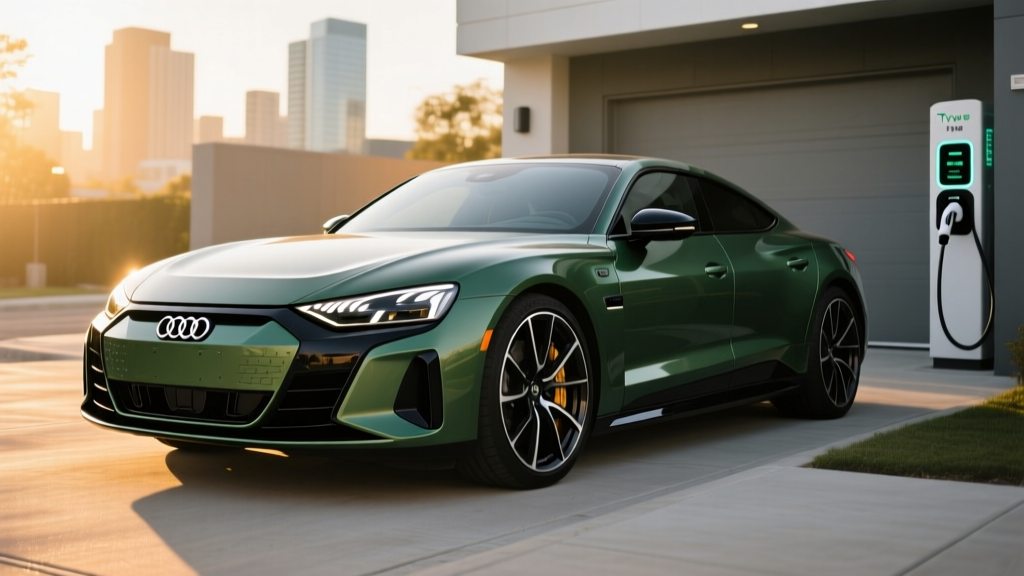
The 2023 Audi e-tron GT occupies a rare slot in the EV market: a luxury performance sedan that prioritizes composure over theatrics. Sharing its J1 platform with the Porsche Taycan, the e-tron GT delivers brutal acceleration — the RS variant hits 60 mph in 3.1 seconds — while maintaining the ride refinement Audi's grand-touring badge demands. But with EPA range figures hovering in the low 230s and a starting price north of $106,000, buyers need to weigh performance against practicality with eyes wide open.
This review covers every number that matters: real-world range, charging behavior on 350 kW hardware, the tax-credit picture, and whether the e-tron GT justifies its premium against the Taycan and Model S.
2023 Audi e-tron GT: Core Specifications at a Glance
| Spec | e-tron GT quattro | RS e-tron GT |
|---|---|---|
| EPA Range | 238 mi | 232 mi |
| Battery (gross / usable) | 93.4 kWh / ~85.0 kWh | 93.4 kWh / ~85.0 kWh |
| Chemistry | NMC (nickel-manganese-cobalt) | NMC |
| Horsepower (boost) | 522 hp | 637 hp |
| Torque | 472 lb-ft | 612 lb-ft |
| 0-60 mph (mfr.) | 3.9 sec | 3.1 sec |
| Top Speed | 152 mph | 155 mph |
| Drivetrain | Dual-motor AWD | Dual-motor AWD |
| Max DC Charge Rate | 270 kW | 270 kW |
| 10–80% DC Time | ~23 min | ~23 min |
| Level 2 (AC) Rate | 9.6 kW (48A) / 11.5 kW (optional) | 9.6 kW / 11.5 kW (optional) |
| MPGe (combined) | 82 MPGe | 79 MPGe |
| Efficiency | 41 kWh/100 mi | 42 kWh/100 mi |
| Cargo (rear + frunk) | 9.2 cu ft + 3.5 cu ft | 9.2 cu ft + 3.5 cu ft |
| Base MSRP | $106,500 | $149,900 |
| Battery Warranty | 8 yr / 100,000 mi | 8 yr / 100,000 mi |
Range: What the EPA Sticker Doesn't Tell You
The e-tron GT's 800-volt J1 architecture gives it a 93.4 kWh gross battery pack, but Audi reserves roughly 8.4 kWh as a buffer to protect long-term cell health. That leaves approximately 85.0 kWh usable — which, at the car's observed highway consumption of roughly 38–42 kWh/100 mi, mathematically lands in the 200–220 real-world mile corridor.
According to fueleconomy.gov, the e-tron GT quattro achieves 82 MPGe combined (41 kWh/100 mi). The RS, with its stickier Pirelli P Zero tires and higher performance tuning, drops to 79 MPGe (42 kWh/100 mi). These figures are competitive with the Taycan 4S but trail the Tesla Model S Long Range's 120 MPGe and 405-mile EPA rating.
The heat pump comes standard, which helps mitigate cold-weather range loss compared to EVs without one, but physics still governs: freezing temperatures sap 15–25% from any lithium-ion pack, and the e-tron GT is no exception.
Charging: 270 kW Peak, But Read the Curve
The e-tron GT's 800-volt architecture enables a maximum DC fast-charge rate of 270 kW — among the fastest of any production EV. On a compatible 350 kW charger (Electrify America, Ionity in Europe), the car can recover 10% to 80% state of charge in approximately 23 minutes under ideal thermal conditions.
However, the charge curve tells the fuller story:
- 10–40% SoC: Sustains near the 270 kW peak, adding roughly 3–4 miles of range per minute.
- 40–60% SoC: Tapers to approximately 200–220 kW as cell temperature management engages.
- 60–80% SoC: Further taper to 120–150 kW.
- Above 80% SoC: Sharp drop to ~50 kW to protect battery longevity — charging to 100% adds another 25–30 minutes.
This curve behavior means the e-tron GT rewards drivers who charge between 10–80% and skip the full top-up unless necessary. Preconditioning activates automatically when a DC fast charger is set as the navigation destination, warming or cooling the battery to optimize charge acceptance.
| Charge Level | Power | Approximate Rate | Notes |
|---|---|---|---|
| Level 1 (120V) | ~1.4 kW | ~3–4 mi/hr | Emergency/trickle only |
| Level 2 (240V, 48A) | 9.6 kW | ~25–28 mi/hr | Standard onboard charger |
| Level 2 (240V, optional) | 11.5 kW | ~30–33 mi/hr | Optional e-tron Charging System |
| DC Fast (CCS, 350 kW station) | Up to 270 kW | ~200 mi in 20 min (10-80%) | Requires preconditioning for best results |
For home charging, a 9.6 kW Level 2 wallbox (48 amps on a 60-amp circuit) fully replenishes the pack in roughly 9.5 hours — practical for overnight use. The optional 11.5 kW onboard charger reduces that to about 8 hours but requires a 60-amp EV circuit (75-amp breaker). Most owners find the standard 9.6 kW sufficient.
The e-tron GT uses the CCS1 connector standard for non-Tesla DC fast charging in North America. With the industry shifting toward NACS (Tesla's connector), Audi has confirmed future models will adopt NACS, but 2023 models rely on CCS with adapter options for Tesla Supercharger access where available.
Performance: The 0-60 Numbers That Define the GT
This is where the keyword — 2023 Audi e-tron GT 0-60 — earns its search volume. The base e-tron GT quattro delivers 522 hp (with launch control boost) and reaches 60 mph in 3.9 seconds. That's already supercar-adjacent territory, but the RS e-tron GT escalates dramatically: 637 hp on overboost and a 3.1-second 0-60 time that Audi conservatively rates — independent testing by outlets like Car and Driver has recorded 2.9-second runs.
The dual-motor AWD system uses a rear-focused torque bias with an electronically controlled center differential simulation. The rear motor features a two-speed transmission — first gear multiplies torque for launch, second gear optimizes highway efficiency. This engineering choice, shared with the Taycan, explains why the e-tron GT doesn't suffer the high-speed power drop-off that single-speed EVs experience above 90 mph.
Driving dynamics lean toward grand-touring composure rather than track aggression. The standard three-chamber air suspension adjusts ride height by up to 2.2 inches and firms up in Dynamic mode, but the GT never feels as razor-edged as a Taycan Turbo. Steering is precise if slightly light, and the low center of gravity (battery pack mounted under the floor) keeps body roll minimal through sweeping corners.
Regenerative braking offers three levels selectable via steering-wheel paddles, but no true one-pedal driving mode. Maximum regen deceleration is approximately 0.3g — useful but less aggressive than the Chevy Bolt EUV or Nissan Ariya's e-Pedal. Audi's philosophy here is deliberate: the GT is meant to coast like a traditional luxury sedan, not to punish lift-off with aggressive drag.
Interior, Tech, and Practicality
The e-tron GT's cabin is unmistakably Audi — clean horizontal lines, high-quality materials, and a dual-screen MMI setup (10.1-inch upper infotainment, 8.6-inch lower climate/controls). The 12.3-inch Virtual Cockit Plus instrument cluster remains one of the best in the industry for EV-specific data, showing real-time power consumption, regen levels, and range projections clearly.
However, practicality is the e-tron GT's most significant compromise:
- Rear seat: Legroom measures just 32.1 inches — tight for adults on long trips. The sloping roofline cuts headroom to 36.6 inches, and the transmission-tunnel-style center console (a J1 platform quirk from housing wiring) makes the middle seat essentially unusable.
- Cargo: 9.2 cubic feet in the rear hatch and 3.5 cubic feet in the front trunk (frunk). That totals 12.7 cu ft — less than a Honda Civic. Two roll-aboard suitcases fit in the rear; the frunk handles a charging cable and a small duffel.
- Infotainment: Wireless Apple CarPlay and Android Auto are standard. The MMI touch response system works well but requires looking away from the road for climate adjustments — physical knobs would be preferable.
- Driver assistance: Audi Pre Sense City (automatic emergency braking with pedestrian detection), lane departure warning, and adaptive cruise control with stop-and-go are included. The optional Audi Pre Sense Rear and intersection assist are worth the package price for safety-conscious buyers. All features are SAE Level 2 — the driver must remain fully engaged at all times.
Pricing, Trims, and the Tax Credit Picture
| Trim | Base MSRP | As-Tested (typical options) | Federal §30D Credit Eligible? |
|---|---|---|---|
| e-tron GT Premium Plus | $106,500 | $112,000–$118,000 | No — MSRP exceeds $55,000 sedan cap |
| e-tron GT Prestige | $113,200 | $120,000–$128,000 | No — MSRP exceeds $55,000 sedan cap |
| RS e-tron GT | $149,900 | $158,000–$170,000 | No — MSRP exceeds $55,000 sedan cap |
The 2023 Audi e-tron GT does not qualify for the federal §30D new EV tax credit (up to $7,500). Under current IRS rules, new sedans must have an MSRP at or below $55,000 to be eligible. The e-tron GT's lowest trim starts at $106,500 — nearly double the cap. Buyer income limits ($150,000 single / $300,000 joint) and battery critical-mineral sourcing requirements are moot here; the MSRP cap alone disqualifies it.
However, buyers should be aware of state-level incentives that may apply regardless of MSRP (check your state's energy office for current programs) and the used EV credit (§25E): if you purchase a qualifying pre-owned e-tron GT from a dealer for $25,000 or less — unlikely given current depreciation curves, but worth monitoring as the car ages — up to $4,000 (30% of sale price) may be available, subject to income caps.
Ownership Costs: Warranty, Efficiency, and Running Expenses
Audi backs the e-tron GT with a competitive warranty package:
- Limited vehicle warranty: 4 years / 50,000 miles
- Battery & powertrain warranty: 8 years / 100,000 miles (covers capacity loss below 70% of original)
- Complimentary maintenance: 1 year / 10,000 miles (first scheduled service)
- Roadside assistance: 4 years / unlimited miles
Charging cost is where the e-tron GT delivers genuine savings over its gas-powered rivals. At the national average residential electricity rate of ~$0.16/kWh (as of 2025 EIA data), a full 85 kWh charge costs approximately $13.60 — delivering ~200 real-world miles. That's roughly $0.07 per mile, compared to $0.15–0.18 per mile for a comparable BMW M8 Gran Coupe on premium fuel. Public DC fast charging at $0.35–0.50/kWh raises the cost to $0.15–0.21 per mile — still competitive with gas but noticeably higher than home charging.
Insurance premiums run higher than average for the segment. Expect annual premiums in the $2,800–$3,600 range depending on your profile, reflecting the GT's repair costs (carbon fiber and aluminum body panels, specialized high-voltage training for technicians).
Competitor Check: e-tron GT vs. Taycan vs. Model S
The e-tron GT's cross-shopping set is small but fierce:
- Porsche Taycan 4S ($107,700): Virtually identical platform, slightly sharper handling, similar 227-mile EPA range. The Taycan wins on steering feel and configurability; the e-tron GT wins on ride comfort and standard equipment value.
- Tesla Model S Long Range ($74,990): Dominates on range (405 mi EPA) and tech (FSD Supervised, OTA updates), but its interior quality and ride refinement lag the Audi significantly. Over $30,000 cheaper at base.
- BMW i7 xDrive60 ($120,295): Larger, more luxurious, 318-mile range, but sacrifices the GT's sporty proportions and 0-60 performance for limousine comfort.
The e-tron GT makes the most sense for buyers who want Porsche-level acceleration with Audi-level daily comfort and don't need 300+ miles of range. If road trips are frequent and charging stops feel like friction, the Model S or i7 serve better. If driving engagement is paramount, the Taycan edges ahead.
Who Should Buy the 2023 Audi e-tron GT?
Pros, Cons, and Bottom Line
- 270 kW DC charging — among the fastest available
- Sub-4-second 0-60 across the lineup
- Ride quality exceeds the Taycan's firmness
- 800V architecture future-proofs charging compatibility
- Stunning design that ages better than most EVs
- 232–238 mi EPA range trails competitors
- Cramped rear seat and limited cargo
- No federal tax credit eligibility
- Infotainment requires too many screen taps for climate
- No true one-pedal driving mode
Frequently Asked Questions
What is the real-world range of the 2023 Audi e-tron GT?
Expect approximately 195–215 miles on the highway and up to 240 miles in city driving with heavy regen use. Cold weather (below freezing) can reduce range to 165–185 miles. The EPA sticker reads 238 miles (base) and 232 miles (RS), but real-world driving — especially at highway speeds — consistently undershoots those figures.
How fast does the 2023 Audi e-tron GT charge?
On a 350 kW DC fast charger with preconditioning, the e-tron GT charges from 10% to 80% in approximately 23 minutes, peaking at 270 kW. At home on a 9.6 kW Level 2 wallbox, a full charge takes about 9.5 hours. The optional 11.5 kW onboard charger shaves that to roughly 8 hours.
Does the 2023 Audi e-tron GT qualify for the federal EV tax credit?
No. Under IRS §30D rules, new sedans must have an MSRP of $55,000 or less. The e-tron GT starts at $106,500, disqualifying it entirely. State incentives may still apply — check your local energy agency — and the used EV credit (§25E) could become relevant as the car depreciates in future years.
Is the Audi e-tron GT worth buying over the Porsche Taycan?
They share the same platform, but the e-tron GT offers a more comfortable ride, more standard equipment at comparable price points, and a more distinctive exterior design. The Taycan counters with sharper steering, more configurable driving modes, and a slightly wider dealer service network. Test-driving both is essential — the preference is subjective.
How does the e-tron GT perform in cold weather?
The standard heat pump helps, but expect 15–25% range loss below freezing. Regenerative braking is also reduced when the battery is cold, meaning the friction brakes do more work until the pack warms up. Preconditioning while plugged in (via the myAudi app) is strongly recommended in winter to preserve range and charge speed.
What is the battery replacement cost?
Out-of-warranty battery replacement for the 93.4 kWh pack currently runs $20,000–$28,000 at Audi dealerships, though the 8-year/100,000-mile warranty (covering drops below 70% capacity) should protect most original owners. Individual module replacement — if only a portion of the pack degrades — can reduce that cost significantly.
Sources: fueleconomy.gov (EPA range and efficiency data), irs.gov (§30D tax credit rules), Audi USA official specifications. Pricing and incentives reflect data available as of the 2025 model year transition; verify current figures with your dealer.