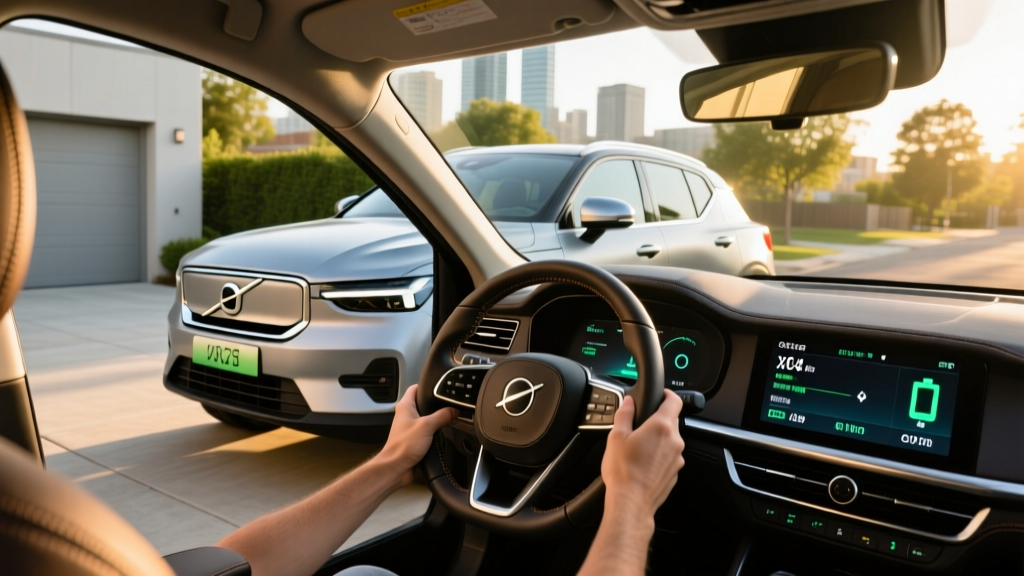
The Bottom Line on the 2022 Volvo XC40 Recharge Pure Electric P8 Twin Ultimate
If you're evaluating a used 2022 Volvo XC40 Recharge Pure Electric P8 Twin Ultimate in 2026, here's what matters: it delivers 402 hp, a 78 kWh (usable) NMC battery, and an EPA-rated 223 miles of range. Real-world highway range drops to roughly 185–200 miles, and cold-weather driving can cut that to 150–170 miles. DC fast charging peaks at 150 kW, reaching 10–80% in about 37 minutes. The P8 Twin Ultimate was Volvo's top-trim luxury EV compact SUV before the brand shifted to the EX40 nameplate for 2025. As a used purchase in 2026, expect pricing between $24,000 and $32,000 depending on mileage and condition. It does not qualify for the federal §30D new-vehicle credit, but the used EV tax credit (up to $4,000) may apply if you meet income and dealer requirements.
Range, Battery, and Charging: What the Specs Actually Mean
The 2022 XC40 Recharge P8 uses a 78 kWh usable lithium-ion NMC (nickel manganese cobalt) battery pack. Dual electric motors produce a combined 402 hp and 486 lb-ft of torque, launching this 4,700-lb compact SUV from 0–60 mph in 4.5 seconds. That performance comes at an efficiency cost: the EPA rates it at 85 MPGe combined, or roughly 37 kWh per 100 miles — thirsty by EV standards.
| Spec | Value |
|---|---|
| EPA Range | 223 miles |
| Real-World Highway Range | ~185–200 miles |
| Cold-Weather Range (20°F) | ~150–170 miles |
| Battery (Usable) | 78 kWh, NMC chemistry |
| EPA Efficiency | 85 MPGe (37 kWh/100 mi) |
| DC Fast Charge Peak | 150 kW (CCS1) |
| 10–80% DCFC Time | ~37 minutes |
| Level 2 Charge Rate | 11 kW (~32 mi/hr) |
| 0–60 mph | 4.5 seconds |
| Horsepower | 402 hp |
| Drivetrain | AWD (dual motor) |
| Original MSRP (Ultimate) | ~$59,950 |
| Battery/Powertrain Warranty | 8 yr / 100,000 mi |
Understanding the Charge Curve
The 150 kW peak charge rate is only sustained between roughly 15% and 40% state of charge. After 60%, the rate tapers significantly — dropping below 75 kW by 70% and below 40 kW past 85%. This is standard behavior for NMC packs managed conservatively, but it means a 10–90% session takes closer to 55 minutes. On a road trip, plan your stops around 10–80% increments for the best time-to-miles ratio.
According to fueleconomy.gov, the 2022 XC40 Recharge P8's combined annual electricity cost is approximately $750 based on 15,000 miles driven and national-average electricity rates — roughly half the fuel cost of a comparable gas-powered luxury compact SUV.
Cost Breakdown: Buying and Running the XC40 Recharge P8 in 2026
Here's a realistic five-year ownership projection for a used 2022 XC40 Recharge P8 Twin Ultimate purchased in 2026, compared against a gas-powered 2022 BMW X3 xDrive30i as a baseline.
| Category | XC40 Recharge P8 (Used) | BMW X3 xDrive30i (Used) |
|---|---|---|
| Purchase Price (avg.) | $28,000 | $30,000 |
| Used EV Tax Credit (§25E) | –$4,000 (if eligible) | $0 |
| Effective Purchase | $24,000 | $30,000 |
| Fuel/Energy (5 yr) | $3,750 | $9,400 |
| Maintenance (5 yr) | $1,800 | $4,500 |
| Insurance (5 yr, avg.) | $9,500 | $7,800 |
| Estimated Depreciation | $10,000 | $12,000 |
| Total 5-Year Cost | ~$49,050 | ~$63,700 |
Where the Savings Come From
Energy costs assume home Level 2 charging at $0.14/kWh national average. The XC40 Recharge's 37 kWh/100 mi efficiency means each mile costs about $0.052 in electricity. The BMW X3, averaging 25 MPG combined at $3.50/gallon, costs $0.14 per mile — nearly three times more. Maintenance savings are significant: no oil changes, no transmission fluid, and regenerative braking extends pad life substantially.
Where Costs Are Higher
EV insurance premiums run 15–25% higher than comparable gas vehicles due to battery replacement cost exposure and specialized repair requirements. If you rely exclusively on public DC fast charging, your per-mile energy cost can climb to $0.10–$0.14/mi (at $0.30–$0.48/kWh), narrowing the gap with gasoline significantly. Home charging access is the single biggest variable in EV ownership economics.
EV vs. Gas vs. Hybrid: How the XC40 Recharge Compares
| Metric | XC40 Recharge P8 (BEV) | XC40 T5 (Gas) | XC60 Recharge (PHEV) |
|---|---|---|---|
| EPA Range / MPG | 223 mi (85 MPGe) | 26 MPG combined | 35 mi electric + 30 MPG |
| 0–60 mph | 4.5 sec | 6.2 sec | 5.0 sec |
| Annual Fuel/Energy | ~$750 | ~$2,100 | ~$1,100 |
| Annual Maintenance | ~$360 | ~$900 | ~$700 |
| Tax Credit Eligibility (Used) | Up to $4,000 (§25E) | None | Up to $4,000 (§25E) |
| Best For | Home chargers, urban/suburban | Road-trip heavy, no home charging | Short commutes + long trips |
The PHEV Volvo XC60 Recharge deserves consideration if you regularly drive beyond 223 miles without charging access. Its 35-mile electric-only range covers most daily commutes, while the gas engine eliminates range limitations. The trade-off: you maintain two powertrains (oil changes, spark plugs, and transmission service remain), and the smaller battery means less electric-only utility in cold weather.
Real-World Ownership: What First-Time EV Buyers Must Know
Home Charging Is Non-Negotiable for Cost Savings
Without home Level 2 charging, the XC40 Recharge P8's cost advantage erodes rapidly. A 240V/48A home charger installation typically costs $800–$2,500 including equipment and electrician labor, depending on panel capacity and run length. If your electrical panel needs a 200A upgrade, add $1,500–$3,000. This is a one-time cost that pays for itself within 12–18 months of exclusive public-charging avoidance.
The XC40 Recharge's 11 kW onboard charger adds roughly 32 miles of range per hour on Level 2 — a full overnight charge (8 hours) restores about 250 miles, more than the vehicle's real-world range.
Cold Weather Hits This Platform Hard
The 2022 XC40 Recharge P8 lacks a heat pump — it uses resistive PTC heating for the cabin. In sustained sub-30°F driving, expect 25–35% range reduction. Volvo added a heat pump starting with the 2024 model year refresh. If you live in northern climates, precondition the cabin and battery while still plugged in to minimize range loss, and budget for mid-trip DCFC stops on drives over 120 miles in winter.
The CCS1 Connector Reality
The 2022 model uses a CCS1 charge port. As of 2026, the industry is transitioning to NACS (Tesla's connector), but Electrify America, EVgo, and ChargePoint stations with CCS1 connectors remain widely available. Volvo provides a NACS adapter for older CCS1-equipped models — check with your dealer for availability. The Supercharger network is accessible via adapter, though charge speeds may be limited by adapter throughput.
Common Misconceptions About the XC40 Recharge P8
| Myth | Fact |
|---|---|
| "It gets 223 miles no matter what" | EPA range assumes mixed driving at moderate temps. Expect 185–200 mi highway, 150–170 mi in cold weather. |
| "150 kW charging means it's always fast" | Peak rate is sustained only between ~15–40% SoC. Average rate over a 10–80% session is closer to 95–110 kW. |
| "The battery will need replacing soon" | NMC degradation on this platform averages 8–12% over 100,000 miles. The 8-year/100,000-mile warranty covers drops below 70% capacity. |
| "I'll save money even on public chargers" | At $0.35–$0.48/kWh (common DCFC rates), your per-mile cost reaches $0.10–$0.14 — approaching gasoline economics. |
| "It qualifies for the $7,500 federal credit" | The §30D new-vehicle credit no longer applies to used purchases. The §25E used-EV credit offers up to $4,000 with income and price caps. |
Battery Degradation in Practice
Based on fleet data from early XC40 Recharge models now approaching 80,000–100,000 miles, NMC pack degradation has been moderate — typically 8–12% capacity loss. That translates to a real-world range of roughly 170–185 highway miles at 100,000 miles, down from ~200 when new. Volvo's battery warranty guarantees 70% capacity retention for 8 years or 100,000 miles. Full pack replacement outside warranty is estimated at $15,000–$20,000 — a worst-case scenario that's statistically rare but worth factoring into used-EV purchase decisions.
Federal Tax Credit: The Used EV Rule (§25E)
As a used vehicle purchased in 2026, the 2022 XC40 Recharge P8 Twin Ultimate may qualify for the Previously-Owned Clean Vehicle Credit (§25E), which provides up to $4,000 or 30% of the sale price (whichever is less). Per IRS guidelines, eligibility requires:
- Sale price: $25,000 or less (the vehicle must actually sell at or below this threshold)
- Buyer income limits: Modified AGI not exceeding $75,000 (single), $112,500 (head of household), or $150,000 (joint)
- Dealer sale: Must be purchased from a licensed dealer who reports the sale to the IRS
- Model year: Must be at least two model years old (2022 qualifies in 2026)
- First use: You must be the first person to claim this credit on this specific VIN
The credit can be transferred to the dealer at point of sale as an immediate price reduction, or claimed on your tax return. Consult a tax professional — credit availability depends on your specific filing situation and is subject to legislative changes.
Decision Framework: Should You Buy This Car?
Choose the 2022 XC40 Recharge P8 Twin Ultimate if:
- You have (or can install) Level 2 home charging
- Your typical daily driving is under 150 miles round-trip
- You value quick acceleration (4.5 sec 0–60) and premium interior materials
- You live in a moderate climate, or can accept winter range trade-offs
- You find a well-maintained example under $28,000 with remaining battery warranty
- You want a compact luxury SUV form factor with AWD
Look elsewhere if:
- You regularly drive 200+ miles between charging opportunities
- You lack home charging and your area has sparse public DCFC infrastructure
- You live in sustained sub-20°F winters and need reliable 200+ mile range year-round
- You need more than 20.7 cu ft of cargo space behind the rear seats
- You want access to Tesla Superchargers natively (adapter required, with potential speed limits)
Frequently Asked Questions
How long does it take to charge the 2022 XC40 Recharge P8 at home?
On a 48A/240V Level 2 home charger, a full 0–100% charge takes approximately 8 hours. The 11 kW onboard charger is the limiting factor — even if your charger supplies more power, the vehicle caps intake at 11 kW. A standard 120V outlet (Level 1) adds only about 3–4 miles per hour, making it impractical as a primary charging method for this 78 kWh battery.
Is the XC40 Recharge P8's battery reliable long-term?
Volvo's NMC battery packs have shown moderate degradation in fleet data — typically losing 8–12% capacity over 100,000 miles. The 8-year/100,000-mile battery warranty (covering drops below 70% state of health) provides a safety net. The primary risk factor is repeated DC fast charging to 100% in hot climates — keeping daily charges to 80% and using DCFC sparingly extends pack longevity.
What's the difference between the 2022 XC40 Recharge and the 2025+ EX40?
Volvo renamed the XC40 Recharge to the EX40 starting with the 2025 model year. The EX40 received a larger 82 kWh battery (extended range variant), a heat pump for better cold-weather efficiency, updated infotainment, and Google Built-in. The 2022 P8 model is mechanically similar but less efficient and lacks the heat pump — the main functional differences for daily ownership.
Can I use Tesla Superchargers with the 2022 XC40 Recharge?
Yes, but only with a CCS-to-NACS adapter. Volvo has offered adapters to existing owners — contact your dealer for availability. Charge speeds on Superchargers may be limited by adapter throughput and the vehicle's 150 kW peak charge rate. Electrify America and other CCS1 networks remain the native option without an adapter.
What maintenance does the XC40 Recharge P8 require?
Routine maintenance is minimal: cabin air filter replacement (~$60–$80 annually), brake fluid flush every 2 years, tire rotation every 5,000–7,500 miles, and windshield washer fluid. Regenerative braking significantly reduces pad and rotor wear — many owners report original brake pads lasting 80,000+ miles. There are no oil changes, spark plugs, timing belts, or transmission fluid services.
How does insurance cost compare to a gas Volvo XC40?
EV insurance premiums typically run 15–25% higher than gas equivalents. For the XC40 Recharge P8, expect annual premiums of $1,700–$2,200 depending on your location, driving record, and coverage level — compared to $1,400–$1,800 for a gas XC40 T5. Shop quotes from EV-friendly insurers (Geico, Progressive, and State Farm tend to be competitive for EVs) before purchasing.
Sources: EPA Fuel Economy — 2022 Volvo XC40 Recharge, IRS Used Clean Vehicle Credit (§25E), IIHS 2022 XC40 Recharge Safety Ratings