Quick Verdict: A Practical, No-Drama Electric SUV
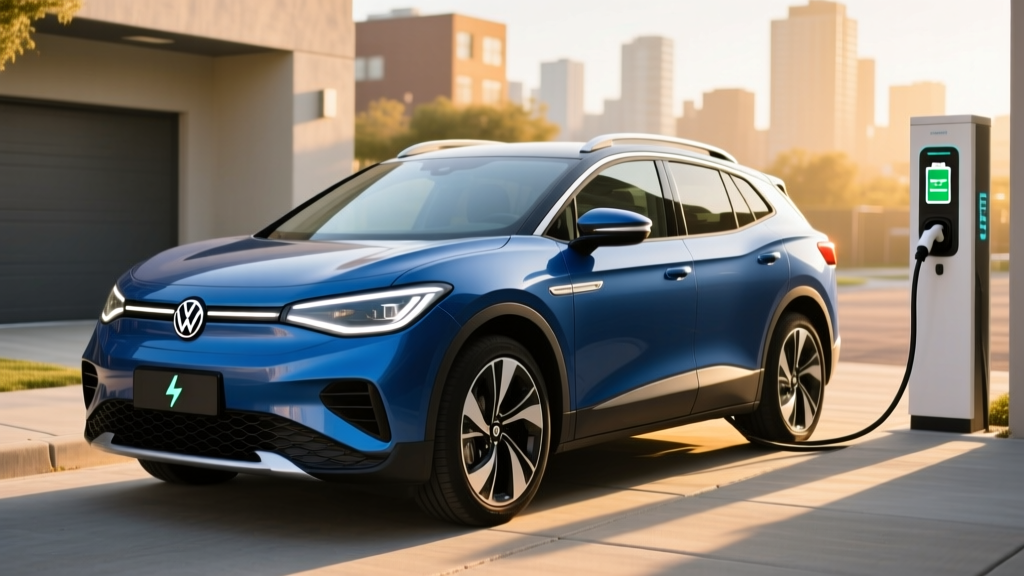
The 2022 Volkswagen ID.4 Pro S occupies a specific niche in the used-EV market: a mainstream, family-sized crossover that prioritizes comfort and usability over headline-grabbing performance. With 260 miles of EPA-estimated range on the rear-wheel-drive model, a usable 82 kWh battery, and Volkswagen's 8-year/100,000-mile battery warranty, it's a rational pick for buyers who want a daily-driver EV without the Tesla ecosystem or the premium price tag of a Ford Mustang Mach-E Extended Range.
But rational doesn't mean perfect. The ID.4's 125 kW peak DC fast-charging rate trails rivals, its infotainment software drew widespread criticism at launch, and its 0-60 mph time of 7.7 seconds won't impress anyone coming from a dual-motor competitor. If you're evaluating a used 2022 ID.4 Pro S in 2026, here's exactly what you need to know — with real numbers, not marketing copy.
2022 VW ID.4 Pro S: Core Specifications
| Specification | Value |
|---|---|
| EPA Range (RWD) | 260 miles |
| EPA Range (AWD Pro S) | 249 miles |
| Battery (Usable) | 82 kWh (NMC chemistry) |
| Drivetrain | Rear-wheel drive (single motor); AWD available |
| Horsepower | 201 hp (RWD) / 295 hp (AWD) |
| Torque | 229 lb-ft (RWD) / 339 lb-ft (AWD) |
| 0-60 mph | 7.7 sec (RWD) / 5.4 sec (AWD) |
| Max DC Fast Charge | 125 kW (RWD) / 135 kW (AWD) |
| 10-80% DC Charge Time | ~34 minutes |
| Level 2 Home Charging | 11 kW (37 miles/hr added) |
| Efficiency | 104 MPGe combined / 32 kWh/100mi |
| Cargo Volume | 30.3 cu ft (rear seats up) / 64.2 cu ft (folded) |
| Original MSRP (Pro S RWD) | $45,490 (before destination) |
| Battery/Powertrain Warranty | 8 years / 100,000 miles |
Real-World Range: What the EPA Sticker Doesn't Tell You
According to fueleconomy.gov, the RWD ID.4 Pro S achieves 104 MPGe combined (107 city / 99 highway). That efficiency figure is competitive with the Hyundai Ioniq 5 (110 MPGe combined) but trails the Tesla Model Y Long Range (122 MPGe combined). The ID.4's boxy crossover shape creates more aerodynamic drag than sleeker competitors, which is why highway efficiency drops more noticeably than in sedans like the Hyundai Ioniq 6.
One practical note for used buyers: by 2026, a 2022 ID.4 will have approximately 3-5 years of battery age. NMC chemistry in VW's MEB platform has shown moderate degradation — most owners report 3-6% capacity loss over the first three years based on owner forums and fleet data. That translates to roughly 8-15 fewer miles of range versus day one. Check the vehicle's State of Health (SoH) via an OBD-II scanner or a dealer diagnostic before purchasing.
Charging Speed: The ID.4's Most Debated Spec
The 2022 ID.4 Pro S charges at a peak rate of 125 kW on a DC fast charger (135 kW for AWD models). That peak is sustained roughly from 10% to 30% State of Charge (SoC), after which the charge curve tapers progressively. From 10% to 80%, expect approximately 34 minutes at a 150 kW or higher station.
| Charging Level | Power / Voltage | Rate | Time / Range Added |
|---|---|---|---|
| Level 1 (120V household) | 1.2 kW | ~4 miles/hr | ~65 hours (0-100%) |
| Level 2 (240V home, 48A) | 11 kW | ~37 miles/hr | ~8.5 hours (0-100%) |
| DC Fast Charge (150+ kW station) | 125 kW peak | Varies by SoC | ~34 min (10-80%) |
Here's the honest context: 125 kW was acceptable in 2022 but is now outpaced by the Hyundai Ioniq 5 (240 kW peak, 10-80% in ~18 minutes) and the Tesla Model Y (250 kW peak on V3 Superchargers). On a road trip, that's roughly 15 extra minutes per charging stop compared to an Ioniq 5. For daily commuting with home Level 2 charging, this difference is irrelevant — you plug in overnight and wake up full every morning.
The ID.4 uses the CCS1 connector for DC fast charging. Volkswagen included three years of complimentary charging on the Electrify America network with the 2022 model (30-minute sessions), which may still be active on lower-mileage examples. Confirm the remaining balance with VW's customer service using the VIN.
Preconditioning tip: The ID.4 can precondition its battery for faster DC charging when you set a DC fast-charger as your navigation destination. This warms the battery to optimal temperature, reducing the taper effect. In cold weather, preconditioning can cut your 10-80% time by 5-8 minutes — always use it.
Performance, Drivetrain, and Ride Quality
The rear-wheel-drive ID.4 Pro S produces 201 horsepower and 229 lb-ft of torque from a single permanent-magnet motor on the rear axle. The 0-60 mph time of 7.7 seconds is adequate for merging and passing but won't feel sporty. The AWD Pro S pairs a front induction motor with the rear unit for a combined 295 hp and 339 lb-ft, dropping the 0-60 to 5.4 seconds.
Where the ID.4 earns its keep is ride quality. The suspension tuning is firm-but-compliant, absorbing highway expansion joints and broken pavement with less crash-through than the stiffer Hyundai Ioniq 5. The steering is light and numb — a deliberate choice for comfort over engagement. The turning circle of 31.5 feet is excellent for a crossover this size, making it genuinely easy to park in urban settings.
Regenerative braking in the ID.4 is relatively mild by default. You can select B mode (stronger regen) via the shift drum, but Volkswagen did not implement true one-pedal driving in the 2022 model year. You'll still use the brake pedal regularly. This is a deliberate engineering choice to maintain a natural brake-pedal feel, but it frustrates EV veterans accustomed to aggressive regen from a Chevrolet Bolt or Nissan LEAF.
Interior, Cargo, and Technology
The ID.4 Pro S cabin is spacious and minimalist. Rear-seat legroom measures 37.6 inches, which comfortably fits adults on long trips. Cargo volume behind the second row is 30.3 cubic feet, expanding to 64.2 cubic feet with the 60/40 split rear seats folded. That's competitive with the Toyota RAV4 and slightly less than the Tesla Model Y (30.2 / 76.2 cu ft).
The Pro S trim adds premium features over the base Pro: a panoramic fixed glass roof, heated front seats with leatherette upholstery, a heated steering wheel, a 12-inch infotainment display (vs. 10-inch on Pro), and a powered liftgate. The digital cockpit uses a compact 5.3-inch driver display mounted on the steering column, supplemented by an available head-up display with augmented-reality navigation arrows.
The infotainment caveat: The 2022 ID.4 launched with VW's ID. Software 2.x, which was widely criticized for slow response times, capacitive-touch slider controls (no physical volume knob), and occasional freezes. Volkswagen issued multiple over-the-air updates through 2023-2024 that improved responsiveness. Before buying used, confirm the vehicle has received its latest OTA update — or ask the dealer to flash the most current software version.
Driver assistance comes via Volkswagen's IQ.DRIVE suite, which includes adaptive cruise control with stop-and-go, lane-keeping assist, front and rear automatic emergency braking, and blind-spot monitoring. This is SAE Level 2 driver assistance — you must keep your hands on the wheel and eyes on the road at all times. It is not self-driving. The system works well on highways but is less confident on lane markings in construction zones compared to GM's Super Cruise or Ford's BlueCruise.
Pricing, Tax Credits, and Used-EV Economics in 2026
The 2022 ID.4 Pro S originally carried an MSRP of $45,490 (RWD) and $49,170 (AWD), before the $1,220 destination charge. In the 2026 used market, well-maintained examples with 25,000-45,000 miles typically list between $22,000 and $28,000 depending on condition, mileage, and region.
| Item | Amount |
|---|---|
| Original MSRP (Pro S RWD) | $45,490 |
| Typical Used Price (2026, 30-40k mi) | $23,000 - $27,000 |
| Federal Used EV Credit (§25E) | Up to $4,000 (30% of sale price, max $4,000) |
| Estimated Price After Credit | $19,000 - $23,000 |
Tax credit details: As a used vehicle purchased in 2026, the 2022 ID.4 qualifies for the IRS §25E Previously-Owned Clean Vehicle Credit, not the new-vehicle §30D credit. The §25E credit equals 30% of the sale price, up to a maximum of $4,000. Eligibility requirements include:
- Sale price must be $25,000 or less
- Buyer's modified adjusted gross income must not exceed $75,000 (single) / $112,500 (head of household) / $150,000 (joint)
- Vehicle must be at least two model years old (a 2022 qualifies in 2026)
- Vehicle must have a battery capacity of at least 7 kWh (the ID.4's 82 kWh easily clears this)
- Purchase must be from a licensed dealer (private-party sales do not qualify)
- Credit is non-refundable — you must have sufficient tax liability to claim it (point-of-sale transfer is available for §25E as of 2024)
This is where the used ID.4 Pro S becomes compelling: if you find one priced at $24,000 from a dealer and your income falls within the caps, you could realize an effective purchase price near $20,000 — a lot of EV for the money. Consult a tax professional to confirm your eligibility, as rules are subject to legislative change.
Ownership Costs, Warranty, and Long-Term Outlook
Volkswagen backs the ID.4's battery and electric drivetrain with an 8-year/100,000-mile warranty (whichever comes first), covering defects and capacity loss below 70% of original capacity. For a 2022 model, that coverage extends through 2030 or 100,000 miles. The limited vehicle warranty was 4 years/50,000 miles and has likely expired on most examples by 2026.
Charging costs are low if you charge at home. At the national average residential electricity rate of ~$0.17/kWh, fully recharging the 82 kWh battery costs approximately $13.94, yielding a fuel cost of roughly $0.054 per mile. Compare that to a 25 MPG gas crossover at $3.30/gallon, which costs $0.132 per mile — more than double. Over 15,000 annual miles, that's a savings of approximately $1,170 per year on fuel alone.
Insurance premiums for the ID.4 tend to run 10-20% higher than comparable gas crossovers due to repair-cost data for EV battery and electronics damage. Get quotes before purchasing. Maintenance costs are minimal: no oil changes, no spark plugs, brake pad life is extended significantly by regenerative braking. Budget for cabin air filter replacement (~$40-60 annually) and tire rotation. EV-specific tires (low rolling resistance) cost more at replacement time — expect $800-$1,200 for a set of four.
Pros, Cons, and Who Should Buy the 2022 ID.4 Pro S
Pros
- Spacious cabin with adult-friendly rear legroom (37.6 in)
- Smooth, compliant ride quality on rough roads
- Tight turning circle (31.5 ft) for easy city driving
- Strong value on the used market with §25E credit
- 8-year battery warranty still active through 2030
- Panoramic glass roof and premium Pro S features
- 3 years Electrify America charging (may still apply)
Cons
- DC fast charging (125 kW) is slower than key rivals
- Infotainment software was buggy at launch (check for updates)
- No one-pedal driving; regen is mild by EV standards
- No front trunk (frunk) — storage is rear cargo only
- Capacitive-touch controls frustrate some drivers
- AWD range drops to 249 miles EPA
- Insurance costs higher than gas equivalents
Who This EV Suits Best
Buy the 2022 ID.4 Pro S if: You're a commuter or small family needing a comfortable, quiet electric crossover for daily driving and occasional road trips under 200 miles. You have access to home Level 2 charging. You value ride comfort and interior space over fast-charging speed and sporty handling. You can take advantage of the §25E used-EV credit to bring the effective price below $23,000.
Look elsewhere if: You frequently road-trip 300+ miles and need 200+ kW DC fast charging (consider a used Hyundai Ioniq 5 or Tesla Model Y). You demand the latest infotainment UX. You need one-pedal driving for city traffic. You need a third row (consider the Kia EV9 or used Tesla Model X).
Frequently Asked Questions
What is the real-world range of the 2022 VW ID.4 Pro S?
The EPA rates the RWD ID.4 Pro S at 260 miles. In real-world mixed driving at moderate temperatures, expect 230-245 miles. Highway-only driving at 75+ mph yields roughly 210-225 miles. In freezing conditions with cabin heat, plan for 180-200 miles. The AWD version loses approximately 10-15 miles in each scenario.
How fast does the 2022 ID.4 Pro S charge?
On a DC fast charger (150 kW+), it peaks at 125 kW and charges from 10-80% in approximately 34 minutes. At home on a 240V Level 2 charger (48 amps), it charges at 11 kW, adding about 37 miles of range per hour — a full charge takes roughly 8.5 hours. On a standard 120V outlet, it adds only about 4 miles per hour.
Does the 2022 ID.4 qualify for a federal EV tax credit in 2026?
As a used vehicle, it qualifies for the IRS §25E Previously-Owned Clean Vehicle Credit — up to $4,000 (30% of sale price). The sale price must be $25,000 or less, your income must be under $75K/$112.5K/$150K (single/HOH/joint), and you must buy from a licensed dealer. The new-vehicle §30D credit does not apply to used purchases. Consult a tax professional for your specific situation.
Is the 2022 ID.4 Pro S worth buying vs. competitors?
At $22,000-$27,000 used (potentially $18,000-$23,000 after the §25E credit), the ID.4 Pro S offers strong value for a comfortable, spacious EV crossover. It trades charging speed and tech polish for ride comfort and interior room. If fast charging is your priority, a used Ioniq 5 or Model Y is better. If comfort and value lead your decision, the ID.4 Pro S is one of the best deals in the used-EV market in 2026.
What is the battery warranty on a used 2022 ID.4?
Volkswagen covers the high-voltage battery and electric powertrain for 8 years or 100,000 miles, whichever comes first. For a 2022 model, that coverage runs through the 2030 model year. The warranty guarantees the battery will retain at least 70% of its original capacity. If degradation drops below that threshold within the warranty period, VW will repair or replace the battery at no cost.
Does the ID.4 Pro S have a frunk (front trunk)?
No. Unlike the Tesla Model Y, Ford Mustang Mach-E, and Hyundai Ioniq 5, the 2022 ID.4 does not have a front trunk. The space under the hood houses the power electronics and, on AWD models, the front motor. All cargo storage is in the rear (30.3 cu ft behind the second row, 64.2 cu ft with seats folded).