Quick Verdict: The 2022 Tesla Model X at a Glance
The 2022 Tesla Model X occupies a unique space in the used EV market in 2026: it's one of the few three-row electric SUVs that combines genuine 300-plus-mile range, access to the Supercharger network (now open to NACS-equipped non-Teslas but still best-integrated on Tesla hardware), and available Plaid-level performance that embarrasses sports cars. For buyers shopping the pre-owned luxury EV SUV segment, the 2022 Model X represents a compelling value proposition — especially if you qualify for the used-EV federal tax credit under IRS §25E.
This was the first full model year of the "Palladium" refresh (introduced mid-2021), which brought the revised interior with a 17-inch landscape touchscreen, yoke steering option, rear entertainment display, and significantly improved build quality over pre-2021 examples. The Long Range trim delivers up to 348 miles of EPA-estimated range, while the Plaid trim sacrifices roughly 30 miles for a 2.5-second 0-60 mph time.
| Spec | Long Range | Plaid |
|---|---|---|
| EPA Range | 348 mi | 311 mi (w/ 22" wheels: ~296 mi) |
| Battery (usable) | ~100 kWh, NMC | ~100 kWh, NMC |
| Drivetrain | Dual-Motor AWD | Tri-Motor AWD |
| Horsepower | 670 hp | 1,020 hp |
| 0-60 mph | 3.8 sec | 2.5 sec |
| Peak DC Charge Rate | 250 kW | 250 kW |
| 10-80% DC Time | ~30 min | ~30 min |
| Level 2 Rate (48A) | 11.5 kW (~44 mi/hr) | 11.5 kW (~44 mi/hr) |
| MPGe (combined) | 102 MPGe | 98 MPGe |
| Efficiency | 33 kWh/100mi | 34 kWh/100mi |
| Cargo (behind 3rd row) | 14.4 cu ft | |
| Cargo (all seats folded) | 81.5 cu ft | |
| Battery Warranty | 8 yr / 150,000 mi (70% retention) | |
| Original MSRP (2022) | ~$104,990 | ~$126,990 |
Range and Efficiency: EPA vs. Real World
Real-World Expectation: 280–310 miles highway (Long Range); 250–280 miles (Plaid). Cold-weather (below 32°F) highway driving can reduce range by 20–30%, yielding ~210–250 miles in winter conditions for the Long Range trim.
The 2022 Model X uses Tesla's 100 kWh battery pack with NMC (nickel manganese cobalt) chemistry. This chemistry delivers higher energy density than LFP (lithium iron phosphate), which is why it's used in Tesla's long-range and performance vehicles, but it's also more sensitive to sustained high states of charge. Tesla recommends daily charging to 80–90% for NMC packs and reserving 100% for road trips.
The Long Range's EPA rating of 348 miles is generous but achievable in mixed city/highway driving at moderate speeds (55–65 mph) in temperate weather. On a 75-mph highway cruise, expect roughly 280–310 miles depending on wind, elevation, and temperature. The Model X's large frontal area and SUV profile create more aerodynamic drag than a sedan like the Model S, which is why the Model S Long Range achieves 405 miles on the same battery platform.
The heat pump (standard on the 2022 refresh) is a meaningful efficiency improvement over pre-2021 Model X vehicles, which used resistive heating. In cold weather, the heat pump reduces cabin-heating energy draw by roughly 30–40%, partially offsetting the range loss that all EVs experience when batteries are cold and cabin demand is high.
Efficiency figures from fueleconomy.gov show the Long Range at 102 MPGe combined (33 kWh/100 mi) and the Plaid at 98 MPGe combined (34 kWh/100 mi). These are respectable for a 5,100-pound, three-row SUV but notably less efficient than smaller crossovers like the Hyundai Ioniq 5 (114 MPGe combined).
Charging: DC Fast, Level 2, and Home Setup
The 2022 Model X supports up to 250 kW peak DC fast charging via its native NACS (North American Charging Standard) connector — the Tesla Supercharger plug. This remains one of the most reliable charging experiences in the EV market, with automatic plug-and-charge authentication, stall availability shown in the navigation, and battery preconditioning that activates when you navigate to a Supercharger.
| Charging Level | Power | Speed | Use Case |
|---|---|---|---|
| Level 1 (120V, 12A) | ~1.4 kW | ~5 mi/hr | Emergency/top-up only |
| Level 2 (240V, 48A) | 11.5 kW | ~44 mi/hr | Home daily charging |
| Level 2 (240V, 32A Mobile) | 7.7 kW | ~30 mi/hr | Portable/travel charging |
| DC Fast (Supercharger V3) | 250 kW peak | ~175 mi in 15 min | Road trips |
| DC Fast (10-80%) | 250 kW peak | ~30 minutes | Typical road-trip stop |
Understanding the charge curve: The 250 kW peak rate is achieved at low states of charge (roughly 5–25% SoC) when the battery is properly preconditioned. Above 50% SoC, the rate tapers significantly — you might see 100–120 kW at 60% and drop to 40–60 kW by 80%. This is why the 10-80% time of ~30 minutes is a more useful metric than peak kW alone. Charging from 80-100% can add another 25–30 minutes, so it's rarely worth waiting past 80% on a road trip.
For home charging, the onboard charger accepts up to 11.5 kW (48 amps) on a 240V/60A circuit. This adds roughly 44 miles of range per hour, meaning a full charge from 10% takes about 7–8 hours — ideal for overnight replenishment. A Tesla Wall Connector costs approximately $475 for the hardware, with professional installation typically running $500–$2,000 depending on your electrical panel capacity and conduit run length.
One advantage of the 2022 Model X's native NACS connector: as of 2026, you can charge at Superchargers without an adapter, while CCS-equipped competitors need a NACS adapter (included with some brands, sold separately for others). However, Tesla's Supercharger network, while the most reliable, is no longer exclusive — and CCS networks like Electrify America have improved uptime considerably.
Performance and Drivetrain
The 2022 Model X Long Range uses a dual-motor all-wheel-drive setup producing 670 horsepower, achieving a 3.8-second 0-60 mph time. That's already quicker than most V8-powered luxury SUVs. But the Plaid variant is where Tesla's performance engineering becomes almost absurd for a family hauler.
The Plaid's tri-motor AWD configuration (one front motor, two rear motors) delivers 1,020 horsepower and a 2.5-second 0-60 mph time. To put that in perspective, a 2022 Lamborghini Urus does 0-60 in roughly 3.3 seconds. The Plaid achieves this with instant electric torque and sophisticated traction management — no launch control procedure required, just mash the pedal.
Both trims feature adaptive air suspension with adjustable ride height (useful for steep driveways or rough roads) and a towing capacity of up to 5,000 pounds when properly equipped. Towing will cut range roughly in half — expect 150–180 miles from the Long Range when pulling a loaded trailer at highway speeds.
Interior, Cargo, and Technology
The 2022 Palladium-refresh interior is a substantial step up from the pre-2021 Model X. The centerpiece is a 17-inch landscape-oriented touchscreen running Tesla's latest infotainment software, which handles navigation, media, climate, and vehicle settings. A second 8-inch touchscreen for rear-seat passengers controls climate, media, and gaming. The system includes Netflix, YouTube, and Tesla Arcade (gaming) for parked entertainment.
The controversial yoke steering wheel was introduced as an option on the 2022 Model X (and standard on some Plaid builds). It provides an unobstructed view of the instrument cluster but requires adaptation for low-speed maneuvers and three-point turns where hand-over-hand steering is natural. A conventional round wheel was available as a no-cost option.
Passenger and cargo dimensions:
- Seating: 5, 6, or 7 passengers (6-seat with second-row captain's chairs is most common)
- Front legroom: 41.2 inches
- Second-row legroom: 40.9 inches (6-seat config)
- Third-row legroom: 32.7 inches (best for children or short trips)
- Cargo behind 3rd row: 14.4 cu ft
- Cargo behind 2nd row (3rd row folded): 37.1 cu ft
- Cargo with all seats folded: 81.5 cu ft
- Front trunk (frunk): ~6.5 cu ft
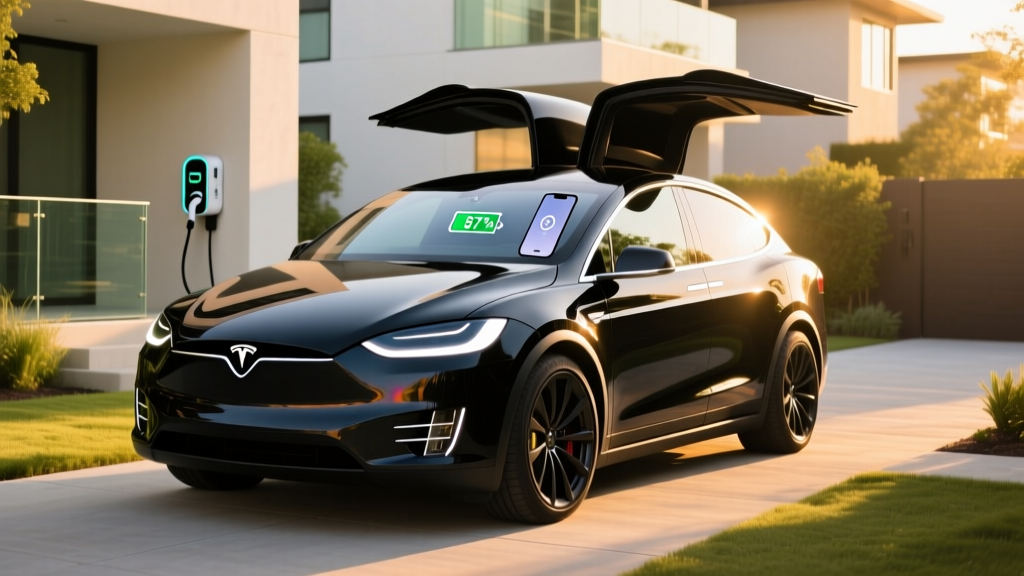
The falcon-wing rear doors remain the Model X's signature feature. They open upward with articulating hinges, providing excellent access to second- and third-row seats in tight parking spaces (they require less side clearance than conventional doors). However, they add mechanical complexity, are slower to open/close than conventional doors, and can be problematic in low-ceiling garages despite ultrasonic obstruction sensors.
Driver assistance: The 2022 Model X comes with Tesla's Basic Autopilot (adaptive cruise control + lane centering). Enhanced Autopilot ($6,000 option) adds auto lane change, autosteer on city streets, and Summon. Full Self-Driving (FSD) Capability ($12,000 option at the time, price varied) adds traffic light/stop sign recognition and city street autosteer.
Tesla Autopilot and FSD (Supervised) are Level 2 systems per SAE classification. The driver must remain fully engaged, hands on the wheel (or yoke), and eyes on the road at all times. These systems do NOT make the vehicle self-driving. Only Level 4 services like Waymo operate without a human driver in defined geographic areas.
Pricing, Tax Credits, and Ownership Costs
As a 2022 model, the Model X is now purchased on the used market. Original MSRPs were approximately $104,990 for the Long Range and $126,990 for the Plaid (before options and destination). In the 2026 used market, expect pricing roughly in the $55,000–$75,000 range for Long Range examples and $70,000–$90,000 for Plaid, depending on mileage, condition, and options.
| Item | Long Range (est.) | Plaid (est.) |
|---|---|---|
| Used Market Price (2026) | $55,000–$75,000 | $70,000–$90,000 |
| §25E Used EV Credit (max) | Up to $4,000 | Up to $4,000 |
| Adjusted Cost (with max credit) | $51,000–$71,000 | $66,000–$86,000 |
Federal tax credit for used EVs (IRS §25E): Unlike the new-vehicle §30D credit (which the 2022 Model X did not qualify for at original purchase due to the MSRP cap of $80,000 for SUVs being exceeded), the used-EV credit under §25E can apply to a pre-owned 2022 Model X purchase from a licensed dealer in 2026, subject to these requirements:
- Credit amount: 30% of the sale price, up to a maximum of $4,000
- Vehicle price cap: Sale price must not exceed $25,000 — this disqualifies most Model X examples
- Buyer income cap: AGI ≤ $75,000 (single), $112,500 (head of household), $150,000 (joint)
- Vehicle age: Must be at least 2 model years old (2022 qualifies in 2026)
- Purchase from a licensed dealer (private-party sales excluded)
- First used-EV credit for this buyer within the prior 3 years
Important caveat: The $25,000 sale-price cap under §25E effectively means the used-EV tax credit will not apply to a 2022 Model X in most cases, since market prices significantly exceed that threshold. Buyers should not count on receiving this credit. Consult a tax professional and review current rules at IRS.gov for your specific situation.
The new-vehicle §30D credit is unavailable for a 2022 Model X purchased in 2026, as §30D applies only to new vehicles. At original 2022 purchase, the Model X Long Range's MSRP of ~$104,990 exceeded the $80,000 SUV cap under §30D, making it ineligible regardless of buyer income or battery sourcing.
Ownership costs to budget for:
- Insurance: The Model X carries higher-than-average insurance premiums due to repair costs and performance. Expect $2,500–$4,000/year depending on location, driving record, and trim.
- Maintenance: Minimal compared to ICE SUVs — cabin air filters, wiper fluid, tire rotation, brake fluid checks. Budget ~$300–$500/year.
- Tires: The Model X's weight (5,100+ lbs) and instant torque wear tires faster than lighter vehicles. Expect replacement every 25,000–35,000 miles at $1,200–$1,800 for a set of four 20- or 22-inch tires.
- Home electricity: At $0.15/kWh national average, charging a 100 kWh battery from 10-90% costs roughly $12. Annual electricity cost for 12,000 miles: ~$600–$800 (vs. ~$2,400 in gasoline for a comparable BMW X5).
Battery Health, Warranty, and Longevity
Tesla's battery and drive unit warranty for the 2022 Model X covers 8 years or 150,000 miles (whichever comes first), with a minimum 70% battery capacity retention guarantee. This is one of the more generous warranties in the segment and transfers to subsequent owners.
For a 2022 vehicle in 2026, roughly 4 years and potentially 40,000–80,000 miles of warranty coverage remain, depending on the specific car's mileage. This is a critical factor when buying used: always check the odometer against the 150,000-mile threshold.
Tesla's NMC battery packs have demonstrated strong longevity in real-world data. Average degradation for Tesla's 100 kWh packs shows roughly 5–8% capacity loss at 100,000 miles, based on fleet data. The Model X's active thermal management (liquid cooling/heating) helps maintain battery health across temperature extremes.
Maximizing battery life on a 2022 Model X:
- Set daily charge limit to 80–90% (the vehicle's software lets you adjust this)
- Avoid frequent DC fast charging when Level 2 is available
- Don't let the battery sit at very low SoC (below 10%) for extended periods
- Use preconditioning before Supercharging (navigate to the charger via the car's nav)
- Check battery health via the Tesla app's Service mode or third-party tools like Tessie
Out-of-warranty battery replacement for the Model X currently runs approximately $15,000–$22,000 at Tesla Service Centers, including labor. While this is a significant expense, most Model X batteries are projected to retain 80%+ capacity at 150,000 miles based on current degradation data.
Pros and Cons
Pros
- 348-mile EPA range (Long Range) — among the longest of any 3-row EV SUV
- Native NACS/Supercharger access — no adapter needed, best-in-class charging network integration
- Plaid tri-motor performance (1,020 hp, 2.5s 0-60) is unmatched in the segment
- Over-the-air updates continue adding features years after purchase
- Falcon-wing doors provide excellent rear-seat access in tight spaces
- Spacious cargo area (81.5 cu ft max) with a usable frunk
- Strong 8-year/150,000-mile battery warranty with remaining coverage on 2022 models
- Heat pump standard — improved cold-weather efficiency over older Model X
Cons
- No federal tax credit eligibility at new purchase (§30D MSRP cap exceeded); §25E used credit unlikely due to $25K price cap
- Falcon-wing doors add mechanical complexity and potential repair costs
- Yoke steering is polarizing and requires adaptation (no variable-ratio gearing in 2022)
- Insurance premiums are significantly above average for the class
- Third-row space is tight for adults (32.7" legroom)
- Build quality improved with Palladium refresh but still inconsistent panel gaps reported
- Heavy vehicle (5,100+ lbs) accelerates tire wear
- 250 kW peak DC charge rate trails newer 800V competitors (Hyundai/Kia at 350 kW, Lucid at 300+ kW)
How It Compares: Model X vs. the Competition
In the used luxury three-row EV SUV market in 2026, the 2022 Model X faces competition from several directions:
| Vehicle | EPA Range | Seats | 0-60 | Est. Used Price |
|---|---|---|---|---|
| 2022 Tesla Model X LR | 348 mi | 5/6/7 | 3.8s | $55K–$75K |
| 2023 Rivian R1S (Dual) | 321 mi | 7 | 4.5s | $65K–$80K |
| 2023 Kia EV9 GT-Line | 270 mi | 6/7 | 5.0s | $45K–$58K |
| 2022 BMW iX xDrive50 | 324 mi | 5 | 4.4s | $48K–$62K |
The Rivian R1S is the closest direct competitor — it seats seven, offers genuine off-road capability, and has a strong adventure-oriented brand. However, it's typically more expensive on the used market, has slightly less range, and its charging network (Rivian Adventure Network) is far smaller than Tesla's Supercharger system.
The Kia EV9 is the value pick — significantly cheaper, practical three-row seating, and 800V architecture for fast charging. But it gives up ~80 miles of range compared to the Model X Long Range and doesn't match Tesla's performance or software ecosystem.
The BMW iX is a luxury benchmark with excellent ride quality and interior materials, but it only seats five — a dealbreaker for families needing a third row.
Who Should Buy the 2022 Model X?
Choose the 2022 Model X if: You need three-row seating with 300+ miles of range, you value Supercharger network reliability for road trips, you want rapid performance (especially in Plaid trim), and you're comfortable with Tesla's minimalist interior philosophy.
Look elsewhere if: You prioritize luxury interior materials (consider the BMW iX), you need serious off-road capability (consider the Rivian R1S), you want the lowest cost of entry into a three-row EV (consider the Kia EV9), or you need guaranteed tax credit eligibility (most new EVs under $80K MSRP qualify for §30D).
Frequently Asked Questions
What is the real-world range of the 2022 Tesla Model X?
The EPA rates the Long Range at 348 miles and the Plaid at 311 miles. In real-world highway driving at 70–75 mph, expect 280–310 miles from the Long Range and 250–280 from the Plaid. Cold weather (below freezing) can reduce these figures by 20–30%, particularly on short trips where the battery doesn't reach optimal operating temperature.
How fast does the 2022 Model X charge?
On a Tesla V3 Supercharger (250 kW peak), the 10-80% charge takes approximately 30 minutes with battery preconditioning. At home on a 240V/48A Level 2 charger, the onboard 11.5 kW charger adds roughly 44 miles of range per hour, fully replenishing overnight. The 250 kW peak rate applies at low SoC and tapers significantly above 50%.
Does the 2022 Model X qualify for any federal tax credit in 2026?
The new-vehicle §30D credit is unavailable (the Model X's MSRP exceeded the $80,000 SUV cap at original purchase, and §30D only applies to new vehicles). The used-EV credit (§25E) has a $25,000 sale-price cap that most used Model X listings will exceed, effectively disqualifying them. Always verify current rules at IRS.gov and consult a tax professional.
Is the 2022 Model X worth buying vs. newer competitors?
If range and Supercharger access are your priorities, the 2022 Model X Long Range remains highly competitive — few three-row EVs match its 348-mile EPA rating. However, competitors like the Kia EV9 offer 800V charging architecture and lower prices, while the Rivian R1S offers genuine off-road capability. The Model X's 250 kW peak charge rate is no longer class-leading. It's worth buying if you find a well-maintained example at a fair price and value Tesla's charging ecosystem.
What are the biggest risks of buying a used 2022 Model X?
Key risks include: falcon-wing door mechanism repairs ($1,500–$3,000 per door if out of warranty), high tire wear costs, above-average insurance premiums, and potential panel-gap or trim issues from the early Palladium production ramp. Always get a pre-purchase inspection at a Tesla Service Center and verify remaining battery/drive unit warranty (8 years/150,000 miles from original in-service date).
How does Autopilot/FSD work on the 2022 Model X?
Basic Autopilot (standard) provides adaptive cruise control and lane centering on highways. Enhanced Autopilot and FSD Capability were optional upgrades adding more advanced lane changes, navigation-based autosteer, and city street driving. All are SAE Level 2 systems requiring constant driver supervision — they are not self-driving. FSD on a 2022 vehicle continues to receive over-the-air updates in 2026, but capabilities and naming may have evolved since original sale.