Quick Verdict: The Entry-Level EV Benchmark, Even in 2026
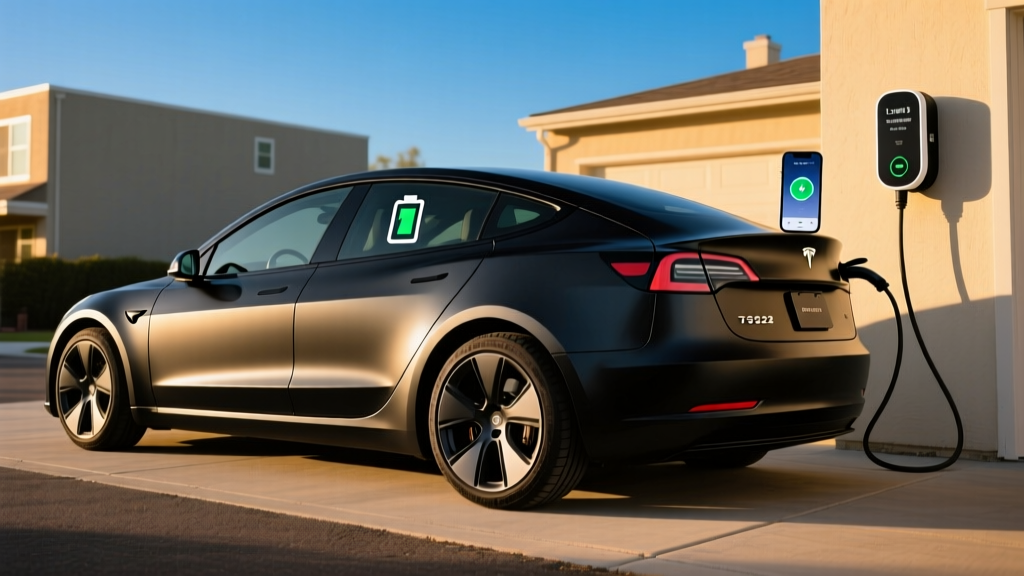
The 2022 Tesla Model 3 Rear Wheel Drive (formerly the Standard Range Plus) remains one of the most efficient, tech-forward sedans on the used EV market. Built with a lithium iron phosphate (LFP) battery and a single rear motor, it delivers 272 miles of EPA-estimated range at a price point that undercuts most new competitors — especially when the federal used-EV tax credit applies. For buyers evaluating a pre-owned 2022 Tesla Model 3 Rear Wheel Drive today, the value proposition is strong: brisk 5.8-second 0–60 performance, access to the Supercharger network, and LFP chemistry that tolerates daily 100% charging without the degradation anxiety of nickel-based packs.
But this trim also carries trade-offs. The cabin is spartan, rear-seat legroom is tight for taller adults, and the ride quality on 19-inch wheels can be firm on broken pavement. If you're cross-shopping against a used Hyundai Ioniq 6, Chevrolet Bolt, or a new 2026 Model 3 RWD, this review breaks down exactly what you're getting.
Range & Efficiency: EPA vs. Real-World
The 2022 Model 3 RWD carries an EPA-estimated range of 272 miles on a full charge, with a combined efficiency rating of 132 MPGe (25 kWh per 100 miles). That efficiency figure is among the best in the EV segment — it means you're spending less per mile on electricity than almost any competitor.
- Mixed city/highway (55–70°F): Expect 250–265 miles. City driving with regen braking helps recover energy.
- Sustained highway at 75 mph: Plan for 220–240 miles. Aerodynamic drag hits all sedans hard above 70 mph.
- Cold weather (below 32°F): Range drops 15–25%, yielding roughly 200–230 miles. The LFP pack lacks the energy density of NMC, so cold hits harder here than on Long Range trims.
- Heat pump equipped: Yes — the 2022 Model 3 includes Tesla's heat pump, which mitigates cabin-heating energy draw compared to resistive heaters.
The usable battery capacity is approximately 57.5 kWh from a gross ~60 kWh pack. Tesla uses a CATL-supplied LFP (lithium iron phosphate) prismatic cell in this trim. LFP chemistry offers two major ownership advantages: it can be charged to 100% daily without accelerating degradation (Tesla actually recommends periodic 100% charges to recalibrate the BMS), and it has a longer cycle life than NMC. The trade-off is lower energy density — which is why the RWD trim has less range than the 75-kWh Long Range despite similar exterior dimensions.
Charging Speed: DC Fast, Level 2 & Level 1
Charging speed is where the LFP battery's C-rate limitation shows. The 2022 Model 3 RWD peaks at 170 kW on a DC fast charger — lower than the Long Range's 250 kW peak. In practice, the charge curve is relatively flat, meaning you spend less time waiting at the tail end, but the 10–80% session still takes roughly 25–30 minutes at a V3 Supercharger or equivalent 150+ kW CCS/NACS station.
| Charging Level | Power (kW) | Miles of Range Added | Notes |
|---|---|---|---|
| Level 1 (120V household) | ~1.2 kW | ~3–4 mi/hr | Emergency/trickle only; full charge takes 50+ hours |
| Level 2 (240V, 32A Mobile Connector) | 7.6 kW | ~26 mi/hr | Full charge in ~8 hours; included Mobile Connector |
| Level 2 (240V, 48A Wall Connector) | 11.5 kW | ~39 mi/hr | Requires Tesla Wall Connector or J1772 adapter; full charge in ~5.5 hours |
| DC Fast Charge (peak) | 170 kW | ~175 mi in 15 min | 10–80% in ~25–30 min; tapers above 80% SoC |
Charging curve reality check: Peak 170 kW is only sustained between roughly 5–30% State of Charge. By 50%, you'll see ~120 kW, and above 80% the rate drops below 40 kW. For road trips, plan stops around 15–20 minutes each, leaving at 70–80% SoC rather than waiting for a full top-off. Preconditioning the battery (automatic when a Supercharger is set as your navigation destination) is essential to hit these peak rates in cool weather.
Performance & Drivetrain
The single rear-mounted permanent magnet motor produces 283 horsepower and approximately 307 lb-ft of torque. Tesla quotes a 0–60 mph time of 5.8 seconds. In real-world driving, the instant torque delivery makes the Model 3 RWD feel quicker than the number suggests — merging onto highways and launching from stoplights is effortless. The rear-wheel-drive layout gives it a sportier, more tail-happy character than dual-motor variants, though traction control intervenes aggressively on wet surfaces.
| Spec | Value |
|---|---|
| EPA Range | 272 miles |
| Battery (usable / gross) | ~57.5 kWh / ~60 kWh |
| Battery Chemistry | LFP (Lithium Iron Phosphate, CATL) |
| Drivetrain | Rear-Wheel Drive (single motor) |
| Horsepower | 283 hp |
| 0–60 mph | 5.8 seconds |
| Top Speed | 140 mph |
| Efficiency | 132 MPGe combined / 25 kWh/100 mi |
| Max DC Fast Charge | 170 kW |
| 10–80% DC Fast Charge | ~25–30 minutes |
| Level 2 Charge Rate | 11.5 kW (48A) / 7.6 kW (32A) |
| Cargo Volume | 23 cu ft (trunk 15 cu ft + frunk 3.1 cu ft + rear fold-down) |
| Rear Legroom | 35.2 inches |
| Battery Warranty | 8 years / 100,000 miles (70% retention) |
| Original MSRP (new, 2022) | $46,990 (incl. destination) |
Interior, Tech & Driver Assistance
The 2022 Model 3 interior is a study in minimalism. A single 15-inch center touchscreen handles navigation, climate, media, and vehicle settings — there is no instrument cluster, no head-up display, and no physical buttons beyond steering-wheel rollers and window switches. Build quality on the Fremont-built 2022 models improved over earlier years, though panel gaps and wind noise at highway speed remain common owner complaints.
Standard tech features:
- Tesla Basic Autopilot (lane centering, traffic-aware cruise control, emergency braking)
- Over-the-air software updates
- Native navigation with real-time Supercharger routing
- Sentry Mode dashcam recording
- Heated front and rear seats, heated steering wheel
- Wireless phone charging pad
- 15-speaker premium audio
Optional Full Self-Driving (FSD) Capability: If the used vehicle has the $12,000 FSD package (or $15,000 at the time of 2022 purchase), note that this is a SAE Level 2 driver-assist system — not autonomous driving. You must keep your hands on the wheel and eyes on the road at all times. FSD Supervised adds features like Navigate on Autopilot, Auto Lane Change, Autopark, and Smart Summon, but it does not eliminate the need for active driver supervision.
Tesla Autopilot and FSD (Supervised) are Level 2 driver-assistance systems. The driver is responsible for all vehicle operation and must remain fully engaged. This is fundamentally different from Level 4 robotaxi services (e.g., Waymo), which operate without a human driver in geofenced areas.
Pricing, Tax Credits & Ownership Costs
The 2022 Model 3 RWD originally stickered at $46,990 (including $1,200 destination). As of early 2026, used examples typically sell for $22,000–$28,000 depending on mileage, condition, and whether FSD was purchased. The critical financial lever for buyers is the IRS §25E Used Clean Vehicle Credit, which provides up to $4,000 or 30% of the sale price (whichever is less) for qualifying pre-owned EVs.
| Line Item | Amount |
|---|---|
| Typical Used Price (private party / dealer) | $24,000–$27,000 |
| Federal §25E Used EV Credit (30% of sale price, max $4,000) | −$4,000 (if eligible) |
| Effective Net Price | $20,000–$23,000 |
§25E Used EV Credit eligibility requirements (2026 tax year):
- Sale price must be $25,000 or less
- Buyer income caps: $75,000 single / $112,500 head of household / $150,000 joint
- Vehicle must be at least 2 model years old (2022 qualifies in 2026)
- Must be purchased from a licensed dealer (private-party sales do not qualify)
- Credit can be claimed once per buyer every 3 years
- Point-of-sale transfer available — dealer applies the credit as a down-payment reduction
Verify current rules at IRS.gov §25E before purchasing. Eligibility depends on your tax situation — consult a tax professional.
Annual operating cost estimate: At $0.16/kWh (national average), charging the 57.5 kWh battery from empty costs ~$9.20. Driving 12,000 miles/year at 25 kWh/100 mi requires ~3,000 kWh, or roughly $480/year in electricity. Compare that to a 30-MPG gas sedan at $3.30/gallon: ~$1,320/year. Insurance for a used Model 3 averages $1,800–$2,400/year — get quotes before buying, as Tesla repairs drive premiums higher than mainstream brands.
Warranty & Battery Longevity
Tesla's battery and drive unit warranty for the 2022 Model 3 RWD covers 8 years or 100,000 miles, whichever comes first, with a minimum 70% capacity retention threshold. If the battery degrades below 70% within that window, Tesla will repair or replace it. The limited vehicle warranty was 4 years / 50,000 miles — most 2022 models have now exited bumper-to-bumper coverage unless an extended plan was purchased.
LFP batteries are among the most durable lithium-ion chemistries available. CATL's LFP cells are rated for 3,000+ full charge cycles before reaching 80% State of Health. At 272 miles per cycle, that's a theoretical 816,000 miles — far beyond the life of the vehicle itself. In practice, calendar aging and partial cycles mean you should expect well under 5% degradation in the first three years and roughly 10–12% after 100,000 miles. Many high-mileage Tesla owners report LFP packs holding 90%+ capacity after 80,000 miles.
Pros, Cons & Who Should Buy
- Class-leading efficiency (132 MPGe / 25 kWh/100 mi)
- LFP battery: daily 100% charging, long cycle life, low degradation
- Access to Tesla Supercharger network (most reliable DC network in the US)
- Strong performance: 283 hp, 5.8s 0–60
- Over-the-air updates keep software current years after purchase
- Used EV tax credit can drop effective price below $21,000
- Rear legroom (35.2 in) is tight for adults on long trips
- LFP cold-weather range loss is more pronounced than NMC
- 170 kW peak DC charge rate is slower than Long Range and competitors like Ioniq 5/6
- No instrument cluster or head-up display — all info on center screen
- Fremont 2022 build quality: watch for panel gaps, rattles, and phantom-braking reports
- Insurance costs 20–35% higher than comparable gas sedans
- Ride quality firm, especially on optional 19-inch Sport wheels
Best suited for: Solo commuters and couples who prioritize low operating costs, tech-forward features, and reliable fast-charging access. The 272-mile range handles daily driving easily, and LFP chemistry rewards owners who charge to 100% at home every night. It's not ideal as a primary family hauler (rear seat is tight, no hatchback cargo access like the Model Y) or for frequent cold-climate road trips where the range penalty and 170-kW charge ceiling add time.
Frequently Asked Questions
What is the real-world range of the 2022 Tesla Model 3 RWD?
The EPA rates it at 272 miles. In mixed real-world driving at moderate temperatures, expect 250–265 miles. Sustained highway driving at 75 mph drops that to 220–240 miles, and sub-freezing weather can reduce range to 200–230 miles due to LFP chemistry's cold sensitivity and cabin heating demand.
How fast does the 2022 Model 3 RWD charge?
On a DC fast charger, it peaks at 170 kW, reaching 10–80% in approximately 25–30 minutes with a preconditioned battery. At home on a 48-amp Level 2 charger (11.5 kW), you'll add about 39 miles per hour, fully charging in roughly 5.5 hours. On a standard 32-amp Level 2 circuit, expect 26 miles per hour.
Does the 2022 Model 3 RWD qualify for the federal EV tax credit?
As a used vehicle in 2026, it can qualify for the §25E Used Clean Vehicle Credit of up to $4,000 — but only if the dealer sale price is $25,000 or less, the buyer meets income caps ($75K single / $150K joint), and the vehicle is at least 2 model years old. It does not qualify for the §30D new-vehicle credit since it's pre-owned. Always confirm eligibility with your tax professional and the IRS §25E guidelines.
Is the 2022 Model 3 RWD worth buying vs. competitors?
Against a used Chevrolet Bolt EV (259-mi range, slower DC charging at 55 kW), the Model 3 wins on charging speed, performance, and tech. Against a used Hyundai Ioniq 6 (361-mi range on Long Range trims, 350-kW charging), the Ioniq 6 offers more range and faster charging but typically costs $5,000–$8,000 more on the used market. The Model 3 RWD's LFP battery and Supercharger access make it the strongest value play under $25,000.
Should I worry about LFP battery degradation?
LFP is one of the most robust EV battery chemistries. Expect less than 5% degradation in the first 2–3 years and roughly 10–12% at 100,000 miles. Unlike NMC packs, Tesla recommends charging LFP to 100% at least weekly to keep the battery management system calibrated. The 8-year/100,000-mile warranty with a 70% retention floor provides strong coverage.
Does this model have Tesla's NACS charging port?
Yes. All Tesla vehicles use the North American Charging Standard (NACS) connector natively. As of 2026, NACS is the dominant DC fast-charging standard in the US, with Ford, GM, Rivian, and others adopting it. You'll have access to Tesla Superchargers and any NACS-equipped public station without an adapter.