The Sweet Spot of the Taycan Lineup
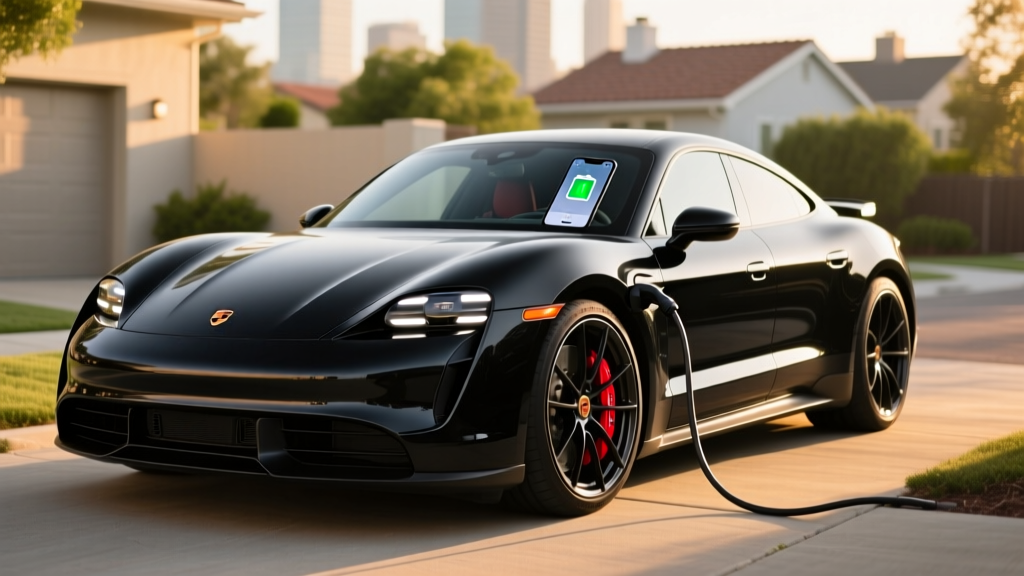
When Porsche slotted the GTS badge between the Taycan 4S and the Turbo in late 2021 for the 2022 model year, it wasn't just filling a gap — it was arguably building the most complete Taycan. The 2022 Porsche Taycan GTS pairs a 590-horsepower dual-motor all-wheel-drive system with the larger Performance Battery Plus pack, a sport-tuned air suspension, and enough range to serve as a legitimate daily driver. For buyers shopping the used EV market in 2026, the GTS represents a compelling intersection of Porsche dynamics and practical electrified ownership — but only if you understand its real-world range, charging behavior, and what federal incentives still apply.
This review breaks down every number that matters: EPA range versus what you'll actually see on a highway or in January, the 800-volt charging architecture that still outpaces most competitors, the tax-credit math under current IRS §30D rules, and the ownership costs that separate a smart buy from an expensive lesson.
Range and Efficiency: EPA Sticker vs. Reality
Real-World Expectation: 195–215 miles highway at 70+ mph; 220–240 miles mixed city/suburban driving; expect 170–195 miles in freezing temperatures with cabin heat.
The 2022 Taycan GTS sedan carries an EPA-estimated 227 miles of range, per fueleconomy.gov. That figure places it behind the Tesla Model S Long Range (~405 mi) and the Lucid Air Pure (~410 mi), but range was never the Taycan's primary value proposition. What matters more is how the GTS uses its electrons.
The GTS achieves an EPA-rated 83 MPGe combined, translating to roughly 41 kWh per 100 miles. In real-world highway driving at sustained speeds above 70 mph, efficiency drops to approximately 44–48 kWh/100 mi, which is where the 195–215 mile real-world figure comes from. Porsche's thermal management system is among the best in the industry — the active liquid cooling and heating loops keep the battery in its optimal temperature window, which helps mitigate cold-weather losses compared to passively cooled packs. But physics still wins: expect a 15–20% range reduction in sub-30°F conditions, especially on short trips where the cabin heat pump cycles frequently.
One critical note: the GTS Sport Turismo (wagon variant) carries a slightly lower EPA rating of 221 miles due to its larger frontal area and added weight. If range is a priority, the sedan is the marginally better pick.
Battery, Powertrain, and Performance Specs
| Specification | 2022 Porsche Taycan GTS |
|---|---|
| Battery (Gross / Usable) | 93.4 kWh / 83.7 kWh |
| Battery Chemistry | NMC (Nickel Manganese Cobalt) — LG Energy Solution cells |
| Voltage Architecture | 800V nominal |
| Drivetrain | Dual-motor AWD (permanent magnet synchronous) |
| Horsepower (Launch Control) | 590 hp (440 kW) |
| Torque | 626 lb-ft |
| 0–60 mph | 3.5 seconds (manufacturer, with Launch Control) |
| Top Speed | 155 mph (electronically limited) |
| EPA Range (Sedan) | 227 miles |
| EPA Efficiency | 83 MPGe combined / 41 kWh/100 mi |
| Curb Weight | ~5,121 lbs |
| Battery Warranty | 8 years / 100,000 miles (70% capacity retention) |
| Vehicle Warranty | 4 years / 50,000 miles limited |
The Taycan GTS uses the larger of Porsche's two battery packs — the Performance Battery Plus (PB+) with a gross capacity of 93.4 kWh and approximately 83.7 kWh usable. The cells are NMC chemistry supplied by LG Energy Solution, chosen for their energy density and high-discharge capability. Unlike LFP (lithium iron phosphate) packs found in some base Tesla and BYD models, NMC offers better cold-weather performance and higher peak power delivery at the cost of slightly faster long-term degradation and a lower cycle-life ceiling.
Porsche's 800-volt architecture remains a defining technical advantage. While most competitors in this price range (Audi e-tron GT, BMW i4 M50) run 400V systems, the Taycan's doubled voltage allows it to push higher charge power with lower current, reducing heat generation in the cables and cells. This is why the GTS can sustain high charge rates deeper into the session — a topic we'll cover in the charging section.
The 590 hp figure is available only with Launch Control engaged (which preconditions the battery and manages torque distribution). In normal driving, output is 509 hp. The two-speed rear transmission — a rarity in EVs — gives the GTS an aggressive first-gear launch and an efficient overdrive second gear for highway cruising, contributing to both the 3.5-second 0–60 time and the respectable highway efficiency.
Charging Speed: DC Fast and Home Level 2
| Charging Level | Max Power | Rate / Time | Connector |
|---|---|---|---|
| DC Fast Charge (Peak) | 270 kW | 10–80% in ~22.5 minutes (optimal conditions) | |
| DC Fast Charge (Sustained Avg.) | ~180–200 kW avg | 10–80% real-world: ~25–28 min | |
| Level 2 (Home / Public AC) | 9.6 kW (onboard charger) | ~27 miles of range per hour | |
| Level 1 (120V Household) | 1.4 kW | ~4 miles of range per hour |
The 2022 Taycan GTS can accept up to 270 kW on a compatible DC fast charger — a figure that still ranks among the fastest in production as of 2026. On a 350 kW Electrify America or Ionity station with the battery preconditioned (via the Porsche Charging Planner navigation routing), the GTS ramps quickly to peak power, holding above 200 kW from roughly 10% to 45% state of charge before tapering. The 10–80% session takes approximately 22.5 minutes under ideal thermal conditions.
Here's the real-world caveat: "ideal conditions" means a battery temperature between 86–95°F, which the Charging Planner achieves by beginning preconditioning 15–30 minutes before arrival. If you pull up to a charger cold — say, after the car has been parked overnight in 40°F weather without preconditioning — peak power may be limited to 120–150 kW initially, extending the 10–80% session to 35+ minutes. Always use the Charging Planner when navigating to a DC fast charger. This single habit is the biggest practical range and time optimization a Taycan owner can make.
For home charging, the Taycan GTS comes with a 9.6 kW onboard charger (an optional 19.2 kW onboard charger was available, which halves Level 2 charge time but requires a 100-amp dedicated circuit and compatible EVSE — most homes won't support this without a panel upgrade). On a standard 48-amp Level 2 home charger like the ChargePoint Home Flex or Porsche Mobile Charger Connect, you'll add roughly 27 miles of range per hour, meaning a full 10–100% charge takes about 9–10 hours. For daily use, this is more than sufficient — most owners charge overnight and wake up to a full battery.
The Taycan uses a CCS1 connector in North America. As of 2026, Porsche has confirmed future models will adopt NACS (Tesla's connector), but the 2022 GTS retains CCS1. Adapters for Tesla Supercharger access (CCS-to-NACS) are available from third-party manufacturers, though compatibility and maximum charge rates vary. Porsche's official Tesla Supercharger adapter became available for 2024+ models; 2022 owners should verify adapter firmware compatibility before purchasing.
Pricing, Tax Credits, and Ownership Economics
| Item | Amount |
|---|---|
| 2022 Taycan GTS Base MSRP (at launch) | $134,100 |
| Typical As-Tested Price (with options) | $145,000–$160,000 |
| 2026 Used Market Range (est.) | $78,000–$105,000 (depending on mileage/condition) |
| Federal Tax Credit — New (§30D) | Not eligible (MSRP exceeds $55,000 sedan cap) |
| Federal Tax Credit — Used (§25E) | Up to $4,000 (30% of sale price, max $4,000; vehicle must be <$25,000 — GTS does not qualify) |
| Estimated Annual Insurance | $3,200–$4,500 (varies by state, driver, coverage) |
The 2022 Taycan GTS launched with a base MSRP of $134,100, and well-optioned examples easily crossed $155,000 with additions like the Sport Chrono package, rear-axle steering, Burmester audio, and premium leather interiors. As of 2026, used GTS sedans typically trade between $78,000 and $105,000 depending on mileage, condition, and whether the car is a sedan or Sport Turismo.
Federal tax credit eligibility: The Taycan GTS did not qualify for the new-vehicle §30D federal tax credit when purchased new, because the IRS caps sedan eligibility at an MSRP of $55,000 (SUVs/trucks/vans are capped at $80,000). At $134,100 base, the GTS far exceeds this threshold. Additionally, buyer income caps ($150,000 single / $300,000 joint AGI) and critical-mineral/battery-sourcing requirements further limit credit availability for vehicles in this price class. For used-vehicle purchases under §25E, the credit is 30% of the sale price up to $4,000 — but the vehicle must sell for $25,000 or less, which the GTS will not reach for many years. In short: do not expect any federal tax credit when purchasing a 2022 Taycan GTS, new or used. Some state-level incentives may apply — check your local DMV and energy office for details. For definitive federal rules, consult IRS.gov §30D guidance.
On the operating-cost side, the GTS is cheaper to "fuel" than a comparable Porsche Panamera GTS. At a national average electricity rate of $0.17/kWh and 41 kWh/100 mi efficiency, you'll spend roughly $6.97 per 100 miles on home charging. DC fast charging at $0.40–$0.50/kWh raises that to $16.40–$20.50 per 100 miles — still competitive with premium gasoline at $4.00+/gallon and 18 MPG. Porsche also offers three years of complimentary 30-minute charging sessions at Electrify America stations for original owners; verify whether this benefit transfers to second owners on a used purchase.
Interior, Cargo, and Daily Practicality
The Taycan GTS interior is a study in minimalism and material quality. The standard 16.8-inch curved digital instrument cluster replaces traditional gauges with a configurable, glare-resistant display. A 10.9-inch central touchscreen handles infotainment, navigation, and vehicle settings, with an optional 10.9-inch front-passenger display available. Physical buttons are scarce — even the climate controls are touch-capacitive on the lower console panel, which looks sleek but draws criticism for requiring too much visual attention while driving.
Cargo space is the GTS's most practical surprise:
- Rear trunk: 14.3 cubic feet (sedan) — competitive with a BMW 5 Series
- Front trunk (frunk): 2.8 cubic feet — enough for a charging cable bag and a small duffel
- Sport Turismo cargo area: 15.7 cu ft (rear) + 2.8 cu ft (frunk), with a more usable hatch opening
- Rear legroom: 32.7 inches — adequate for adults on shorter trips, tight for six-footers on long drives
- Front headroom: 40.0 inches (sedan); Sport Turismo adds ~0.4 inches
The Sport Turismo body style is the practicality pick: the hatchback design makes loading bulkier items far easier, and the slightly raised roofline improves rear headroom. If you plan to use the Taycan as a sole vehicle, the Sport Turismo is worth the search premium.
Notable tech features include Porsche Communication Management (PCM) with wireless Apple CarPlay (wired Android Auto on 2022 models), over-the-air software updates, Porsche Connect services with remote preconditioning, and the available InnoDrive adaptive cruise with predictive speed adjustment based on upcoming curves and speed limits. The InnoDrive system is a Level 2 driver-assist feature — it requires continuous driver engagement and does not constitute autonomous driving.
Driving Impressions and Standout Features
The GTS occupies a specific niche in the Taycan lineup: it's tuned for drivers who want more aggression than the 4S but don't need (or want to pay for) the Turbo's excess. The standard adaptive air suspension with Porsche Active Suspension Management (PASM) has been recalibrated for the GTS with firmer damping, stiffer anti-roll bars, and a more responsive rear-axle steering calibration (when equipped). The result is a car that rotates eagerly in corners while maintaining composure over broken pavement — a balance that the softer 4S and the firmer Turbo S each sacrifice in different directions.
The GTS-specific Sport Chrono package is standard and includes the steering-wheel-mounted drive-mode selector, Launch Control, and a 20-second "push-to-pass" overboost function. The standard Porsche Electric Sport Sound adds a synthesized drivetrain soundtrack that amplifies under acceleration — opinions on this feature are sharply divided, but it can be turned off.
Key drawbacks to note:
- Regenerative braking maxes out at approximately 0.3g, meaning true one-pedal driving (coming to a complete stop without the brake pedal) is not available. Porsche's philosophy is that blended braking feels more natural, and most owners adapt quickly — but if you're coming from a Tesla or Nissan LEAF, the transition requires re-learning.
- Rear-seat space is tight for taller passengers on longer journeys.
- Infotainment touch-capacitive climate controls are a distraction risk.
- No NACS connector (CCS1 only); Supercharger access requires an adapter.
- Insurance costs are significantly above the EV average — budget accordingly.
Competitor Comparison: GTS vs. the Field
The 2022 Taycan GTS competes most directly with the Audi e-tron GT (and RS e-tron GT), the Tesla Model S Plaid, and the BMW i4 M50. Here's how the key numbers stack up:
| Metric | 2022 Taycan GTS | 2022 Audi RS e-tron GT | 2022 Tesla Model S Plaid | 2022 BMW i4 M50 |
|---|---|---|---|---|
| EPA Range | 227 mi | 232 mi | 396 mi | 270 mi |
| Battery (Usable) | 83.7 kWh | 83.7 kWh | ~95 kWh | 81.5 kWh |
| Peak DC Charge | 270 kW | 270 kW | 250 kW | 200 kW |
| 0–60 mph | 3.5 sec | 3.1 sec | 1.99 sec | 3.7 sec |
| HP (Launch) | 590 | 637 | 1,020 | 536 |
| Base MSRP (2022) | $134,100 | $142,400 | $129,990 | $65,900 |
| Tax Credit (New) | None | None | None | None (MSRP cap) |
The Taycan GTS and RS e-tron GT share the same J1 platform and battery, but the Porsche's chassis tuning, steering feel, and brake-pedal modulation are noticeably more refined. The Model S Plaid obliterates everything in a straight line but trades interior build quality and ride refinement for that performance. The i4 M50 is the value pick — nearly $70,000 less than the GTS — but it's a smaller vehicle with less power and a lower charge rate. The GTS wins on driving engagement and build quality; it loses on range and price.
Pros and Cons at a Glance
- Class-leading 800V charging architecture with 270 kW peak
- Exceptional chassis balance and steering feel — a true driver's EV
- Two-speed rear gearbox aids both launch and highway efficiency
- Excellent thermal management minimizes cold-weather and repeated-launch degradation
- Practical cargo space (especially Sport Turismo hatchback)
- Build quality and materials rival or exceed any luxury EV
- Strong used-value retention relative to other luxury EVs
- 227-mile EPA range trails competitors (Model S, i4, Lucid)
- No federal tax credit eligibility (new or used)
- Rear seat is tight for adults on longer trips
- No true one-pedal driving (regen caps at ~0.3g)
- Touch-capacitive climate controls are distracting
- CCS1 connector only — NACS/Supercharger access requires adapter
- High insurance premiums ($3,200–$4,500/year typical)
Who Should Buy the 2022 Porsche Taycan GTS?
The GTS is best suited for:
- Enthusiast drivers who prioritize handling, steering feedback, and chassis dynamics over maximum range or straight-line speed records.
- Daily commuters with home Level 2 charging and a round-trip commute under 150 miles — the 227-mile range is ample with overnight charging.
- Sport Turismo buyers who want a practical, stylish wagon with genuine cargo versatility and the option of all-wheel drive in snow-belt states.
- Used-EV shoppers in 2026 seeking a depreciated luxury performance EV with proven battery durability and Porsche dealer network support.
It's less ideal for:
- Frequent road-trippers who regularly drive 300+ miles between stops — the 227-mile range means more charging stops than a Model S or Lucid Air.
- Family haulers needing comfortable rear seats for car seats or tall teenagers — look at the Kia EV6, Hyundai Ioniq 5, or Rivian R1S instead.
- Budget-conscious buyers hoping to leverage federal tax credits — the GTS doesn't qualify under any current §30D or §25E pathway.
Frequently Asked Questions
What is the real-world range of the 2022 Porsche Taycan GTS?
The EPA rates the GTS sedan at 227 miles. In real-world highway driving at 70+ mph, expect 195–215 miles. In freezing weather with cabin heat, plan for 170–195 miles. The Sport Turismo wagon variant is rated at 221 miles EPA, with a similar real-world reduction.
How fast does the Taycan GTS charge at home and on the road?
On a DC fast charger, the GTS peaks at 270 kW and can charge from 10–80% in approximately 22.5 minutes with a preconditioned battery. At home on a 9.6 kW Level 2 charger, it adds about 27 miles of range per hour, with a full charge taking roughly 9–10 hours. The optional 19.2 kW onboard charger can halve home charge time but requires significant electrical infrastructure.
Does the 2022 Taycan GTS qualify for the federal EV tax credit?
No. Under current IRS §30D rules, the new-vehicle credit is capped at sedans with an MSRP of $55,000 or less. The GTS launched at $134,100, far exceeding this limit. The used-vehicle credit (§25E) requires a sale price of $25,000 or less, which the GTS will not reach in the foreseeable future. Consult a tax professional for any state-specific incentives that may apply.
Is the Taycan GTS worth buying over a Tesla Model S or Audi e-tron GT?
If driving dynamics, build quality, and charging speed are your top priorities, the GTS is arguably the best choice in its class. If maximum range (396 mi) and straight-line acceleration (1.99 sec 0–60) matter more, the Model S Plaid wins on paper. The RS e-tron GT shares the same platform but trades some chassis refinement for a slightly more aggressive power delivery. Test-drive all three — the GTS typically wins on feel.
What is the battery warranty, and how long will the pack last?
Porsche warranties the Taycan's high-voltage battery for 8 years or 100,000 miles, guaranteeing at least 70% of original capacity. Early data from 2020–2022 Taycan models suggests degradation is well-managed thanks to the liquid thermal management system and conservative buffer strategy (~9.7 kWh buffer between gross and usable). Many high-mileage Taycans have shown less than 10% degradation at 60,000+ miles, though individual results vary based on charging habits and climate.
Can I charge the Taycan GTS at a Tesla Supercharger?
The 2022 Taycan GTS uses a CCS1 connector. Tesla's Supercharger network was CCS-compatible for non-Tesla vehicles at select locations, but as of 2026, the network is transitioning to NACS. Third-party CCS-to-NACS adapters exist, but verify compatibility and maximum supported charge rate before relying on one for road trips. Porsche's official adapter was designed for 2024+ models — confirm 2022 compatibility with your dealer.
Sources: EPA / fueleconomy.gov, IRS §30D Clean Vehicle Credits, Porsche USA official specifications.