The 2022 Mazda MX-30 at a Glance
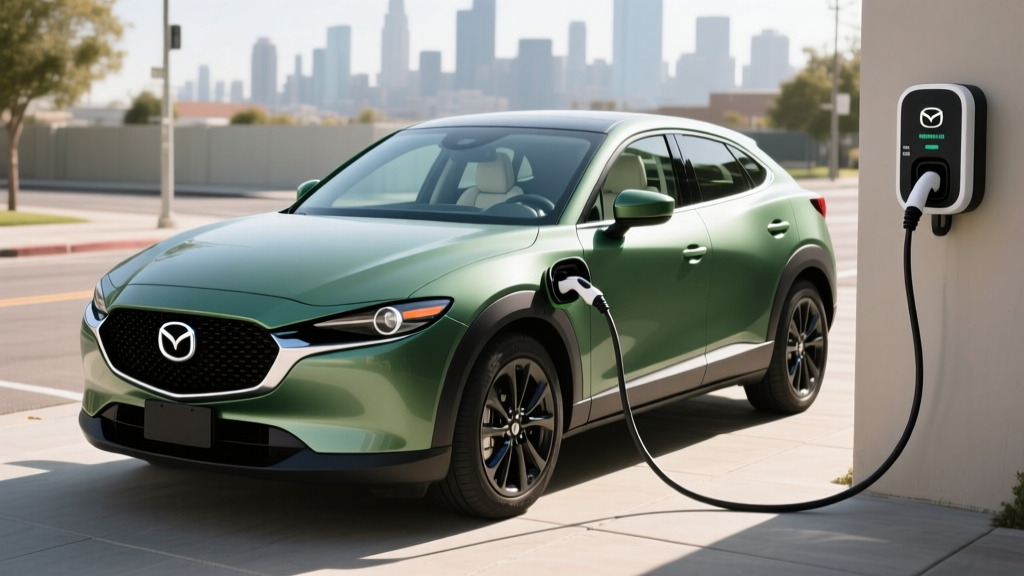
The 2022 Mazda MX-30 was Mazda's first mass-production battery-electric vehicle, launched exclusively in California as a compliance-style subcompact crossover. With a 35.5 kWh battery and an EPA-estimated 100 miles of range, it was one of the shortest-range EVs sold in the United States that year. Mazda discontinued the MX-30 after the 2023 model year, which means every example on the road today is a used vehicle — and that changes the purchase calculus entirely.
This review evaluates the 2022 MX-30 from a 2026 used-EV buyer's perspective: what you're actually getting, where the range falls short, how the charging performs, and whether the used-EV tax credit can make this one of the cheapest electrified vehicles you can buy.
| Spec | Value |
|---|---|
| EPA Range | 100 miles |
| Battery (Usable) | 35.5 kWh, NMC lithium-ion |
| Motor Output | 143 hp / 200 lb-ft torque |
| Drivetrain | Front-wheel drive (FWD) |
| 0-60 mph | ~9.0 seconds |
| DC Fast Charge (Peak) | 50 kW (CCS) |
| 10-80% DC Charge Time | ~36 minutes |
| Level 2 AC Charge Rate | 6.6 kW (~22 mi/hr) |
| EPA Efficiency | 92 MPGe combined (36 kWh/100 mi) |
| Cargo Volume | 21.0 cu ft (rear seats up) |
| Original Base MSRP | $34,645 (Base) / $37,645 (Premium Plus) |
| Battery Warranty | 8 years / 100,000 miles |
Range and Efficiency: The 100-Mile Reality
The EPA rates the 2022 MX-30 at exactly 100 miles of combined range. That figure was low even for 2022 — the Chevrolet Bolt EV offered 259 miles, and the Hyundai Kona Electric delivered 258. Mazda intentionally limited the battery size to keep weight down and preserve the brand's driving-dynamics philosophy, but the trade-off is severe range restriction.
EPA sticker: 100 miles. In real-world driving, expect:
- City/commute (moderate climate): 90-105 miles — the MX-30's regen and low-speed efficiency are decent
- Highway (70 mph, dry): 75-85 miles — aerodynamic drag and the small battery compound range loss at speed
- Cold weather (below 40°F): 65-80 miles — NMC chemistry loses 15-25% capacity in freezing temps without a dedicated heat pump system
Bottom line: this is a strict city commuter. Plan for 70 usable miles in worst-case conditions and you won't be stranded.
Efficiency is rated at 92 MPGe combined, which translates to 36 kWh per 100 miles. That's slightly less efficient than competitors like the Bolt EV (120 MPGe / 28 kWh/100 mi), partly because the MX-30 is heavier relative to its battery size. According to fueleconomy.gov, the MX-30's combined energy consumption is middling for the subcompact EV class.
Charging Speed: Functional but Unremarkable
The MX-30's charging hardware reflects its 2020-era engineering. DC fast charging tops out at 50 kW via a CCS connector — a rate that was already conservative when the car launched and looks increasingly dated in 2026, when many EVs charge at 150-350 kW.
| Level | Power / Rate | Speed | Notes |
|---|---|---|---|
| Level 1 (120V) | ~1.4 kW | ~4-5 mi/hr | Emergency/trickle only; 20+ hours for full charge |
| Level 2 (240V) | 6.6 kW | ~22 mi/hr | Full charge in ~5.5 hours; adequate for overnight |
| DC Fast (CCS) | 50 kW peak | 10-80% in ~36 min | Curve tapers sharply above 60%; 80-100% adds 20+ min |
The small battery has one advantage: even at 50 kW, a 10-80% session takes roughly 36 minutes because there's less total energy to push. The charge curve holds near peak through about 50-60% State of Charge, then tapers significantly to protect cell health. On a road trip (however unlikely in a 100-mile EV), you'd spend more time waiting per mile gained than in a longer-range vehicle with a bigger charging window.
Home Level 2 charging at 6.6 kW is perfectly adequate for overnight replenishment. Plug in when you get home, and the car is full by morning — which is exactly how this vehicle is designed to be used. Installation of a 240V/30A circuit typically runs $500-$1,500 depending on panel proximity; consult a licensed electrician for your specific setup.
Performance and Driving Dynamics
The MX-30 uses a single front-mounted electric motor producing 143 horsepower and 200 lb-ft of torque. The 0-60 mph time of approximately 9.0 seconds is leisurely by EV standards — the Bolt EV hits 60 in about 6.5 seconds — but the instant torque delivery makes city acceleration feel punchier than the numbers suggest.
Where Mazda's engineering shows is in the chassis tuning. The MX-30 rides on a bespoke EV platform with a low center of gravity, and the steering is weighted and precise in a way most compliance EVs never attempted. The suspension absorbs urban road imperfections well, and the cabin remains quiet at speed. Mazda also implemented a synthetic "engine note" through the speakers that mimics a rotary engine under acceleration — a polarizing choice that some drivers find charming and others disable immediately.
The front-wheel-drive layout and relatively narrow tires mean traction is adequate rather than exceptional. There's no AWD option. For a California commuter, FWD is sufficient; for snow-belt buyers, this is a meaningful limitation.
Interior, Cargo, and Tech
The MX-30's interior is where Mazda's premium aspirations are most visible. The cabin uses sustainable materials — recycled plastic bottle fabrics, cork trim accents (a nod to Mazda's founding as a cork manufacturer in 1920), and a floating center console with a distinctive design. Build quality is genuinely excellent, with tight panel gaps and materials that feel a class above the price point.
Practical space, however, is tight:
- Rear legroom: 30.4 inches — cramped for adults on anything beyond short trips
- Front legroom: 42.1 inches — comfortable for the driver and front passenger
- Cargo (rear seats up): 21.0 cu ft — competitive with the Kona Electric (19.2 cu ft)
- Cargo (rear seats folded): ~37 cu ft — adequate for grocery runs or two carry-on bags
The rear doors are Mazda's "freestyle" design — small, rear-hinged half-doors that open opposite the front doors (similar to the old Honda Element or BMW i3). They look distinctive but create a narrow rear-seat opening that makes loading car seats or bulky items awkward.
Tech features include an 8.8-inch infotainment display controlled by a rotary dial (no touchscreen), Apple CarPlay and Android Auto (wired), a 7-inch digital instrument cluster, and Mazda's i-Activsense safety suite: adaptive cruise control, lane-keeping assist, automatic emergency braking, blind-spot monitoring, and rear cross-traffic alert. The driver-assist features are SAE Level 2 — meaning the driver must remain fully engaged at all times.
Pricing, Tax Credits, and Used-EV Value in 2026
When new, the 2022 MX-30 started at $34,645 for the base trim and $37,645 for the Premium Plus (adding a head-up display, Bose audio, heated steering wheel, and parking sensors). Destination added $1,225.
As a new vehicle, the MX-30's eligibility for the $7,500 federal tax credit under IRS §30D was always uncertain due to battery-sourcing and critical-mineral requirements that tightened through 2023-2024. But in 2026, the relevant question is the used-EV tax credit (IRS §25E), which applies to pre-owned electric vehicles purchased from a dealer for $25,000 or less.
| Item | Estimated Value |
|---|---|
| Used market price (dealer, 2026) | $14,000 - $19,000 |
| Used-EV tax credit (§25E) | Up to $4,000 (30% of sale price, capped) |
| Effective price after credit | $10,000 - $15,000 |
| Income cap (modified AGI) | $75K single / $112.5K head of household / $150K joint |
| Dealer sale requirement | Must purchase from licensed dealer (private sales excluded) |
Per IRS guidelines on the used clean vehicle credit, the credit equals 30% of the sale price up to a maximum of $4,000. For an MX-30 selling at $16,000, the credit would be $4,000 (the cap). Buyers must meet income thresholds, purchase from a licensed dealer, and the vehicle must be at least two model years old (which a 2022 model satisfies in 2026). The credit can be transferred to the dealer at point of sale for an immediate price reduction.
At $10,000-$15,000 after the credit, the MX-30 becomes one of the cheapest EVs available in the US market — undercutting used Bolts, Kona Electrics, and Nissan Leafs on price, though not on capability.
Pros and Cons
- Premium interior materials and build quality punch above the price class
- Low used pricing + $4,000 federal credit = exceptional entry-level EV value
- Quiet, composed ride with Mazda's trademark steering feel
- Comprehensive i-Activsense driver-assist suite included on all trims
- Small battery = fast overnight Level 2 charging and low electricity cost
- Unique freestyle-door design stands out in a sea of crossovers
- 100-mile EPA range is severely limiting — real-world highway can dip to 75 miles
- 50 kW DC fast charging is slow by 2026 standards
- California-only original sale limits used inventory outside the West Coast
- Rear freestyle doors create a narrow, awkward rear-seat opening
- Rear legroom (30.4 in) is tight for adults
- No heat pump — cold-weather range loss is significant
- FWD only — no AWD option for snow or rain-heavy climates
- Infotainment uses rotary dial, not touchscreen — divisive for some buyers
Who Should Buy the 2022 Mazda MX-30 in 2026?
The MX-30 fits a narrow but real buyer profile. It works best as:
- A second car for a two-car household: one partner commutes 20-30 miles round trip in the MX-30 while the other vehicle handles longer trips and hauling.
- An urban apartment dweller with workplace or home charging: if your daily driving stays under 50 miles and you can plug in overnight or at work, the range limitation rarely surfaces.
- A budget-conscious EV buyer: at $10,000-$15,000 after the used-EV credit, this is a premium-interior electric car for the price of a used Honda Civic.
It does not work for: road trips, single-car households, families needing rear-seat space, cold-climate drivers without garage parking, or anyone whose daily commute exceeds 40 miles one way.
Frequently Asked Questions
What is the real-world range of the 2022 Mazda MX-30?
The EPA rates it at 100 miles combined. In practice, expect 90-105 miles in moderate city driving, 75-85 miles at highway speeds, and 65-80 miles in freezing weather. The small 35.5 kWh NMC battery leaves minimal buffer for adverse conditions.
How fast does the MX-30 charge at home and on DC fast chargers?
Home Level 2 charging runs at 6.6 kW, adding roughly 22 miles of range per hour — a full charge takes about 5.5 hours. DC fast charging peaks at 50 kW via CCS, with a 10-80% session taking approximately 36 minutes. The charge curve tapers noticeably above 60% SoC.
Does the 2022 MX-30 qualify for any federal EV tax credit in 2026?
As a used vehicle, it may qualify for the IRS §25E used clean vehicle credit — up to $4,000 (30% of sale price, capped). Eligibility requires: purchase from a licensed dealer for $25,000 or less, buyer income below $75K (single) / $150K (joint), and the vehicle being at least two model years old. Consult a tax professional to confirm your specific eligibility.
Is the MX-30 worth buying versus a used Chevy Bolt EV or Nissan Leaf?
It depends on priorities. The Bolt EV offers 259 miles of range and faster charging for roughly $4,000-$7,000 more on the used market. The Leaf (40 kWh) provides 149 miles but uses the CHAdeMO connector, which is being phased out at public stations. The MX-30 wins on interior quality and lowest effective price after the tax credit, but loses decisively on range and charging speed. If your daily driving is under 40 miles, the MX-30's range is manageable; if you need flexibility, the Bolt is the stronger choice.
What's the battery warranty situation on a used 2022 MX-30?
Mazda's original battery warranty covers 8 years or 100,000 miles against defects and capacity loss below a specified threshold. A 2022 model retains coverage through 2030 or 100,000 miles — meaning most used examples in 2026 still have several years of battery warranty remaining. Verify the specific terms with a Mazda dealer using the VIN.
Can I take the MX-30 on a road trip?
Technically yes, but it requires careful planning. With 75-85 miles of highway range and 36-minute DC fast-charge stops (10-80%), a 300-mile trip would require three charging stops adding roughly two hours. Compare that to a Bolt EV (one stop, ~30 minutes) or a modern long-range EV (zero stops). The MX-30 is a commuter, not a road-trip vehicle.