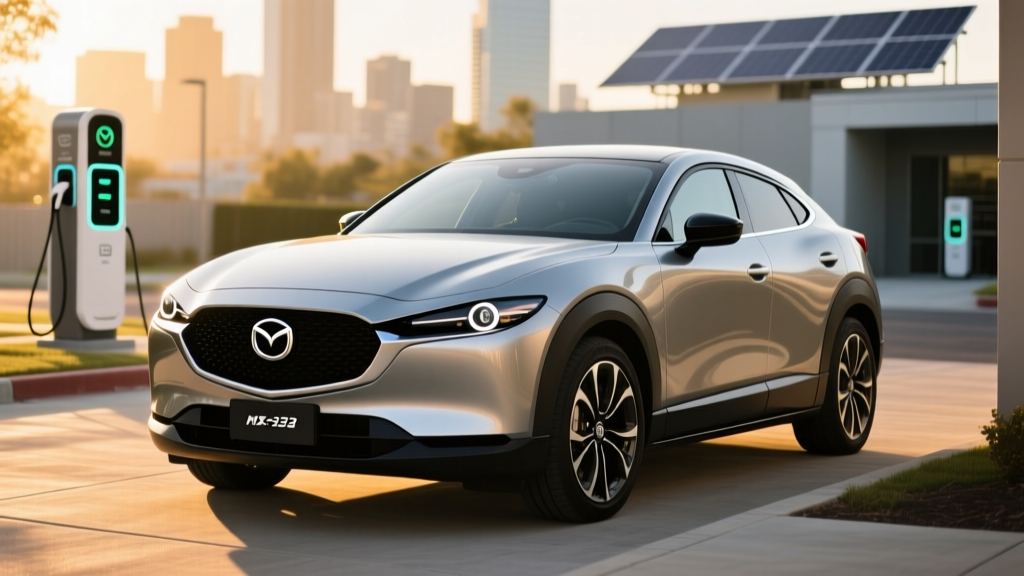
Quick Verdict: The 2022 Mazda MX-30 EV in 2026
The 2022 Mazda MX-30 electric vehicle was sold exclusively in California as a compliance car, and Mazda discontinued the EV version after the 2023 model year. With just 100 miles of EPA-estimated range and a 35.5 kWh battery, it is one of the shortest-range modern EVs ever sold in the US. As a used purchase in 2026, expect to pay roughly $14,000–$19,000 depending on mileage and condition. It can work as a dedicated city commuter for someone with reliable home charging and a sub-60-mile daily round trip, but it is not a viable primary vehicle for most households. The federal §30D tax credit does not apply to used purchases of this model, though the used-EV credit (up to $4,000) may apply if you buy from a dealer and meet IRS income thresholds.
Why the MX-30's 100-Mile Range Defines Everything
Mazda made a deliberate engineering choice with the MX-30 EV: a small 35.5 kWh lithium-ion battery (NMC chemistry) to keep weight down and cost low. The result, according to fueleconomy.gov, is an EPA-estimated range of 100 miles and a combined efficiency rating of 92 MPGe (roughly 30 kWh per 100 miles).
Here is what that means in practice:
- Highway driving at 70 mph: Expect 80–90 miles before the battery is depleted. EVs lose efficiency at sustained highway speeds because there is no regenerative braking to recapture energy.
- Cold weather (below 40°F): Range can drop 20–30%, meaning a real-world winter range of 70–80 miles in freezing conditions.
- City commuting with regen: This is the MX-30's best-case scenario. Stop-and-go driving lets regenerative braking recover energy, and you may approach or slightly exceed the 100-mile EPA figure.
EPA Sticker: 100 miles
Real-World Highway: ~80–90 miles
Real-World Cold Weather: ~70–80 miles
Real-World City (mild climate): ~95–105 miles
If your daily round-trip commute exceeds 60 miles, this car will require mid-day charging or cause persistent range stress. For comparison, the 2022 Nissan Leaf S offered 149 miles EPA, and the 2022 Chevrolet Bolt EV delivered 259 miles — both at similar or lower used-market prices today.
Charging Speeds: Level 2 Is Fine, DC Fast Charging Is a Limitation
The MX-30's charging hardware reflects its compliance-car origins. Here are the exact figures:
| Charging Level | Power (kW) | Connector | 10–80% Time | Miles Added per Hour |
|---|---|---|---|---|
| Level 1 (120V household) | ~1.2 kW | J1772 | ~24+ hours | ~4 mi/hr |
| Level 2 (240V home/public) | 6.6 kW | J1772 | ~4.5 hours | ~22 mi/hr |
| DC Fast Charging | 50 kW peak | CCS1 | ~36 minutes | N/A |
The 50 kW DC fast-charging peak is the critical weakness. In 2026, most mainstream EVs accept 150–250 kW on DC fast chargers, meaning a 10–80% charge in 18–25 minutes. The MX-30's 50 kW cap means you are tethered to a charger for over half an hour to gain roughly 70 miles of range — and that assumes the charger can deliver its full rate, which many older 50 kW stations cannot sustain.
For daily use, Level 2 home charging is the practical path. A full overnight charge from empty takes about 5.5 hours at 6.6 kW, which is fine for a car with a 35.5 kWh battery. But this means the MX-30 is essentially home-charge dependent. Relying on public DC fast charging for daily needs would be frustrating and time-consuming.
Home charging installation cost for a Level 2 station (like a ChargePoint Home Flex or Emporia Level 2) typically runs $800–$2,000 total, including the unit ($400–$700), electrician labor ($400–$1,200), and permits ($50–$150), assuming your electrical panel has capacity. A panel upgrade from 100A to 200A can add $1,500–$3,000.
2022 Mazda MX-30 EV: Full Spec Sheet
| Specification | 2022 Mazda MX-30 EV |
|---|---|
| EPA Range | 100 miles |
| Battery Capacity | 35.5 kWh (NMC lithium-ion) |
| Motor Output | 143 hp / 200 lb-ft torque |
| 0–60 mph | ~8.7 seconds |
| Combined MPGe | 92 MPGe |
| Level 2 Charge Rate | 6.6 kW (J1772) |
| DC Fast Charge Peak | 50 kW (CCS1) |
| 10–80% DC Fast Charge | ~36 minutes |
| Drivetrain | FWD |
| Original MSRP (Base) | $34,110 (before incentives) |
| 2026 Used Price Range | $14,000–$19,000 |
| Battery Warranty | 8 years / 100,000 miles |
| Basic Warranty | 3 years / 36,000 miles |
Cost of Ownership: MX-30 EV vs. a Comparable Gas Car
One of the most common questions from first-time EV buyers is whether the fuel savings justify the purchase. With a used MX-30 now priced around $14,000–$19,000, the upfront cost is actually quite low. Let's compare five-year ownership costs against a typical gas-powered subcompact SUV like a 2022 Mazda CX-3 (30 MPG combined) bought used for a similar price.
| Cost Category (5-Year) | 2022 Mazda MX-30 EV (Used) | 2022 Mazda CX-3 Gas (Used) |
|---|---|---|
| Purchase Price | $16,500 (avg) | $16,500 (avg) |
| Fuel/Energy (12,000 mi/yr) | $2,700 ($0.13/kWh avg) | $7,200 ($3.50/gal avg) |
| Maintenance | $1,200 | $3,000 |
| Insurance (avg) | $6,500 | $5,800 |
| Depreciation (est.) | $5,500 | $4,800 |
| Total 5-Year Cost | ~$32,400 | ~$37,300 |
The MX-30 EV saves roughly $4,900 over five years primarily through lower energy and maintenance costs. EVs eliminate oil changes, spark plugs, transmission fluid, and exhaust system repairs. Brake pad life is also extended thanks to regenerative braking.
However, there are caveats. Insurance on EVs tends to run 10–20% higher than equivalent gas vehicles due to higher repair costs after collisions and battery replacement risk. Depreciation on the MX-30 may also be steeper than average because the market has largely rejected 100-mile-range EVs — which is actually an opportunity for used buyers who understand the car's limits.
MX-30 EV vs. Gas and Hybrid Alternatives
If you are cross-shopping, here is how the MX-30 EV stacks up against gas and hybrid options in the used market at similar price points:
| Vehicle | Powertrain | Range / MPG | Used Price (2026) | Best For |
|---|---|---|---|---|
| 2022 Mazda MX-30 EV | BEV | 100 mi range | $14,000–$19,000 | Short city commutes, home charging |
| 2022 Chevrolet Bolt EV | BEV | 259 mi range | $16,000–$22,000 | Longer range on a budget |
| 2022 Toyota Corolla Hybrid | HEV | 52 MPG combined | $18,000–$23,000 | No charging access, long commutes |
| 2022 Hyundai Ioniq PHEV | PHEV | 29 mi EV + 52 MPG | $19,000–$24,000 | Short EV commute + gas flexibility |
| 2022 Mazda CX-3 | Gas | 30 MPG combined | $15,000–$19,000 | Low upfront cost, no charging needed |
The MX-30's only real advantage over the Bolt EV is a slightly lower entry price and Mazda's more premium interior materials. The Bolt's 259-mile range, faster DC charging (up to 55 kW sustained but with a much larger 65 kWh battery), and practical hatchback cargo area make it the objectively better used EV buy for most people.
If you lack home charging, the Corolla Hybrid or Ioniq PHEV eliminates range and charging concerns entirely while still reducing fuel consumption significantly.
Common Misconceptions About the MX-30 EV
| Myth | Fact |
|---|---|
| "100 miles is enough because most people drive less than 40 miles a day." | True for average daily driving, but you must account for detours, errands, climate control use, and cold-weather range loss. A 40-mile commute can consume 55–65 miles of rated range in winter. |
| "I can just use DC fast charging if I need more range." | The 50 kW peak charge rate means 36+ minutes for a 10–80% charge, adding only ~70 miles. This is impractical for road trips and frustrating even for occasional top-ups. |
| "The battery will need expensive replacement soon." | Mazda's 8-year/100,000-mile battery warranty still covers many 2022 models through 2030. NMC batteries typically retain 85–90% capacity after 5 years of normal use. A replacement, if needed out of warranty, would cost $8,000–$12,000. |
| "It qualifies for the $7,500 federal tax credit." | The new-vehicle §30D credit no longer applies — the MX-30 EV is discontinued. However, the used clean vehicle credit (up to $4,000 or 30% of sale price, whichever is lower) may apply when purchased from a licensed dealer if your income is under $75,000 (single) or $150,000 (joint). |
| "Mazda still sells the MX-30 EV." | Mazda discontinued the all-electric MX-30 after the 2023 model year. In some markets, a rotary range-extender version was offered, but it was never sold in the US. You can only buy the EV as a used vehicle in 2026. |
Who Should Actually Buy the MX-30 EV in 2026?
Buy the 2022 Mazda MX-30 EV if:
- Your daily round-trip driving is under 50 miles, reliably, year-round
- You have access to Level 2 home charging (garage or driveway with a 240V outlet)
- You live in a mild climate (Southern California, where most were originally sold)
- You want a second car specifically for commuting and errands
- You value Mazda's interior quality and driving dynamics over range
- You can find one under $16,000 and qualify for the used-EV credit
Skip the MX-30 EV and consider alternatives if:
- Your commute exceeds 60 miles round trip or varies significantly
- You live in a cold-weather state where winter range loss of 20–30% would leave you with 70 miles or less
- You rely on street parking or lack home/workplace charging access
- You need a primary household vehicle for road trips, family hauling, or unpredictable schedules
- You want DC fast charging that can meaningfully extend range on longer drives
First-Time EV Buyer Checklist for the MX-30
If this is your first electric vehicle, the MX-30's low used price makes it a tempting entry point. But confirm these items before signing any paperwork:
- Verify home charging feasibility. Can you install a 240V Level 2 charger? Get an electrician quote before buying. Budget $800–$2,000 for installation.
- Check the battery State of Health (SoH). Ask the dealer or seller for a battery diagnostic report. A 2022 model should still show 90%+ capacity retention. If below 85%, negotiate the price down significantly.
- Confirm remaining warranty. The 8-year/100,000-mile battery warranty runs from the original in-service date. A 2022 model sold in mid-2022 is covered until mid-2030.
- Test-drive your actual commute. Drive the MX-30 on your real route with climate control on. Watch the range meter. If you arrive home with less than 20% battery, this car is too range-limited for your needs.
- Research used-EV credit eligibility. The up-to-$4,000 credit requires purchase from a licensed dealer, a sale price under $25,000, and buyer income under IRS thresholds. Confirm details at irs.gov.
- Get an insurance quote first. EV insurance can be 10–20% higher. Get a binding quote before finalizing the purchase to avoid surprises.
Frequently Asked Questions
Is the 2022 Mazda MX-30 EV still available new?
No. Mazda discontinued the all-electric MX-30 after the 2023 model year. It was only sold in California and in very limited numbers. In 2026, you can only purchase one on the used market.
Can I take the MX-30 EV on a road trip?
Technically yes, but it is not practical. With 100 miles of range and a 50 kW DC fast-charging cap, you would stop for 35+ minutes every 70–80 miles. A 300-mile trip that takes 5 hours in a gas car would take 8+ hours in the MX-30. This is a commuter car, not a road-trip vehicle.
Does the MX-30 EV come with a heat pump?
No. The MX-30 EV uses a conventional resistive heater for cabin heating, which draws significant power from the battery in cold weather. This is a major reason the range drops 20–30% in winter. Most competing EVs from 2022 onward (Bolt, Ioniq 5, Model 3) include heat pumps that are far more efficient.
What is the MX-30's cargo space?
The MX-30 offers 21.0 cubic feet behind the rear seats and approximately 41.7 cubic feet with the rear seats folded. The rear-hinged "freestyle" rear doors look distinctive but make rear-seat access awkward in tight parking spaces.
Can I charge the MX-30 at Tesla Superchargers?
Not natively. The MX-30 uses a CCS1 connector for DC fast charging and a J1772 connector for Level 2. Tesla has opened some Superchargers to non-Tesla EVs via the Magic Dock adapter (built into the Supercharger pedestal) at select locations, but availability is limited. You will primarily rely on Electrify America, EVgo, and ChargePoint networks for public DC charging.
How does the used-EV tax credit work for the MX-30?
The IRS used clean vehicle credit provides up to $4,000 or 30% of the sale price (whichever is lower) when you buy a qualifying used EV from a licensed dealer. The vehicle must be sold for $25,000 or less, and your modified adjusted gross income must not exceed $75,000 (single), $112,500 (head of household), or $150,000 (married filing jointly). The credit is non-refundable and can only be claimed once per vehicle. Consult a tax professional to confirm your eligibility.