Quick Verdict: The 2022 Kia EV6 Still Sets the Charging Bar
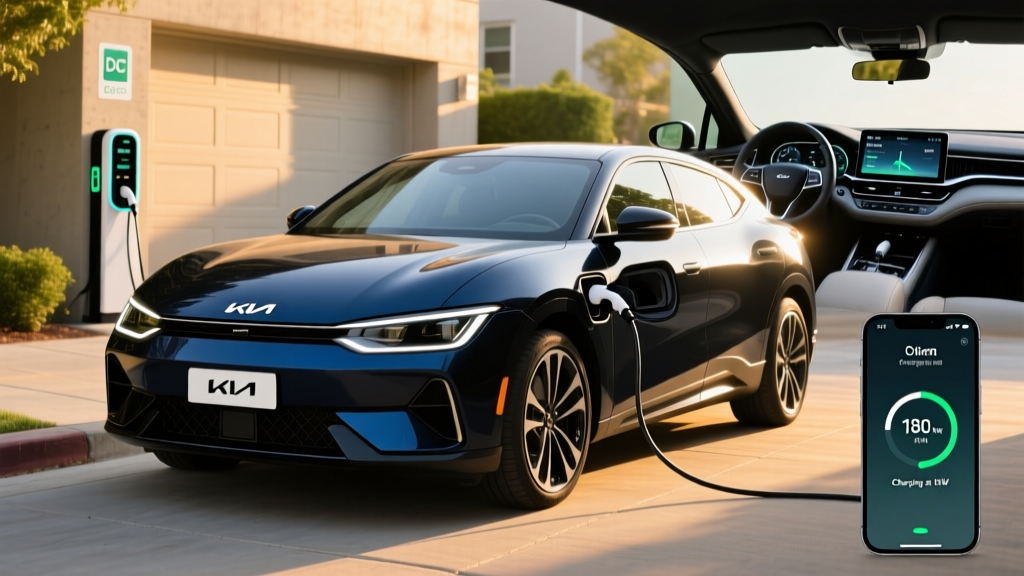
Even years after its debut, the 2022 Kia EV6 remains one of the most compelling electric crossovers on the used and certified-pre-owned market. Built on Hyundai Motor Group's E-GMP platform with an 800-volt electrical architecture, the EV6 delivers DC fast-charging speeds that rival vehicles costing $30,000 more. For buyers shopping the 2022 Kia EV6 in 2026, the value proposition has shifted from new-car incentives to certified-pre-owned pricing, but the hardware — particularly that blistering charge curve — hasn't aged a day.
This review covers the 2022 model year specifically: the Wind and GT-Line trims with the Long Range battery, plus the high-performance GT variant that arrived late in the production cycle. We'll break down what you can actually expect on a road trip, at a home charger, and on your tax return.
Range, Battery, and Efficiency: EPA vs. Reality
| Spec | Wind RWD | GT-Line AWD | GT AWD |
|---|---|---|---|
| EPA Range | 310 mi | 274 mi | 206 mi |
| Battery (usable) | 77.4 kWh | 77.4 kWh | 77.4 kWh |
| Chemistry | NMC (Nickel Manganese Cobalt) | NMC | NMC |
| MPGe (combined) | 134 MPGe | 117 MPGe | 85 MPGe |
| kWh/100 mi | 25 kWh | 29 kWh | 40 kWh |
| Drivetrain | Rear-Wheel Drive | Dual-Motor AWD | Dual-Motor AWD |
- City/suburban mixed driving: 290–315 mi (regen-heavy routes match or exceed EPA)
- Sustained 70–75 mph highway: 250–275 mi (aerodynamic drag and higher consumption)
- Cold weather (below 32°F): 210–250 mi (battery chemistry resistance + cabin heating; the EV6 lacks a heat pump on the Wind trim, which amplifies winter losses)
- GT-Line AWD highway: Expect ~225–240 mi in moderate temps, dropping to ~190 mi in deep winter
Source: fueleconomy.gov EPA estimates; real-world figures based on aggregated owner reports and independent testing.
The 77.4 kWh NMC (nickel manganese cobalt) pack is shared across all 2022 EV6 trims. NMC chemistry offers higher energy density than LFP (lithium iron phosphate), which is why Kia packs 310 miles into a relatively compact crossover floor. The trade-off: NMC cells degrade slightly faster over thousands of cycles and are more sensitive to sustained 100% state-of-charge storage. For daily driving, set your charge limit to 80% and save 100% for road trips.
Efficiency-wise, the Wind RWD at 25 kWh per 100 miles is competitive with the Tesla Model Y Long Range (~26 kWh/100 mi) and notably better than the Ford Mustang Mach-E Extended Range RWD (~28 kWh/100 mi). The GT, however, trades efficiency for its 576 horsepower — 40 kWh/100 mi means you'll pay at the charger what you save at the gas pump, relatively speaking.
Charging Speed: 800V Architecture Still Leads the Pack
| Charging Level | Spec | What It Means |
|---|---|---|
| Level 1 (120V household) | ~1.4 kW | ~4–5 miles of range per hour — emergency/trickle only |
| Level 2 (240V home/public) | 10.9 kW (onboard charger max) | ~32–37 miles per hour; full charge in ~7.5 hours |
| DC Fast Charge (CCS) | Peak 240 kW (800V capable) | 10–80% in ~18 minutes on a 350 kW station |
| DC Fast Charge (realistic) | ~175–200 kW average to 80% | Expect ~22 minutes at a 150–250 kW Electrify America or EA station |
The EV6's 800-volt architecture is its single biggest hardware advantage. Most competitors from 2022 — the Mach-E, Volkswagen ID.4, even the Hyundai Ioniq 5's corporate sibling — run 400V systems that peak lower and taper harder above 60% state of charge. On a 350 kW CCS charger, the 2022 EV6 sustains over 200 kW from roughly 15% to 55% SoC, then gradually tapers to ~120 kW by 80%. That taper curve is noticeably flatter than 400V competitors, which often cliff-drop past 60%.
Important context for used buyers in 2026: The 2022 EV6 uses the CCS1 connector natively. With Tesla opening its Supercharger network to CCS vehicles via the Magic Dock adapter, and Kia now offering NACS-port vehicles from 2025 onward, you may need a CCS-to-NACS adapter for Tesla Superchargers. Kia has provided NACS adapters to some model-year owners; check with your dealer or Kia's owner portal for adapter availability on the 2022 model year.
For home charging, the 10.9 kW onboard charger means a 48-amp Level 2 wallbox (like a ChargePoint Home Flex or Emporia Vue) will replenish the full 77.4 kWh pack in roughly 7.5 hours — easily overnight. Budget $500–$1,200 for a quality Level 2 unit plus professional installation, depending on your electrical panel's proximity to the garage.
Performance and Driving Dynamics
| Trim | Horsepower | Torque (lb-ft) | 0–60 mph | Top Speed |
|---|---|---|---|---|
| Wind RWD | 225 hp | 258 | 7.2 sec | 115 mph |
| GT-Line AWD | 320 hp | 446 | 5.1 sec | 115 mph |
| GT AWD | 576 hp | 545 | 3.4 sec | 161 mph |
The Wind RWD is the efficiency play — 225 hp is plenty for merging and passing, and the single-motor layout contributes to that 310-mile range. The GT-Line AWD adds a front motor for 320 hp and all-weather traction, a sweet spot for four-season climates. The GT is a different animal entirely: 576 hp with an electronic limited-slip differential and a drift mode that's more party trick than practicality. It's legitimately quick — 3.4 seconds to 60 mph puts it in Porsche Taycan territory — but the 206-mile EPA range is the tax you pay.
Ride quality on the Wind and GT-Line is compliant and quiet, with well-tuned regenerative braking that offers four levels (adjustable via steering-wheel paddles) plus an "i-Pedal" one-pedal-driving mode that brings the car to a full stop. The GT stiffens the suspension considerably; it's a sports sedan in crossover clothing, and the ride reflects that on broken pavement.
Interior, Cargo, and Technology
The 2022 EV6's interior uses a dual 12.3-inch curved display layout — one for the instrument cluster, one for infotainment — running Kia's UVO Connect system with wireless Apple CarPlay and Android Auto. Physical buttons for climate control are present (a win over touch-only panels), though the glossy black center console attracts fingerprints aggressively.
| Dimension | Measurement |
|---|---|
| Cargo (rear seats up) | 24.4 cu ft |
| Cargo (rear seats folded) | 50.2 cu ft |
| Frunk (front trunk) | 0.7 cu ft (RWD) / 0.3 cu ft (AWD) |
| Rear legroom | 39.4 in |
| Front headroom | 39.6 in |
| Towing capacity | 2,700 lbs (AWD, with braked trailer) |
Cargo volume is competitive with the Model Y (30.2 cu ft rear-up, but the EV6's cargo area is wider and more usable). The frunk is essentially a glorified cable-storage cubby — don't expect meaningful luggage space up front, especially on AWD models where the front motor shrinks it further.
Standout tech features:
- Vehicle-to-Load (V2L): The EV6 can output up to 3.6 kW of AC power via an adapter plugged into the charge port, enough to run a laptop, campsite appliances, or even a small window AC unit during an outage. This is genuinely useful and rare in the 2022 model year.
- Highway Driving Assist 2 (HDA2): Kia's SAE Level 2 driver-assistance system includes adaptive cruise, lane-centering, and lane-change assist. It's competent on interstates but requires hands-on-wheel engagement. This is not autonomous driving.
- Remote Smart Parking Assist: The car can pull itself in and out of tight spaces via key fob — handy for narrow garage setups.
- Augmented-reality head-up display: Available on GT-Line with Premium Package; projects navigation arrows onto the windshield.
- No heat pump on the Wind trim (standard on GT-Line and GT) — expect greater winter range loss on the base model
- Rear visibility is compromised by the thick C-pillar and small rear window; the digital rearview mirror option helps
- Infotainment can lag when switching between wireless CarPlay and native navigation
- No rear wiper — a surprising omission that matters in rain and snow
- Frunk is nearly useless for storage
Pricing, Tax Credits, and 2026 Used-Market Value
| Trim (2022 MSRP at launch) | Original MSRP | Estimated 2026 CPO/Used Price |
|---|---|---|
| Wind RWD | $48,200 | $28,000–$33,000 |
| GT-Line RWD | $52,400 | $32,000–$37,000 |
| GT-Line AWD | $57,600 | $35,000–$41,000 |
| GT AWD | $62,400 | $40,000–$48,000 |
Federal tax credit (§30D) status for the 2022 EV6: When new, the EV6 was assembled in South Korea, which disqualified it from the $7,500 new-vehicle federal tax credit under the North American final-assembly requirement enacted in August 2022. Buyers who took delivery before that date may have qualified; those after did not. This is a critical detail for anyone evaluating the original purchase economics.
However, as a used EV purchased in 2026, the 2022 Kia EV6 can qualify for the Used Clean Vehicle Credit (IRC §25E) — up to $4,000 or 30% of the sale price (whichever is less), provided:
- The sale price is $25,000 or less (this rules out most GT-Line and GT trims on the used market)
- The buyer's modified AGI is ≤ $75,000 (single), $112,500 (head of household), or $150,000 (joint)
- The vehicle is purchased from a licensed dealer
- The buyer has not claimed another used-EV credit in the prior 3 years
- The vehicle is at least 2 model years old (the 2022 model qualifies in 2026)
In practice, a 2022 Wind RWD priced at or below $25,000 from a dealer could net a $4,000 point-of-sale credit, bringing the effective price to ~$21,000 — exceptional value for a 310-mile, 240 kW-charging crossover. Check current rules at IRS.gov §25E and consult a tax professional before relying on eligibility.
Warranty and Long-Term Battery Health
| Coverage | Term |
|---|---|
| Basic (bumper-to-bumper) | 5 years / 60,000 miles |
| Powertrain | 10 years / 100,000 miles |
| EV Battery | 10 years / 100,000 miles (retains ≥70% capacity) |
| Roadside Assistance | 5 years / 60,000 miles |
Kia's 10-year/100,000-mile battery warranty guarantees at least 70% state of health (SoH). For a 2022 model in 2026, you likely have 6+ years and 60,000+ miles of factory battery coverage remaining — a significant safety net on the used market. NMC packs in the E-GMP platform have shown modest degradation in early data: most owners report 93–97% SoH after 30,000 miles, which projects to 85–90% at 100,000 miles under normal use.
Battery care tips for NMC chemistry:
- Set daily charge limit to 80% (use the car's built-in charge-limit setting)
- Avoid leaving the car at 100% SoC for more than a few hours
- Minimize DC fast-charging sessions above 90% — the taper exists to protect the cells, but heat still accumulates
- In extreme cold, use the battery preconditioning feature before fast-charging (activate via navigation to a charger)
2022 Kia EV6 vs. Key Competitors
| 2022 Kia EV6 Wind RWD | 2022 Hyundai Ioniq 5 SEL RWD | 2022 Ford Mach-E Premium RWD ER | 2022 Tesla Model Y LR AWD | |
|---|---|---|---|---|
| EPA Range | 310 mi | 303 mi | 314 mi | 330 mi |
| Battery | 77.4 kWh NMC | 77.4 kWh NMC | 91 kWh NMC | ~82 kWh NMC |
| Peak DC Charge | 240 kW | 233 kW | 150 kW | 250 kW |
| 10–80% DC Time | ~18 min | ~18 min | ~45 min | ~25 min |
| 0–60 mph | 7.2 sec | 7.4 sec | 6.1 sec | 4.8 sec |
| Cargo (rear up) | 24.4 cu ft | 27.2 cu ft | 29.7 cu ft | 30.2 cu ft |
| V2L | Yes (3.6 kW) | Yes (3.6 kW) | No | No |
| Heat Pump | No (Wind) | No (SEL) | Yes | Yes (standard) |
- DC fast-charging speed is your top priority (240 kW peak is best-in-class for the year)
- You want V2L capability for camping, tailgating, or backup power
- You prefer a sportier driving position and sharper exterior styling
- You're buying CPO and want the remaining 10-year battery warranty
- Cargo space is paramount — the Model Y and Mach-E offer significantly more
- You live in a cold climate and need a heat pump — consider the GT-Line or a Mach-E/Tesla
- You need Supercharger access without an adapter hassle
- You want the most advanced driver-assist tech — Tesla's Autopilot/FSD and GM's Super Cruise are more capable (though still Level 2)
Pros and Cons at a Glance
- Class-leading 240 kW DC fast-charging with a flat taper curve
- 310-mile EPA range on Wind RWD is competitive
- V2L (3.6 kW) is genuinely useful and rare in this class
- 10-year/100,000-mile battery warranty (strongest in the segment)
- Comfortable ride on Wind/GT-Line; GT is a legitimate performance machine
- Physical climate controls — no touchscreen-only HVAC
- Competitive used pricing with potential $4,000 used-EV tax credit
- No heat pump on Wind trim — winter range suffers
- Frunk is essentially non-functional (0.7 cu ft RWD)
- CCS1 connector requires adapter for Tesla Superchargers
- No rear wiper — a baffling omission
- Cargo volume trails Model Y, Mach-E, and Ioniq 5
- GT trim's 206-mile range is a steep trade for performance
- Rear visibility hindered by thick C-pillars
Who Should Buy the 2022 Kia EV6?
Ideal for: Daily commuters with DC fast-charging access on their route, couples who take 2–4 road trips per year (the 18-minute 10–80% charge time keeps stops short), and outdoor enthusiasts who'll use V2L for campsite power. The Wind RWD at a used price near $25,000 (after the $4,000 credit) is one of the best value-per-mile-of-range propositions on the 2026 used market.
Less ideal for: Large families needing maximum cargo space (look at the Model Y or Kia EV9), cold-climate drivers who can't stretch to the GT-Line with its standard heat pump, or anyone whose routine includes remote areas with sparse CCS charging infrastructure.
Frequently Asked Questions
What is the real-world range of the 2022 Kia EV6?
The Wind RWD is EPA-rated at 310 miles. In real-world mixed driving, expect 290–315 miles in moderate temperatures. Sustained highway driving at 70+ mph drops that to 250–275 miles, and cold weather (below freezing) can reduce range to 210–250 miles due to battery resistance and cabin heating demands. The AWD GT-Line averages about 225–240 highway miles in fair weather.
How fast does the 2022 EV6 charge at home and on the road?
At home on a Level 2 (240V) charger, the EV6 accepts up to 10.9 kW, adding roughly 32–37 miles of range per hour and fully charging in about 7.5 hours. On a DC fast charger rated at 350 kW, it peaks at 240 kW and charges from 10–80% in approximately 18 minutes. On more common 150 kW chargers, expect 10–80% in about 25–30 minutes.
Does the 2022 Kia EV6 qualify for any federal tax credit in 2026?
As a used vehicle in 2026, the 2022 EV6 may qualify for the Used Clean Vehicle Credit (IRC §25E) of up to $4,000, but only if the sale price is $25,000 or less and the buyer meets income caps ($75K single / $150K joint). This generally limits eligibility to the Wind RWD trim. The vehicle must be purchased from a dealer, and the buyer cannot have claimed another used-EV credit in the past 3 years. Consult IRS guidelines and a tax professional.
Is the 2022 Kia EV6 worth buying vs. a Tesla Model Y or Ford Mach-E?
The EV6 wins on DC charging speed (240 kW peak vs. the Mach-E's 150 kW) and V2L capability, which neither competitor offers. The Model Y leads in cargo space (30.2 cu ft vs. 24.4), Supercharger network access, and over-the-air software updates. The Mach-E offers the most cargo room of the three and a standard heat pump. If fast road-trip charging and V2L matter most, the EV6 is the strongest pick. If cargo and charging-network convenience lead your priorities, the Model Y edges ahead.
How long will the 2022 EV6 battery last?
Kia warrants the 77.4 kWh NMC battery for 10 years or 100,000 miles, guaranteeing at least 70% capacity retention. Early degradation data from E-GMP platform vehicles suggests most packs retain 93–97% SoH at 30,000 miles, projecting to roughly 85–90% at 100,000 miles with proper care (daily 80% charge limit, avoiding prolonged 100% storage). A full battery replacement, if ever needed out of warranty, is estimated at $12,000–$18,000 depending on labor and cell pricing at the time.
Does the 2022 EV6 have a heat pump?
The GT-Line and GT trims include a heat pump as standard equipment, which significantly improves cold-weather efficiency by using ambient and waste heat rather than resistive cabin heating. The Wind trim does not include a heat pump, which means greater winter range loss — potentially 25–35% in sub-freezing temperatures versus 15–20% with a heat pump. If you live in a cold climate, prioritize the GT-Line.
What connector does the 2022 EV6 use for charging?
The 2022 EV6 uses the CCS1 (Combined Charging System) connector for both Level 2 AC and DC fast charging. It does not have the newer NACS (Tesla) port. To use Tesla Superchargers, you'll need a CCS-to-NACS adapter — check with Kia for adapter availability and compatibility, or purchase a third-party adapter rated for the EV6's 800V system.
Sources: EPA fueleconomy.gov, IRS Used Clean Vehicle Credit, Kia EV6 official specifications, IIHS 2022 EV6 safety ratings.