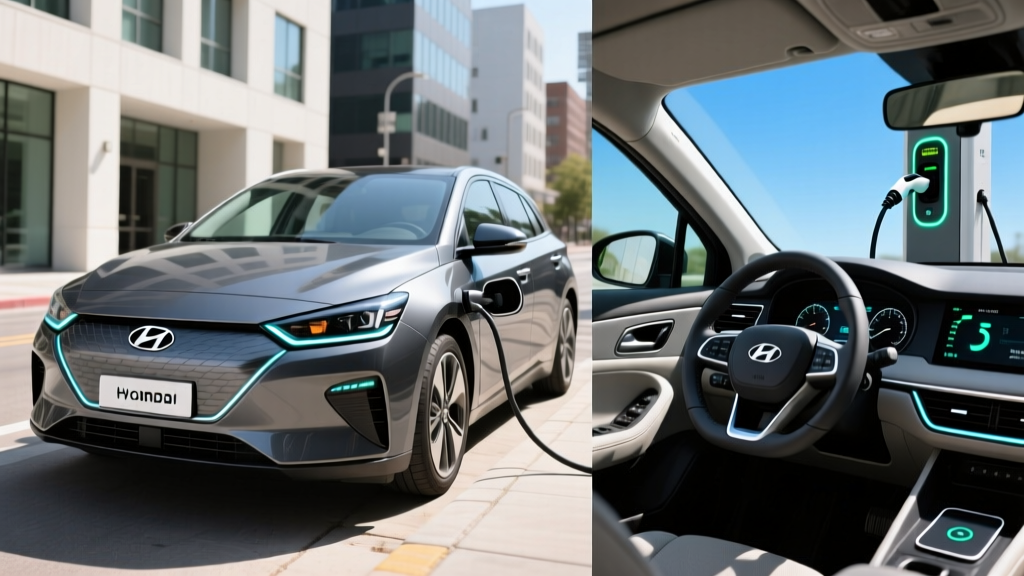
The 2022 Hyundai Ioniq EV was the final model year for Hyundai's original Ioniq Electric before the automaker shifted its electrification strategy to the Ioniq 5 and broader E-GMP platform lineup. As a used EV in 2026, it occupies an interesting niche: a compact hatchback with modest range by today's standards, but exceptional efficiency, solid build quality, and a price point that—when combined with the used-EV federal tax credit—makes it one of the most affordable ways into electric ownership.
This review covers the 2022 Ioniq EV (sometimes searched as the "2022 Hyundai Ioniq EV") with the specs, real-world data, and ownership context you need to evaluate one on the used market today.
2022 Hyundai Ioniq EV: Quick Verdict
The 2022 Ioniq EV is a pragmatic commuter car that prioritizes efficiency over range or performance. Its 170-mile EPA range trails modern competitors, but its 135 MPGe combined rating remains among the best of any EV ever sold in the US. If your daily driving stays under 60-70 miles and you have reliable home charging, the Ioniq EV is a compelling used buy—especially if you qualify for the $4,000 used-EV tax credit under IRS §25E.
| Spec | 2022 Hyundai Ioniq EV (SE/SEL/Limited) |
|---|---|
| EPA Range | 170 miles |
| Battery (Usable) | 38.3 kWh (NMC lithium-ion) |
| Efficiency | 135 MPGe combined / 25 kWh/100 mi |
| Max DC Fast Charge | 100 kW (CCS) |
| 10–80% DC Fast Charge | ~54 minutes (peak ~64 kW sustained) |
| Level 2 Charge Rate | 7.2 kW onboard charger (~25 mi/hr) |
| Motor / Drivetrain | 100 kW (134 hp) / FWD single-speed |
| 0–60 mph | ~8.5 seconds |
| Cargo Volume | 23.0 cu ft (rear seats up) / 55.0 cu ft (folded) |
| Original MSRP (2022) | $34,000 (SE) – $39,400 (Limited) |
| Estimated Used Price (2026) | $14,000 – $20,000 depending on mileage/trim |
| Battery Warranty | 8 yr / 100,000 mi (original owner, transferable) |
Real-World Range: What 170 EPA Miles Actually Means
EPA Estimated Range: 170 miles
Real-World Expectation: 130–150 miles highway (70+ mph); 155–170 miles mixed city/suburban; 100–120 miles in freezing temperatures with cabin heat.
The 170-mile EPA sticker is accurate for mixed driving in moderate temperatures. In practice, the Ioniq EV's exceptional efficiency (25 kWh per 100 miles, per fueleconomy.gov) means it extracts more miles per kWh than almost any EV on the road. That efficiency partially offsets the small battery.
However, physics is unforgiving. At sustained highway speeds of 70-80 mph, aerodynamic drag pushes consumption higher, and real-world highway range drops to roughly 130-150 miles. In winter conditions—say, 25°F with seat heaters and cabin heat running—expect 100-120 miles. The Ioniq EV uses a resistive PTC heater rather than a heat pump, which draws significant energy from the traction battery in cold weather.
For a commuter doing 30-40 miles round trip with home charging, this is a non-issue. For road trips, the 170-mile range requires deliberate planning: you'll stop every 90-100 miles on the highway to maintain a comfort buffer and avoid the slow charge-curve taper above 80% State of Charge (SoC).
Charging Speed: DC Fast and Home Level 2
The 2022 Ioniq EV uses the CCS1 connector for DC fast charging and a J1772 inlet for Level 1/Level 2 AC charging. Note that Hyundai has since adopted the NACS (Tesla) connector for new models starting with 2025 production, but the 2022 Ioniq EV retains CCS. You can use a CCS-to-NACS adapter at Tesla Supercharger V3/V4 stalls if needed.
| Charging Level | Power | Time (10–80%) | Miles Added per Hour |
|---|---|---|---|
| Level 1 (120V household) | ~1.4 kW | ~28 hours (full) | ~5 mi/hr |
| Level 2 (240V, 32A home) | 7.2 kW (max onboard) | ~5.5 hours (full) | ~25 mi/hr |
| DC Fast Charge (CCS) | 100 kW peak | ~54 min (10–80%) | N/A (curve-limited) |
The charging curve matters here. While Hyundai rates the Ioniq EV at 100 kW peak DC fast-charge capability, that peak is brief. In real-world testing at Electrify America and EVgo 150 kW+ stations, the Ioniq EV typically peaks around 60-64 kW between 10-40% SoC, then tapers progressively. The 10-80% charge takes approximately 54 minutes—noticeably slower than modern 800V architectures like the Ioniq 5 (which achieves 10-80% in ~18 minutes).
The 7.2 kW onboard AC charger is adequate for overnight home charging. A full charge from empty takes roughly 5.5 hours on a 32-amp Level 2 circuit. Most owners will plug in nightly and rarely need a full charge, making the Level 2 rate perfectly sufficient for daily use. Home Level 2 charger installation typically costs $800–$2,000 including equipment and electrician labor, depending on panel proximity and local permit requirements.
Performance and Driving Experience
The 2022 Ioniq EV is motivated by a single front-mounted permanent-magnet synchronous motor producing 100 kW (134 horsepower) and 218 lb-ft of torque. Power goes to the front wheels through a single-speed reduction gear—no traditional transmission.
The 0-60 mph time of approximately 8.5 seconds is leisurely by 2026 EV standards. This is a car tuned for efficiency, not acceleration. That said, the instant torque delivery makes it feel responsive around town, and the low center of gravity (battery pack under the floor) keeps body roll well-controlled through corners.
Ride quality is firm but compliant. Road noise is moderate—noticeably more than the Ioniq 5 or Tesla Model 3 at highway speeds, but acceptable for the class. Regenerative braking is adjustable via steering-wheel paddles (three levels plus a "smart regen" mode that adapts based on traffic ahead), though it does not offer true one-pedal driving to a complete stop like some competitors.
Interior, Cargo, and Technology
The Ioniq EV is a compact hatchback with seating for five, though the rear seat is snug for adults over 6 feet tall. Key dimensions:
- Front legroom: 43.3 inches
- Rear legroom: 35.0 inches
- Cargo (rear seats up): 23.0 cubic feet
- Cargo (rear seats folded): 55.0 cubic feet
The 23.0 cu ft cargo area behind the rear seats is generous for the hatchback segment and swallows groceries, luggage, or a week's worth of commuter gear. There is no front trunk (frunk)—the space under the hood houses the motor, inverter, and 12V auxiliary battery.
Infotainment: The 2022 model year received an updated 10.25-inch touchscreen with wireless Apple CarPlay and Android Auto on SE and SEL trims (the Limited uses a wired connection with built-in navigation). The system is responsive and logically laid out, with physical knobs for volume and tuning—a practical choice many owners prefer over all-touch interfaces.
Driver Assistance (ADAS): The Ioniq EV comes equipped with Hyundai SmartSense, a suite of Level 2 (SAE) driver-assist features. This includes:
- Adaptive cruise control with stop-and-go
- Lane-keeping assist and lane-centering
- Forward collision-avoidance assist with pedestrian detection
- Blind-spot collision warning
- Rear cross-traffic collision-avoidance assist
SAE Automation Level: Hyundai SmartSense is a Level 2 driver-assistance system. The driver must remain fully engaged, keep hands on the wheel, and monitor the road at all times. This is not autonomous or "self-driving" capability.
The adaptive cruise and lane-centering work well on divided highways, reducing fatigue on longer drives. However, the system lacks the hands-free capability of GM's Super Cruise or Ford's BlueCruise on mapped highways.
Pricing, Trims, and Federal Tax Credit Eligibility
When new, the 2022 Ioniq EV was offered in three trims. Original MSRP figures and current estimated used-market pricing:
| Trim | Original MSRP (2022) | Est. Used Price (2026) | After $4,000 Used-EV Credit (§25E) |
|---|---|---|---|
| SE | $34,000 | $14,000 – $16,500 | $10,000 – $12,500 |
| SEL | $36,500 | $15,500 – $18,000 | $11,500 – $14,000 |
| Limited | $39,400 | $17,500 – $20,000 | $13,500 – $16,000 |
Federal tax credit for used EVs (IRS §25E): The 2022 Ioniq EV may qualify for up to $4,000 under the used clean vehicle credit (30% of the sale price, capped at $4,000). Key eligibility requirements per IRS.gov:
- Sale price must be $25,000 or less (all trims qualify at current used prices)
- Buyer income caps: $75,000 single / $112,500 head of household / $150,000 joint filers (modified AGI)
- Vehicle must be at least two model years old (2022 models qualify in 2024 and later)
- Must be purchased from a licensed dealer (private-party sales do not qualify)
- Credit can be transferred to the dealer at point of sale for an upfront price reduction
- Vehicle must have a battery capacity of at least 7 kWh (the Ioniq EV's 38.3 kWh easily exceeds this)
Important caveat: Tax rules change. Confirm current eligibility with a tax professional and verify the specific vehicle's battery-sourcing documentation before purchase. The §25E credit is non-refundable, meaning you must have sufficient federal tax liability to benefit from it (unless transferred at point of sale).
Note that the new-vehicle §30D credit (up to $7,500) no longer applies to the 2022 Ioniq EV since it was discontinued and is now only available used.
Battery, Warranty, and Long-Term Ownership
The 2022 Ioniq EV uses a 38.3 kWh (usable capacity) NMC (nickel-manganese-cobalt) lithium-ion battery pack mounted under the rear seats and cargo floor. NMC chemistry offers good energy density but is more sensitive to sustained high-SoC storage and extreme heat than LFP chemistry.
Battery degradation: Hyundai's battery management system includes active liquid cooling and heating, which significantly extends battery life compared to passively cooled packs. Based on fleet data and owner reports from high-mileage 2017-2021 Ioniq EVs, degradation typically runs 1-2% per year under normal use. A 2022 model in 2026 (roughly 4 years old) should retain approximately 90-95% of its original capacity, equating to roughly 153-162 miles of range at 90% State of Health (SoH).
Warranty coverage:
- EV Battery: 8 years / 100,000 miles (whichever comes first), covering capacity loss below 70% of original. This warranty transfers to subsequent owners.
- Powertrain: 10 years / 100,000 miles (original owner); 5 years / 60,000 miles (second owner)
- New Vehicle: 5 years / 60,000 miles (likely expired on most 2022 models by 2026)
The transferable battery warranty is a significant advantage on the used market. A 2022 Ioniq EV with 45,000 miles still has roughly 4 years and 55,000 miles of battery coverage remaining.
Pros and Cons
Pros
- Outstanding efficiency (135 MPGe / 25 kWh/100 mi) — lowest cost per mile of almost any EV
- Very affordable on the used market, especially after the $4,000 §25E credit
- Generous cargo space (23 cu ft) for a compact hatchback
- Strong Hyundai SmartSense ADAS suite included on all trims
- Transferable 8-year/100,000-mi battery warranty provides used-buyer confidence
- Liquid-cooled battery pack supports long-term durability
- Physical knobs for climate and volume — practical and distraction-free
Cons
- 170-mile EPA range is limiting for road trips; requires frequent stops
- DC fast charging is slow by 2026 standards (~54 min 10-80%)
- No heat pump — cold-weather range loss is significant (30-40%)
- Modest 134 hp / 8.5-sec 0-60 — not a performance EV
- Rear seat legroom (35.0 in) is tight for tall adults
- CCS connector may require an adapter for Tesla Supercharger access
- Discontinued model — future parts availability could be a concern long-term
Who Should Buy the 2022 Hyundai Ioniq EV?
The 2022 Ioniq EV is best suited for:
- Commuters with round trips under 70 miles who can charge at home nightly
- Budget-conscious buyers seeking the lowest total cost of EV ownership (purchase price + electricity + maintenance)
- Second-car households where a longer-range vehicle handles road trips
- Urban and suburban drivers who rarely drive more than 100 miles in a day
It is not the right choice for:
- Frequent road-trippers or those in charging-desert regions
- Drivers in extreme cold climates without a garage (cold-weather range loss compounds the short battery)
- Those who need to regularly carry four adults (rear seat is snug)
- Buyers who prioritize acceleration and driving dynamics
Choose the 2022 Ioniq EV if: Your budget is under $16,000 after credits, your daily driving is under 60 miles, you have Level 2 home charging, and efficiency matters more than range or speed.
Look elsewhere if: You need 250+ miles of range, take road trips monthly, live in a region with harsh winters and sparse charging, or want a modern 800V fast-charging architecture. Consider a used Ioniq 5, Chevrolet Bolt EUV, or Tesla Model 3 instead.
2022 Hyundai Ioniq EV: Frequently Asked Questions
What is the real-world range of the 2022 Hyundai Ioniq EV?
The EPA rates it at 170 miles. In real-world driving, expect 130-150 miles at highway speeds, 155-170 miles in city/mixed driving, and as low as 100-120 miles in freezing temperatures. The Ioniq EV's high efficiency helps maximize every kWh, but the 38.3 kWh battery sets a hard ceiling.
How fast does the 2022 Ioniq EV charge?
On a DC fast charger (CCS), it peaks at roughly 60-64 kW and takes about 54 minutes from 10-80% SoC. At home on a 240V Level 2 charger (7.2 kW), a full charge takes about 5.5 hours, adding roughly 25 miles of range per hour of charging.
Does the 2022 Ioniq EV qualify for a federal tax credit?
Not the new-vehicle §30D credit (it's discontinued). However, it may qualify for the used-EV credit under IRS §25E: up to $4,000 (30% of sale price) if the sale price is under $25,000, you meet income caps ($75K single / $150K joint), and you buy from a licensed dealer. Verify current rules at IRS.gov and consult a tax professional.
Is the 2022 Ioniq EV worth buying vs. competitors?
Against a used Chevrolet Bolt EV (259-mile range, similar price), the Ioniq EV offers better efficiency and build quality but significantly less range. Against a used Nissan Leaf (149-226 mi depending on battery), the Ioniq EV has liquid cooling (the Leaf uses passive air cooling, which accelerates degradation). The Ioniq EV wins on efficiency and warranty; it loses on range and charging speed. If your daily mileage is low, the Ioniq's efficiency translates to the lowest per-mile electricity cost in the segment.
What battery chemistry does the 2022 Ioniq EV use?
NMC (nickel-manganese-cobalt) lithium-ion with a usable capacity of 38.3 kWh. The pack is liquid-cooled and actively thermally managed, which supports better longevity than passively cooled alternatives. For optimal battery health, avoid routinely charging to 100% unless needed for a long trip—setting the charge limit to 80-90% for daily use reduces stress on NMC cells.
What is the biggest drawback of the 2022 Ioniq EV in 2026?
Range and charging speed. The 170-mile EPA rating and ~54-minute 10-80% DC fast charge feel dated compared to 2026 EVs offering 300+ miles and 18-minute fast charges. For a commuter car charged at home overnight, this is manageable. For anything beyond daily commuting, it requires planning and patience.
Sources: EPA range and efficiency data from fueleconomy.gov; used-EV tax credit rules from IRS.gov; safety ratings from IIHS.org.