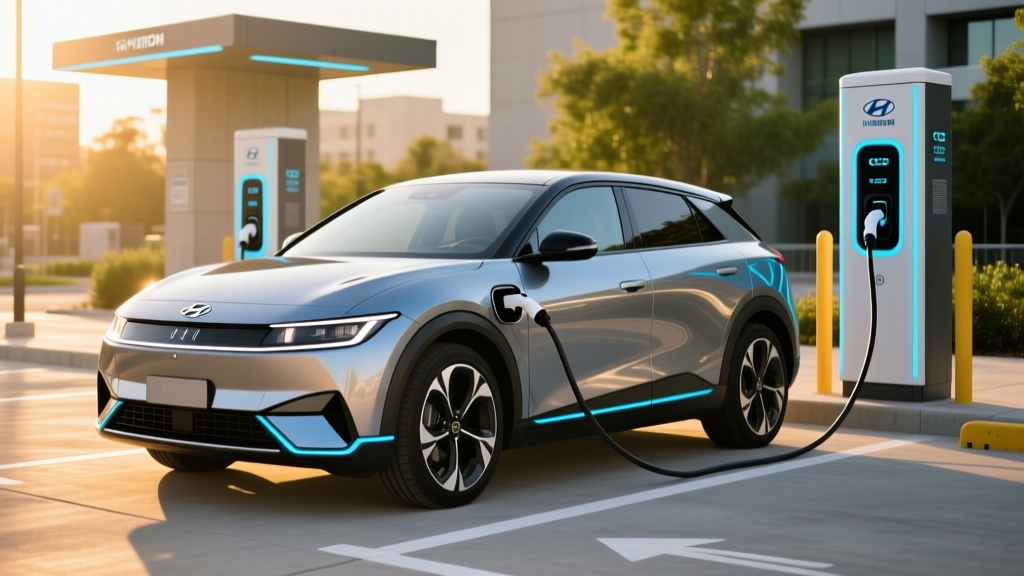
The 2022 Hyundai Ioniq 5 launched as a styling statement and an engineering benchmark, riding on Hyundai Motor Group's Electric-Global Modular Platform (E-GMP) with an 800-volt architecture that was rare at its price point. Now, as a used-EV proposition in 2026, it remains one of the most compelling crossovers for buyers who prioritize charging speed and interior space over brand cachet. If you've been researching car and driver 2022 hyundai ioniq 5 sales data, you've likely noticed this model holds strong in both the pre-owned market and in owner-satisfaction surveys. Here's everything you need to know before buying one today.
2022 Ioniq 5 At-a-Glance Specifications
| Spec | SE / SEL RWD | Limited RWD | SEL / Limited AWD |
|---|---|---|---|
| EPA Range | 303 mi | 303 mi | 256 mi |
| Battery (usable) | 77.4 kWh (NMC) | 77.4 kWh (NMC) | 77.4 kWh (NMC) |
| Drivetrain | RWD, single motor | RWD, single motor | Dual-motor AWD |
| Horsepower | 168 hp (SE Std Range) / 225 hp | 225 hp | 320 hp |
| 0–60 mph | ~7.0 sec (225 hp) | ~7.0 sec | ~4.5 sec |
| Max DC Charge Rate | 240 kW (peak) | 240 kW (peak) | 240 kW (peak) |
| 10–80% DCFC Time | ~18 min (ideal) | ~18 min (ideal) | ~18 min (ideal) |
| Level 2 Home Charge | 10.9 kW (~37 mi/hr) | 10.9 kW (~37 mi/hr) | 10.9 kW (~37 mi/hr) |
| EPA Efficiency | 132 MPGe / 25 kWh/100mi | 114 MPGe / 30 kWh/100mi | 110 MPGe / 31 kWh/100mi |
| Cargo (behind 2nd row) | 27.2 cu ft | 27.2 cu ft | 27.2 cu ft |
| Cargo (seats folded) | 59.3 cu ft | 59.3 cu ft | 59.3 cu ft |
| Rear Legroom | 39.4 in | 39.4 in | 39.4 in |
| Original Base MSRP | $43,650 | $52,600 | $47,100 |
| Battery Warranty | 10 years / 100,000 miles | ||
Sources: EPA fueleconomy.gov, Hyundai Motor America
Real-World Range: What to Actually Expect
Real-World Highway (70 mph, moderate temps): ~240–265 miles (RWD) / ~200–225 miles (AWD)
Cold Weather (below 32°F, highway): ~185–220 miles (RWD) / ~155–185 miles (AWD)
The 2022 Ioniq 5's EPA-rated 303 miles applies specifically to the RWD Long Range trims (SE, SEL, Limited) equipped with the 77.4 kWh NMC (nickel-manganese-cobalt) battery pack. The AWD variants drop to 256 miles due to the added front motor and higher weight.
In real-world highway driving at 70–75 mph with climate control active, expect the RWD model to deliver roughly 240–265 miles before needing a charge. The Ioniq 5 is relatively efficient for its size — its slippery 0.288 drag coefficient helps — but highway speeds always cut into EV range more than city driving, where regenerative braking recovers energy.
Cold weather is the bigger penalty. The 2022 Ioniq 5 uses a heat pump (standard on most trims), which mitigates cabin-heating energy draw compared to resistive heaters. However, the NMC chemistry still suffers reduced ion mobility in freezing temperatures, typically knocking 20–30% off range. On a 20°F highway trip, plan for 185–220 miles from the RWD model. If your commute is primarily city-based in mild climates, you'll see numbers much closer to — or even slightly above — the EPA estimate.
Charging Speed: The 800V Advantage
The 2022 Ioniq 5's standout technical feature is its 800-volt electrical architecture, which enables DC fast-charging speeds that few competitors in its price bracket could match at launch. Here's how the charging tiers break down:
| Charging Level | Power / Voltage | Speed (miles added) | Notes |
|---|---|---|---|
| Level 1 (120V household) | ~1.4 kW | ~4–5 mi/hr | Emergency/trickle only; ~55+ hours for full charge |
| Level 2 (240V home/public) | 10.9 kW max | ~37 mi/hr | Full charge in ~7.5 hours; ideal for overnight |
| DC Fast Charge (350 kW station) | Up to 240 kW peak | ~200+ mi in 18 min (10–80%) | Requires CCS adapter or CCS-native station |
| DC Fast Charge (150 kW station) | ~150 kW sustained | ~130 mi in 20 min (10–80%) | More common station class; still fast |
Understanding the charge curve: The Ioniq 5 peaks at roughly 240 kW when connected to a 350 kW-class charger with a warm battery (preconditioned via navigation routing). That peak rate holds from approximately 10% to roughly 45% State of Charge (SoC), then tapers progressively. By 65% SoC, you're typically seeing 120–140 kW; above 80%, speeds drop sharply to protect battery longevity, falling below 50 kW. This is why the 10–80% metric is the industry standard — charging from 80–100% can take as long as the 10–80% session.
One critical note for 2026 buyers: The 2022 Ioniq 5 uses a CCS1 connector for DC fast charging. Hyundai has since transitioned to the Tesla NACS standard for newer models, but the 2022 model year remains CCS-native. You can use Tesla Superchargers with a CCS-to-NACS adapter (sold separately, typically $200–$250), which vastly expands your fast-charging network access. Hyundai has confirmed adapter compatibility, though charging speed may be slightly limited compared to native CCS stations.
For home Level 2 charging, the onboard 10.9 kW charger means you'll add roughly 37 miles of range per hour of charging — enough to fully replenish the 77.4 kWh battery overnight in about 7.5 hours. A 48-amp Level 2 home charger on a 240V/60A circuit is the recommended setup (estimated installation cost: $500–$2,000 depending on panel proximity and local permit requirements).
Performance, Ride, and Daily Drivability
The RWD Long Range Ioniq 5 produces 225 horsepower and 258 lb-ft of torque from its rear-mounted permanent-magnet synchronous motor. The 0–60 mph sprint takes approximately 7.0 seconds — adequate for highway merging and confident around town, but not thrilling. The Standard Range RWD model (available only in the SE trim for 2022) uses a smaller 58 kWh battery and 168 hp motor, with a 0–60 time closer to 8.5 seconds and an EPA range of 220 miles.
The AWD dual-motor variant is the performance pick: 320 hp and 446 lb-ft deliver a 4.5-second 0–60 time, which feels genuinely quick in a family crossover. The instant torque delivery — a hallmark of electric drivetrains — makes it feel even faster in real-world stoplight-to-stoplight driving.
Ride quality is composed and slightly firm, tuned more for European-style composure than American-plush isolation. The low center of gravity (battery pack under the floor) keeps body roll minimal through corners. Road noise is well-managed, and the available Highway Driving Assist 2 (HDA2) provides solid Level 2 driver assistance with lane-centering and adaptive cruise — though it requires hands-on-wheel engagement and is not a hands-free system like GM's Super Cruise or Ford's BlueCruise.
Interior Space, Tech, and Notable Features
The Ioniq 5's flat floor and stretched 118.1-inch wheelbase create an interior that punches well above its compact-crossover footprint. Rear-seat legroom measures 39.4 inches — more than many midsize sedans — and the rear seats slide and recline. The 27.2 cu ft cargo area behind the second row expands to 59.3 cu ft with seats folded, competitive with the Tesla Model Y and Ford Mustang Mach-E.
Standout tech features include:
- Dual 12-inch displays: One for the digital instrument cluster, one for infotainment, in a single curved housing
- Vehicle-to-Load (V2L): An internal 120V outlet and an external V2L adapter (included on some trims) that can output up to 3.6 kW — enough to power a laptop, camping gear, or small appliances
- Augmented-reality HUD: Available on the Limited trim, projecting navigation arrows onto the windshield
- Heat pump: Standard on most trims for improved cold-weather efficiency
- Ultra-fast charging architecture: 800V system as discussed above
- Relaxation seats: Front seats with a zero-gravity recline position for charging-stop comfort
Notable drawbacks:
- No front trunk (frunk) on AWD models; RWD models have a small 0.85 cu ft frunk — essentially a cable-storage cubby
- Rear wiper was absent on 2022 models (Hyundai added one for 2023+), a real annoyance in rain and snow
- Infotainment uses physical-touch-capacitive hybrid controls that some users find finicky while driving
- No native NACS port — requires an adapter for Tesla Supercharger access
- Limited trim uses 20-inch wheels that reduce range vs. the 19-inch wheels on SE/SEL
Pricing, Tax Credits, and Used-EV Value
The 2022 Ioniq 5 originally launched with MSRPs ranging from $43,650 (SE Standard Range) to $52,600 (Limited RWD). Well-equipped AWD Limited models topped $53,000 before destination charges.
As a used vehicle in 2026, the 2022 Ioniq 5 is eligible for the IRS §25E Used Clean Vehicle Credit, which provides up to $4,000 or 30% of the sale price (whichever is less) for qualifying pre-owned EVs. Key requirements include:
- Sale price must be $25,000 or less
- Buyer income caps: $75,000 (single), $112,500 (head of household), $150,000 (joint filers) — adjusted gross income
- Vehicle must be at least 2 model years old (2022 models qualify in 2026)
- Must be purchased from a licensed dealer (private-party sales don't qualify)
- Credit can be transferred to the dealer at point of sale for an immediate price reduction
- Buyer must not have claimed another used-EV credit in the prior 3 years
This means a well-maintained 2022 Ioniq 5 SE listed at $24,500 could effectively cost ~$20,500 after the $4,000 credit — exceptional value for a 303-mile-range, 240 kW-charging crossover. Note that the new-vehicle §30D credit (up to $7,500) does not apply to used purchases; only §25E applies. Always verify current eligibility at IRS.gov and consult a tax professional for your specific situation.
2022 Ioniq 5 vs. Key Competitors
| Attribute | 2022 Hyundai Ioniq 5 (RWD LR) | 2022 Ford Mustang Mach-E (ER RWD) | 2022 Tesla Model Y (LR AWD) | 2022 Kia EV6 (RWD LR) |
|---|---|---|---|---|
| EPA Range | 303 mi | 314 mi | 330 mi | 310 mi |
| Battery | 77.4 kWh NMC | 91 kWh NMC | ~75 kWh NMC | 77.4 kWh NMC |
| Max DC Charge | 240 kW | 150 kW | 250 kW | 240 kW |
| 10–80% Time | ~18 min | ~38 min | ~22 min | ~18 min |
| 0–60 mph | 7.0 sec | 6.1 sec | 4.8 sec | 7.2 sec |
| Rear Legroom | 39.4 in | 38.9 in | 41.6 in | 39.0 in |
| Cargo (rear seats up) | 27.2 cu ft | 29.7 cu ft | 30.2 cu ft | 24.4 cu ft |
| V2L Capability | Yes (3.6 kW) | No | No | Yes (3.6 kW) |
The Ioniq 5's closest sibling is the Kia EV6, which shares the E-GMP platform and 800V architecture. The EV6 charges identically but trades some cargo and rear-seat space for a sportier profile. The Mach-E offers more range and cargo volume but charges significantly slower. The Model Y leads in range, Supercharger access, and cargo space but costs more on the used market and lacks V2L. The Ioniq 5's unique combination of ultra-fast charging, V2L, and interior volume at its current used pricing makes it a strong all-rounder.
Who Should Buy the 2022 Ioniq 5?
- You value fast DC charging for road trips (240 kW is among the fastest in its class)
- You need a spacious rear seat for family or car-seat duty
- You want V2L capability for camping, tailgating, or emergency backup power
- You're shopping the $20,000–$25,000 used-EV market and want maximum tech per dollar
- You primarily drive in moderate climates where the 303-mile RWD range shines
- You regularly drive 300+ miles in freezing weather without charging stops (consider a Model Y LR or a larger-battery EV)
- You need hands-free highway driving (the Ioniq 5's HDA2 requires hands on wheel)
- You want maximum cargo space (Model Y or Mach-E offer more)
- You need a frunk for cable storage or groceries (AWD models lack one entirely)
Pros and Cons
- 240 kW DC fast charging — among the fastest in its segment
- Spacious, flat-floor interior with 39.4" rear legroom
- Vehicle-to-Load (V2L) capability up to 3.6 kW
- Heat pump standard on most trims
- Strong 10-year/100,000-mile battery warranty (transferable to second owner)
- Eligible for up to $4,000 used-EV tax credit under §25E
- Distinctive retro-futuristic styling that ages well
- CCS port requires adapter for Tesla Supercharger access
- No rear wiper on 2022 models
- AWD range drops to 256 miles EPA
- Limited frunk space (RWD only, 0.85 cu ft)
- 20" wheels on Limited trim reduce range and ride comfort
- HDA2 requires hands-on-wheel — no hands-free driving
- Infotainment learning curve with hybrid touch/capacitive controls
Frequently Asked Questions
What is the real-world range of the 2022 Hyundai Ioniq 5?
The EPA rates the RWD Long Range at 303 miles and the AWD at 256 miles. In real-world highway driving at 70 mph in moderate temperatures, expect 240–265 miles from the RWD and 200–225 from the AWD. In freezing weather, those numbers drop by roughly 20–30%.
How fast does the 2022 Ioniq 5 charge at home and on the road?
At home on a 240V Level 2 charger, the Ioniq 5 accepts up to 10.9 kW, adding about 37 miles per hour and fully charging in ~7.5 hours. On a 350 kW-class DC fast charger, it peaks at 240 kW and charges from 10–80% in approximately 18 minutes under ideal conditions (preconditioned battery, warm ambient temps).
Does the 2022 Ioniq 5 qualify for any federal tax credit in 2026?
As a used vehicle, the 2022 Ioniq 5 may qualify for the IRS §25E Used Clean Vehicle Credit — up to $4,000 or 30% of the sale price (whichever is less). The sale price must be $25,000 or less, and buyer income caps apply ($75K single / $150K joint). The vehicle must be purchased from a licensed dealer. Always verify at IRS.gov.
Is the 2022 Ioniq 5 worth buying vs. a Tesla Model Y or Ford Mach-E?
It depends on priorities. The Ioniq 5 charges faster than the Mach-E and offers V2L capability neither competitor provides. The Model Y has more range, more cargo space, and native Supercharger access, but typically costs more on the used market. The Ioniq 5 is the value and charging-speed pick; the Model Y is the range and network pick.
What battery chemistry does the 2022 Ioniq 5 use, and how long will it last?
The 2022 Ioniq 5 uses an NMC (nickel-manganese-cobalt) lithium-ion battery. Hyundai warranties the battery for 10 years or 100,000 miles against capacity falling below a specified threshold (typically 70% of original capacity). NMC batteries generally retain 85–92% capacity after 100,000 miles based on industry data, though individual results vary with charging habits and climate exposure.
Can I use Tesla Superchargers with the 2022 Ioniq 5?
Yes, but you'll need a CCS-to-NACS adapter (typically $200–$250). The 2022 Ioniq 5 has a native CCS1 port. Hyundai has confirmed compatibility with approved adapters, though charging speeds may be slightly lower than on native CCS stations. Tesla's Supercharger network opening to CCS vehicles has significantly improved road-trip options for Ioniq 5 owners.
Always verify current tax-credit rules at IRS.gov, range and efficiency data at fueleconomy.gov, and safety ratings at IIHS.org before purchasing. Specs and eligibility may vary by trim, model year, and jurisdiction.