Quick Verdict: The Truck That Made EVs Mainstream
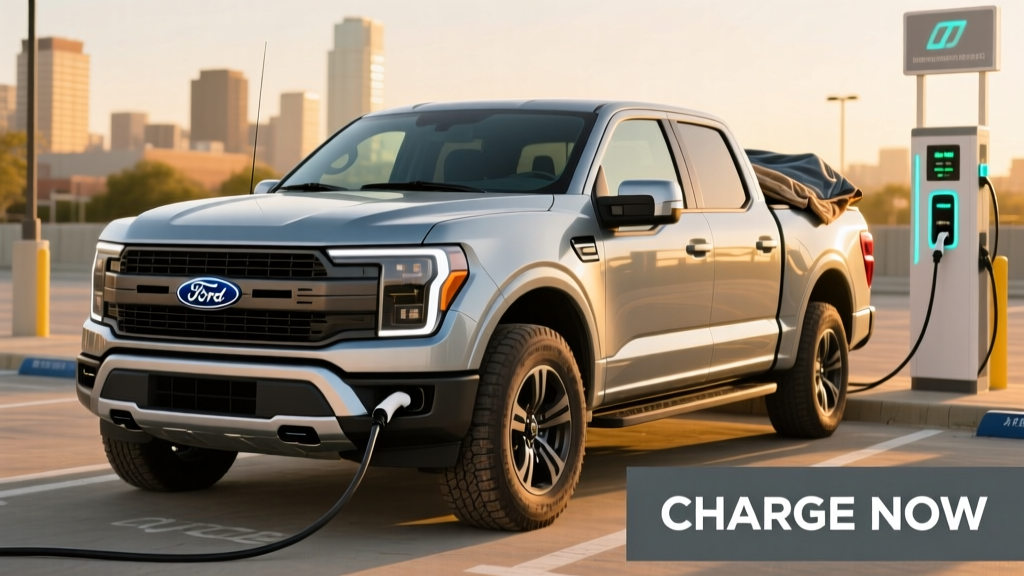
When Ford launched the 2022 F-150 Lightning, it wasn't just releasing another electric vehicle — it was betting America's best-selling nameplate on battery power. The result was an electric pickup that didn't ask buyers to compromise on utility, towing, or worksite capability. From a 2026 vantage point, the Lightning remains one of the most practical and well-rounded electric trucks on the used market, even as newer competitors like the Rivian R1T, Chevrolet Silverado EV, and Tesla Cybertruck have entered the field.
This review covers every spec that matters to a real buyer: exact EPA range figures, real-world range expectations, DC fast-charging curves, home charging requirements, towing impact on range, and current federal tax credit eligibility under IRS §30D rules.
Range and Efficiency: EPA Numbers vs. Reality
The 2022 F-150 Lightning came with two battery options, each delivering very different range profiles:
| Spec | Standard Range | Extended Range |
|---|---|---|
| Usable Battery Capacity | 98 kWh (NMC)131 kWh (NMC) | |
| EPA Range | 230 miles | 320 miles (Lariat, XLT); 300 mi (Platinum) |
| EPA Efficiency | ~68 MPGe (combined) | ~70 MPGe (combined) |
| Energy Consumption | ~48 kWh/100 mi | ~47 kWh/100 mi |
| Drivetrain | Dual-motor AWD | Dual-motor AWD |
| Horsepower | 452 hp | 580 hp |
| Torque | 775 lb-ft | 775 lb-ft |
| 0–60 mph | ~4.5 seconds | ~4.0 seconds |
The EPA sticker on the Extended Range model says 320 miles, but real-world conditions tell a more nuanced story. In mixed highway driving at 70–75 mph, expect 250–280 miles from the Extended Range pack. Cold weather (below 30°F) can reduce range by 20–35%, dropping the Extended Range to roughly 210–250 miles. The Standard Range model, with its smaller 98 kWh pack, realistically delivers 175–200 miles in mixed driving and as low as 150 miles in deep winter conditions. Towing a 5,000-lb trailer can halve range entirely — plan for 100–130 miles on the Standard Range when hauling heavy.
The Lightning uses NMC (nickel manganese cobalt) lithium-ion chemistry in both battery packs. NMC offers higher energy density than LFP, which is critical for fitting 131 kWh into a truck frame. However, NMC batteries benefit from staying between 20–80% state of charge for daily use, unlike LFP packs that tolerate regular 100% charges. Ford's battery management system includes a large buffer to protect long-term health.
For official EPA figures, check the F-150 Lightning on fueleconomy.gov.
Charging Speed: DC Fast, Level 2, and Level 1
Charging speed is where the Lightning's 2022 engineering shows its age compared to newer 800V-architecture trucks. The Lightning runs on a 400V platform, which limits its peak DC fast-charge rate.
| Charging Level | Standard Range (98 kWh) | Extended Range (131 kWh) |
|---|---|---|
| Level 1 (120V, 12A) | ~2 mi/hr (1.4 kW) | ~2 mi/hr (1.4 kW) |
| Level 2 (240V, 32A mobile) | ~13 mi/hr (7.7 kW) | ~13 mi/hr (7.7 kW) |
| Level 2 (240V, 48A wall unit) | ~19 mi/hr (11.5 kW) | ~19 mi/hr (11.5 kW) |
| Level 2 (240V, 80A Charge Station Pro) | ~30 mi/hr (19.2 kW) | ~30 mi/hr (19.2 kW) |
| DC Fast Charge (peak) | 120 kW peak | 150 kW peak |
| DC 10–80% Time | ~44 minutes | ~41 minutes |
Charging curve reality: The Extended Range Lightning peaks at 150 kW but only sustains that rate briefly between roughly 15–35% state of charge. Above 50%, the rate tapers to ~100 kW, and above 80% it drops sharply to under 40 kW. This is normal behavior for NMC packs managed conservatively, but it means a 10–90% charge takes closer to 55–60 minutes at a 150+ kW station. On road trips, plan stops around the 10–80% sweet spot for the fastest turnaround.
For home charging, the Ford Charge Station Pro (80A, hardwired) is the gold standard — it adds roughly 30 miles of range per hour, meaning a full overnight recharge for either battery. However, this requires a 100-amp dedicated circuit, which may necessitate an electrical panel upgrade in older homes. Budget $1,200–$2,500 for a licensed electrician to install a 100A circuit, or $500–$1,000 for a simpler 48A NEMA 14-50 setup.
Performance, Towing, and Payload
The dual-motor AWD powertrain is standard across all 2022 Lightning trims — there's no RWD option. The low center of gravity from the under-floor battery pack gives the Lightning surprisingly composed handling for a full-size truck, with minimal body roll compared to its gas counterpart.
Towing and payload specs:
- Max towing capacity: 7,700 lbs (Standard Range) / 10,000 lbs (Extended Range with Max Trailer Tow Package)
- Max payload: 2,235 lbs (Standard Range) / 1,800 lbs (Extended Range — heavier battery reduces payload)
- Bed length: 5.5 ft (standard)
- Front trunk (frunk): 14.1 cu ft — lockable, weatherproof, with 400 lbs payload capacity and a drain plug
The frunk is one of the Lightning's best features. It replaces the engine bay with a sealed, powered cargo area with four 120V outlets and two USB chargers — ideal for tools on a worksite or groceries that you don't want rolling around the bed. Ford also included Pro Power Onboard, which turns the truck into a mobile generator: 2.4 kW standard (four 120V bed outlets) or an available 9.6 kW system with 240V outlets that can power a job site, tailgate, or even back up your home during an outage (with the Ford Intelligent Backup Power system and a compatible transfer switch).
Pricing, Trims, and Federal Tax Credit
The 2022 F-150 Lightning launched with aggressive pricing that undercut most competitors. Here's the original MSRP breakdown by trim:
| Trim | Standard Range MSRP | Extended Range MSRP |
|---|---|---|
| Pro (fleet/commercial) | $39,974 | $55,974 |
| XLT | $52,974 | $62,974 |
| Lariat | $67,474 | $77,474 |
| Platinum | N/A | $96,874 |
Destination charge: ~$1,795 additional. Prices shown are original 2022 MSRP; used-market pricing in 2026 varies significantly based on mileage, condition, and battery health.
Federal Tax Credit Eligibility (IRS §30D)
The 2022 F-150 Lightning was eligible for the full $7,500 federal tax credit when purchased new, as it met battery-sourcing and critical-mineral requirements and fell under the truck MSRP cap of $80,000 (Pro, XLT, and Lariat Standard/Extended Range models). The Platinum trim at $96,874 exceeded the $80,000 MSRP cap and did not qualify.
For 2026 buyers purchasing a used Lightning: The used EV credit (IRS §25E) offers up to $4,000 or 30% of the sale price (whichever is lower) if you buy from a licensed dealer, the vehicle is at least two model years old, the sale price is under $25,000, and your adjusted gross income falls below $75,000 (single) / $112,500 (head of household) / $150,000 (joint). Check current rules at IRS.gov §25E before purchasing.
Income caps for the new-vehicle credit (if buying leftover new stock): $150,000 (single) / $225,000 (head of household) / $300,000 (joint filers). The credit can now be transferred to the dealer at point of sale as an instant discount, per current IRS rules.
Interior, Technology, and Driver Assistance
The Lightning's cabin mirrors the 14th-generation F-150 gas truck, with one massive upgrade: the available 15.5-inch vertical touchscreen (standard on Lariat and Platinum, optional on XLT) running Ford's SYNC 4A system. The Pro and base XLT trims use a smaller 12-inch touchscreen. Both support wireless Apple CarPlay and Android Auto, over-the-air updates, and Ford's cloud-connected navigation with real-time charging station routing.
Driver assistance (Ford Co-Pilot360 2.0):
- Adaptive cruise control with stop-and-go
- Lane-keeping system with lane centering
- Automatic emergency braking with pedestrian detection
- Blind-spot monitoring with trailer coverage
- Rear-view camera with trailer hitch assist
- Available BlueCruise (hands-free highway driving on pre-mapped divided highways)
Passenger and cargo dimensions:
- Front legroom: 43.9 inches
- Rear legroom (SuperCrew): 43.6 inches — genuinely spacious for rear passengers
- Front headroom: 40.8 inches
- Rear headroom: 40.4 inches
- Bed volume: 52.8 cu ft (5.5 ft bed)
- Frunk volume: 14.1 cu ft
- Total cargo (bed + frunk + cabin): class-leading flexibility
Battery Warranty and Long-Term Ownership
Ford backs the Lightning's battery and electric powertrain with an 8-year / 100,000-mile warranty (whichever comes first), covering defects and capacity loss below 70% of original capacity. This is in line with industry standards and matches most competitors. The rest of the vehicle carries a 3-year/36,000-mile bumper-to-bumper warranty and 5-year/60,000-mile powertrain warranty.
From a 2026 perspective, early 2022 Lightning owners are now 3–4 years into ownership. Real-world degradation data from owner forums and fleet reports suggest 4–8% capacity loss over the first 60,000–80,000 miles, which is within Ford's warranty threshold and consistent with NMC chemistry managed with a conservative buffer. The large battery packs (especially the 131 kWh Extended Range) provide a natural longevity advantage — even with 10% degradation, an Extended Range pack still delivers over 280 EPA-rated miles.
For safety data, the 2022 F-150 Lightning earned a 5-star overall safety rating from NHTSA. Check details at NHTSA.gov.
Pros
- Massive frunk with 14.1 cu ft and 400 lbs capacity
- Pro Power Onboard (up to 9.6 kW) — worksite and home backup
- 10,000-lb towing capacity (Extended Range)
- Spacious SuperCrew cabin with generous rear legroom
- Comfortable ride quality; low center of gravity
- BlueCruise hands-free highway driving available
- Competitive pricing on the used market in 2026
Cons
- 400V architecture limits DC fast-charge speed vs. newer 800V trucks
- Heavy vehicle weight (~6,500 lbs) reduces efficiency
- Standard Range battery (98 kWh) feels inadequate for road trips
- Towing drastically cuts range — plan carefully
- Platinum trim exceeded $80K tax credit cap
- Extended Range adds ~600 lbs, reducing payload capacity
- No rear-wheel-drive option for fleet efficiency buyers
Who Should Buy the 2022 F-150 Lightning?
Choose the Lightning if:
- You need a full-size truck for work, towing, or family use and want to eliminate fuel costs
- Home charging is available (Level 2 strongly recommended)
- You value the frunk and Pro Power Onboard for worksite or tailgating use
- Most of your driving is within 150 miles of home, with occasional road trips
- You want a proven platform with strong dealer support and parts availability
Look elsewhere if:
- You frequently tow heavy loads over 200+ miles (the Rivian R1T or Silverado EV may suit better)
- You lack home charging access and rely solely on public DC fast chargers
- You prioritize cutting-edge charge speed — newer 800V trucks charge significantly faster
- You want a compact or midsize truck (consider the Ford Maverick Hybrid or Rivian R1T)
Frequently Asked Questions
What is the real-world range of the 2022 Ford F-150 Lightning?
The Extended Range (131 kWh) delivers roughly 250–280 miles in real-world highway driving at 70 mph, and 210–250 miles in cold weather below 30°F. The Standard Range (98 kWh) realistically provides 175–200 miles mixed, dropping to around 150 miles in winter. Towing a trailer can cut range by 40–60%.
How fast does the F-150 Lightning charge?
On a DC fast charger, the Extended Range peaks at 150 kW and charges from 10–80% in about 41 minutes. At home on a Ford Charge Station Pro (80A, 19.2 kW), it gains roughly 30 miles per hour — enough for a full overnight charge. On a standard 32A Level 2 outlet, expect about 13 miles per hour.
Does the 2022 F-150 Lightning qualify for the federal EV tax credit?
When new, the Pro, XLT, and Lariat trims qualified for the full $7,500 §30D credit (the Platinum exceeded the $80,000 MSRP cap). For 2026 used buyers, the §25E used-EV credit offers up to $4,000 if the sale price is under $25,000 from a dealer and your income is below IRS thresholds. Always verify current rules at IRS.gov before purchasing.
Is the F-150 Lightning worth buying vs. the Rivian R1T or Silverado EV?
The Lightning wins on price (especially used), frunk utility, Pro Power Onboard, and Ford's massive dealer network. The Rivian R1T offers better off-road capability, faster charging (800V architecture on newer models), and a more premium interior but at a higher price. The Chevrolet Silverado EV (400+ mile range on top trims) offers more range but launched later with fewer used-market options. For value and practicality, the Lightning remains a top pick.
Can the F-150 Lightning power my home during an outage?
Yes — with the available Ford Intelligent Backup Power system and a compatible home transfer switch (installed by a licensed electrician), the Lightning's Extended Range battery can power an average home for up to three days during an outage. The 9.6 kW Pro Power Onboard system feeds 240V and 120V circuits through the transfer switch.
What is the battery warranty on the Lightning?
Ford covers the high-voltage battery for 8 years or 100,000 miles against defects and capacity loss below 70%. Early owner data from 2022 models shows 4–8% degradation over the first 60,000–80,000 miles, which is well within the warranty threshold.