Why the 2022 F-150 Lightning Bolt Pattern Matters for EV Truck Buyers
If you're shopping for a used 2022 Ford F-150 Lightning or planning to swap wheels for winter tires, off-road rubber, or towing-rated setups, knowing the 2022 F-150 bolt pattern is essential. The F-150 Lightning uses a 6×135mm bolt pattern (six lug nuts arranged on a 135mm circle), identical to the gas-powered F-150 of the same generation. That commonality opens up a massive aftermarket wheel catalog — but the Lightning's extra 1,500+ pounds of battery mass means you need wheels rated for the higher gross axle weight.
Beyond the lugs, this guide covers everything an EV truck buyer actually needs: real-world range, DC fast-charge curves, the §30D tax credit picture in 2026, and whether the 2022 model year still holds up against the updated 2024–2026 Lightnings and rivals like the Rivian R1T and Chevrolet Silverado EV.
2022 F-150 Lightning Core EV Specifications
| Spec | Standard Range (SR) | Extended Range (ER) |
|---|---|---|
| EPA Range | 240 mi | 320 mi (Platinum/Lariat: 300 mi) |
| Battery Capacity (usable) | 98 kWh | 131 kWh |
| Battery Chemistry | NMC (Nickel Manganese Cobalt) | NMC |
| Drivetrain | Dual-motor AWD | Dual-motor AWD |
| Horsepower | 563 hp | 563 hp |
| Torque | 775 lb-ft | 775 lb-ft |
| 0–60 mph | ~3.8 sec | |
| Max DC Fast Charge | 120 kW | 150 kW |
| 10–80% DC Time | ~44 min | ~41 min |
| Level 2 Home Charge Rate | 11.3 kW (30 mi/hr) | 19.2 kW (52 mi/hr) w/ 80A |
| MPGe (combined) | 68 MPGe | 70 MPGe |
| kWh/100 mi | 49 kWh | 48 kWh |
| Max Towing | 7,700 lb | 10,000 lb |
| Payload | 2,235 lb | 1,952 lb |
| Bolt Pattern | 6×135mm (6-lug, 135mm circle) | |
| Wheel Size (OEM) | 18" – 22" | |
| Base MSRP (2022) | $39,974 (Pro SR) | $96,874 (Platinum ER) |
Sources: EPA / fueleconomy.gov, Ford Motor Company 2022 F-150 Lightning specifications.
Real-World Range: What the EPA Sticker Doesn't Tell You
EPA sticker: 320 miles (XLT/Lariat with 131 kWh pack). Real-world expectation: 250–280 miles at 70 mph highway, dropping to 200–230 miles in sub-30°F winter conditions. The Standard Range 240-mile EPA figure translates to roughly 185–210 highway miles in practice.
The F-150 Lightning's boxy aerodynamics and 6,000+ lb curb weight punish highway efficiency. In independent testing by EV analysts, the Extended Range model averaged roughly 2.0–2.2 kWh/mile at 70 mph — right in line with its 48 kWh/100mi EPA rating but far thirstier than a sedan-style EV. If your commute is mostly city driving with regenerative braking opportunities, you'll land closer to the EPA number.
Towing is the range killer. Pulling a 5,000-lb trailer at highway speeds can cut range by 40–50%, meaning a 320-mile EPA truck may deliver only 160–180 miles between charges while towing. Ford's onboard range calculator adjusts for trailer load once you plug in the trailer light connector, which is more honest than the initial guess-o-meter reading.
Charging Speed: DC Fast Charge and Home Level 2
The 2022 Lightning's charging performance is competent but not class-leading by 2026 standards. Here's the full breakdown:
| Charging Level | Standard Range | Extended Range |
|---|---|---|
| Level 1 (120V, 12A) | ~3 mi/hr (1.4 kW) | ~3 mi/hr (1.4 kW) |
| Level 2 (240V, 32A mobile) | ~22 mi/hr (7.7 kW) | ~22 mi/hr (7.7 kW) |
| Level 2 (240V, 48A Wall Charger) | ~30 mi/hr (11.3 kW) | ~30 mi/hr (11.3 kW) |
| Level 2 (240V, 80A Ford Charge Station Pro) | N/A (single charger) | ~52 mi/hr (19.2 kW) |
| DC Fast Charge (peak) | 120 kW | 150 kW |
| DC 10–80% time | ~44 minutes | ~41 minutes |
| DC miles added in 10 min | ~54 miles | ~65 miles |
Charging curve reality check: The Extended Range pack peaks at 150 kW only between roughly 15–40% state of charge. Above 60%, the curve tapers significantly, dropping below 80 kW by 70% SoC and below 40 kW past 85%. This is standard NMC behavior driven by cell-protection protocols, but it means the last 20% of a DC session takes nearly as long as the first 60%. Plan your road-trip stops to charge to 80% and move on.
For home charging, the 80A Ford Charge Station Pro is the standout feature for Extended Range trucks, adding 52 miles per hour — enough to fully replenish the 131 kWh pack in roughly 10 hours overnight. This requires a hardwired connection and a 100-amp dedicated circuit; budget $800–$2,000 for electrician installation depending on your panel capacity. Standard Range trucks have a single onboard charger limited to 11.3 kW (48A), so the 80A station won't charge them any faster.
Battery Chemistry, Degradation, and Warranty
Both F-150 Lightning battery packs use NMC (nickel manganese cobalt) pouch cells supplied by SK On. NMC offers higher energy density than LFP (lithium iron phosphate), which is why Ford chose it for a truck that needs to fit a massive battery without sacrificing ground clearance or payload entirely.
Ford's battery warranty: 8 years / 100,000 miles, whichever comes first, with a capacity retention threshold of 70%. If the pack degrades below 70% of original capacity within the warranty period, Ford will repair or replace it. In practice, NMC packs from SK On have shown moderate degradation — early owner reports suggest roughly 5–8% loss after the first 50,000 miles, leveling off afterward.
To maximize longevity, avoid routinely charging to 100% on DC fast chargers and try to keep daily SoC between 20–80%. The Lightning's battery management system includes active liquid cooling and heating, which helps protect cells during extreme-temperature fast charging.
Pricing, Trim Levels, and Federal Tax Credit (2026 Rules)
The 2022 F-150 Lightning launched with four trims: Pro, XLT, Lariat, and Platinum. Since this is a used vehicle in 2026, the new-vehicle §30D credit no longer applies to your purchase. However, the used-EV tax credit (§25E) may apply:
| Trim (2022 MSRP) | Original MSRP | Est. Used Price (2026) | §25E Used-EV Credit |
|---|---|---|---|
| Pro Standard Range | $39,974 | $28,000–$33,000 | Up to $4,000 (30% of sale price, max $4,000) |
| XLT Standard Range | $52,974 | $35,000–$42,000 | Up to $4,000 |
| Lariat Extended Range | $72,974 | $48,000–$58,000 | Up to $4,000 |
| Platinum Extended Range | $96,874 | $60,000–$72,000 | Up to $4,000 |
§25E used-EV credit rules (2026):
- Maximum credit: $4,000 or 30% of the sale price, whichever is lower
- Vehicle sale price must be $25,000 or less — this disqualifies most used Lightning trims except possibly high-mileage Pro SR models
- Buyer income caps: $75,000 single / $112,500 head of household / $150,000 joint (modified AGI)
- Vehicle must be at least 2 model years old (2022 qualifies in 2026)
- Must purchase from a licensed dealer (private-party sales excluded)
- Claimed once per vehicle VIN lifetime under §25E
Source: IRS.gov — Used Clean Vehicle Credit (§25E). Verify current rules with a tax professional before purchase.
- ☐ Sale price ≤ $25,000
- ☐ Buyer MAGI within income limits
- ☐ Purchased from licensed dealer
- ☐ Vehicle is ≥ 2 model years old
- ☐ VIN has not previously been claimed under §25E
- ☐ Battery capacity ≥ 7 kWh (Lightning qualifies at 98/131 kWh)
Because most 2022 Lightnings sell above $25,000 on the used market in 2026, many buyers will not qualify for the used-EV credit. Factor this into your budget realistically.
Performance, Cargo, and Standout Tech
The dual-motor AWD powertrain delivers 563 hp and 775 lb-ft of torque across all trims — numbers that humiliate the gas F-150's V6 and V8 options off the line. The 0–60 time of roughly 3.8 seconds (Extended Range) makes this a 6,500-lb truck that accelerates like a sports sedan. The instant torque also means confident highway merging even when loaded.
Cargo and space:
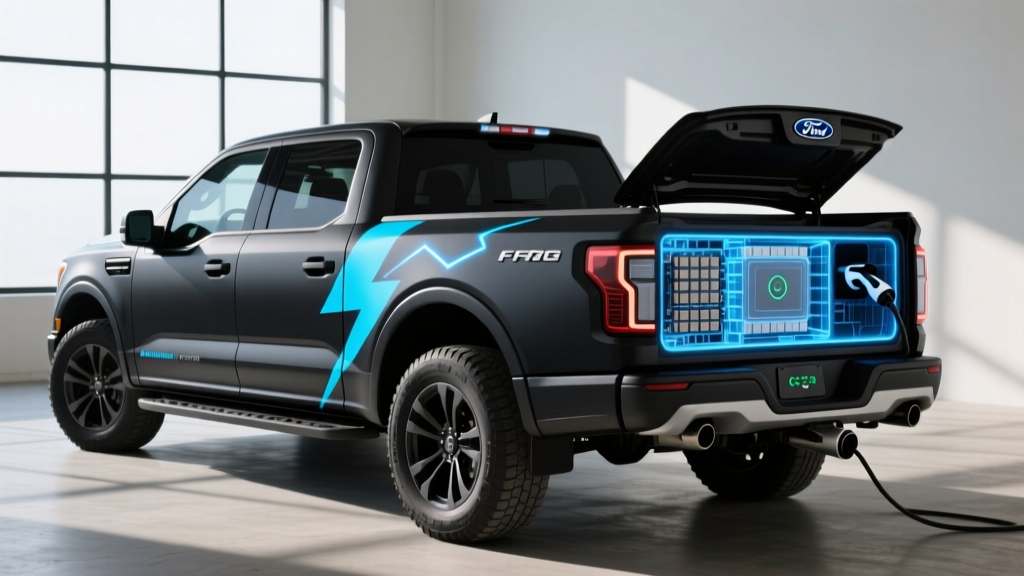
- Front trunk (frunk): 14.1 cu ft — lockable, drainable, with a 400-lb payload capacity. This is the Lightning's party trick, replacing the engine bay with weatherproof storage.
- Bed: 5.5 ft (67.1 in) box, standard across all trims. 52.8 cu ft volume.
- Front legroom: 43.9 in / Rear legroom: 43.5 in (SuperCrew cab)
- Pro Power Onboard: Available 2.4 kW (standard) or 9.6 kW (optional) of onboard power via 120V and 240V outlets in the bed and cabin. The 9.6 kW option can run a welder, circular saw, or power your home during an outage via the Ford Charge Station Pro's V2H (vehicle-to-home) capability.
Tech highlights:
- 15.5" vertical touchscreen (Lariat/Platinum) or 12" touchscreen (Pro/XLT) with SYNC 4A
- Ford BlueCruise (Level 2 hands-free driving on pre-mapped divided highways — not self-driving; driver must remain attentive)
- Onboard scales with payload estimation and trailer tire-pressure monitoring
- Intelligent Range system adjusts range prediction for weather, terrain, and driving habits
Ford BlueCruise is a Level 2 driver-assistance system. It controls steering, acceleration, and braking on qualified highways, but the driver must remain engaged and ready to take over at all times. The cabin camera monitors eye gaze and will issue warnings — then slow the vehicle — if you look away. This is not autonomous driving; it's advanced cruise control with lane centering.
Notable drawbacks:
- Efficiency is poor compared to unibody EVs — expect 48–49 kWh/100mi
- DC fast charging at 150 kW peak trails competitors like the Hyundai Ioniq 5 (240 kW) and even the updated 2024+ Lightning (now with NACS port and slightly improved curves)
- The 2022 model year uses a CCS1 charge port, not the newer NACS (Tesla) standard. Adapters are available for Supercharger access, but native NACS didn't arrive until the 2025 model year
- Rear-seat headroom is tight for passengers over 6'2" due to the battery pack raising the floor
- Insurance costs run 15–25% higher than the gas F-150 equivalent
2022 F-150 Lightning Bolt Pattern and Wheel Specifications
For owners and buyers specifically researching the 2022 F-150 bolt pattern, here's the full wheel specification set:
- Bolt pattern: 6×135mm (6-lug)
- Center bore: 87.1mm
- Thread size: M14 × 1.5
- OEM wheel sizes: 18" (Pro, XLT), 20" (Lariat), 22" (Platinum)
- Lug torque spec: 150 lb-ft (165 Nm) — always use a torque wrench, never an impact gun alone
The 6×135mm pattern is shared with gas F-150s from 2004 onward, so the aftermarket wheel selection is enormous. However, the Lightning's curb weight (6,171–6,369 lb depending on trim and pack) exceeds most gas F-150 configurations. When selecting aftermarket wheels, verify the load rating per wheel meets or exceeds 1,650 lb per corner. Lightweight flow-formed or forged wheels designed for standard F-150s may not be rated for the Lightning's mass, especially when towing or carrying payload.
Who Should Buy the 2022 F-150 Lightning — And Who Shouldn't
Choose the 2022 F-150 Lightning if:
- You need a full-size truck bed and real towing capacity (up to 10,000 lb) with daily electric commuting under 200 miles
- Pro Power Onboard (9.6 kW) is valuable for job-site tools or home backup power
- You want a frunk for secure, weatherproof gear storage
- You can install a Level 2 home charger (essential for a 131 kWh pack — public charging alone is impractical)
- You find a used Pro or XLT near the $25,000 threshold to potentially capture the §25E credit
Look elsewhere if:
- You regularly tow over 200 miles between charges — range drops drastically under load
- You need 350+ miles of range — consider the Rivian R1T Dual-Motor Max (352 mi EPA) or wait for updated platforms
- You want native NACS charging without adapters — look at 2025+ Lightnings or Tesla/Rivian/GM vehicles
- You lack home charging access — the Lightning's 131 kWh pack makes public-only charging expensive and time-consuming
- 563 hp / 775 lb-ft with sub-4-second 0–60
- Massive 14.1 cu ft frunk with 400-lb capacity
- Pro Power Onboard up to 9.6 kW with V2H capability
- 10,000-lb towing capacity (ER)
- BlueCruise hands-free highway driving
- 6×135mm bolt pattern — huge wheel aftermarket
- Comfortable, spacious SuperCrew cabin
- 48–49 kWh/100mi — poor highway efficiency
- Real-world highway range 250–280 mi (ER), far below 320 EPA
- 150 kW peak DC charging is slow by 2026 standards
- CCS1 port (no native NACS on 2022 models)
- Most used examples exceed the $25,000 §25E credit cap
- Rear floor height compromises headroom and ingress
- Insurance premiums 15–25% above gas F-150
Frequently Asked Questions
What is the real-world range of the 2022 F-150 Lightning?
The Extended Range model carries a 320-mile EPA sticker, but real-world highway driving at 70 mph delivers roughly 250–280 miles. In cold weather (below 30°F), expect 200–230 miles. The Standard Range model's 240-mile EPA figure translates to approximately 185–210 highway miles. Towing a trailer can cut range by 40–50%.
How fast does the 2022 F-150 Lightning charge?
On DC fast charging, the Extended Range pack peaks at 150 kW, achieving a 10–80% charge in approximately 41 minutes. The Standard Range peaks at 120 kW with a 10–80% time of roughly 44 minutes. At home on Level 2, the Extended Range can accept up to 19.2 kW (80A) with the Ford Charge Station Pro, adding about 52 miles per hour. Standard Range is limited to 11.3 kW (48A), adding roughly 30 miles per hour.
How much does a used 2022 F-150 Lightning cost in 2026?
Used prices vary by trim, mileage, and condition. Expect to pay roughly $28,000–$33,000 for a Pro Standard Range, $35,000–$42,000 for an XLT, $48,000–$58,000 for a Lariat ER, and $60,000–$72,000 for a Platinum ER. Only Pro models priced at or below $25,000 may qualify for the $4,000 §25E used-EV tax credit.
Is the 2022 F-150 Lightning worth buying vs. competitors?
The 2022 Lightning excels as a practical, comfortable electric work truck with best-in-class frunk space and Pro Power Onboard. Against the Rivian R1T, it's more affordable and offers a larger bed but less range and slower charging. Against the Chevrolet Silverado EV (2024+), it has a shorter range and older charge port but a more proven platform and lower used-market pricing. For a daily-driver truck owner who can charge at home and doesn't tow long distances, the 2022 Lightning remains a strong value in 2026.
Does the 2022 F-150 Lightning qualify for the federal EV tax credit?
As a used vehicle in 2026, the 2022 Lightning is eligible only under the §25E used-EV credit, which caps at $4,000 and requires a sale price of $25,000 or less. Most Lightning trims sell above that threshold. The original §30D new-vehicle credit of up to $7,500 is no longer available for 2022 purchases. Always verify eligibility with the IRS guidelines and consult a tax professional.
What is the 2022 F-150 bolt pattern?
The 2022 F-150 Lightning uses a 6×135mm bolt pattern with an 87.1mm center bore and M14 × 1.5 lug threads. This is the same pattern used on gas F-150s since 2004, providing broad aftermarket wheel compatibility — but verify load ratings to account for the Lightning's 6,200+ lb curb weight.
Always verify specifications with fueleconomy.gov, the IRS, and Ford's official documentation before purchasing. Tax credit rules are subject to change; consult a qualified tax advisor for your specific situation.