The 2022 Chevy Bolt EUV at a Glance
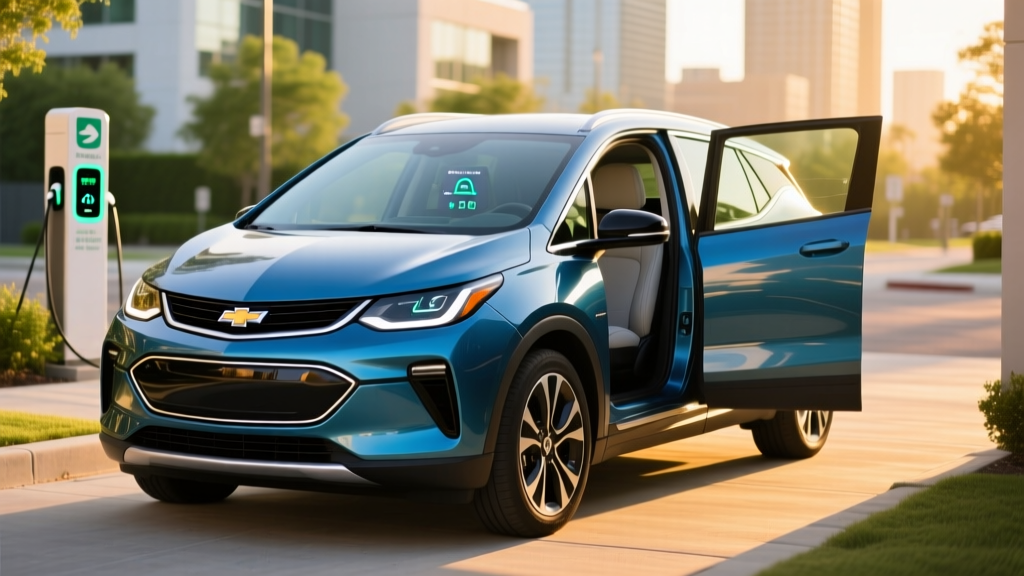
The 2022 Chevrolet Bolt EUV arrived as a stretched, more comfortable sibling to the standard Bolt EV — offering extra rear legroom, a slightly larger footprint, and a starting price that undercut nearly every crossover in the electric-vehicle market. Though Chevrolet discontinued the Bolt EUV after the 2023 model year to make way for next-generation Ultium-based EVs, the 2022 model remains a fixture on the used-EV market in 2026, and its combination of practicality and affordability continues to attract budget-minded buyers.
This review covers everything a current shopper or owner needs: exact EPA range, real-world efficiency, DC fast-charging limitations, battery chemistry, federal tax credit rules for used purchases, and how the Bolt EUV stacks up against rivals like the Hyundai Kona Electric, Kia Niro EV, and Nissan Leaf Plus.
| Spec | Value |
|---|---|
| EPA Range | 247 miles |
| Battery (usable) | 65 kWh, NMC (nickel-manganese-cobalt) |
| Motor / Drivetrain | Single front-mounted motor / FWD |
| Horsepower / Torque | 200 hp / 266 lb-ft |
| 0–60 mph | ~7.0 seconds |
| EPA Efficiency | 115 MPGe combined (29 kWh/100 mi) |
| Max DC Fast Charge | 55 kW (CCS) |
| Level 2 Charge Rate | 11.5 kW onboard charger |
| Cargo Volume (rear seats up / down) | 16.3 cu ft / 56.9 cu ft |
| Rear Legroom | 39.1 inches |
| Battery Warranty | 8 years / 100,000 miles |
| Original Base MSRP (2022) | $33,500 (LT) / $43,400 (Premier) |
Real-World Range: What the 247-Mile EPA Sticker Actually Means
The EPA rates the 2022 Bolt EUV at 247 miles of combined range. That number is achievable in moderate temperatures on suburban and city routes where regenerative braking recovers energy at every stoplight. But real-world conditions rarely match the test cycle perfectly.
Real-World Range Expectations
- City / suburban (50–70°F): 240–260 miles — regen-heavy driving can exceed the EPA sticker.
- Highway (70 mph, 50–70°F): 200–220 miles — the Bolt EUV's boxy crossover profile and lack of a heat pump increase consumption at sustained speed.
- Cold weather (20–35°F, mixed driving): 160–190 miles — expect a 25–35% range reduction due to battery resistance and cabin heating demands.
- Cold highway (below 30°F, 70 mph): 145–170 miles — worst-case scenario for road trips.
The Bolt EUV uses resistive cabin heating rather than a heat pump, which draws heavily from the 65 kWh battery in cold weather. Preconditioning the battery and cabin while still plugged in at home mitigates some of this loss, but the absence of a heat pump is a meaningful disadvantage versus competitors like the Hyundai Kona Electric (which added one for its 2022 refresh).
Charging Speed: The Bolt EUV's Biggest Limitation
Charging is where the 2022 Bolt EUV shows its age most clearly. The peak DC fast-charging rate is 55 kW on a CCS connector — a figure that was modest when the vehicle launched and feels increasingly dated in 2026, when rivals routinely accept 150–250 kW.
| Charging Level | Power | Speed / Time |
|---|---|---|
| Level 1 (120V household) | ~1.4 kW | ~4 miles per hour |
| Level 2 (240V home / public) | Up to 11.5 kW | ~37 miles per hour; full charge in ~7 hours |
| DC Fast Charge (CCS) | Peak 55 kW | 10–80% in ~55–65 minutes; adds ~100 mi in 30 min |
The 10–80% DC fast-charge time of roughly 55 to 65 minutes is the critical figure for road-trip planning. At a 55 kW peak, the Bolt EUV adds approximately 100 miles of range in a half-hour stop — usable, but not competitive with the 15–20 minute 10–80% sessions you'll find in a Hyundai Ioniq 5 or Tesla Model Y on a 350 kW charger.
The charge curve is relatively flat, which is a small positive: the Bolt EUV sustains close to its peak rate through a wider state-of-charge window than some competitors that spike to a high peak and taper aggressively. Still, the low ceiling means road trips require more patience and longer stops. If your driving is overwhelmingly local — commuting, school runs, errands — and you charge at home overnight on Level 2, the DC limitation matters far less.
On Level 2, the 11.5 kW onboard charger is a genuine strength. Many EVs in this price class cap at 7.2 kW, so the Bolt EUV's ability to replenish ~37 miles of range per hour means a full overnight charge in about 7 hours is realistic on a properly installed 48-amp home circuit.
Battery, Powertrain, and Efficiency Deep Dive
The 2022 Bolt EUV uses a 65 kWh usable NMC (nickel-manganese-cobalt) lithium-ion battery pack supplied by LG Energy Solution, manufactured at the Ultium Cells joint-venture plant in Lordstown, Ohio. NMC chemistry offers higher energy density than LFP (lithium iron phosphate), which is why GM was able to fit 247 miles of range into a relatively compact crossover platform.
The trade-off is that NMC cells are more sensitive to sustained high state-of-charge and extreme temperatures than LFP. For long-term battery health, GM recommends:
- Setting the charge target to 80% for daily driving and reserving 100% for trips.
- Using the "Hilltop Reserve" mode if you live at high elevation or frequently descend grades.
- Plugging in during extreme cold to enable battery conditioning.
The single front-mounted permanent-magnet motor produces 200 horsepower and 266 lb-ft of torque, sending power to the front wheels. The 0–60 mph time of approximately 7.0 seconds is adequate for merging and passing but won't thrill anyone coming from a dual-motor EV. The instant torque delivery does make the Bolt EUV feel punchy around town, where most owners spend their miles.
EPA efficiency is rated at 115 MPGe combined (29 kWh per 100 miles), which translates to roughly $0.04–$0.05 per mile at the national average residential electricity rate of ~$0.16/kWh. That's a fraction of the $0.14–$0.18 per mile a comparable gas crossover burns at 28 MPG and $3.80/gallon.
Interior, Cargo, and Technology
The "EUV" designation stands for Electric Utility Vehicle, and the primary benefit over the standard Bolt EV is the stretched wheelbase, which yields 39.1 inches of rear legroom — three full inches more than the Bolt EV hatchback and competitive with compact SUVs like the Honda CR-V. Two adults can sit comfortably in the back on long drives, and rear-facing child seats fit without pushing the front passenger into the dash.
Cargo space measures 16.3 cubic feet behind the rear seats and 56.9 cubic feet with the 60/40 split rear seats folded. There is no front trunk (frunk), as the motor and power electronics occupy the space under the hood.
Technology highlights include:
- Infotainment: A 10.2-inch diagonal touchscreen with wireless Apple CarPlay and Android Auto, plus built-in Google-based navigation on Premier trims.
- Driver assist: Chevy Safety Assist suite — automatic emergency braking, forward collision alert, lane keep assist, following distance indicator, and IntelliBeam auto high beams.
- Super Cruise (optional): GM's hands-free Level 2 driving system was available on the Premier trim with the $2,100 Technology Package. Super Cruise operates on over 400,000 miles of pre-mapped divided highways in the US and Canada. Note: this is SAE Level 2 — the driver must remain attentive, and the system monitors via a steering-column camera.
- One-Pedal Driving: Engaging "L" mode provides strong regenerative braking that allows true one-pedal driving in most city conditions, reducing brake wear significantly.
Drawbacks in the cabin include hard plastics on the lower door panels and center console, a lack of ventilated front seats (heated only, and only on Premier or with the comfort package), and the absence of a spare tire — GM supplies a tire inflator kit instead.
Pricing, Tax Credits, and Used-EV Economics
When new, the 2022 Bolt EUV started at $33,500 for the LT trim and $43,400 for the Premier trim, before destination charges. GM's aggressive price cuts in early 2023 (slashing the MSRP of remaining new inventory) reset expectations, and by 2026, the 2022 Bolt EUV trades primarily on the used market.
| Scenario | Approximate Cost |
|---|---|
| Original 2022 LT MSRP | $33,500 |
| Original 2022 Premier MSRP | $43,400 |
| Used 2022 LT (2026 market avg.) | $18,000–$23,000 |
| Federal Used-EV Credit (§25E) | Up to $4,000 (30% of sale price, max $4,000) |
| Effective price after §25E credit | $14,000–$19,000 (if eligible) |
Federal tax credit note: The original §30D new-vehicle credit no longer applies to 2022 Bolt EUV purchases in 2026, since the vehicle is used. However, the §25E Previously-Owned Clean Vehicle Credit may apply: it provides 30% of the sale price up to $4,000 for qualifying used EVs sold by a licensed dealer for $25,000 or less. Income caps apply ($75,000 single / $150,000 joint filers), and the vehicle must be at least two model years old — which a 2022 model satisfies in 2026. Always verify current eligibility on IRS.gov and consult a tax professional, as rules and qualifying model lists are updated periodically.
Warranty and Long-Term Battery Outlook
GM backs the 2022 Bolt EUV's battery and electric drivetrain with an 8-year / 100,000-mile limited warranty (whichever comes first), which covers defects and capacity loss below 60% of original capacity. The bumper-to-bumper warranty was 3 years / 36,000 miles from original in-service date.
For a 2022 model purchased used in 2026, that means roughly 4–6 years of battery/powertrain coverage remains, depending on mileage. The Bolt platform has demonstrated solid real-world battery longevity: data from owner communities and fleet analyses show typical degradation of 8–12% over the first 100,000 miles, meaning most Bolt packs retain 88–92% of their original capacity at the five-year mark. The 2022 model year also benefits from GM's updated battery-module design introduced after the 2021 recall, which improved cell manufacturing consistency.
If a full battery replacement were needed out of warranty, expect a cost in the range of $14,000–$18,000 (parts and labor) based on current GM dealer pricing for the 65 kWh pack — a significant figure, though the likelihood of needing a full replacement within the warranty period is low based on historical failure rates.
How the 2022 Bolt EUV Compares to Key Rivals
| Spec | 2022 Chevy Bolt EUV | 2022 Hyundai Kona Electric | 2022 Kia Niro EV |
|---|---|---|---|
| EPA Range | 247 mi | 258 mi | 239 mi |
| Battery | 65 kWh NMC | 64 kWh NMC | 64.8 kWh NMC |
| DC Fast Charge Peak | 55 kW | ~50 kW (2022) | ~50 kW (2022) |
| Horsepower | 200 hp | 201 hp | 201 hp |
| Rear Legroom | 39.1 in | 33.4 in | 38.4 in |
| Cargo (behind rear seats) | 16.3 cu ft | 19.2 cu ft | 18.5 cu ft |
| Level 2 Onboard Charger | 11.5 kW | 7.2 kW | 7.2 kW |
The Bolt EUV's standout advantage is rear legroom — nearly six inches more than the Kona Electric — and its 11.5 kW onboard Level 2 charger, which charges at home significantly faster than either rival. Its weaknesses are DC fast-charging speed (though the Kona and Niro are similarly limited in their 2022 generations) and slightly less cargo volume than both competitors.
Choose the 2022 Bolt EUV if:
- You prioritize rear-seat comfort for adults or child seats.
- You charge at home and rarely take road trips over 200 miles.
- You want the fastest Level 2 home charging in this price class.
- You're buying used and want to leverage the $4,000 §25E credit.
Look elsewhere if:
- You regularly road-trip and need faster DC charging (consider a used Hyundai Ioniq 5 or Tesla Model 3).
- You need AWD for snow-belt winters — the Bolt EUV is FWD only.
- You want a frunk or maximum cargo volume.
Pros and Cons
Pros
- Best-in-class rear legroom for a compact EV crossover
- Strong 11.5 kW Level 2 onboard charger for fast home replenishment
- 247-mile EPA range is practical for most daily needs
- Super Cruise availability (Premier) is rare at this price point
- Low used-market pricing + potential $4,000 §25E credit
- One-pedal driving with strong regen reduces brake wear
Cons
- 55 kW DC fast charging is slow for road trips (~55–65 min for 10–80%)
- FWD only — no AWD option for snow or rough weather
- No heat pump — cold-weather range loss is significant (25–35%)
- Interior materials feel budget-grade in lower trims
- No frunk; cargo space trails some rivals
- Discontinued platform — no future OTA or hardware updates expected
Frequently Asked Questions
What is the real-world range of the 2022 Chevy Bolt EUV?
The EPA rates it at 247 miles combined. In real-world driving, expect 240–260 miles in warm city conditions, 200–220 miles on the highway at 70 mph, and 160–190 miles in cold weather (below 35°F) due to resistive heating and battery resistance. Highway driving at 75+ mph in winter can drop range to 145–170 miles.
How fast does the 2022 Bolt EUV charge?
On DC fast charging (CCS connector), it peaks at 55 kW, achieving a 10–80% charge in approximately 55–65 minutes. At home on a 240V Level 2 charger, the 11.5 kW onboard charger delivers about 37 miles of range per hour, with a full charge taking roughly 7 hours. Level 1 (120V) adds about 4 miles per hour.
Does the 2022 Bolt EUV qualify for a federal tax credit in 2026?
The §30D new-vehicle credit no longer applies. However, the §25E Previously-Owned Clean Vehicle Credit may provide up to $4,000 (30% of sale price) if you purchase from a licensed dealer for $25,000 or less and your modified adjusted gross income does not exceed $75,000 (single) or $150,000 (joint). Verify current rules at IRS.gov and consult a tax professional.
Is the 2022 Bolt EUV worth buying used in 2026?
For buyers who primarily drive locally and charge at home, the Bolt EUV is one of the best values in the used-EV market. With prices in the $18,000–$23,000 range (potentially $14,000–$19,000 after the §25E credit), 247 miles of EPA range, and a spacious rear seat, it's hard to beat on cost per mile of range. The main compromise is slow DC fast charging, which makes road trips less convenient than in newer 150+ kW platforms.
What is the battery warranty on a used 2022 Bolt EUV?
GM's battery and powertrain warranty is 8 years / 100,000 miles from the original in-service date. For a 2022 model first sold in mid-2022, coverage extends to approximately mid-2030 or 100,000 miles. The warranty covers defects and capacity loss below 60% of original capacity. Always request the vehicle's in-service date and current mileage to calculate remaining coverage.
Does the Bolt EUV have Super Cruise?
Yes, Super Cruise was available on the Premier trim as part of the $2,100 Technology Package. It enables hands-free driving on over 400,000 miles of compatible divided highways. This is an SAE Level 2 system — the driver must remain attentive and the cabin camera monitors head and eye position. It does not handle surface streets, construction zones, or unmapped roads.