Quick Verdict: The Budget EV That Still Delivers
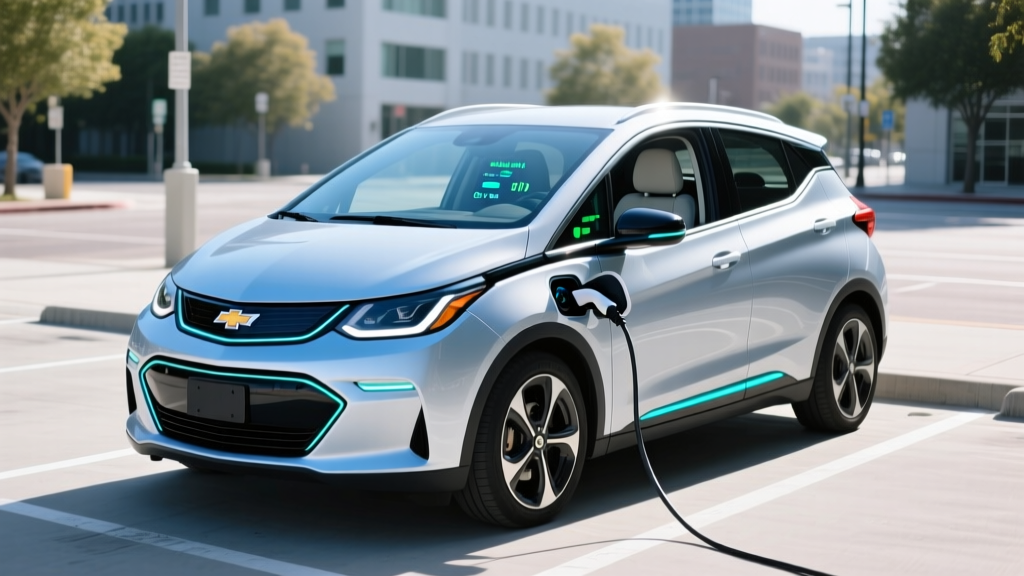
The 2022 Chevrolet Bolt EV arrived with a dramatic price cut — dropping to a $26,500 base MSRP — making it one of the most affordable long-range electric vehicles ever sold in the United States. Though Chevrolet ended Bolt EV production in late 2023 to retool for next-generation Ultium-based models, the 2022 Bolt EV remains a compelling option on the used EV market in 2026, particularly for buyers seeking an affordable daily commuter with legitimate road-trip capability.
With an EPA-estimated 259 miles of range, a roomy hatchback body, and peppy city acceleration, the Bolt EV punches well above its price class. Its main weakness — slow DC fast charging by modern standards — is a real trade-off you need to understand before buying. This review breaks down every spec, real-world behavior, and ownership cost you need to evaluate.
Range, Efficiency, and Real-World Expectations
The 2022 Bolt EV carries a 65 kWh usable lithium-ion battery pack using NMC (nickel manganese cobalt) chemistry. That pack delivers an EPA-estimated 259 miles of combined range — a figure that held strong across multiple independent tests when the car was new.
EPA Estimate: 259 miles (combined city/highway)
Highway driving (70-75 mph): Expect 220–240 miles. The Bolt EV's efficiency drops noticeably at sustained highway speeds due to its upright hatchback aerodynamics.
City/suburban driving: 260–280+ miles is achievable, thanks to aggressive regenerative braking that recaptures energy in stop-and-go traffic.
Cold weather (below 32°F): Plan for a 20–30% reduction, yielding roughly 180–210 miles. The Bolt EV uses a resistive heater rather than a heat pump, which draws more energy from the battery in winter.
Efficiency is rated at 120 MPGe combined (131 city / 109 highway) per fueleconomy.gov. In energy terms, that translates to approximately 28 kWh per 100 miles — competitive with rivals like the Nissan Leaf Plus and Hyundai Kona Electric of the same era.
| Spec | Value |
|---|---|
| EPA Range | 259 miles |
| Battery (usable) | 65 kWh, NMC chemistry |
| Efficiency | 120 MPGe / 28 kWh/100 mi |
| Motor | Single permanent-magnet, FWD |
| Horsepower | 200 hp |
| Torque | 266 lb-ft |
| 0–60 mph | ~6.5 seconds |
| Max DC Fast Charge | 55 kW (CCS) |
| 10–80% DC Time | ~60 minutes |
| Level 2 Home Charging | 11.5 kW (approx. 39 mi/hr) |
| Base MSRP (2022) | $26,500 (1LT) |
| Battery Warranty | 8 years / 100,000 miles |
Charging Speed: The Bolt EV's Known Limitation
Charging is where the 2022 Bolt EV shows its age relative to 2025–2026 competitors. The maximum DC fast-charge rate is 55 kW via its CCS connector — adequate for highway trips if you plan ahead, but far below the 150–350 kW rates now common on newer platforms.
| Charging Level | Power / Voltage | Rate (miles added per hour) | Notes |
|---|---|---|---|
| Level 1 (120V outlet) | ~1.4 kW | ~4 miles/hr | Emergency/trickle only |
| Level 2 (240V home) | 11.5 kW | ~39 miles/hr | Full charge in ~7 hours |
| DC Fast Charge | 55 kW peak (CCS) | ~150 miles/hr (peak) | 10–80% in ~60 min; tapers above 80% |
On a DC fast charger, expect a 10–80% session to take approximately 60 minutes. The charge curve is relatively flat up to about 60% State of Charge, then tapers progressively. Above 80%, charging slows dramatically — a common trait in NMC batteries but more pronounced here due to the lower peak rate and the Bolt EV's thermal management approach, which relies on passive cooling rather than active liquid preconditioning for DC sessions.
Home charging is excellent. The onboard 11.5 kW AC charger is one of the fastest in its class. On a 48-amp Level 2 home circuit, you'll add roughly 39 miles per hour of charging, meaning a depleted battery reaches full overnight in about seven hours. Most owners will rarely need public charging for daily use.
Performance and Driving Dynamics
The Bolt EV's single front-mounted motor produces 200 horsepower and 266 lb-ft of torque, delivered to the front wheels. The instant torque gives it a lively feel around town — the 0–60 mph time of approximately 6.5 seconds is brisk for an affordable compact car, and the Bolt EV will surprise drivers pulling away from stoplights.
Ride quality is firm but compliant, with a low center of gravity from the floor-mounted battery keeping body roll in check. The steering is light and precise, making the Bolt EV easy to maneuver in tight urban environments. At highway speeds, there's some wind noise from the tall greenhouse, and the regenerative braking system — while effective — lacks the true one-pedal driving smoothness of competitors like the Tesla Model 3.
The Bolt EV offers a "One Pedal Driving" mode and a Regen on Demand paddle behind the steering wheel, both of which can bring the car to a complete stop without touching the brake pedal. These features are genuinely useful and help maximize range in city driving.
Interior, Cargo, and Technology
Despite its compact exterior, the Bolt EV's interior is surprisingly spacious thanks to its tall hatchback design:
- Front legroom: 42.1 inches
- Rear legroom: 36.0 inches
- Cargo volume (behind rear seats): 27.8 cubic feet
- Cargo volume (seats folded): 56.6 cubic feet
That cargo space rivals small crossovers and easily handles groceries, luggage for two, or a week's worth of commuting gear.
The infotainment system centers on a 10.2-inch touchscreen running Chevrolet's Infotainment 3 system with wireless Apple CarPlay and Android Auto. The interface is responsive and logically laid out, with physical knobs for volume and tuning — a welcome feature. A 10.2-inch digital driver display replaces traditional gauges, showing speed, range, energy flow, and regen levels.
Available driver-assist features include:
- Automatic Emergency Braking with Pedestrian Detection
- Lane Keep Assist with Lane Departure Warning
- Following Distance Indicator
- Intellibeam auto high beams
- Adaptive Cruise Control (available on 2LT trim)
- Surround Vision 360° camera (2LT)
Notable: The Bolt EV does not offer GM's Super Cruise hands-free driving system. All driver-assist features are SAE Level 2, meaning the driver must remain fully engaged with hands on the wheel and eyes on the road at all times.
The 2022 Bolt EV's driver-assist features (Lane Keep Assist, Adaptive Cruise Control) are SAE Level 2 systems. They assist with steering and speed but do NOT constitute self-driving. The driver is legally and practically responsible for all vehicle control at all times.
Pricing, Trims, and Federal Tax Credit Eligibility
When new, the 2022 Bolt EV was offered in two trims:
- 1LT: $26,500 MSRP (before destination)
- 2LT: $30,300 MSRP (adds leather, Bose audio, 360° camera, heated rear seats, adaptive cruise)
Used Market Pricing in 2026
As a discontinued model, the 2022 Bolt EV is available only on the used market in 2026. Expect to find examples priced between $14,000 and $22,000 depending on mileage, condition, and trim. Lower-mileage 2LT models command the premium end of that range.
Federal Tax Credit for Used EVs (IRS §25E)
Buying a used 2022 Bolt EV may qualify you for the Used Clean Vehicle Credit (IRS §25E), which provides up to $4,000 or 30% of the sale price (whichever is less) when purchased from a licensed dealer. Key eligibility requirements per irs.gov:
- Vehicle age: Must be at least 2 model years old (2022 qualifies in 2026)
- Sale price cap: $25,000 or less
- Buyer income limits: AGI ≤ $75,000 (single), ≤ $112,500 (head of household), ≤ $150,000 (joint)
- Dealer requirement: Must purchase from a licensed dealer (private-party sales excluded)
- First transfer: The credit applies to the first qualified resale after August 16, 2022 — check with the dealer whether this specific VIN has already been claimed
- Frequency limit: One used EV credit per taxpayer every 3 years
Important: The original new-vehicle §30D credit no longer applies to the Bolt EV since it is discontinued and only available used. Always verify eligibility with a tax professional and consult current IRS guidance before purchasing.
| Scenario | Price Range | Max §25E Credit | Effective Price |
|---|---|---|---|
| 1LT, higher mileage | $14,000–$16,500 | $4,000–$4,200 (capped at $4,000) | $10,000–$12,500 |
| 1LT, lower mileage | $16,500–$19,000 | $4,000 | $12,500–$15,000 |
| 2LT, average condition | $19,000–$22,000 | $4,000 | $15,000–$18,000 |
Battery Longevity and Warranty
The 2022 Bolt EV's 65 kWh NMC battery pack is covered by Chevrolet's 8-year / 100,000-mile battery and powertrain warranty. This warranty guarantees the battery will retain sufficient capacity (Chevrolet defines this as above 60% of original capacity, though real-world degradation data suggests most Bolt packs lose only 8–12% over the first 100,000 miles).
The 2022 model year benefits from GM's experience with the Bolt platform — earlier recall issues related to battery fire risk (which affected 2017–2019 models and led to replacement battery packs) were resolved well before the 2022 production run. The 2022 Bolt EV uses the updated battery module design and is not subject to those recalls.
For 2026 buyers, a well-maintained 2022 Bolt EV with 30,000–50,000 miles should still have the majority of its battery warranty intact and significant remaining battery life. Request a battery State of Health (SoH) report from the dealer or use an OBD-II diagnostic tool to check capacity retention before purchasing.
Pros and Cons
- 259-mile EPA range — still competitive in 2026
- Excellent value on the used market ($14K–$22K before credit)
- Up to $4,000 used EV tax credit (§25E)
- Fast 11.5 kW Level 2 home charging
- Spacious hatchback cargo area (27.8 cu ft)
- Peppy 200 hp acceleration for the class
- Wireless Apple CarPlay / Android Auto
- Strong battery reliability record post-recall fix
- Slow 55 kW DC fast charging (60 min for 10–80%)
- No heat pump — significant cold-weather range loss
- Discontinued model — no new production
- No advanced ADAS (Super Cruise unavailable)
- CCS connector only — no NACS without adapter
- Firm ride quality on rough roads
- Some interior materials feel budget-grade
Who Should Buy the 2022 Bolt EV?
Choose the 2022 Bolt EV if:
- You need an affordable daily commuter with 250+ mile range
- You can charge at home (Level 2) and rarely take trips over 200 miles
- You want a practical hatchback with genuine cargo versatility
- Your budget is $15K–$22K (after potential tax credit)
- You prioritize value and low operating costs over fast road-trip charging
Look elsewhere if:
- You regularly drive 300+ mile highway trips and need fast DC charging
- You live in a cold climate and need a heat pump for winter range preservation
- You want the latest ADAS or hands-free driving features
- You prefer NACS compatibility for Tesla Supercharger access without adapters
Frequently Asked Questions
What is the real-world range of the 2022 Chevrolet Bolt EV?
The EPA rates the 2022 Bolt EV at 259 miles combined. In real-world driving, expect 220–240 miles on the highway, 260–280 miles in city conditions, and as low as 180–210 miles in freezing temperatures due to the lack of a heat pump.
How fast does the 2022 Bolt EV charge?
At a DC fast charger, the Bolt EV peaks at 55 kW, taking about 60 minutes for a 10–80% session. At home on a Level 2 (240V, 48A) charger, it charges at 11.5 kW, adding about 39 miles per hour and fully recharging in roughly 7 hours.
Does the 2022 Bolt EV qualify for a federal tax credit in 2026?
As a used vehicle, it may qualify for the IRS §25E Used Clean Vehicle Credit of up to $4,000 when purchased from a licensed dealer, subject to income caps ($75K single / $150K joint), a $25,000 sale price cap, and the credit not having been previously claimed on that VIN. Consult a tax professional and check irs.gov for current rules.
Is the 2022 Bolt EV worth buying versus competitors?
At used-market prices of $14K–$22K, the Bolt EV offers more range and cargo space than a used Nissan Leaf and undercuts used Hyundai Kona Electric and Tesla Model 3 pricing significantly. Its main drawback is slow DC charging. If your driving is mostly local with home charging, the Bolt EV is one of the best-value EVs available.
What are the biggest pros and cons?
Top pros: 259-mile range, low used pricing, fast home charging, spacious hatchback design, and potential $4,000 tax credit. Top cons: 55 kW DC charging is slow for road trips, no heat pump hurts cold-weather range, and the model is discontinued.
Is the Bolt EV battery reliable?
The 2022 model uses GM's updated battery module design following earlier recalls on 2017–2019 models. Real-world data shows typical degradation of 8–12% over 100,000 miles, and the 8-year/100,000-mile warranty provides substantial coverage. Most 2022 examples in 2026 should have significant warranty remaining.