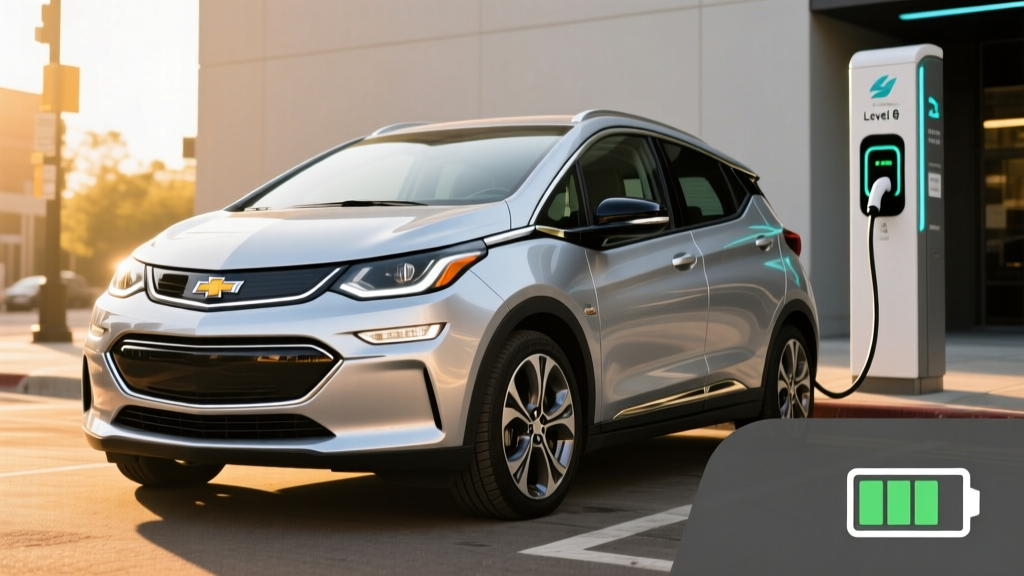
The 2022 Chevrolet Bolt EV 2LT occupies a rare position in the electric-vehicle market: it is one of the most affordable ways to access a 250+ mile EPA-rated EV, especially on the used market where federal tax credits still apply. Now that we are well into 2026 and Chevrolet has replaced the original Bolt platform with the next-generation Bolt EV (and the Equinox EV fills the mainstream slot), the 2022 model year remains a compelling secondhand buy for budget-conscious commuters who need proven range without the premium pricing of a Tesla Model 3 or Hyundai Ioniq 5.
This review breaks down the 2022 Bolt EV 2LT — the top-trim hatchback with leather, a 360-degree camera, and a 10.2-inch infotainment display — covering its real-world range, charging behavior, ownership costs, and whether it still holds up against newer competitors.
2022 Chevrolet Bolt EV 2LT: Core Specifications
| Specification | Value |
|---|---|
| EPA Range | 259 miles |
| Battery Capacity (Usable) | 65 kWh (NMC chemistry) |
| EPA Efficiency | 120 MPGe combined (28 kWh/100 mi) |
| Motor Output | 200 hp / 266 lb-ft torque |
| Drivetrain | Front-wheel drive (single motor) |
| 0–60 mph | ~6.5 seconds |
| Max DC Fast Charge Rate | 55 kW (CCS1 connector) |
| Level 2 Charge Rate | 11.5 kW (48A) |
| Cargo Volume (rear seats up / down) | 16.6 cu ft / 57.0 cu ft |
| Rear Legroom | 36.0 inches |
| Battery Warranty | 8 years / 100,000 miles |
| Original MSRP (2LT) | $38,300 (before destination) |
Real-World Range: What the EPA Sticker Doesn't Tell You
Real-World Expectation: ~220–240 miles on mixed highway driving at 70 mph; ~170–195 miles in sub-freezing winter conditions with cabin heat; up to 260+ miles in mild city driving with regenerative braking engaged.
The 2022 Bolt EV's 259-mile EPA rating was a significant upgrade from the pre-2020 model's 238 miles, thanks to GM's revised battery pack with improved energy density in its NMC (nickel manganese cobalt) lithium-ion cells. The 65 kWh usable capacity provides a solid buffer for daily driving, but real-world results vary considerably based on speed, temperature, and terrain.
On a 70-mph highway loop in moderate temperatures (65–75°F), expect to see between 220 and 240 miles before the battery reaches a low state of charge. The Bolt EV's relatively upright hatchback shape creates more aerodynamic drag than a sleeker sedan like the Tesla Model 3, which hurts efficiency at sustained highway speeds. In city driving where regenerative braking recaptures energy at every stop, owners regularly report matching or slightly exceeding the EPA figure.
Cold weather is the Bolt's biggest range adversary. Without a heat pump (GM reserved that for the Bolt EUV and later models), the 2022 Bolt EV relies on resistive cabin heating, which draws directly from the traction battery. In temperatures below 32°F, plan for a 25–35% range reduction. A 259-mile EPA rating can shrink to 170–195 miles on a cold winter highway run. Preconditioning the battery while plugged in at home mitigates some of this loss but does not eliminate it.
According to fueleconomy.gov, the 2022 Bolt EV achieves 131 MPGe city, 109 MPGe highway, and 120 MPGe combined — translating to approximately 28 kWh per 100 miles. That efficiency figure remains competitive in 2026, though newer platforms like the Hyundai Ioniq 5 (around 30 kWh/100 mi for AWD trims) and Tesla Model 3 RWD (~25 kWh/100 mi) push the envelope further.
Charging Speed: The Bolt EV's Biggest Limitation
| Charging Level | Power / Rate | Miles Added Per Hour | Notes |
|---|---|---|---|
| Level 1 (120V household) | ~1.4 kW (12A) | ~4 miles/hr | Emergency/trickle only |
| Level 2 (240V home/public) | 11.5 kW (48A) | ~39 miles/hr | Full charge in ~7 hours |
| DC Fast Charge (CCS1) | 55 kW peak | ~160 miles/hr (peak) | 10–80% in ~55–60 minutes |
Charging is where the 2022 Bolt EV shows its age most clearly. The 55 kW peak DC fast-charge rate was already behind the curve in 2022, and in 2026 it trails competitors significantly. For context, the Hyundai Ioniq 5 peaks at 240 kW (10–80% in ~18 minutes), the Tesla Model 3 at 170 kW (~25 minutes), and even the budget-oriented Nissan Leaf Plus managed 100 kW.
The Bolt EV's DC charging curve is notably flat but low. It sustains close to 55 kW from roughly 10% to 50% state of charge, then tapers gradually through the 50s and 60s kW range before dropping sharply above 80%. A 10–80% session takes approximately 55 to 60 minutes at a capable CCS1 station — which means a 300-mile road trip with one charge stop will add at least an hour to your travel time.
For home charging, the Bolt EV's 11.5 kW onboard charger is genuinely strong. On a properly installed 48-amp Level 2 circuit (requiring a 60-amp breaker), you will add roughly 39 miles of range per hour, and a full overnight charge from near-empty takes about 7 hours. This makes the Bolt an excellent daily commuter when home charging is available — plug in at night, wake up to a full battery every morning, and rarely think about range.
The CCS1 connector is standard, meaning access to Electrify America, EVgo, and ChargePoint DC networks. However, the Bolt EV does not natively support Tesla's NACS connector. As of 2026, GM has transitioned new vehicles to NACS, but 2022 Bolt owners can use a GM-approved CCS-to-NACS adapter to access Tesla Supercharger stalls (V2 and V3) — though the Bolt's 55 kW cap means you will never approach the stall's maximum output regardless.
Performance and Driving Dynamics
The 2022 Bolt EV's single front-mounted permanent-magnet motor produces 200 horsepower and 266 lb-ft of torque. That torque figure is available instantly from zero RPM, which makes the Bolt feel punchy around town and responsive in stoplight-to-stoplight driving. The 0–60 mph time of approximately 6.5 seconds is not sports-car territory, but it is quick enough for confident highway merging and passing.
The driving experience is dominated by two characteristics: one-pedal driving capability and a firm but compliant ride. GM's "Driving Mode" selector includes a "L" (low) mode that maximizes regenerative braking, allowing most drivers to operate the car without touching the brake pedal in normal traffic. A steering-wheel paddle provides additional regen on demand. This system works well and reduces brake wear significantly — many Bolt owners report original brake pads at 50,000+ miles.
Ride quality is acceptable for a subcompact hatchback, though the Bolt's relatively short wheelbase (102.4 inches) and stiff suspension tuning mean you feel sharper bumps more than you would in a larger crossover. Road noise at highway speeds is noticeable, and the lack of a front motor means no all-wheel-drive option. The Bolt EV is strictly front-wheel drive, which is fine for most commutes but limits traction in heavy snow compared to AWD EVs.
Interior, Tech, and the 2LT Trim Advantage
The 2LT is the top trim for the 2022 Bolt EV, and it adds meaningful comfort and technology over the base 1LT. Standard 2LT features include perforated leather-appointed seating, heated front seats, a heated steering wheel, a 360-degree surround-view camera, wireless Apple CarPlay and Android Auto, a 7-speaker Bose premium audio system, and a 10.2-inch diagonal color touchscreen infotainment display.
The infotainment system runs GM's Infotainment 3 software, which is responsive and intuitive. Physical knobs for volume and tuning remain — a practical choice that many owners prefer over touchscreen-only interfaces. The 8-inch digital driver display provides speed, range, power consumption, and navigation information, though it lacks the configurability of newer digital cockpits.
Driver-assistance technology on the 2LT includes Chevy Safety Assist: automatic emergency braking with pedestrian detection, forward collision alert, lane keep assist with lane departure warning, following distance indicator, and automatic high beams. Adaptive cruise control is available but was not standard on all 2LT configurations — check the window sticker or build sheet for the "Driver Confidence II" package.
Cargo space is generous for the hatchback form factor: 16.6 cubic feet behind the rear seats and 57.0 cubic feet with the 60/40 split rear seats folded. That is competitive with the Volkswagen ID.4 (30.3 / 64.2 cu ft for a larger crossover) and substantially more than a Tesla Model 3 trunk (23 cu ft). The Bolt's tall roofline makes loading bulky items easier than in a sedan.
Pricing, Tax Credits, and Total Ownership Cost
| Item | Amount |
|---|---|
| Original MSRP (2LT, before destination) | $38,300 |
| Destination Charge | $995 |
| Total Original MSRP | $39,295 |
| Typical 2026 Used Price (30K–50K mi) | $16,000–$22,000 |
| Federal Used EV Tax Credit (§25E) | Up to $4,000 (30% of sale price, max $4,000) |
| Effective Price After Credit | ~$12,000–$18,000 |
The 2022 Bolt EV is no longer available new, so the relevant pricing question in 2026 is used-market value and tax-credit eligibility. The original MSRP of $39,295 for the 2LT has dropped significantly in the used market, with well-maintained examples at 30,000–50,000 miles selling for $16,000–$22,000 depending on condition, location, and market dynamics.
The critical advantage: the Bolt EV qualifies for the IRS §25E Used Clean Vehicle Credit, which provides 30% of the sale price up to a maximum of $4,000. According to IRS guidelines, eligibility requires:
- Vehicle price cap: Sale price must be $25,000 or less (the Bolt EV easily qualifies at current used prices)
- Buyer income limits: Modified AGI must not exceed $75,000 (single), $112,500 (head of household), or $150,000 (joint filers)
- Vehicle age: Must be at least 2 model years old (the 2022 model qualifies in 2026)
- Dealer requirement: Must be purchased from a licensed dealer who reports the sale to the IRS
- Point-of-sale transfer: The credit can be transferred to the dealer at purchase, reducing your out-of-pocket cost immediately
- One-time use: Each buyer can claim this credit only once every 3 years
For a $18,000 used 2022 Bolt EV 2LT, the §25E credit would be $4,000 (since 30% of $18,000 = $5,400, but the cap is $4,000), bringing the effective cost to approximately $14,000. That is extraordinary value for a 259-mile-range EV with leather, Bose audio, and a full suite of safety technology.
Note: The §30D new vehicle tax credit of up to $7,500 no longer applies to used purchases. The Bolt EV was eligible for the full $7,500 when new (before GM hit the original manufacturer cap in late 2022), but that credit has since been replaced by the used-vehicle pathway for secondhand buyers.
Battery Health, Warranty, and Longevity
GM warranties the 2022 Bolt EV's battery pack for 8 years or 100,000 miles (whichever comes first) against defects and excessive capacity loss. The warranty guarantees the battery will retain at least 60% of its original capacity during the coverage period, though in practice, most Bolt EVs show far less degradation.
Real-world data from Bolt EV owners at 50,000–80,000 miles suggests typical capacity loss of 5–10% over the first 3–4 years, depending on charging habits and climate exposure. The NMC chemistry in the Bolt is proven and well-understood. To maximize longevity:
- Avoid routinely charging to 100% unless needed for a long trip — set the charge limit to 80–90% for daily use
- Minimize DC fast charging when Level 2 is available (the Bolt's slow DC rate actually helps here, as it generates less heat)
- Use preconditioning in extreme cold to warm the battery before driving
- Avoid leaving the vehicle at very low state of charge (below 10%) for extended periods
If battery replacement were ever needed out of warranty, estimates for the 65 kWh pack run $12,000–$18,000 including labor as of 2026, though this is a worst-case scenario that very few Bolt owners have faced.
It is also worth noting that GM issued a recall for 2017–2019 Bolt EVs related to battery fire risk, which led to battery pack replacements under warranty. The 2022 model year uses the revised, post-recall battery pack and is not subject to that recall. GM replaced affected packs with new units that actually have slightly more capacity, which is a net positive for owners of those earlier vehicles.
How the 2022 Bolt EV 2LT Compares to Key Rivals
In the 2026 used-EV market, the Bolt EV 2LT competes against several well-established alternatives. Here is how the key matchups break down:
vs. 2022 Nissan Leaf Plus (used ~$17,000–$21,000): The Leaf Plus offers a similar 212-mile EPA range and CHAdeMO DC charging (62 kW), but the CHAdeMO connector is increasingly unsupported on newer public networks. The Bolt's CCS1 connector and 259-mile range give it a clear practical edge. The Leaf also uses a passive air-cooled battery, which degrades faster in hot climates.
vs. 2022 Tesla Model 3 Standard Range (used ~$22,000–$28,000): The Model 3 offers superior DC charging speed (170 kW), access to the Supercharger network natively, a more advanced driver-assist suite, and a lower center of gravity for better handling. However, it costs $5,000–$8,000 more on the used market and provides less cargo versatility as a sedan. The Bolt wins on value; the Model 3 wins on road-trip charging and tech.
vs. 2022 Hyundai Kona Electric (used ~$18,000–$23,000): The Kona Electric offers 258 miles of EPA range (nearly identical to the Bolt), 64 kWh battery, and 100 kW DC fast charging — nearly double the Bolt's rate. This makes the Kona significantly better for road trips. However, the Kona's rear seat and cargo space are tighter, and its infotainment system is less intuitive. A close call, but the Kona edges ahead for buyers who road-trip frequently.
Pros
- 259-mile EPA range at a bargain used price (~$14K–$18K after tax credit)
- Strong 11.5 kW Level 2 home charging for overnight convenience
- Generous hatchback cargo space (57.0 cu ft with seats folded)
- 2LT trim includes leather, Bose audio, heated seats, 360° camera
- One-pedal driving with strong regenerative braking reduces brake wear
- Eligible for up to $4,000 federal used-EV tax credit (§25E)
- Proven NMC battery chemistry with 8-year/100,000-mile warranty
- Quick 0–60 time (~6.5 sec) with instant electric torque
Cons
- 55 kW DC fast charging is painfully slow for road trips (~60 min 10–80%)
- No heat pump — significant range loss (25–35%) in cold weather
- No AWD option; front-wheel drive only limits winter traction
- CCS1 connector requires an adapter for Tesla Supercharger access
- No Super Cruise or hands-free driving capability
- Road noise and ride firmness noticeable at highway speeds
- Adaptive cruise control was optional, not standard on all 2LT builds
Who Should Buy the 2022 Chevrolet Bolt EV 2LT?
- You need an affordable daily commuter with 250+ mile range and home charging access
- Your budget is under $20,000 after tax credits
- You value hatchback cargo versatility over sleek sedan styling
- You rarely take road trips longer than 200 miles one-way
- You want a well-equipped interior (leather, Bose, heated seats) at an economy price
- You regularly drive 300+ mile highway routes and need fast DC charging
- You live in a cold climate and need maximum winter range or AWD
- You want hands-free highway driving (Super Cruise, Autopilot, BlueCruise)
- Native Tesla Supercharger access is a priority without adapter hassle
The 2022 Bolt EV 2LT excels as a daily commuter and errand-runner for drivers who can charge at home and do not frequently road-trip beyond its comfortable one-charge radius. At current used prices with the §25E tax credit applied, it delivers more range, cargo space, and premium features per dollar than nearly any EV on the market. The 55 kW charging limitation is real and consequential for road trips, but for the 90% of driving that happens within 50 miles of home, the Bolt EV is a quiet, smooth, and remarkably economical choice.
Frequently Asked Questions
What is the real-world range of the 2022 Chevrolet Bolt EV 2LT?
The EPA rates the 2022 Bolt EV at 259 miles. In real-world mixed highway driving at 70 mph in moderate temperatures, expect 220–240 miles. In city driving with regenerative braking, you may match or exceed 259 miles. In sub-freezing winter conditions with cabin heat, range drops to approximately 170–195 miles due to the lack of a heat pump.
How fast does the 2022 Bolt EV charge at home and on DC fast chargers?
At home on a 240V Level 2 charger, the Bolt EV charges at 11.5 kW, adding roughly 39 miles of range per hour and achieving a full charge in about 7 hours. On a DC fast charger, it peaks at 55 kW, which means a 10–80% session takes approximately 55–60 minutes. This is significantly slower than competitors like the Ioniq 5 (18 minutes) or Model 3 (25 minutes).
Does the 2022 Bolt EV qualify for a federal tax credit?
As a used vehicle in 2026, the 2022 Bolt EV qualifies for the IRS §25E Used Clean Vehicle Credit — up to $4,000 (30% of sale price). Eligibility requires a sale price under $25,000, buyer income below IRS thresholds ($75K single / $150K joint), purchase from a licensed dealer, and the vehicle being at least 2 model years old. The credit can be transferred at the point of sale. The §30D new-vehicle credit no longer applies.
How much does a used 2022 Bolt EV 2LT cost in 2026?
Typical asking prices for a 2022 Bolt EV 2LT with 30,000–50,000 miles range from $16,000 to $22,000 depending on condition and market. After the $4,000 federal used-EV credit, the effective cost can drop to $12,000–$18,000, making it one of the least expensive ways to access a 250+ mile EV.
Is the 2022 Bolt EV worth buying vs. competitors?
For budget-focused buyers who primarily commute and charge at home, the 2022 Bolt EV 2LT offers unbeatable value — 259 miles of range, premium 2LT features, and hatchback utility for under $18,000 after credits. However, if you road-trip frequently, the 55 kW DC charging speed is a genuine drawback, and you should consider a used Hyundai Kona Electric (100 kW DC) or Tesla Model 3 (170 kW DC + Supercharger network) instead.
What is the battery warranty on the 2022 Bolt EV?
GM covers the Bolt EV's 65 kWh battery pack for 8 years or 100,000 miles, whichever comes first. The warranty guarantees the battery will retain at least 60% of its original capacity. Real-world degradation data suggests most Bolts lose only 5–10% capacity in the first 3–4 years of typical use.