Quick Verdict: Supercar Speed Meets Grand Touring Comfort
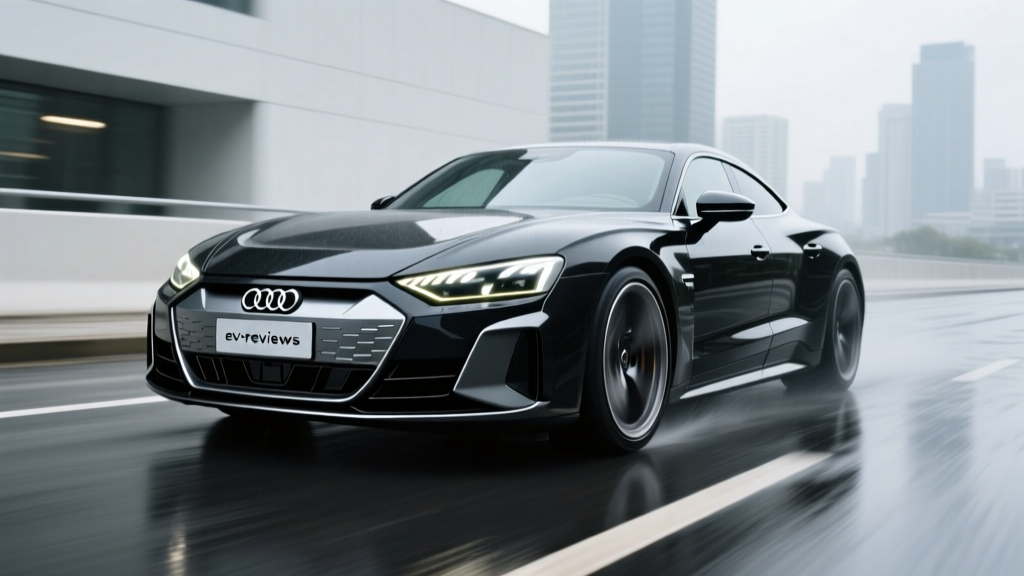
The 2022 Audi RS e-tron GT is a four-door electric grand tourer that trades maximum range for explosive acceleration and Porsche Taycan–derived engineering. Built on the same J1 Performance platform as the Taycan Turbo, it pairs a 93.4 kWh gross (83.7 kWh usable) NMC lithium-ion battery with a dual-motor all-wheel-drive system producing up to 637 horsepower in launch-control mode. The result is a 0-60 mph time of 3.1 seconds (Audi's official figure) with independent testing often clocking it even quicker at around 2.9–3.0 seconds on prepped surfaces.
But raw speed comes at an efficiency cost. The EPA rates the RS e-tron GT at 232 miles of range and 79 MPGe combined — figures that fall well short of rivals like the Tesla Model S Plaid or Lucid Air. For the target buyer — someone who prioritizes build quality, design, and Autobahn-bred composure over hypermiling — those trade-offs may be acceptable. Here is every number that matters.
Full Spec Sheet at a Glance
| Specification | 2022 Audi RS e-tron GT |
|---|---|
| Base MSRP | $139,900 (before destination) |
| As-Tested Price (typical) | $149,000–$155,000 |
| EPA Range | 232 miles |
| MPGe (City / Hwy / Combined) | 79 / 82 / 79 MPGe |
| Efficiency | 42 kWh / 100 mi |
| Battery (Gross / Usable) | 93.4 kWh / 83.7 kWh |
| Battery Chemistry | NMC (Nickel Manganese Cobalt) |
| Drivetrain | Dual-motor AWD (permanent magnet) |
| Horsepower (Boost / Launch Control) | 590 hp / 637 hp |
| Torque | 612 lb-ft |
| 0-60 mph | 3.1 seconds (mfr); ~2.9s independent |
| Top Speed | 155 mph (electronically limited) |
| Peak DC Fast Charge | 270 kW |
| 10–80% DC Charge Time | ~22.5 minutes |
| Level 2 Charge Rate | 10.9 kW (~33 mi/hr) |
| Charge Port / Connector | CCS1 (J1772 combo) |
| Battery Warranty | 8 years / 100,000 miles |
| Bumper-to-Bumper Warranty | 4 years / 50,000 miles |
Source: EPA fueleconomy.gov, Audi USA press archives.
Range & Efficiency: The Honest Numbers
Real-World Highway (70+ mph, moderate climate): ~185–205 miles
Real-World City / Mixed: ~210–225 miles
Cold Weather (below 30°F, highway): ~155–175 miles
The 232-mile EPA figure already reflects the RS e-tron GT's aerodynamic drag penalty and performance-oriented tuning. On a 75-mph highway loop in mild weather, expect roughly 190–200 miles before the low-charge warning intervenes. The car's 800-volt architecture and excellent thermal management help it sustain performance, but physics is physics: a 5,139-pound sedan with wide 245/265-section tires will consume energy at a higher rate than a Tesla Model S Long Range.
Cold weather compounds the hit. NMC chemistry loses roughly 20–30% of usable capacity in sub-freezing temperatures without preconditioning. The RS e-tron GT's heat pump (standard) mitigates cabin heating losses, but battery-cell resistance still rises. Plan for 160–175 real miles on a cold winter highway trip.
Efficiency of 42 kWh per 100 miles means you'll spend roughly $0.13–$0.17 per mile at home (depending on your electricity rate) versus $0.08–$0.10 per mile in a comparably quick Tesla Model S. For a car in this price bracket, efficiency is rarely the primary purchase driver, but it affects road-trip logistics: you'll stop more often on long drives than you would in a Lucid Air Grand Touring (516 mi EPA).
Charging: 800-Volt Architecture Delivers
The RS e-tron GT's J1 platform was engineered around an 800-volt electrical architecture — the same one Porsche uses in the Taycan. This allows dramatically higher DC fast-charge power than 400-volt competitors.
| Charging Level | Power / Voltage | Rate | Notes |
|---|---|---|---|
| Level 1 (120V household) | ~1.4 kW | ~4 mi/hr | Emergency/trickle only |
| Level 2 (240V home) | 10.9 kW | ~33 mi/hr | Full charge in ~8.5 hours |
| DC Fast (CCS, 350 kW station) | Up to 270 kW peak | 10–80% in ~22.5 min | Sustains high rate to ~55% SoC, then tapers |
| DC Fast (150 kW station) | ~150 kW sustained | 10–80% in ~35 min | Common at Electrify America, EVgo |
On a 350 kW Electrify America or Ionity station with preconditioning active, the RS e-tron GT ramps quickly to its 270 kW peak and holds a strong charge curve through roughly 50–55% state of charge. Above 60%, the rate tapers to protect the NMC cells — you'll see it drop to ~150 kW, then ~80 kW past 75%. The 10–80% sprint of roughly 22–23 minutes is competitive with the Taycan Turbo and significantly quicker than any 400-volt EV (most CCS rivals at this price point managed 150–200 kW peaks in 2022).
Home charging tip: The onboard charger caps at 10.9 kW. A 48-amp Level 2 wall connector on a 60-amp circuit will fully replenish the battery overnight. Expect $800–$2,000 for a professional Level 2 home installation depending on panel proximity and local permitting. Always consult a licensed electrician for final specifications.
Performance: The 2022 Audi RS e-tron GT 0-60 Experience
This is the headline number: 3.1 seconds to 60 mph using launch control. The dual-motor setup pairs a front permanent-magnet motor (235 hp) with a rear motor (456 hp), with a combined system output of 590 hp in normal boost mode and 637 hp when launch control is engaged. The rear axle features a two-speed transmission — first gear multiplies torque for launch, second gear optimizes highway efficiency — a rare engineering choice in the EV space.
The acceleration character differs from a Tesla Model S Plaid. Where the Tesla delivers violent, neck-snapping torque with minimal ceremony, the Audi's launch feels more progressive and composed — the Quattro AWD system and torque-vectoring rear differential manage traction with surgical precision. You get all 612 lb-ft of torque available from zero RPM, but delivered through a chassis that communicates grip rather than overwhelming it.
Top speed is electronically limited to 155 mph. The car's low center of gravity (battery pack mounted under the floor) and adaptive air suspension keep it planted through high-speed sweepers, and the rear-axle steering (optional) tightens the turning radius for city maneuvering. Braking from 70 mph is confident thanks to the standard carbon-ceramic brake option (a $7,500 upgrade on some trims) or the large steel rotors on base configurations.
Pricing, Tax Credits & Ownership Costs
The 2022 Audi RS e-tron GT launched with a base MSRP of $139,900 (plus $1,095 destination). Typical examples with the Year One package, carbon-ceramic brakes, and premium paint landed between $149,000 and $155,000.
| Cost Factor | Details |
|---|---|
| Base MSRP | $139,900 |
| Typical As-Tested | $149,000–$155,000 |
| Federal §30D Tax Credit (New, 2022) | Up to $7,500 — subject to battery sourcing & income caps |
| Federal §25E Used-EV Credit (from 2024) | Up to $4,000 on qualifying pre-owned examples (MSRP cap: $25,000 — RS e-tron GT does NOT qualify) |
| Estimated Insurance (annual) | $3,500–$5,000 |
| Estimated Electricity Cost (12,000 mi/yr) | $630–$840 (at $0.13–$0.17/kWh) |
Tax credit reality check: Under IRS §30D rules, the RS e-tron GT's eligibility for the full $7,500 new-vehicle credit depends on the buyer's modified adjusted gross income (AGI cap: $150,000 single / $300,000 joint), battery critical-mineral sourcing requirements, and the vehicle's MSRP cap ($55,000 for sedans). Because the RS e-tron GT is classified as a sedan with an MSRP far above $55,000, it does NOT qualify for the new-vehicle §30D credit under current rules. Always verify eligibility with a tax professional before purchasing. Point-of-sale transfer of the credit (available from 2024) does not change MSRP-cap ineligibility.
The used §25E credit (up to $4,000) also excludes the RS e-tron GT because that credit requires a sale price of $25,000 or less. Bottom line: buyers should not expect any federal tax credit on this vehicle, new or used. Some state-level incentives may still apply — check your local DMV or energy office for current programs.
Interior, Cargo & Daily Practicality
The RS e-tron GT's cabin is a showcase of Audi's top-tier material quality: available Valcona leather with honeycomb stitching, carbon-fiber or open-pore wood trim, and a flat-bottom steering wheel with RS-mode satellite buttons. The 12.3-inch Virtual Cockpit digital instrument cluster and 10.1-inch MMI touchscreen handle infotainment duties, with wireless Apple CarPlay and Android Auto, a 16-speaker Bang & Olufsen sound system, and a head-up display.
Cargo space: 9.2 cubic feet in the rear trunk and 3.2 cubic feet in the front trunk (frunk), for a total of roughly 12.4 cu ft. This is tight for the class — the Tesla Model S offers 28 cu ft behind the rear seats and 25 cu ft with seats folded. The Taycan provides similar numbers to the Audi (about 14.3 cu ft combined).
Passenger room: Front legroom is 41.3 inches; rear legroom is 32.1 inches. The rear seats are best suited for children or shorter adults on longer trips. The roofline's aggressive slope cuts into rear headroom (36.5 inches), making the cabin feel more intimate than airy.
Driver assistance: The RS e-tron GT comes with Audi's adaptive cruise assist (a Level 2 SAE system combining adaptive cruise and lane-centering), intersection assist, and traffic-sign recognition. It is not a hands-free system like GM's Super Cruise or Ford's BlueCruise — the driver must keep hands on the wheel at all times. Audi does not offer a Level 3 or Level 4 autonomous driving feature on this model.
Pros, Cons & Who Should Buy
Pros
- 0-60 in 3.1s with refined, composed launch character
- 800V architecture enables 270 kW peak DC charging (~22 min 10–80%)
- Exceptional build quality, materials, and cabin quietness
- Standard adaptive air suspension with excellent ride composure
- Striking design that stands apart from Tesla and Lucid
- Rear-axle steering (optional) for tight maneuverability
Cons
- 232-mi EPA range trails Model S, Lucid Air, and Taycan 4S
- Does not qualify for federal §30D or §25E tax credits
- Cargo space (12.4 cu ft total) is limited for the class
- Rear seats are cramped for taller adults
- Infotainment system is functional but not class-leading in UX
- No hands-free highway driving feature (Level 2 only)
- High insurance premiums ($3,500–$5,000/yr)
Who this EV suits best: The RS e-tron GT is ideal for the enthusiast buyer who wants supercar-class acceleration in a four-door package with Audi's signature refinement. It works well as a daily driver for commutes under 150 miles round-trip with home Level 2 charging, and as a weekend grand tourer on routes with reliable DC fast-charging infrastructure (Electrify America corridors, for instance). It is not the right choice for families needing cargo versatility, long-distance road-trippers who hate stopping, or budget-conscious buyers seeking maximum value per mile of range.
Frequently Asked Questions
What is the real-world range of the 2022 Audi RS e-tron GT?
In mixed driving at moderate temperatures, expect 210–225 miles. Sustained highway driving at 70+ mph drops this to 185–205 miles. In sub-freezing winter conditions on the highway, plan for 155–175 miles. The EPA sticker of 232 miles is achievable only in ideal city/suburban conditions at moderate speeds.
How fast does the RS e-tron GT charge at home and on the road?
At home on a Level 2 (240V, 48-amp) charger, the 10.9 kW onboard charger adds roughly 33 miles of range per hour, fully replenishing the battery in about 8.5 hours. On a 350 kW DC fast charger, it peaks at 270 kW and charges from 10–80% in approximately 22–23 minutes. On a more common 150 kW station, expect 10–80% in roughly 35 minutes.
Does the 2022 Audi RS e-tron GT qualify for the federal EV tax credit?
No. Under current IRS §30D rules, new clean-vehicle credits are capped at $55,000 MSRP for sedans. The RS e-tron GT's MSRP of $139,900+ far exceeds this threshold. The used §25E credit also excludes it due to the $25,000 sale-price cap. Consult a tax professional for state-specific incentives that may apply.
Is the RS e-tron GT worth buying versus the Porsche Taycan Turbo or Tesla Model S Plaid?
Choose the RS e-tron GT if you prioritize Audi's interior quality, understated design, and a more composed (less aggressive) performance character than the Tesla. The Taycan Turbo is its closest sibling — same platform, similar range and charging — but wears Porsche badging and has a slightly firmer ride. The Model S Plaid is dramatically faster (1.99s 0-60 claimed), offers more range (405 mi EPA), and costs less, but cannot match the Audi's fit-and-finish. None of these vehicles qualify for the federal credit at their MSRP levels.
What is the battery warranty on the RS e-tron GT?
Audi covers the high-voltage battery for 8 years or 100,000 miles (whichever comes first), with a capacity-retention threshold of 70%. If the battery degrades below 70% of its original usable capacity within that period, Audi will repair or replace it. The general bumper-to-bumper warranty is 4 years / 50,000 miles.
How does the 2022 RS e-tron GT compare to the newer 2024–2025 model years?
The 2022 model year was the launch year for the e-tron GT lineup. Subsequent model years received minor software updates and package restructuring, but the core powertrain, battery, and charging architecture remain the same through the current generation. If buying used, the 2022 model offers comparable performance and range to newer examples at a potentially lower price point on the pre-owned market.