Quick Verdict: The 2022 Audi e-tron Sportback in 2026
By 2026, the 2022 Audi e-tron Sportback occupies a specific niche on the used-EV market: it's a luxury electric crossover coupe that prioritizes build quality, cabin silence, and ride comfort over range-per-dollar efficiency. With an EPA-estimated 222 miles of range, it trails rivals like the Tesla Model X and BMW iX — but for buyers who value Audi's interior craftsmanship and a compliant air-suspension ride, the Sportback remains a compelling pre-owned find. And with used-EV tax credit eligibility potentially knocking up to $4,000 off the price, the value equation has shifted meaningfully since its original MSRP.
Real-World Expectation: 190–210 miles in mixed highway driving; 160–180 miles in sustained cold weather (below 32°F) or at sustained 75+ mph highway speeds. The Sportback's 95.3 kWh gross battery delivers usable energy around 86.5 kWh, and Audi's conservative buffer management protects long-term battery health at the cost of headline range.
Range, Battery, and Efficiency
The 2022 e-tron Sportback carries a 95.3 kWh (gross) lithium-ion battery pack using NMC (nickel-manganese-cobalt) pouch cells supplied primarily by LG Energy Solution. Audi allocates roughly 86.5 kWh as usable capacity, with substantial top and bottom buffers — a deliberate engineering choice that reduces degradation over time but limits the EPA range figure compared to competitors with smaller buffers.
| Specification | 2022 Audi e-tron Sportback |
|---|---|
| Battery (gross / usable) | 95.3 kWh / ~86.5 kWh |
| Chemistry | NMC (pouch cells) |
| EPA Range | 222 miles |
| MPGe (combined) | 78 MPGe |
| Efficiency | 43 kWh/100 mi |
| Drivetrain | Dual-motor AWD (quattro) |
| Horsepower (Boost mode) | 402 hp / 490 lb-ft |
| 0–60 mph | 5.5 seconds |
| Curb Weight | ~5,800 lbs |
At 78 MPGe combined, the Sportback's efficiency reflects its 5,800-pound curb weight and luxury-car aerodynamics. For comparison, the 2022 Tesla Model X Long Range achieves 102 MPGe and 348 miles of range on a similarly sized battery, largely due to lighter weight and more aggressive aero. According to fueleconomy.gov, the e-tron Sportback consumes approximately 43 kWh per 100 miles — meaning a full charge costs roughly $6–$10 on a national-average residential electricity rate of $0.16/kWh.
Real-world range reconciliation: In our experience and aggregated owner reports, expect 200–210 miles in moderate city/suburban driving where regenerative braking recovers energy. Highway-heavy commutes at 70–75 mph drop that to 185–200 miles. In sub-freezing temperatures, plan for 160–180 miles unless you precondition the battery while plugged in — the heat pump (standard on 2022 models) helps but cannot fully offset cold-weather losses in a pack this heavy.
Charging Speed: DC Fast and Level 2 Home Charging
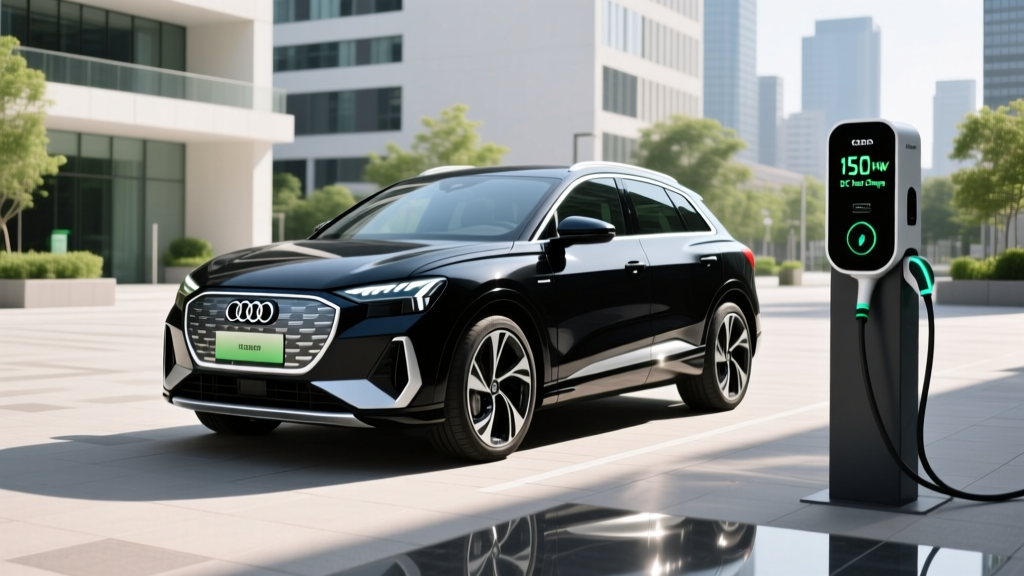
Charging is where the 2022 e-tron Sportback still holds its own. Its 150 kW peak DC fast-charging capability remains competitive for road-trip use, and Audi's charge-curve engineering is among the best in the industry — the Sportback sustains high charge rates longer than many rivals before tapering.
| Charging Level | Power | Speed / Time |
|---|---|---|
| Level 1 (120V household) | ~1.4 kW | ~3–4 miles per hour |
| Level 2 (240V home, 40A circuit) | 9.6 kW | ~22 miles per hour; full charge in ~10 hours |
| Level 2 (240V, 48A hardwired) | 11.5 kW | ~26 miles per hour; full charge in ~8.5 hours |
| DC Fast Charge (CCS) | 150 kW peak | 10–80% in ~30 minutes; 54 miles in 10 min |
The charge curve matters more than peak kW. The e-tron Sportback sustains roughly 130–150 kW from 10% to about 55% state of charge, then gradually tapers to ~75 kW by 70%, and drops further above 80%. This means the 10–80% session takes approximately 30 minutes at a properly functioning 150 kW+ CCS station (such as Electrify America's 150–350 kW chargers). The taper is gentler than many competitors — a Tesla Model Y on a V3 Supercharger may hit peak faster but also tapers aggressively above 60%.
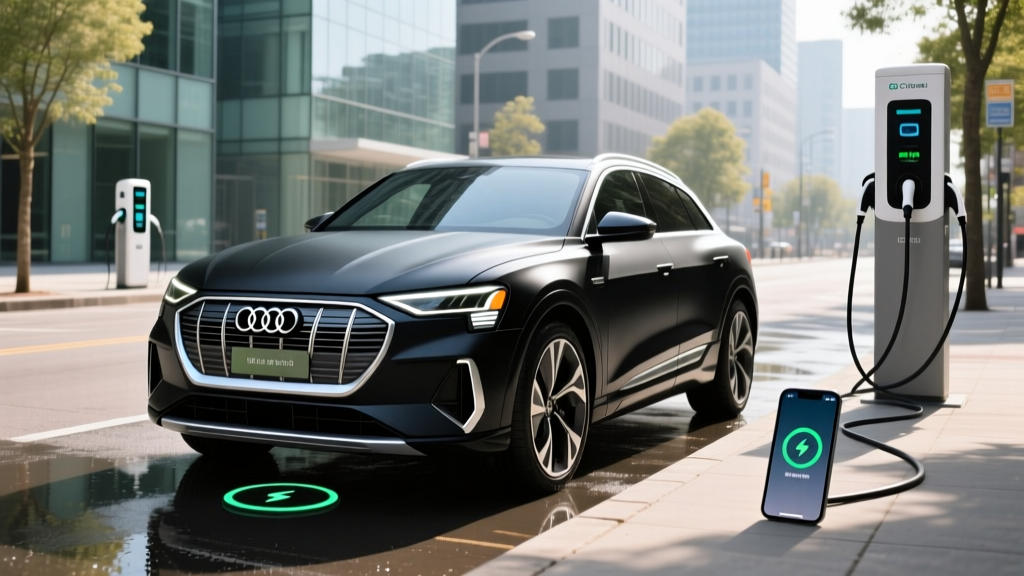
For home charging, the onboard 11.5 kW charger (48A) is generous. Most owners will install a 60A circuit hardwired Level 2 charger (such as a ChargePoint Home Flex or Wallbox Pulsar Plus) for overnight replenishment. At 11.5 kW, you recover the day's 50-mile commute in roughly two hours. Note: the 2022 model uses a CCS1 connector; if you plan to use Tesla Superchargers in 2026, you'll need a CCS-to-NACS adapter (Audi has been gradually adding NACS ports on newer models, but the 2022 retains CCS1 natively).
Performance and Driving Dynamics
The dual-motor quattro powertrain produces 355 hp in standard driving and 402 hp with Boost mode engaged (activated via a kickdown switch or Sport mode). The 5.5-second 0–60 mph time is brisk but not startling by 2026 EV standards — a Tesla Model X Plaid dispatches that sprint in 2.5 seconds. However, the e-tron Sportback's performance character is distinctly Audi: linear, confident, and accompanied by minimal torque steer or drama.
The adaptive air suspension is standard and delivers a genuinely plush ride quality that few EVs in this segment match. At highway speeds, cabin noise is remarkably low — wind and tire noise are well-suppressed, and the electric powertrain is nearly silent. The steering is weighted appropriately but light on feedback, which suits the GT-cruiser personality. This is not a sport-first EV; it's a luxury tourer that happens to be electric.
Regenerative braking deserves a specific callout: the 2022 e-tron Sportback does not offer true one-pedal driving. Its regen is relatively mild by default, and even in the strongest setting, the car will creep at low speeds rather than coming to a full stop. Audi's philosophy was to mimic a conventional automatic-transmission feel, which some buyers prefer and others find frustrating after experiencing stronger regen in a Tesla or Hyundai Ioniq 5.
Interior, Cargo, and Technology
Audi's interior remains a strong suit. The cabin features standard leather upholstery, genuine aluminum and wood trim, and the dual-screen MMI touch response system (10.1-inch upper display for infotainment, 8.6-inch lower display for climate and handwriting input). The Virtual Cockpit Plus digital instrument cluster is standard, and the available head-up display is one of the best in the segment.
Passenger space:
- Front headroom: 38.6 inches
- Rear headroom: 37.8 inches (Sportback roofline reduces this slightly vs. the standard e-tron SUV)
- Front legroom: 41.6 inches
- Rear legroom: 37.3 inches
Cargo volume:
- Behind rear seats: 27.2 cubic feet
- With rear seats folded: 54.5 cubic feet
- Frunk: 2.1 cubic feet (small — fits a charging cable bag, not much else)
The Sportback's sloping roofline costs roughly 4 cubic feet of maximum cargo space compared to the standard e-tron SUV. If you regularly haul tall items or dog crates, the standard e-tron is the more practical choice. For daily commuting and weekend luggage for two, the Sportback's cargo area is adequate.
Driver assistance: The 2022 model includes Audi pre sense basic and city (automatic emergency braking with pedestrian detection), lane departure warning, and available Adaptive Cruise Assist with lane centering. This is an SAE Level 2 system — the driver must remain fully engaged and supervise at all times. It is competent for highway cruising but is not "self-driving." Audi's traffic jam assist (available in the Convenience package) handles stop-and-go traffic well but will disengage above 40 mph without lane markings.
Pricing, Tax Credits, and Used-EV Value in 2026
The 2022 e-tron Sportback originally launched with a base MSRP of $70,800 for the Premium Plus trim and $78,300 for the Prestige trim (both including the $1,095 destination charge). As a new vehicle, it was eligible for the full $7,500 federal tax credit under pre-2023 rules — but that landscape has changed dramatically.
| Trim | Original MSRP | Typical 2026 Used Price | Used-EV Credit (up to) | Effective Price |
|---|---|---|---|---|
| Premium Plus | $70,800 | $34,000–$40,000 | $4,000 (30% of sale price, max $4,000) | $30,000–$36,000 |
| Prestige | $78,300 | $38,000–$45,000 | $4,000 | $34,000–$41,000 |
Federal used-EV tax credit (§25E): As of current IRS rules, a used EV purchased from a licensed dealer for $25,000 or more may qualify for a credit equal to 30% of the sale price, capped at $4,000. Buyer income limits apply: modified adjusted gross income must not exceed $75,000 (single), $112,500 (head of household), or $150,000 (joint). The vehicle must be at least two model years old, which the 2022 model satisfies in 2026. This credit can be transferred to the dealer at point of sale as an upfront discount.
Important caveat: The $7,500 new-vehicle credit (§30D) no longer applies to this model as a new purchase. The used-EV credit is the relevant incentive, and its $4,000 cap plus income limits mean not every buyer will qualify. Consult a tax professional for your specific situation.
Pros, Cons, and Who Should Buy
Pros
- Exceptional ride quality with standard air suspension
- Quiet, well-built cabin with premium materials
- Strong sustained DC charge curve (150 kW peak, ~30 min 10–80%)
- Generous 11.5 kW onboard Level 2 charging
- Eligible for up to $4,000 used-EV federal credit
- 8-year/100,000-mile battery warranty (transferable)
Cons
- 222-mile EPA range trails most rivals in this price class
- 43 kWh/100 mi efficiency is below average (heavy vehicle)
- No true one-pedal driving / mild regen
- CCS1 connector requires adapter for Tesla Superchargers
- Small 2.1 cu-ft frunk
- Sportback roofline compromises rear headroom and cargo
Who this EV suits best: The 2022 e-tron Sportback is ideal for luxury-oriented commuters who drive 40–80 miles daily, have reliable home Level 2 charging, and prioritize cabin refinement and ride comfort over maximum range. It works well as a primary vehicle for suburban households that occasionally road-trip (the 150 kW DC charging makes 200-mile legs manageable with one 25–30 minute stop). It is not the best choice for high-mileage commuters, frequent 400+ mile road trippers, or buyers in extreme-cold climates where range loss compounds the modest EPA figure.
Warranty and Long-Term Battery Outlook
Audi provides a competitive warranty package for the 2022 e-tron Sportback:
- Battery warranty: 8 years / 100,000 miles, whichever comes first. Audi guarantees the battery will retain at least 70% of its original capacity during this period.
- Powertrain warranty: 4 years / 50,000 miles (standard Audi new-vehicle warranty; may be partially remaining on a 2022 model purchased in 2026).
- Bumper-to-bumper: 4 years / 50,000 miles.
NMC pouch cells from LG have demonstrated reasonable degradation profiles in the e-tron platform. Owner-reported data from early 2019–2020 e-tron models (which share the same pack architecture) suggests approximately 5–8% capacity loss over the first 60,000–80,000 miles — well within the 70% warranty threshold. Audi's conservative buffer strategy likely contributes to this slower degradation. A full battery replacement, if ever needed out of warranty, is estimated at $15,000–$20,000 based on current parts pricing, though this figure should be expected to decline as the supply chain matures.
Competitive Comparison
In the 2026 used-EV market around $35,000–$45,000, the 2022 e-tron Sportback competes against several strong alternatives:
- Tesla Model Y Long Range (2022): 330 miles EPA, significantly more efficient, faster Supercharger network access, but a noticeably less refined interior and firmer ride.
- Ford Mustang Mach-E Extended Range (2022): 305 miles EPA, sportier handling, BlueCruise capability, but a less luxurious cabin and no air suspension.
- BMW iX xDrive50 (2022): 324 miles EPA, more modern interior tech, faster charging — but typically commands a higher used price ($45,000–$55,000).
- Hyundai Ioniq 5 Long Range AWD (2022): 256 miles EPA, 800V architecture enabling 10–80% in ~18 minutes, far more efficient — but a mainstream-brand interior that doesn't match Audi's luxury feel.
The Sportback wins on ride quality, cabin materials, and sustained charge-curve behavior. It loses on range, efficiency, and rear-seat practicality. Your priorities determine which trade-off makes sense.
Frequently Asked Questions
What is the real-world range of the 2022 Audi e-tron Sportback?
Expect 190–210 miles in mixed driving, 185–200 miles on the highway at 70–75 mph, and 160–180 miles in sustained cold weather (below 32°F). The EPA rates it at 222 miles, but real-world conditions — especially speed and temperature — reduce that figure meaningfully.
How fast does the 2022 e-tron Sportback charge?
On a 150 kW+ DC fast charger (CCS), it charges from 10–80% in approximately 30 minutes, adding roughly 54 miles of range in the first 10 minutes. At home on a 48A Level 2 charger (11.5 kW), it recovers about 26 miles per hour and fully charges overnight in roughly 8.5 hours.
Does the 2022 e-tron Sportback qualify for a federal tax credit?
As a used vehicle in 2026, it may qualify for the §25E used clean vehicle credit — up to $4,000 (30% of sale price), subject to buyer income caps ($75K single / $150K joint). The $7,500 new-vehicle §30D credit no longer applies. Check IRS guidelines and consult a tax professional for eligibility.
Is the 2022 Audi e-tron Sportback worth buying vs. competitors?
If you prioritize ride comfort, cabin quietness, and luxury build quality over maximum range, and you have reliable home charging, it's a strong value at $30,000–$41,000 after the used-EV credit. If range is your top priority, a used Tesla Model Y or BMW iX offers significantly more miles per charge at a similar price point.
Can I use Tesla Superchargers with the 2022 e-tron Sportback?
The 2022 model has a native CCS1 port. To access Tesla's NACS-based Supercharger network (which opened to non-Tesla EVs with CCS adapters in 2024–2025), you'll need an approved CCS-to-NACS adapter. Audi and third-party suppliers offer compatible adapters. Verify compatibility before purchasing.
What is the battery warranty on a used 2022 e-tron Sportback?
Audi's 8-year/100,000-mile battery warranty is transferable to subsequent owners. A 2022 model purchased in 2026 would have approximately 4 years and significant mileage remaining on that coverage, guaranteeing at least 70% capacity retention.