Quick Verdict: The 2021 VW ID.4 Five Years Later
The 2021 Volkswagen ID.4 was VW's first mass-market battery-electric vehicle for North America, and it arrived with a promise: a practical, family-friendly crossover with competitive range and a sub-$40,000 price tag. Now in 2026, with several model-year refreshes behind it, the original ID.4 has migrated squarely into the used-EV market — where it presents a compelling value proposition for buyers who understand what they're getting.
As a daily-driver EV, the 2021 ID.4 delivers on comfort, cargo space, and straightforward electric commuting. Its 82 kWh (77 kWh usable) NMC battery provides an EPA-estimated 260 miles of range for the rear-wheel-drive Pro model. But prospective used buyers should know the limitations: DC fast charging peaks at a modest 125 kW, the original infotainment software drew widespread criticism, and real-world highway range falls noticeably below the sticker. Let's break down every number that matters.
Range and Efficiency: EPA vs. the Real World
- EPA estimated range: 260 miles (250 miles for Pro S with larger wheels)
- Real-world highway (70-75 mph, moderate temps): ~215–235 miles
- Real-world mixed commuting (city/suburban): ~240–260 miles
- Cold-weather estimate (below 32°F, highway): ~175–200 miles
The ID.4's efficiency peaks around 3.0–3.2 kWh/mile in mixed driving. Highway speeds and cold temperatures hit it harder than some competitors due to its boxy aero profile and the 2021 model's lack of a standard heat pump (available only on AWD Pro S trims).
According to fueleconomy.gov, the 2021 ID.4 Pro RWD achieves a combined 104 MPGe, translating to roughly 32 kWh per 100 miles. That's competitive with the 2021 Ford Mustang Mach-E Select RWD (101 MPGe) but trails the Hyundai Ioniq 5 (114 MPGe for the 2022 model). In practical terms, expect to spend about $0.10–$0.14 per mile on electricity at national average residential rates (~$0.16/kWh), or roughly $5.20–$7.30 for a full home charge.
The real-world range gap is the key ownership insight here. On a 250-mile road trip at 75 mph in 85°F weather, you'll likely need a mid-trip charge stop. In winter conditions without a heat pump (standard on RWD trims), cabin heating draws directly from the traction battery and can reduce range by 25–35%. Buyers in northern climates should factor this into commute planning — or specifically seek out the AWD Pro S trim, which included VW's heat pump as standard equipment.
Battery, Charging Speed, and Infrastructure
The 2021 ID.4 uses an 82 kWh gross / 77 kWh usable lithium-ion battery pack with NMC (nickel-manganese-cobalt) chemistry, supplied primarily by SK Innovation. NMC offers higher energy density than LFP (lithium iron phosphate), giving VW more range in a smaller physical package — but NMC cells are more sensitive to sustained high-state-of-charge storage and extreme heat. For longevity, VW recommends daily charging to 80% and reserving 100% for longer trips.
| Charging Level | Power / Rate | Time / Miles Added |
|---|---|---|
| Level 1 (120V household) | ~1.4 kW | ~3–4 miles per hour |
| Level 2 (240V home/public) | 11 kW (48A onboard charger) | ~30 miles per hour; 0–100% in ~7.5 hours |
| DC Fast Charge (CCS) | Peak 125 kW | 10–80% in ~38 minutes |
The 125 kW peak DC charge rate was middling in 2021 and looks more dated by 2026 standards, where competitors like the Hyundai Ioniq 5 (peak 240 kW) and the refreshed ID.4 models (up to 175 kW) charge substantially faster. The 2021 ID.4's charge curve holds near peak rate from roughly 5–30% state of charge, then tapers progressively. Expect 30–80% to take approximately 25 minutes at a capable 150+ kW station — but the full 10–80% session stretches closer to 38 minutes.
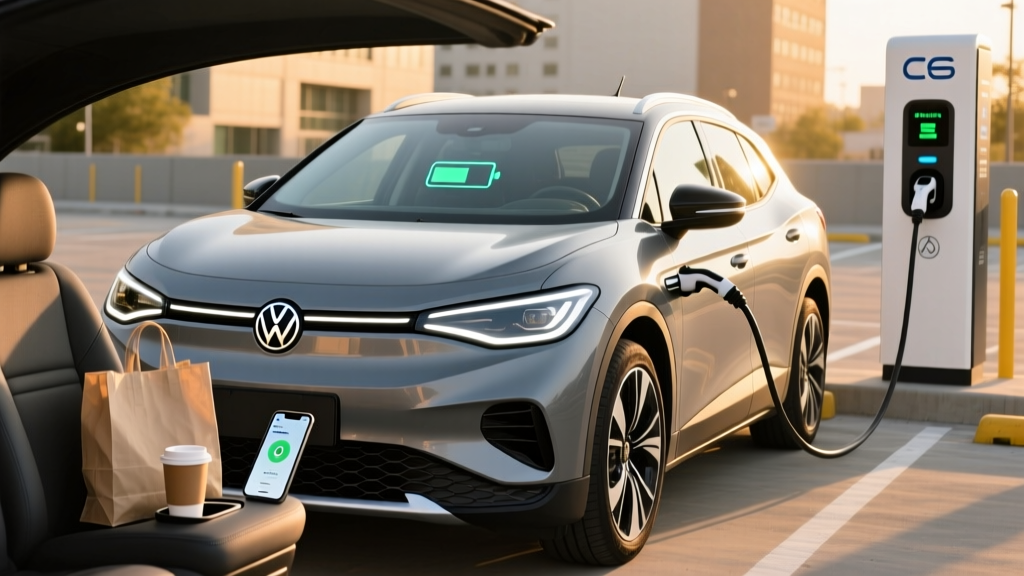
On the plus side, the 11 kW Level 2 onboard charger is excellent for home use. A full overnight charge on a 48-amp Level 2 wallbox (like the ChargePoint Home Flex or Emporia Level 2) replenishes the entire battery in about 7.5 hours — plenty fast for daily needs. VW also included three years of complimentary 30-minute DC fast-charging sessions at Electrify America stations for original purchasers; for used buyers, this benefit typically does not transfer, so factor public charging costs into your budget.
Performance and Drivetrain
The 2021 ID.4 was offered exclusively with a rear-mounted permanent-magnet synchronous motor producing 201 horsepower and 229 lb-ft of torque. The all-wheel-drive Pro S AWD variant (introduced later in the model year) added a front induction motor for a combined 295 hp and 339 lb-ft.
| Spec | Pro / Pro S (RWD) | Pro S AWD |
|---|---|---|
| Horsepower | 201 hp | 295 hp |
| Torque | 229 lb-ft | 339 lb-ft |
| 0–60 mph | ~7.7 seconds | ~5.4 seconds |
| Drivetrain | Rear-wheel drive | Dual-motor AWD |
| EPA Range | 260 mi (Pro) / 250 mi (Pro S) | 249 mi |
| Top Speed | 99 mph (electronically limited) | 112 mph |
| Towing Capacity | Not rated (2021) | 2,700 lbs (with factory hitch) |
The RWD model's 7.7-second 0–60 time is adequate for merging and passing but won't thrill anyone coming from a Tesla Model Y. The AWD variant's 5.4-second run is genuinely quick and adds confidence in rain and snow. Ride quality is a standout: the ID.4's MEB platform delivers a compliant, well-damped feel that absorbs highway imperfections better than the stiffer-riding Mach-E. Regenerative braking offers a "B" mode for stronger regen, but VW did not implement true one-pedal driving — you'll still need the friction brakes for complete stops, which frustrates some EV veterans.
Interior, Cargo, and Technology
Inside, the 2021 ID.4 prioritizes space over flair. Passenger volume is generous, with 41.1 inches of front legroom and 37.6 inches in the rear — competitive with the Toyota RAV4 and notably roomier than the Mazda CX-5. Cargo capacity measures 30.3 cubic feet behind the second row and 64.2 cubic feet with the rear seats folded. There is no front trunk (frunk); VW used that space for HVAC components and electronics.
The technology story is where the 2021 ID.4 drew its harshest criticism. The original 10-inch (Pro) or 12-inch (Pro S/Statement package) infotainment touchscreen ran VW's first-generation MEB software, which was plagued by slow response times, non-intuitive menus, and capacitive touch sliders for volume and climate that lacked backlighting. VW has issued multiple over-the-air and dealer-applied software updates since 2021, and many of the worst issues have been mitigated — but the interface still trails the responsiveness of Hyundai's or Tesla's systems.
Standard driver-assistance features include VW's IQ.DRIVE suite: adaptive cruise control with stop-and-go, lane-keeping assist, blind-spot monitoring, rear cross-traffic alert, and automatic emergency braking. This is an SAE Level 2 system — it assists with steering and speed but requires continuous driver attention and hands-on-wheel supervision. It is not autonomous driving.
Pricing, Tax Credits, and Used-EV Value
The 2021 ID.4 originally started at $39,995 MSRP for the Pro trim, with the Pro S at $44,495 and the Pro S AWD at $48,175 (all before destination). In the 2026 used-EV market, pricing varies significantly by mileage, condition, and battery health:
| Trim | Original MSRP | Est. Used Price (2026) | Federal Used-EV Credit Eligibility |
|---|---|---|---|
| Pro (RWD) | $39,995 | $18,000–$23,000 | Up to $4,000 or 30% of sale price (whichever is lower) |
| Pro S (RWD) | $44,495 | $20,000–$26,000 | Up to $4,000 or 30% of sale price |
| Pro S AWD | $48,175 | $22,000–$28,000 | Up to $4,000 or 30% of sale price |
Federal used-EV tax credit (IRC §25E): The 2021 ID.4 qualifies for the federal used clean vehicle credit when purchased from a licensed dealer. The credit equals 30% of the sale price, capped at $4,000. Eligibility requirements include:
- Sale price must be $25,000 or less — this caps which trim/mileage combinations qualify
- Buyer income limits: AGI ≤ $75,000 (single), $112,500 (head of household), $150,000 (joint)
- Vehicle must be at least 2 model years old (met for the 2021 model year)
- Must purchase from a licensed dealer — private-party sales do not qualify
- Credit can be transferred to the dealer at point of sale as an upfront discount
Per IRS guidelines, always confirm eligibility with a tax professional before relying on the credit. Income and pricing thresholds are subject to change. Many 2021 ID.4 Pro models priced under $25,000 will qualify, bringing the effective purchase price as low as $14,000–$19,000 — exceptional value for a 260-mile-range EV.
Warranty and Battery Longevity
VW backs the ID.4's battery pack and electric drivetrain with an 8-year / 100,000-mile warranty (whichever comes first), covering defects and capacity loss below 70% of original capacity. The basic vehicle warranty is 4 years / 50,000 miles. For a 2021 model, that means the battery/drivetrain warranty extends through approximately 2029 or 100,000 miles — a meaningful safety net for used buyers.
NMC battery degradation in the ID.4 has proven moderate based on early owner reports. Most 2021 examples with 40,000–60,000 miles show approximately 5–8% capacity loss, which is within normal expectations for liquid-cooled NMC packs. To maximize longevity:
- Set daily charge limit to 80% (configurable in the vehicle settings)
- Avoid repeated DC fast-charging sessions above 90% SoC
- In extreme heat, precondition the battery before fast charging
- Store the vehicle between 20–80% SoC if parked for extended periods
Pros and Cons
- Comfortable, compliant ride quality — one of the smoothest in the compact EV crossover segment
- Generous rear-seat legroom (37.6 in) and cargo space (30.3 cu ft)
- Strong Level 2 home charging at 11 kW (~30 mi/hr)
- Excellent used-EV value — eligible for up to $4,000 federal credit under §25E
- Comprehensive IQ.DRIVE safety suite standard on all trims
- AWD variant offers strong 5.4-second 0–60 and 2,700-lb towing
- DC fast charging peaks at only 125 kW — slower than Ioniq 5, Model Y, and newer ID.4 models
- Original infotainment software was slow and frustrating (improved but still dated)
- No front trunk (frunk) — lost cargo utility
- Capacitive touch climate/volume sliders lack backlighting and tactile feedback
- Real-world highway range (~220 mi) falls well below EPA 260 mi estimate
- No true one-pedal driving mode
- RWD model's 7.7-second 0–60 is unremarkable
Who Should Buy the 2021 VW ID.4 in 2026?
- You want a comfortable, roomy electric commuter under $25,000 (after credit)
- Your daily driving is under 80 miles round-trip with home Level 2 charging
- You prioritize ride comfort and cabin quietness over sporty handling
- You're in a moderate climate or can find the AWD Pro S with a heat pump
- You road-trip frequently and need fast DC charging (consider used Ioniq 5 or Model Y)
- You want cutting-edge infotainment and software UX
- You need more than 250 miles of real-world highway range regularly
- You require hands-free highway driving assist (GM Super Cruise or Ford BlueCruise vehicles)
Frequently Asked Questions
What is the real-world range of the 2021 VW ID.4?
The EPA rates the 2021 ID.4 Pro RWD at 260 miles. In real-world mixed driving, expect 240–260 miles. At sustained highway speeds (70–75 mph), range drops to approximately 215–235 miles. In freezing temperatures with cabin heat, plan for 175–200 miles, especially on RWD trims without a heat pump.
How fast does the 2021 ID.4 charge at home and on the road?
At home on a 240V Level 2 charger, the ID.4 accepts up to 11 kW, adding roughly 30 miles of range per hour and achieving a full charge in about 7.5 hours. On DC fast chargers, it peaks at 125 kW, reaching 10–80% in approximately 38 minutes. This is slower than many 2026 competitors but adequate for planned road trips.
Does the 2021 VW ID.4 qualify for the federal EV tax credit?
As a used vehicle, the 2021 ID.4 qualifies for the IRC §25E used clean vehicle credit — up to $4,000 or 30% of the sale price (whichever is less). The sale price must be $25,000 or below, the buyer's AGI must fall under IRS income caps ($75K single / $150K joint), and the purchase must be through a licensed dealer. Consult a tax professional and review IRS §25E guidance before purchase.
Is the 2021 ID.4 worth buying vs. the Tesla Model Y or Hyundai Ioniq 5?
It depends on your priorities. The used 2021 ID.4 undercuts both on price and offers a more comfortable ride. The Model Y wins on charging speed (250 kW peak), software UX, Supercharger network access, and real-world range. The Ioniq 5 offers dramatically faster 800V charging (240 kW) and a more modern interior but may cost more on the used market. If budget is the primary driver and road-trip frequency is low, the ID.4 is a strong value pick.
What are the biggest problems with the 2021 VW ID.4?
The most cited issues are the slow, unintuitive original infotainment software (partially improved via updates), unlit capacitive touch sliders for climate and volume, the absence of a frunk, and slower DC fast charging compared to rivals. Mechanically, the ID.4 has been reliable, with no widespread battery or drivetrain failure reports as of 2026.
How long will the 2021 ID.4 battery last?
VW warranties the battery for 8 years / 100,000 miles against capacity loss below 70%. Real-world data from early adopters suggests 5–8% degradation at 40,000–60,000 miles, which projects to roughly 85–90% capacity retention at 100,000 miles with proper care. Avoiding frequent 100% charges and minimizing DC fast charging in extreme heat will extend battery life.