Quick Verdict: A Comfortable Cruiser, Not a Stoplight Racer
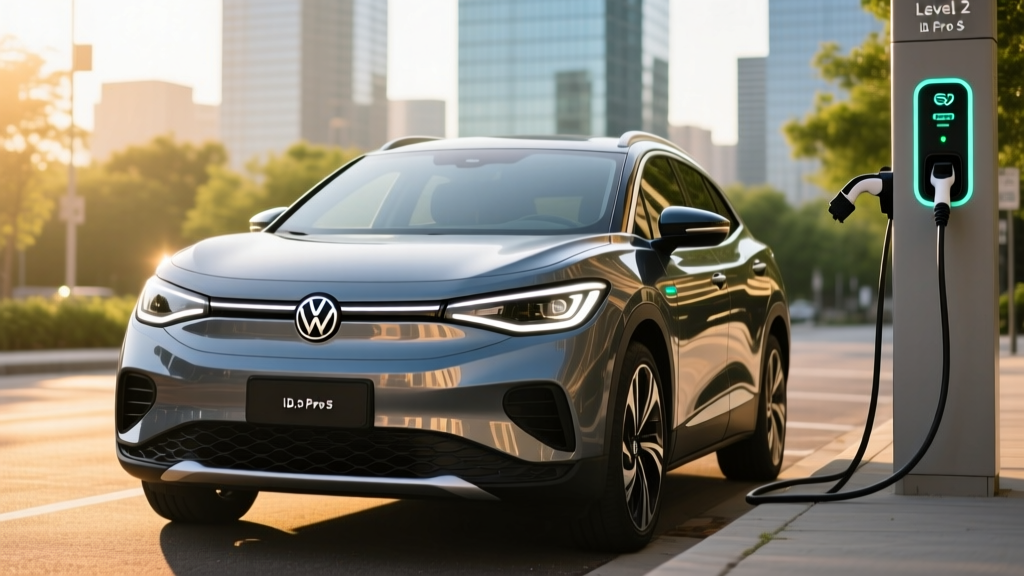
The 2021 Volkswagen ID.4 Pro S was VW's opening salvo in the American EV market — a practical, roomy compact crossover built on the MEB platform with rear-wheel drive and an 82 kWh (77 kWh usable) NMC battery. If you're searching for the 2021 Volkswagen ID.4 Pro S 0-60 time, here's the number: 7.7 seconds to 60 mph with its 201-horsepower single rear motor. That's adequate for merging and passing, but it won't pin you to the seat like a Mustang Mach-E or Tesla Model Y.
What the ID.4 Pro S does deliver is a compliant ride, generous cargo space, and — on the used market — potential eligibility for the federal used-EV tax credit (up to $4,000 under IRC §25E). For buyers evaluating this as a pre-owned purchase in 2026, the ID.4 Pro S represents one of the more comfortable and practical compact EV crossovers available at depreciated prices.
| Spec | Value |
|---|---|
| EPA Range | 260 miles |
| Battery (usable / gross) | 77 kWh / 82 kWh, NMC |
| Motor / Drivetrain | Single rear motor, RWD |
| Horsepower / Torque | 201 hp / 229 lb-ft |
| 0-60 mph | 7.7 seconds |
| Top Speed | 99 mph (electronically limited) |
| Max DC Fast Charge | 125 kW (CCS) |
| 10-80% DC Charge Time | ~38 minutes |
| Level 2 Home Charge Rate | 11 kW (~37 mi/hr) |
| EPA Efficiency | 104 MPGe combined (29 kWh/100mi) |
| Cargo (rear seats up / folded) | 30.3 / 64.2 cu ft |
| Battery Warranty | 8 years / 100,000 miles |
| Original MSRP (Pro S) | $44,495 (before incentives) |
Range and Efficiency: EPA vs. Real World
The 2021 ID.4 Pro S carries an EPA-estimated 260 miles of range from its 77 kWh usable battery. That placed it mid-pack among 2021 compact EV crossovers — behind the Tesla Model Y Long Range (326 mi EPA at the time) but competitive with the Ford Mustang Mach-E Select RWD (230 mi EPA) and ahead of the base Hyundai Kona Electric (258 mi EPA).
EPA sticker: 260 miles. Expect 220-240 miles in mixed highway driving at 70+ mph, where aerodynamic drag cuts into the ID.4's bluff crossover profile. In freezing temperatures (below 32°F), plan for 175-200 miles of usable range — the 2021 ID.4 lacks a heat pump in U.S. trims, relying on resistive cabin heating that draws heavily from the traction battery. City driving with frequent regen braking can push closer to or slightly above the EPA figure.
Efficiency lands at 104 MPGe combined, which translates to roughly 29 kWh per 100 miles according to fueleconomy.gov. That's respectable but not class-leading — the Tesla Model Y achieves around 28 kWh/100mi, while the Hyundai Ioniq 5 (introduced a year later) manages similar figures with faster charging. The ID.4's weight (~4,680 lbs curb) and relatively conservative thermal management contribute to the middling efficiency.
Charging Speed: DC Fast, Level 2, and the 125 kW Ceiling
Charging is where the 2021 ID.4 Pro S shows its age relative to 2024+ competitors. The maximum DC fast-charge rate is 125 kW via its CCS1 connector — a figure that was acceptable in 2021 but feels slow now that vehicles like the Ioniq 5 and F-150 Lightning push 170-230+ kW.
| Level | Power | Speed | Notes |
|---|---|---|---|
| Level 1 (120V) | ~1.4 kW | ~3-4 mi/hr | Emergency/trickle; 80+ hours for full charge |
| Level 2 (240V, 48A) | 11 kW | ~37 mi/hr | ~7.5 hours from 10-100% on home charger |
| DC Fast (CCS) | 125 kW peak | ~210 mi/hr at peak | 10-80% in ~38 min; tapers significantly above 80% |
The 10-80% DC fast charge takes approximately 38 minutes at a capable station (150 kW+). The charge curve is the critical detail VW's marketing underemphasized: the ID.4 holds near-peak power only between roughly 10-30% state of charge, then progressively tapers. From 80-100%, charging slows dramatically — plan on an additional 25-30 minutes if you need a full top-up. For road trips, the practical strategy is to charge from 10-80% and move on.
At home on a Level 2 charger, the 11 kW onboard charger replenishes the battery in about 7.5 hours — meaning an overnight charge is straightforward. VW included three years of complimentary charging on the Electrify America network (limited to 1,000 kWh) for original 2021 purchasers, though this benefit has likely expired for most original owners and does not transfer to subsequent buyers in all cases.
Performance: The 0-60 Story and Driving Impressions
The 2021 Volkswagen ID.4 Pro S 0-60 mph time of 7.7 seconds comes from the single rear-mounted permanent-magnet synchronous motor producing 201 hp and 229 lb-ft of torque. This is a rear-wheel-drive layout — VW didn't offer the dual-motor AWD Pro S until the 2022 model year in the U.S. (which dropped the 0-60 to around 5.7 seconds with 295 hp).
On the road, the ID.4 Pro S feels relaxed rather than sporty. The instant torque delivery from the electric motor makes city acceleration feel punchy off the line (0-30 mph is brisk), but the single-speed reduction gear and 4,680-lb curb weight blunt the urgency as speeds climb. Highway passing requires planning — you won't dart through gaps the way you would in a Model Y Performance (3.5 seconds to 60 mph).
Where the ID.4 excels is ride quality. The MEB platform's low center of gravity and four-wheel independent suspension absorb bumps with a composure that beats most competitors in this segment. Steering is light and precise but devoid of feedback — this is a comfort-tuned cruiser, and VW leaned into that identity. The turning circle of 31.5 feet is excellent for a compact SUV, making parking maneuvers easy.
Regenerative braking is adjustable via steering-wheel paddles (B-mode for max regen, D-mode with selectable levels), but VW did not offer true one-pedal driving that brings the car to a complete stop. You'll still use the brake pedal at low speeds — a frustration for drivers accustomed to the Chevy Bolt or Nissan Leaf's one-pedal behavior.
Interior, Cargo, and Technology
The ID.4 Pro S cabin is minimalist to the point of controversy. A 12-inch touchscreen dominates the dash (the base Pro got a 10-inch unit), with most functions — including climate controls — buried in the touchscreen or touch-sensitive sliders below it. The Pro S trim added panoramic fixed glass roof, heated front seats, power-adjustable driver seat with memory, and a hands-free power liftgate.
Passenger space is generous: 41.1 inches of front legroom and 37.6 inches of rear legroom give the ID.4 a spacious, airy feel amplified by the Pro S's panoramic roof. Rear-seat adults will be comfortable on long trips. Cargo volume stands at 30.3 cubic feet behind the rear seats and 64.2 cubic feet with them folded — competitive with the RAV4 and CR-V, and more than the Mach-E (29.7/59.7 cu ft).
Notably, there is no front trunk (frunk). The space under the hood houses ancillary electronics and the windshield-washer reservoir. For an EV, this is a missed opportunity for extra sealed storage.
The infotainment system drew widespread criticism at launch for laggy response times, confusing menu structures, and non-illuminated touch sliders for volume and temperature. VW has issued over-the-air updates that improved responsiveness somewhat, but the system still trails competitors like Hyundai's intuitive UI or Tesla's benchmark software. Wireless Apple CarPlay and Android Auto are standard on the Pro S.
Driver-assistance tech includes VW's IQ.DRIVE suite: adaptive cruise control with stop-and-go, lane-keeping assist, blind-spot monitoring, rear cross-traffic alert, and front automatic emergency braking. This is a competent SAE Level 2 driver-assist system — it requires continuous driver supervision and is not autonomous. The lane-centering can wander on faded markings, and the adaptive cruise is conservative in gap selection, but it's adequate for highway commutes.
Pricing, Used Market, and Tax Credit Eligibility
The 2021 ID.4 Pro S originally stickered at $44,495 (including destination). The base Pro started at $39,995. A 1st Edition launch model at $43,995 was also available in limited numbers. These prices qualified for the full $7,500 federal tax credit under the pre-2023 rules (IRC §30D), which significantly improved the value proposition for original buyers.
For used buyers in 2026, the relevant incentive is the used clean vehicle credit under IRC §25E, which provides up to $4,000 (or 30% of the sale price, whichever is lower). According to IRS guidelines, eligibility requires:
- Sale price must be $25,000 or below
- Vehicle must be at least 2 model years old (2021 qualifies in 2026)
- Buyer income caps: $75,000 single / $112,500 head of household / $150,000 joint (modified AGI)
- Purchase must be from a licensed dealer (private-party sales excluded)
- Vehicle must have been previously titled — cannot be a new or reconditioned vehicle sold as new
- Credit is non-refundable but can be transferred to the dealer as a point-of-sale discount
As of early 2026, used 2021 ID.4 Pro S listings typically range from $18,000 to $24,000 depending on mileage and condition, placing most examples within the $25,000 sale-price cap. A buyer meeting income requirements purchasing from a dealer at $22,000 would qualify for a $4,000 credit (30% of $22,000 = $6,600, capped at $4,000), effectively bringing the net cost to around $18,000. Always consult a tax professional and verify eligibility on the IRS website before relying on credit assumptions.
Battery Health, Warranty, and Long-Term Ownership
The 2021 ID.4's 82 kWh gross (77 kWh usable) battery pack uses NMC (nickel-manganese-cobalt) lithium-ion chemistry supplied primarily by LG Energy Solution and SK On. NMC offers higher energy density than LFP (lithium iron phosphate), enabling the ID.4's 260-mile range in a relatively compact pack, but it is more sensitive to sustained high states of charge and extreme temperatures.
VW's battery warranty covers 8 years or 100,000 miles against defects and capacity loss below 70% of original capacity — whichever comes first. For a 2021 model, that warranty extends through the 2029 model year or 100,000 miles on the odometer. Early ID.4 battery degradation data suggests modest capacity loss: most owners report 93-96% state of health after three years and 40,000-60,000 miles, which is consistent with well-managed NMC packs. The 77 kWh usable buffer (out of 82 kWh gross) provides a ~6.5% top-and-bottom buffer that helps preserve longevity.
If the battery does require out-of-warranty replacement, expect estimates in the $15,000-$20,000 range based on current MEB pack pricing — though this cost is expected to decline as the supply chain matures. For used buyers, requesting a battery state-of-health (SoH) readout from a VW dealer before purchase is strongly recommended.
Insurance costs for the ID.4 Pro S tend to run 10-20% higher than a comparably priced gas-powered Tiguan, reflecting the higher repair costs associated with EV battery packs and specialized bodywork. Average annual premiums land around $1,800-$2,200 depending on state and driver profile.
How It Compares: ID.4 Pro S vs. Key Competitors
The 2021 compact EV crossover segment was small but competitive. Here's how the ID.4 Pro S stacks up against the alternatives you'll find on the used market:
| Attribute | VW ID.4 Pro S | Tesla Model Y LR | Ford Mach-E Select RWD | Hyundai Kona Electric |
|---|---|---|---|---|
| EPA Range | 260 mi | 326 mi | 230 mi | 258 mi |
| 0-60 mph | 7.7 sec | 4.8 sec | 6.1 sec | 6.4 sec |
| Battery (usable) | 77 kWh NMC | 75 kWh NMC | 68 kWh NMC | 64 kWh NMC |
| Max DC Charge | 125 kW | 250 kW | 115 kW | 100 kW |
| 10-80% Time | ~38 min | ~20 min | ~45 min | ~47 min |
| Cargo (rear up) | 30.3 cu ft | 30.2 cu ft | 29.7 cu ft | 19.2 cu ft |
| Typical Used Price (2026) | $18-24K | $24-32K | $17-22K | $14-18K |
- Ride comfort and cabin quietness are top priorities
- You value VW's build quality and dealership network
- Cargo space matters (best-in-class with seats up)
- You primarily charge at home and take occasional road trips
- Fast DC charging is critical (Tesla/Ioniq 5 are far ahead)
- You need AWD for snow-belt winters (not available on 2021 RWD)
- Performance matters (Model Y is 3 seconds quicker to 60)
- You want cutting-edge infotainment (Tesla or Hyundai win here)
Pros, Cons, and Who Should Buy
- Compliant, quiet ride quality that outclasses sportier competitors
- Spacious rear seat and excellent cargo volume
- Strong used-market value with potential $4,000 federal credit
- Comprehensive IQ.DRIVE safety suite standard
- Panoramic glass roof creates an airy cabin (Pro S)
- Low 31.5-ft turning circle for easy city parking
- 125 kW max DC charging is slow for road trips vs. newer EVs
- No one-pedal driving — regen doesn't bring car to full stop
- Infotainment is sluggish with frustrating touch-sensitive sliders
- No front trunk (frunk) for extra storage
- No heat pump on U.S. trims — cold-weather range suffers
- 0-60 in 7.7 seconds trails most competitors
Best suited for: Daily commuters and small families who charge primarily at home, prioritize ride comfort over acceleration, and take road trips infrequently enough that the 38-minute 10-80% charge time isn't a dealbreaker. The ID.4 Pro S is an excellent second car or a first EV for someone who doesn't need to regularly drive 300+ miles in a single stretch.
Not ideal for: Performance-oriented drivers, frequent long-distance road trippers, buyers in extreme cold-weather climates without garage parking, or anyone who expects Tesla-level infotainment and Supercharger convenience.
Frequently Asked Questions
What is the real-world range of the 2021 Volkswagen ID.4 Pro S?
The EPA rates the ID.4 Pro S at 260 miles. In real-world mixed driving at highway speeds, expect 220-240 miles. In sub-freezing temperatures without a heat pump (not equipped on U.S. 2021 models), range can drop to 175-200 miles. City driving with frequent regenerative braking may match or slightly exceed the EPA figure.
How fast does the 2021 ID.4 Pro S charge?
On a DC fast charger, the ID.4 Pro S peaks at 125 kW and charges from 10-80% in approximately 38 minutes. On a Level 2 home charger at 11 kW, a full charge takes about 7.5 hours, adding roughly 37 miles of range per hour. Level 1 (120V) trickle charging adds only 3-4 miles per hour.
Does the 2021 ID.4 Pro S qualify for a federal tax credit in 2026?
As a used vehicle, the 2021 ID.4 Pro S may qualify for the IRC §25E used clean vehicle credit of up to $4,000, provided the sale price is $25,000 or below, the buyer meets income caps ($75K single / $150K joint), and the purchase is through a licensed dealer. It does not qualify for the new-vehicle §30D credit since it is not a new sale. Verify current rules at irs.gov and consult a tax professional.
Is the 2021 ID.4 Pro S worth buying vs. a used Tesla Model Y or Mach-E?
It depends on priorities. The ID.4 Pro S wins on ride comfort, cargo versatility, and potentially lower used pricing with tax credit eligibility. The Model Y wins decisively on range (326 mi), charging speed (250 kW), performance (4.8 sec 0-60), and Supercharger network access. The Mach-E offers a middle ground with better performance (6.1 sec) but shorter range (230 mi). If road-trip charging speed is important, the Model Y is the clear choice. If daily comfort and value matter more, the ID.4 Pro S holds up well.
What is the biggest drawback of the 2021 ID.4 Pro S?
The 125 kW DC fast-charging ceiling is the most significant limitation for a vehicle bought in 2026, when competitors routinely charge at 170-350 kW. Combined with the lack of a heat pump and sluggish infotainment, the ID.4 shows its 2021 engineering most clearly at DC fast chargers on road trips. For a home-charging commuter, these drawbacks matter far less.
How is the battery holding up on 2021 ID.4 examples?
Early data from owner forums and fleet reports suggests the 77 kWh usable NMC pack is degrading modestly, with most 40,000-60,000 mile examples retaining 93-96% of original capacity. VW's 8-year/100,000-mile battery warranty (covering drops below 70% capacity) remains in effect through 2029. Always request a dealer SoH diagnostic before purchasing a used example.